There is little chance of the new US and Russia peace deal succeeding in Syria, according to rebel groups fighting in the war-torn country.
A Free Syrian Army leader called Fares al-Bayoush said Russia and Damascus had not observed the last agreement, and the chances of the new deal succeeding were the same as the last one.
And according to a military spokesman for the rebel Nour al-Din al Zinki Brigades, the deal could worsen the ferocious fighting between rebels and Assad’s forces in Aleppo.
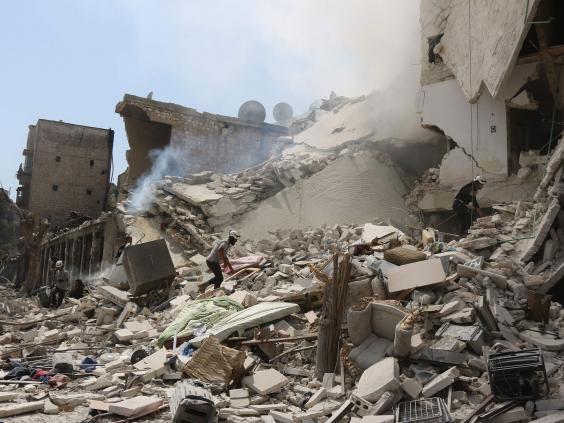
Human rights groups report the conflict in the divided northern city has claimed more than 700 civilian lives in the last 40 days, including 165 children.
Captain Abdul Salam Abdul Razak said the deal give the Syrian army a chance to gather forces and pour more Iranian-backed militias into the main battles raging in the city.
A nationwide ceasefire is set to begin at sunset on Monday after US and Russia came to an agreement in Geneva which US Secretary of State John Kerry said could be a “turning point” for the war-torn country if implemented.
Mr Kerry said the plan was intended “to reduce violence, ease suffering and resume movement towards a negotiated peace and a political transition in Syria.”
But the potential breakthrough deal will hinge on compliance by Syrian President Bashar al-Assad's Russian-backed forces and US-supported rebel groups, plus key regional powers such as Turkey, Iran and Saudi Arabia.
Bassma Kodmani, spokesperson for the Syrian opposition High Negotiations Committee (HNC), said the body welcomed the deal “if it is going to be enforced.”
The onus was on Russia as its influence “was the only way to get the regime to comply,” her statement added.
The deal, at least publicly and for now, appears to overcome months of distrust between Russia and the United States that President Barack Obama had cited less than a week ago.
Now, the two powers are lining up in an unexpected new military partnership targeting the so-called Islamic State and al-Qaida-linked militants, while trying to prod Assad and opposition groups to end a civil war that has killed up to 500,000 people and displaced millions.
The ultimate hope is to silence the Syrian guns so that the long-stalled peace process under UN mediation can resume between Assad's envoys and representatives of the opposition, while the two world powers focus on battling jihadis.
Foreign Secretary Boris Johnson has said he welcomes the deal, and said the Assad regime must “respond with convincing ideas of its own, not bombing, shelling and sieges”.
Additional reporting by agencies