
As we’ve published such a lot of material today, here’s a quick guide:
Impact of the crisis
- Syria’s war: 80% in poverty, life expectancy cut by 20 years, $200bn lost. A United Nations Development Programme-backed report paints a devastating picture of a country after four years of war.
- Satellites capture how the lights have gone out in Syria. Bombings and huge numbers of people fleeing have cut night-time light levels by 83% since 2011, with places such as Aleppo almost entirely dark.
- The worst place in the world? Aleppo in ruins after four years of Syria war.
- War in Syria: how my life has changed. Six Syrians from across the divide, from rebel officers to regime supporters give their accounts of the last four years.
- The fate of medical staff on the front line of the conflict underlines the brutality of the civil war with 599 medical personnel among the casualties. Medics describes life on the front line.
- Dr Entabi, A British-Syrian eye consultant, describes one of his regular stints at a Syrian field hospitals. “There is blood everywhere: maimed bodies, dismembered bodies of people, one hand is there, one leg is there,” he said.
- The acid attack victim who is one of Syria’s lucky ones. Andi is among the minority of injured Syrians to have received treatment for her physical scars – but the crippling emotional wounds remain
- Syria conflict: share your stories
Diplomatic and political crisis
- Syrian opposition leader hits out at west’s ‘cardboard’ support. Khaled Khoja, new president of the Syrian National Coalition, urges western governments to engage with the Free Syrian Army to defeat both Assad and Isis.
- How international divisions contributed to Syria’s war without end. After four years of conflict, it is clear President Assad’s allies have been more determined to keep him in power than his enemies have been to remove him.
- How far will Barack Obama go? For the first time for years, a majority of US voters appear to favour some kind of military engagement – but the government does not speak with one voice.
Refugee crisis
- Younis, a 19 year resident of Jordan’s Za’atari camp describes a day in the life of refuge in Jordan.
- UN plan to relocate Syrian refugees in northern Europe. UNHCR proposes one-year pilot programme for ‘orderly relocation’ from overstretched southern countries.
- ‘Flowers, candles and coffee were waiting for us’. For many families escaping the war in Syria, Germany would not be the first choice for asylum. However, the German authorities’ welcoming policies have helped them rebuild their shattered lives.
- A long way from home: Syrians find unlikely refuge in Brazil. Since 2013 Brazil has resettled more Syrian refugees than any other country in the region, but Latin America can come as a culture shock after life in a war zone.
- Young Syrian refugees give up hopes of education in Jordan. Children living as refugees are forced into work to feed their families, as their parents are not allowed to earn.
Video and interactive guides
- Syria conflict: four years on - video explainer
- Syria’s war in seven maps
- Syrian refugees
- Syrian asylum applications: Europe 2011-14
- After Syria horrors, refugees start life anew in Germany – interactive
Islamic State
-
‘Hunger, displacement, theft … but is there anything worse than beheadings?’ Residents of the Syrian city of Raqqa who have fled to Lebanon tell of life back home in Isis’s capital.
- To the wire: the smugglers who get people into Syria for Islamic State. Minibuses carry everyone from foreign would-be Isis jihadis to people who simply want to cross the border from Turkey to visit sick relatives.
- The Belgian father who went to Syria to help his Isis defector son return home – video
- Laughing at Isis: Syrian video artists go beyond fear to ridicule jihadis. Young refugees risk their lives by mocking Islamic State in a series of films, as satirising the extremists grows in popularity across the Middle East
Future prospects
- What are the possible solutions to the Syria conflict? – live Q&A
- The war is still raging, but the race to rebuild Aleppo has already begun. Architects, town planners and engineers plan reconstruction of Syrian city’s historic centre, in effort to avoid postwar ‘Dubaification’
Updated
So it’s time to bring this day of coverage to a close. Look out for more pieces in the run-up to this weekend’s anniversary. If you want to take the debate further, hop across to this page to take part in a more focused Q and A on the refugee problem.
If you are coming to the live membership event this evening at King’s Place, see you there. Otherwise, let’s hope this is the last war anniversary that we have to cover.
Day in the life, part IV
Before we wrap things up, it’s back to Za’atari where Younis and his family are having a meal.
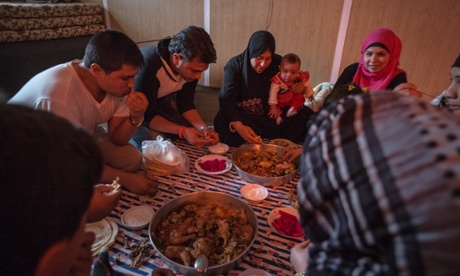
We usually eat two meals a day: breakfast and a late lunch or early dinner. Today we had chicken with potatoes, salad and yogurt. It’s not my favourite dish but it was good. My favourite thing to eat is mansaf – rice with yogurt and meat or chicken. We have that about three times a week. Is there anyone who doesn’t like mansaf? My mum does most of the cooking and she’s very good. We all sit down to eat together as a family. After dinner, I usually go to play basketball, but if it’s raining, I’ll stay at home and play games on my phone until I go to bed at 10 or 11.
Tomorrow may be a little different, but it will probably be pretty much the same.”
Alas, the same is probably true of the broader Syria crisis...
But away from geopolitics, ordinary people are trying to make a difference.
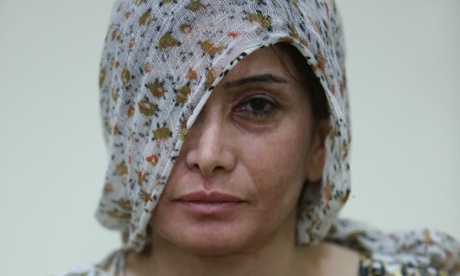
There is the heartwarming case of the Syrian woman scarred by an acid attack who was rescued from a life of disfigurement by a chance meeting half the world away.
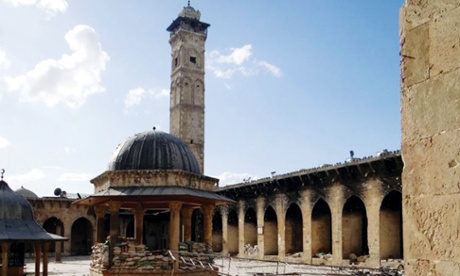
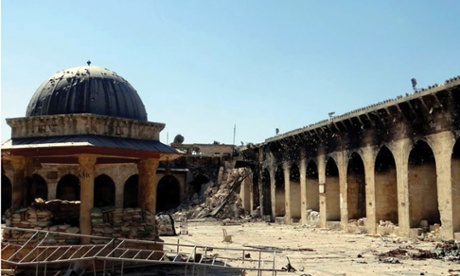
There are the exiles with a plan to restore Aleppo to its former glory the moment the war is over
And there are the legion of aid agencies, NGOs and UN bodies who continue to do the unglamorous work of helping the millions of destitute Syrians, in Jordan, Turkey, Lebanon, Iraq - and in Syria itself.
If you feel sufficiently moved to help these people in their work, follow this link.
America is of course the crucial actor. Already the US-led coalition has launched more than 1,200 airstrikes on Isis targets in northern Syria. Tom McCarthy writes here about what the next steps might be for a president entering the twilight of his tenure.
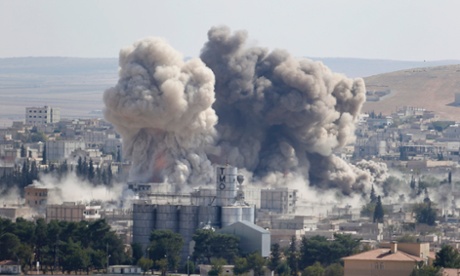
But America doesn’t have the appetite for another open-ended messy foreign adventure, right? Wrong - according to an NBC News/Wall Street Journal poll released on Tuesday, 52% of likely voters in the 2016 US presidential election said they would feel more favourable towards a candidate who backed sending combat troops to fight Isis.
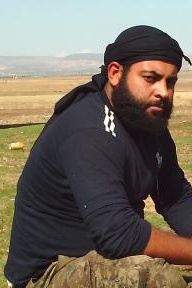
Before the uprising Abu al-Farouq was an Aleppo grocer annoyed at having to pay up to a third of his family income in bribes to officials. Now he’s a commander with the opposition Free Syrian Army, fighting on numerous fronts and not just against the Syrian government but also against Islamic extremist. In our final account of life in Syria over the last four years he describes how he began his military campaign with an attack against an government checkpoint in Aleppo in 2011.
“Now we are fighting Isis, Jabhat al-Nusra, Kurds and the regime,” he told Mona Mahmood.
If we devote ourselves to fighting Isis and Jabhat al-Nusra, the regime will recapture the areas we have liberated. To solve this problem, a deal was made with Isis that the FSA would stay out of areas liberated by Isis, and Isis would not advance in our areas. But Isis began to tempt people with religious speech and money, and more than 10,000 FSA fighters went to fight with Isis. For many it was either fighting with Isis and earning a living, or fighting with the FSA and starving.
The global response
What can the world do? It’s been an ignominious four years for the ‘international community’ which, as Ian Black argues, has failed to agree on pretty much anything other than that killing children is a bad thing.
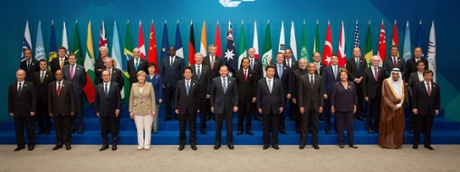
The future is inauspicious. Attempts to bring warring parties to the table habitually fail. Even as I write, Reuters is reporting the latest military clash - a battle for control of a town called Doreen in which maybe 50 combatants died. Headlines like these don’t make the news any more. War has become banal.
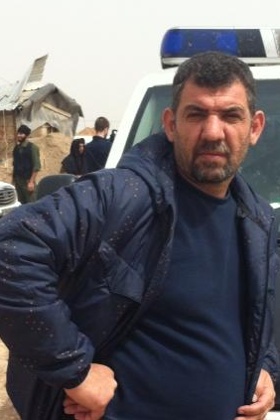
How have Syrian diaspora responded to the crisis? In the fifth of our accounts from Syrians, Abu Salih a Syrian in Romania says the sight of his countrymen being killed motivated him to run aid convoys for Syrian opposition. Speaking to Mona Mahmood, he said:
After three months, I drove with my colleagues in four cars for more than 3,500km from Germany through Austria, Hungry, Romania, Bulgaria, Turkey and finally to Syria. We shipped medications, satellites, modern mobiles and cameras, secret cameras like pens, and hats and toys for the protesters to conceal themselves from the regime while they were filming. We handed this to activists waiting at the border.
Mobiles and internet equipment were hidden inside our clothes and underneath the car seats, which were piled with clothes and shoes and Syrian bread while we crossed borders. We weren’t allowed to take medication but we would bring some first-aid equipment, such as stretchers and wheelchairs, to the Free Syrian Army and local committees.
A few times the shipment fell into the hands of the security forces, or the vehicle would be hit by a rocket or get ambushed. Sometimes trucks loaded with internet receivers, Thurayas [satellite phones] and communications equipment were lost if the driver was detained by security forces or killed while making the shipment.
We were able to send more than 50 secondhand ambulances to Syria. We bought some from Hamburg city council, others from the health ministry in Hungary. They cost $5,000 each, which we paid either from our savings or from donations from Syrians in exile.
I felt guilty staying in Romania while Syrians were being killed as they faced the regime. That’s why we opened an office in Turkey, to be close to our people and to make it easier to send aid all over Syria. The fighters inside Syria said they didn’t need us to fight, but to provide important equipment. They wanted support.
Updated
We’ve asked readers for their pictures and thoughts on this anniversary.
Iranian-Kurd documentary maker, Soran Qurbani is in Kobani, the Syrian-Kurdish city recently. His two photographs sent into GuardianWitness show the devastation in the city, which was laid to waste by a three-month Isis assault late last year.

You are welcome to Kobane
We were walking in the city of Kobani and suddenly found the message of welcome which had been on the southern gate of the city.
Qurbani shares his observations about the situation in Kobani now:
Today it’s raining. Kids are on their way home from the first school that opened last week. Many families have already returned from Turkey and most of them are managing to live in their ruined or semi-ruined house especially in the west and north districts.

You are welcome to Kobane, second part 'Come to Kobane', first part was 'You are wel'
We were walking in the city of Kobani and suddenly found the message of welcome which was on the southern gate of the city.
The first shop opened four days ago and now you can cut your hair and have a Falafel or chicken kebab. People are desperately in need for basic needs like water and electricity and warm clothes. The local government has provided a huge bakery and warehouse which are being run as a co-operative by volunteers. People can have free bread and foods and also vegetables from time to time. There is a hospital located in an old school that receives people, mainly wounded fighters from the front.
Yesterday I was with an old couple when they arrived at their ruined house. It was completely destroyed by an air-strike and there were three unexploded rockets and two dead bodies that were IS members left behind.
The lack of basic utilities may soon force people to go rural areas which somehow is better than returning to the camps. In fact nearly 70% of the city isn’t habitable according to local government officials and there are plans to build a new camp here in Kobanê for those families that have nowhere to live.
Two more schools are expected to open soon to return kids into an educational environment instead of hanging around the destruction and rockets and dead bodies. Now there are 400 kids with eight teachers in the school which teaches Kurdish language, mathematics and English language too.
Hi all – we’ve wrapped up the live Q&A now, so just to say thanks for great range of questions. Rim will be on the panel at the Guardian Live event tonight: Behind the headlines: Syria four years on, so we’ll continue the conversation then. If you can’t make it in person you can follow on Twitter using #GuardianLive.
Thanks again, Maeve.
Updated
Live Q&A: 'war needs to stop before we loose this generation'
You also asked about the plight of the 3.8 million refugees seeking shelter in other countries. Should they be housed beyond Europe and how do we prevent a lost generation?
On email, Eric Gamboa Caneo asked: Could refugees be sent to other places like Chile, Argentina or Brazil partly funded by the UN and the European Union? Would that expedite the solution for the millions affected? Is it something that has been thought about?
Melissa: This is happening. Brazil and Uruguay are already resettling refugees from Syria or provided humanitarian visas. A list of the countries and their pledges can be found here. We are asking for a minimum of 100,000 resettlement or humanitarian admission places in the next two years. But we actually need many more than that. We assess that 10% of the refugees in the neighbouring countries are in need of resettlement. This means they are highly vulnerable and not coping well in exile. So we are calling for more combined with asylum and more legal avenues like work and student visas and also family reunification.
Rim: This would solve small part of the problem, but when around 8,000 refugees leave Syria a day I think we have also to look for solutions inside the areas they are leaving.
Melissa: We are hugely concerned about the implications a continued shortage of funding to cover basic needs will have on stability and security. Refugees were once hopeful there would be a day when they could return home to Syria. This helped them to endure life in a tent and their kids out of school. They are losing this hope with no end in sight to the conflict.
And the terrible conditions people live in is starting to wear them down. Many more will leave. Some are even returning to Syria. Others use “negative coping mechanisms” – unable to access the legal labour market they are sending their children to work, “survival sex” or early marriage.
Rim: The impact indeed will be very negative and destabilising. The children turning teenagers in the refugee camps are potential candidates for entering the deadly cycle of violence.
Also on email Katharina Goetze asked the following questions: How strongly related, in your view, is the task of finding a solution for Syria to the one of finding a solution for Iraq? What can we do now to counter as much as possible the emergence of a “lost generation” of children? And how can we better strengthen local civil society in rebuilding Syria (and Iraq)?
Melissa: in answer to your second question, we are deeply worried about the prospect of a lost generation of Syrian refugee children. This is already happening – many kids have been out of already for four years. In Lebanon, only 20% of Syrian refugee children are in school. We need to better convince donors that it is in their strategic self interest to provide the funding for education and to support the countries hosting all of these children, many who need access to over-crowded public schools. These children are the future architects of Syria - who should be trained to rebuild and seek reconciliation, not revenge.
Your third question relates to your first. Provide training, healing and opportunity to refugees in exile and build a society in exile that is educated and peaceful. Who will stop the cycle of violence.
Rim: The most efficient solution to the lost generation is to intensify the efforts to reach peace in Syria. Those children have houses, schools and teachers back in the areas they had to leave. Many resources are being poured now on educating the lost generation, which is great, but they are not enough – war needs to stop before we loose what is left out of this generation and the country.
Live Q&A: 'dividing the region won't help'
You were also interested in the historical roots of the conflict and what the international community can do to find a peaceful solution:
On email Chris Naylor asked: Syria’s history is of being fought over and torn apart century on century from within and without - except for a period of stability under the Ottoman Empire. Is today’s Syria really a viable state at all? Might Syria be more peaceful as two or three independent provinces, which then might choose – or not – to co-operate.
Rim: Stability in the Syrian history is not confined to the Ottoman period, which itself led to other instabilities. Dividing the area even more is not going to help. Syria’s location is very strategic which has made the country subject conquests and attempts to control it. Division is not going to change its location.
Eliot: As it stands today Syria certainly isn’t a viable state, and the question is how far are the different factions involved in the conflict willing to go to make Syria, in their eyes, a viable state? It’s one thing to theorise about how peaceful and viable Syria might be in one scenario or another, but it’s quite a different thing to see any realistic paths to those situations.

Questions for the panel:
1. Can UN peacekeepers be sent in to protect civilians?
2. What are the best steps forward to try and negotiate a ceasefire; at least a humanitarian ceasefire? Is this made difficult because of involvement of multiple groups?
3. Medical assistance is urgently required. What efforts are underway to help offer medical assistance to civilians?
Melissa: as humanitarian organisations, we are calling for much greater access inside Syria. More than 12 million people are in need of aid to stay alive and the situation is deteriorating rapidly. An estimated 4.8 million Syrians are in places that are hard to reach, including 212,000 in besieged areas that are so dangerous, we rarely manage to get our aid to them. The ability of the humanitarian community to reach people in need remains severely constrained by active conflict along access routes, shifting frontlines, and bureaucratic hurdles. We continue to urge those with influence over the parties fighting to do all they can to facilitate aid.
Rim: if a UN peacekeeping and monitoring mission is sent, it can have impact in reducing the violence and protecting civilians in many, but not all, areas in Syria. Here are a few recommendations from our hungry for peace report:
- Inside Syria, the international community should upscale its presence and engagement on all levels
- The best way to negotiate ceasefire is to build on what is already going on, rather than imposing new negotations
- Whatever is there is not enough. Access is a big issue. The most important humanitarian/medical help to offer now is to end this bloody conflict.

My question to the panel would be what do you think the prospects for secularism beyond Assad's dictatorship?
Eliot: As it stands, very poor, especially if those countries backing (rightly or wrongly) moderates continue to do half-heartedly, and I don’t see that situation changing any time soon.
Rim: It all depends on the way the conflict is resolved, despite everything I still think that the prospect is strong for a secular Syria, the it needs to be Syrian-Syrian process.
Live Q&A: 'the roots of the conflict are political and about rights'
You asked about peace and stability in Syria and its surrounding countries: is Syria a viable state? Would a successful peace settlement have to go beyond its borders? And is a moratorium on the use of explosive weapons – on both sides – the best route to peace?
Should a long-term peace settlement maintain the states of Syria and Iraq with their presently understood borders? Would a Dayton Agreement style partition into separate states for Shia, Sunni, Kurd, Assyrian and others be preferable? Can two multi-ethnic states be maintained and have the broad support of the different peoples living there?
Rim: I shall answer regarding Syria only. The faultlines of the conflict in Syria do not overlap with the fighting on the frontline– which are complex and divide the country to numerous fractions. The roots of the conflict are political and are about rights, including the right to take decisions locally – the absence of these rights meant that the central government was able to put in place drastic policies that marginalised the already marginalised areas. Therefore the solution should include an element of decentralisation in it, but not division.
Eliot: Looking at the state Syria is in at the moment it seems to me it’s unthinkable that any kind of peace settlement or Dayton Agreement style partition is in anyway viable. It would be a miracle to get all the factions involved to sit down with each other and make those sorts of agreements. To me it comes down to all factions involved reaching a point where they think the conflict is un-winnable. I don’t think that’s the case yet, and I don’t think that’ll be the case for a very long time.
On email Rob Perkins asked: De Misutra’s proposal for a six-week freeze on heavy explosive weapon use in Aleppo is the first to see any kind of agreement between conflict parties in Syria. Do you think this is a possible route to de-escalating the conflict? Do you think that rolling back the use of heavy explosive weapons in populated areas might be the best way to see peace?
Rim: This is indeed one of the routes. If implemented, this would lead to strong decline in the number of casualties among civilians and will prepare the mood for more steps that could lead to de-escalation and agreements. Right now there is a feeling of despair that nothing can ever make the situation better. One step that could a deliver tangible difference on the ground, on the humanitarian front, would be good start indeed.
Eliot: If there’s any hope for de-escalating the conflict it’s in small local agreements in areas where it’s possible for all factions to come to an agreement. I fear the major obstacle will be divisions in the opposition and the Islamic State preventing such agreements from taking hold. In these circumstances I hope for the best, but fear for the worst.
What hope is there for the establishment of an at least semi-democratic, non-tribalist government that can bring about some reconciliation between the various factions and prevent the strongly Islamist elements from gaining a permanent foothold?
Is there any common ground on which opposition and regime moderates can reconcile, and if so will this necessarily have to exclude Al-Assad?
From the outside this would appear to be the only possible hope
Rim: What is crucial is the process itself – it needs to be a process that leads eventually to democracy. Armed conflicts and foreign interventions will not bring that. As a first step we need to have a system of power sharing on many levels in Syria in order to break the monopoly of dictatorship over power. The power sharing should be coded in an instructional declaration that divides the power of the president – which is now absolute power. This is more important than focusing on the leader. There is no guarantee that a new president is going to give away power voluntarily if the constitution guarantees him/her full power.
Eliot: Personally speaking, none whatsoever. Moderate elements of the opposition have fallen to the wayside, Islamist factions continue to dominate, and the Syrian government and its allies are in a strong enough position that removing Assad from power is currently not on the table, even as part of a peace agreement.
Updated
Live Q&A: what are the possible solutions to the Syria conflict?
For the next hour we’re giving you the chance to put your question to our expert panel who are here to discuss the conflict and possible solutions.
The panel
Rim Turkmani is a senior research fellow at LSE and co-founder of the Syrian Civil Coalition and the Madani Organisation, a not-for-profit organisation that supports the role of the Syrian civil society in modern state building.
Eliot Higgins, also know as Brown Moses. Higgins is a citizen journalist who began monitoring the weapons being used in Syria from his front room in Leicester.
Melissa Fleming is the chief spokesperson for UNHCR who have led the Syrian refugee response from the beginning – they estimate that 3.8 million refugees, half of them children, have crossed the border to find safety in other countries.
Any questions? Post them in the comments below and we’ll try and answer as many as we can in the next hour.
Sometimes, the best resort to terror is ridicule. At least, that is what this group of young Syrians feel. They have released a series of videos spoofing Isis, as Constanze Letsch reports:
Indeed, this seems to be emerging as a new regional trend. Here is a Palestinian group doing much the same thing:
Isis numbers are estimated at anywhere between 20,000 and 30,000. As many as 3,000 are estimated to be Europeans. Following recent attacks in Paris and Copenhagen, security services are warning of the possibility of returning jihadis wreaking havoc in European capitals.
But others get disillusioned with the Isis way of life and return home to equally uncertain futures - and the threat of prosecution.
Why would anyone join Isis? One of its recruit Abu Hareth describes how he was radicalised during the two year siege of Homs.
In the fourth of our accounts from inside Syria, he told Mona Mahmood how he was tortured after being arrested for taking part in the initial protests in the central Syrian city.
I joined a small militant group in prison, they were well trained and trading in weapons. I also filmed violent events in Homs on my mobile and sent footage to friends living abroad to run on YouTube.
Funded by donors from Gulf states, I formed a media group of 11 armed men to document regime crimes. Donations were sent in the form of humanitarian aid, which we sold to buy media equipment and weapons. I took part in many battles until a siege was imposed on Baba Amr [a district of Homs] by the regime and most of the locals were forced to flee. I joined Salafi Hizb ut-Tahrir, which was calling for an Islamic state, and learned a lot of fighting skills with them. But I was also watching with great admiration the rise of Jabhat al-Nusra and was totally impressed by their martyrdom operations.
The siege lasted for two years and it was a hard test for us. We lost lots of dear people, and were forced to eat reptiles, cowhide and leaves. I pledged my allegiance to Isis in March 2014. I did a month-long Sharia course, which included five lessons a day to learn the Qur’an, conditions of Islam, Isis discipline and Islamic sharia. Then Mosul and Raqqa were liberated and we became a real Islamic state.
My life has changed entirely since I joined Isis. I was an ignorant man who used to have many girlfriends, but no more after learning it is not correct Islam to fall in love with a girl without being married to her. I have to learn sharia and fight infidels instead of playing football. Songs are not approved either. My life has a purpose now and a state to defend ...
I work now for al-Furqan media centre. We carried out a poll about the killing of the Jordanian pilot – most people in Syria agreed with it. Syrian people know that this crusade, this infidel and malicious coalition, is against Muslims, not Isis.
Updated
Foreigners have been travelling to join the jihadis for at least two years, but the emergence of a Briton, Mohammed Emwazi, as henchman-in-chief, and the defection of three British schoolgirls last month, has focused attention on the caravan of westerners shuttling through Turkey to join Isis.
In a deft piece of reportage, Constanze Letsch, follows the route east to Gaziantep and down to a border town which we are not naming to protect the people she spoke to.
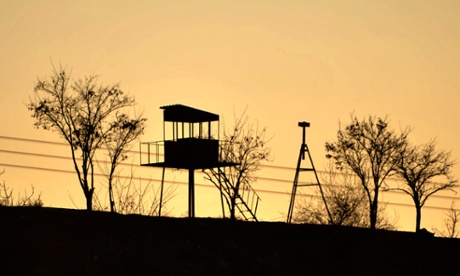
One smuggler told us:
There were French men who took their entire families with them to Syria. Once I carried a bag full of dollar notes across. The guy I helped was going to give it to Isis.”
Raqqa is the newfound capital of the Islamic ‘state’. Refugees who have fled to Lebanon’s Bekaa valley tell of the monotony and fear that has gripped the town since the jihadis arrived.
Islamic State
We’re now going to turn our attention to the terrorist group Islamic State (Isis) and how it has used the crisis in Syria to take root in large swaths of eastern Syria the base of its so-called caliphate.
The Guardian’s Martin Chulov tells the inside story Isis’s rise with the help of an exclusive account from one of the group’s commanders. Abu Ahmed describes how the group developed in a prison camp in Iraq under the noses of their US captors.
It was at Camp Bucca that Abu Ahmed first met Abu Bakr al-Baghdadi, the emir of Isis who is now frequently described as the world’s most dangerous terrorist leader. From the beginning, Abu Ahmed said, others in the camp seemed to defer to him. “Even then, he was Abu Bakr. But none of us knew he would ever end up as leader.”
Day in the life, part III
Back to Za’atari now, where Younis has hooked up with some friends to work out.
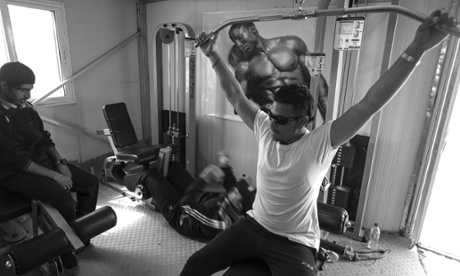
In a sprawling camp with little to do, this gym and sports centre is a magnet for young people, and the principal hang out for Younis and his teenage friends, as he tells Sam Jones
I come to the multi-activity centre here every day to do some exercise and some body-building. There’s a gym, a football pitch and a volleyball court. I exercise to keep healthy and fit rather than to build muscles, but I think everyone should keep fit. I don’t really like football – especially in the hot weather – but I don’t mind watching. I like coming here to support the other kids and to see how they’re getting on. It’s also really the only place where me and my friends can meet, so I spend most of the day here from about 11am til 3pm. Back in Syria, I used to meet friends at school and in the gym. Most of the youths here are reckless and there are a lot of fights. It would be good if there was a youth centre where people could meet and become more responsible: a fight here between two kids can quickly spread of their fathers get involved and then the villages and tribes pile in. If there was no multi-activity centre, the kids in the camp would spend all their time creating problems.”
Updated
If you’re moved by any of these stories and want to make a difference, however small, please follow this link to find out how to donate. We don’t want to deflect sympathy from the equally worthy Red Nose day, but needs must...
Updated
The journey of the refugee rarely moves in a straight line. It is circuitous, costly, dangerous, sometimes fatal, and often ends in disappointment or penury, or both.
In October last year, we traced refugees as they tried to get across the Meditteranean. Here, photographer Tom Bradley charts the twisty route that Syrians have taken to get to Germany.
Imagine the indignity of this:
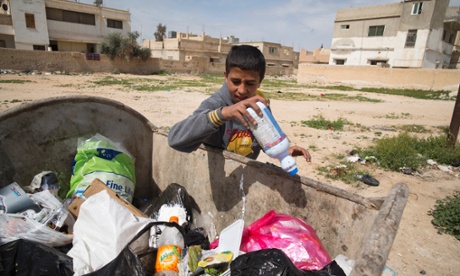
Before the civil war Ahmed Jabra used to aspire to a legal career in Aleppo, now he has to rummage through bins in the Jordanian town of Mafraq just to survive, writes Sam Jones.
On good days the 15-year-old gets to sell his finds to scrap dealers for a few pounds, on bad days he gets robbed by local kids.
Ahmed is aware that he may be sacrificing his future, but feels he has little choice. “When I was a kid in Syria, I wanted to be a judge,” he says. “But now I have to work. What can I do?”
His plight underlines the dilemma faced by the parents of Syrian refugee children - they have to choose between feeding their children and educating them.
According to Unicef, almost half of the 2 million children living as refugees in Jordan, Lebanon, Turkey, Egypt and Iraq are not receiving any form of education, while only about 340,000 are enrolled in formal schooling.
Most refugees live outside the camps and in host communities, where the strain they place on the public education system and other basic services makes them deeply unpopular. And Mafraq, which means crossroads in Arabic, was not a prosperous place before the the war forced hundreds of thousands of Syrians over the border.
...which reminds me. It’s interesting to compare western countries in terms of who has taken in how many Syrians. Germany and Sweden lead the way in Europe and even Brazil has taken in more than 1,700.
The UK and US figures are interesting by comparison. Though the UK has approved more than 4,000 asylum cases over the past four years, it has actively resettled just 143 Syrians, and now appears to be accepting fewer and fewer asylum requests.
The US figures are not much better, around 500 resettled in the past three years, as Lauren Gambino in New York reports.
The UN called two years ago for a proper system to deal with the refugee crisis. But this, like other diplomatic demarches towards Syria, has not been acted on.
...secondly, Jon Watts travelled to Sao Paulo, a full 10,000 kilometres from Damascus, to find it had become an unlikely destination for Syrians looking to make a new start.
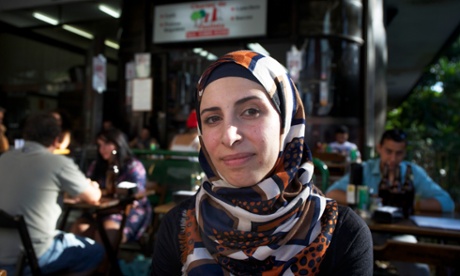
Dana al Balkhi told us:
I like the people here. They are really nice, really welcoming. They love strangers.”
Not all refugee stories are heartbreaking and wretched. Two case studies coming up here which show what can happen if people are treated decently, helped to settle and shown a little kindness.
Firstly, Kate Connolly travelled to the northern tip of Germany to find that refugees had been welcomed, if not with open arms, then with those international symbols of outreach: flowers, candles and coffee.
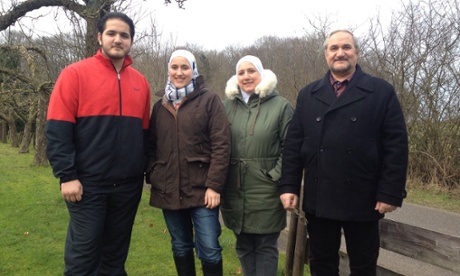
Yahia, the father of the family, told us:
They tried to make it as comfortable as possible. It was cold, wet and dark. My wife was crying – she was so nervous, but we’ll never forget the warmth of their welcome.”
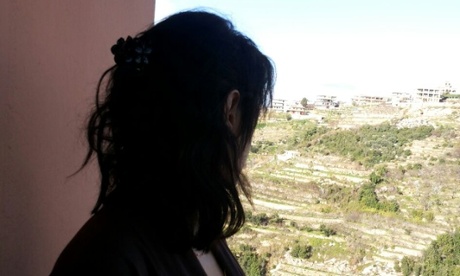
In the third of our accounts of life inside Syria, Sara Talal describes being beaten up and interrogated by the security services after taking part in some of the first demonstrations against the Assad regime.
The interrogation method took a different course, every answer was received with a few blows by hands and boots on my face and head. They wanted me to say that I was with the militants. I told them: “I’m not going to confess to something I have not done.”
I did not see my family for two months. Some detainees would come from their interrogation, saying they had been threatened with rape if they did not cooperate.
Despite fleeing Syria after being released, Talal told the Guardian’s Mona Mahmood that she still doesn’t feel safe and she fears the worst about her oldest brother who remains in detention. The body of one of her other brothers was dumped outside the family’s home.
I smuggled myself to Lebanon to register with the UN, but I don’t feel safe in Lebanon either because I do not have a legal residency. I stay at home with my husband, whose residency and passport have both expired.
Two weeks ago we got a phone call telling us that the Netherlands has accepted us because my sister has been there for many years. My mother and sister stayed with my brothers’ wives and children in Damascus. My mother still hopes she will hear about my detained brother ...
I do not regret what I have done. I still hope that one day I will go back to Syria after it has been liberated – although there is no Syria any more. It is completely destroyed.
Of course, the other upshot of the mass exodus of people is the dramatic escalation in the number of people trying to cross the Mediterranean to get into Europe. Record numbers in 2014 - and a record death toll of more than 3,000 people
This film made late last year documents the extent to which Syrians will go to try and get to safety.
The influx has totally wrongfooted Europe, which is struggling to adhere to a policy under which refugees are supposed to register in their country of arrival. Most do not. In an exclusive, Harriet Grant has found out that the United Nations wants to sort this situation out by relocating refugees around Europe to even up the burden and make resettlement less stressful for Syrian refugees
A UN official, Vincent Cochetel, told her:
We are concerned that when the boat arrivals resume on a large scale in April, not all the lessons learned from last year have been drawn by EU member states.
The world's worst refugee crisis
We’re turning our attention now to the extraordinarily grim situation for the millions of Syrians who have been uprooted since 2011. Around half the pre-war population of 20 million have been displaced by the war. Some 3.5 million have fled abroad while more than double that number are believed to be displaced within Syria itself.
The interactive shows the disproportionate burden that has fallen on neighbouring states like Jordan, Turkey and Lebanon, where one in four people is now a Syrian refugee, as Kareem Shaheen writes.
Actually, the key statistic in this piece might be the fact that 30,000 Syrians have been born in Lebanon since the war started and are therefore now not just homeless but stateless as well.

The international community is failing the test posed by Syria in a fundamental way, according to Britain’s former foreign secretary David Miliband.
Speaking to BBC Radio 4’s Today programme Miliband, who now heads International Rescue Committee, said:
There has been a desperate failure to match means and ends … since the beginning of the Syria crisis. The original call was for Assad to go, that was the end that was desire but there were no means to fulfil that. UN security council resolutions have been passed, words have been said about humanitarian aide … but they have not been followed up in a way that has brought help and health and livelihood to the people of Syria.
The failure is a real one. And the bucks stops at the UN security council fundamentally … While the statistics about Syria are shocking – the fact that 220,000 people are dead, that 4 million refugees are in neighbouring countries, that the third largest city in Jordan is now a refugee camp. Even more shocking is that there is no effective political process at all currently underway to bring the Syria conflict to an end. The most that can be said is that the UN envoy is trying to bring a temporary truce in one city in Syria – that is deeply deeply shocking to anyone who believes that it is the responsibility of the international system to end war and bring peace.”
Day in the life, part II
Back to Za’atari now, where Younis is figuring out what to do with his morning...
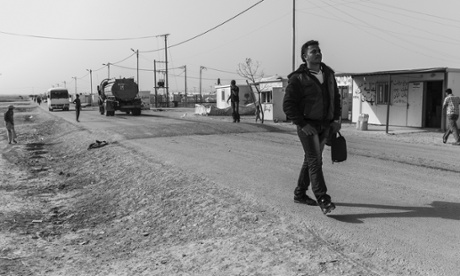
“I’ve just been to the market to buy rice, chicken, bananas and cooking oil from the local mall. It’s the first time I’ve been as we have a relative who works there and he normally brings us food. It was very crowded and it took a long time to buy everything. I spent 25 dinars on our ecard. Every member of the family gets 10 dinars a fortnight that are put on the electronic card. It’s not enough to get everything you need, so people have to spend cash at the stalls in the camp, which are half the price of the mall. A bottle of oil will cost two dinars from a stall and five from the camp mall. Some people sell their ecards to others. If a card has 100 dinars credit, it can be sold on for 50 dinars. Some people who smoke do that because the ecard doesn’t cover cigarettes.”
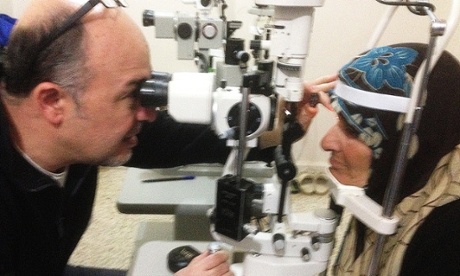
Dr Entabi, A British-Syrian eye consultant, has been speaking to Aisha Ghani about one of his regular stints at a Syria field hospitals.
I went into the trauma operating room a couple of times, and it’s just chaos. Everybody is working for 24 hours. There are no shifts.
There is blood everywhere: maimed bodies, dismembered bodies of people, one hand is there, one leg is there. People going blind. I’ve seen a few people with multiple shrapnel in their face causing blindness, and especially children.
He says the biggest worry is for the children who need urgent psychiatric support, some whom have lost their limbs, and who are “living in continuous trauma every day, for every minute, for every second in their lives.”
A Twitter account has created a live virtual memorial sharing the names of all of the known victims of the Syrian conflict, writes Maeve Shearlaw.
Every five minutes @HowManySyrians tweets the name, sex, location, cause of death of every civilian in chronological order.
The account, set up by the Syrian American Council, started tweeting the beginning of the week but had only reached December 2011 by this morning. 2012 will take even longer to get through as the death toll increased exponentially in the second year of the conflict.
They say they will keep going until Twitter, who have strict rules about the number of tweets you can send, cut them off.
The council have been collating the names ever since the UN decided to stop officially updating the death toll, pooling data from the Centre for Documentation of Violations in Syria, the Syrian Observatory of Human Rights and other sources.
Lina Sergie, chair of the council said: “we hope people will read the tweets and remember the sheer human loss and devastating toll that the conflict has inflicted on the Syrian people over the last four years. It takes three seconds to say 200,000 people have died in Syria but it will take 40 days to tweet half their names”. They also plan to read out the names in front of the White House in a five-day vigil that began last night.
Updated
Medical staff recount horrors of working on the front line

The fate of medical staff on the front line of the conflict underlines the brutality of the civil war, writes Carmen Fishwick.
Over the past four years, 599 medical personnel working in Syria have been killed. They include 195 doctors and 117 nurses, and 56 pharmacists, according to figures by Physicians for Human Rights. A further 31 UN staff have been detained or are missing. In 2014 the death rate among medical workers occurred at the rate of one a day.
Hospitals, field clinics, ambulances and those transporting medicine and supplies operated under constant threat of attack. There have 224 recorded instances of attacks on 175 separate medical facilities.
And yet medical staff continue to be on hand to help the 12.2 million people needing humanitarian assistance including the 4.8 million living in areas that are difficult to reach.
Medical personnel have told the Guardian how the humanitarian situation has changed over the last four years and how they have managed to cope.
A doctor from the Médecins sans Frontières-supported Al Salameh hospital in Aleppo
After a period of severe bombardment, an influx of patients arrived to the hospital. An entire family was brought in – they had been attempting to flee to safety in Turkey. Two of the children were immediately killed in the bombing. Out of the rest, one of the sons, Nadim, a boy of 12 years, had his leg amputated. His 9-month-old baby brother Amjad had both of his feet amputated. The mother had a broken leg. But the worst of all was when the other brother, 4-years-old, waved goodbye to his mother as he was taken into the operating theatre to amputate the lower half of his body.
These are awful stories to witness, but it is made much harder when you feel you cannot treat them properly because you lack equipment and doctors.
Syria’s government and the various anti-government forces operating within the country, including ISIS, have targeted medical infrastructure and personnel in Syria since the war began in 2011. Without protection, the suffering of civilians has been compounded and an already fragile health care system had been eroded. Access to medical supplies and equipment is restricted by the constraints imposed on humanitarian operations by various forces in the conflict.
Fadi, country & operations director of humanitarian aid organisation Hand in Hand for Syria
We originally thought we’d be there for one year and then as soon as the conflict finish we’d pack up and go home.
I work between Turkey, Jordan and the UK where I spend two weeks at each location. In the past, I used to visit Syria more frequently but now it’s too dangerous.
Deliberate attacks on medical facilities aim to put pressure on opposition groups in the area and force local people to drive them out but civilians. Ambulances are being targeted just for responding to emergencies. No surgical or emergency facility is safe. This is one of the reasons we’ve gone under the ground in areas like Kafr Zeita and Ma’arat Nouman – to protect the facilities and civilians.
The greatest threat is from barrel bombs or being targeted by jet fighters. We do not distribute at collective centres nor ask people to come to our warehouse or office to collect the aid. Instead, we do door to door distributions to avoid crowds gathering in the streets so we don’t end up with a massacre.
Five months ago, there was a barrel bomb attack in a market nearby one of our facilities. And a hospital that we provide with equipment and medication has been totally destroyed.
We cannot offer full protection to our staff but we have a security team who follow the news and plan distributions and routes. At the beginning of the conflict we lost 11 of our staff even though they were working in extreme secrecy just because they were providing humanitarian aid.
People in opposition held areas see it as their responsibility to facilitate our work and support us.
The biggest challenge remains funding. With the length of the conflict, donors are tired of donating to Syria and we have a hard job of keeping them interested in donating. Those with Syrian background are unable to pay now as they are supporting their families. Recent media coverage about ISIS has played a negative role with less donors willing to pay for the Syria crisis.”
Since Ibn Khaldun mental hospital in Allepo was destroyed in 2012, only two hospitals and one referral centre remain to provide mental health services to an increasing population of Syrians seeking those services. Although a huge number of mental health professionals have left the country, the World Health Organisation is currently renovating four psychiatric health facilities in Damascus and Aleppo in order to provide support to an additional 11,000 patients.
Abu Omar, a psychologist in a mental health programme supported by Médecins sans Frontières:
We see all types of children. Some are more balanced than others, but it is obvious the war has affected them all in some way or other. Those children who stayed in Syria much longer before becoming refugees witnessed a lot and managed to develop some coping mechanisms to deal with the trauma. But they saw a lot of death and destruction, and seemed to normalise it, which is not especially healthy either. Seeing body parts became a regular occurrence. They were bored and traumatised all at once.
Children up to 15 years are wetting the bed. They have nightmares and cannot sleep. Many feel a lot of anxiety and feel insecure. Their schooling has been interrupted and they have lost touch with their friends and communities. Those children who had one of their parents killed in the bombings tend to display violent and angry behavioural patterns more than others.
More than 3 million people are estimated to have fled the country in the past four years. There is a heavy strain on medical professionals an a huge number of qualified medical staff have fled. There are fewer than 40 medics serving the estimated 700,000 people left in Aleppo.
Staff member in Al-Salameh hospital, Aleppo:
I work all day for my family and return home to find my wife has lost her temper again with our children and is being violent with them. If I try and talk to her she doesn’t listen. I don’t have much control any more, and as the father of the family I feel I am not living up to my responsibilities. I don’t know how to fix my family. I feel it is broken.
Of course, not everyone in Syria is destitute and not everyone is hostile to president Bashar al-Assad.
In the second of our featured Syrians who tell us how their life has changed, Um Naji, a 45-year-old mother of three, from the northern Damascus suburb of Nabak, says Assad is the country’s only hope for preserving “Syria as a land of civilisation”.
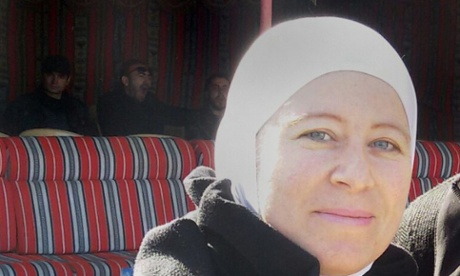
In second of our accounts of life before and after the civil war she recounts how she laughed when she first saw people, including some of her relatives, demonstrating against the government.
Speaking to Mona Mahmood she says the revolution became a nightmare, but insists that the situation has improved since the government regained controlled of more areas from the opposition.
Every time the army liberates more areas, security improves. My daughter in Damascus goes to university safely now. Everything is available: power, water, bread and fruit. Yes, prices are high but it is OK. When the opposition was in control, there was stealing, raping, slaughtering and looting. But when Nabak was liberated by the state, we returned to rebuild the district, planting flowers and olive trees...
All over Syria, the lights are going out
One of the most striking visual signs of how life is ebbing away in Syria is a series of satellite images showing the lights literally going out all across the country.
Images analysed by #WithSyria, a global coalition of humanitarian and human rights organisations, have revealed that 83% of lights have gone out since 2011.
The #WithSyria coalition has launched a global petition that calls on world leaders to “turn the lights back on in Syria”.
Inside Syria
For the next hour or so, we are going to focus on the situation on the ground inside Syria.
Martin Chulov, our Middle east correspondent, has led the Guardian’s reporting on the ground in the country. Here he gives an account of the devastation of the northern city of Aleppo which was once Syria’s most prosperous and populous city. It has been now torn apart by the war split between the west controlled by the Syrian government and the east run by the opposition.

Much of the east is ravaged and empty. Almost all public parks have been stripped of trees, which were harvested for firewood. When there were no more trees, families begun cutting up school desks and chairs to stay warm.
Updated
Tonight, to round out today’s coverage, there will be a live panel debate at the Guardian in which we’ll be asking panellists not just for their thoughts on the conflict, but for solutions. We’ll hope to tease out some ways forward during a question and answer segment which will appear in this blog.
If you have any insights that you would like raised in either forum, please feel free to leave them in the comment thread.
Day in the life, part 1
Time to introduce a remarkable young Syrian who is one of around 100,000 people stuck in the Za’atari refugee camp in Jordan, a desert settlement that has rapidly mushroomed into Jordan’s fourth largest city.
Younis, 19, has lived in the camp for two years with his mother, two brothers, two sisters, aunt and grandfather. Younis wants to be a photojournalist and works for the Za’atari camp magazine, The Road.
Today, in the company of Guardian reporter Sam Jones, he will walk us through an average day in the camp, starting with the morning routine.
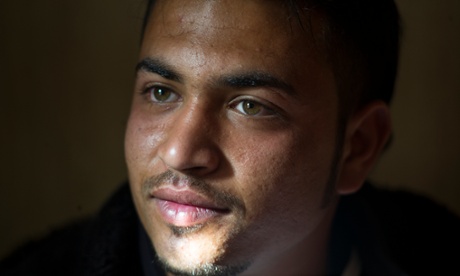
I woke up a lot earlier than usual because of the neighbours’ chickens. Sometimes they’re OK; sometimes they’re annoying. I washed my face and then I climbed up on to the roof of the caravan to set up the solar power system to charge our phones and lights. There’s been no power in the camp for the last three months now so it’s something I do every morning. It’ll take all day to charge but we’ll get about 12 hours of light. Then I drank my first coffee which helped wake me up. We don’t have breakfast – normally boiled eggs and beans – until about 10am. My mum or my sister do the cooking, but everyone’s got their own jobs to do. My aunt and my brother, who are working for the Norwegian Refugee Council, head off to work but I stay behind at home until I get an assignment. If I don’t have one to do, I just stay at home and play games on my phone until I head over to the gym and volleyball court after breakfast.”
Our middle east editor Ian Black has interviewed Khaled Khoja, head of the mainstream Syria opposition movement, who expressed a deep sense of betrayal at the lukewarm support the west has shown for moderate anti-Assad forces.
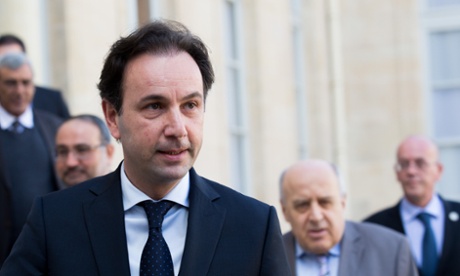
Khoja says the main difference in the war is that while Assad can claim resolute backing from Iran and Russia, the opposition’s international backers have proven less wholehearted. In short, he says, it’s a “pact of steel versus a pact of cardboard”
There is no will from our allies. We have a lot of allies and a lot of promises compared with what the regime has received.”
As with many conflicts, when they become entrenched, the positions on the ground change little, as this timeline map of the war shows.
As you’ll see when you click through the maps, the rebel opposition seized ground quickly through 2011 and 2012, only for Assad’s forces to slowly wrest back control over most city centres.
The big change comes in the second half of 2013 when the opposition forces properly fracture into moderates and radical Islamists, who start to carve out their self-styled ‘Islamic State’.
With no one side gaining the upper hand, a military denouement to this crisis appears unlikely any time soon.
We’ve been speaking to Syrians from all walks of life, asking them where they were in March 2011 and what has happened to them since. We’ll introduce them to you as the day progresses.
Faris Shihab was an army officer who quickly defected to the opposition when the protests started to take hold in Damascus four years ago.
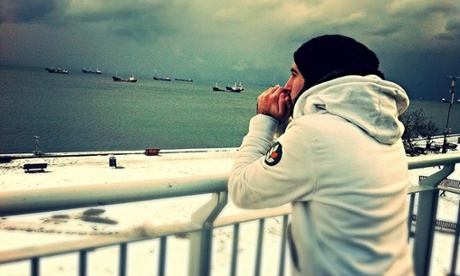
He fought the regime in the capital’s suburbs until disillusion set in. Now he hides out in Turkey, waiting for the rest of his life to begin.
People who fought the regime will never reconcile with the regime. They won’t go back to humiliation after they tasted freedom. If you bend your head once, you will bend it for ever.”
First some numbers. More than 200,000 dead, 3.5 million refugees, half the country uprooted: the Syrian tragedy has broken records for all the wrong reasons.
A report published overnight - one of many timed to coincide with this anniversary - reveals more: life expectancy reduced by 20 years, 80% of people plunged into poverty, losses estimated at $200bn and rising - and this in a country which was hardly rich to start with.
As it has become a country of poor people, 30% of the population have descended into abject poverty where households struggle to meet the basic food needs to sustain bare life.”
Welcome to the Guardian’s day of special coverage to mark the fourth anniversary of the uprising against Bashar al-Assad and the subsequent civil war in Syria.
Throughout the day we will exploring the depths of a crisis that has claimed 200,000 lives, sparked a humanitarian catastrophe, fuelled violent Islamic extremism, and exposed serious divisions and weakness in the international community.
It will be four years on Sunday since a peaceful uprising began against the regime of the Syria’s president Bashar al-Assad. Since then the news from Syria has become bleaker by the week. While the world may have grown weary of the unremittingly grim updates from Syria, we want to spend the day focusing on how this tragedy came to pass, as well as tracking the extent and the impact of the civil war, and, looking to the future, asking whether there is any way out?
The coverage includes a new video about the conflict and an interactive graphic on how the war has developed over the last four years.
Throughout the day we will be running before-and-after reports from Syrians in which they recount where they were in March 2011 and what has happened to them since.
Four years of violence has forced more than 3.8 million Syrians to seek refuge in neighbouring countries, creating what the UN has described as the “biggest humanitarian emergency of our era”. We will examine how the crisis has spread and what the international community has done in response. We will also feature regular updates from one of those refugees to provide snapshots of daily life in Jordan’s sprawling Zaatari camp.
To round off the day our panel of experts will be answering your questions on the possible solutions the crisis, in a live question and answer session.









The refugee crisis looks like it will be protracted, camps have shifted from tented settlements to steel caravans. Given that UNHCR only received 58 per cent of the funding it needed last year and only one per cent so far this year, and the WFP had to temporarily cut food vouchers, the only income some refugees have, what effects will there be on the stability of the region if millions of people can't work or feed themselves while becoming semi-permanent refugees?