
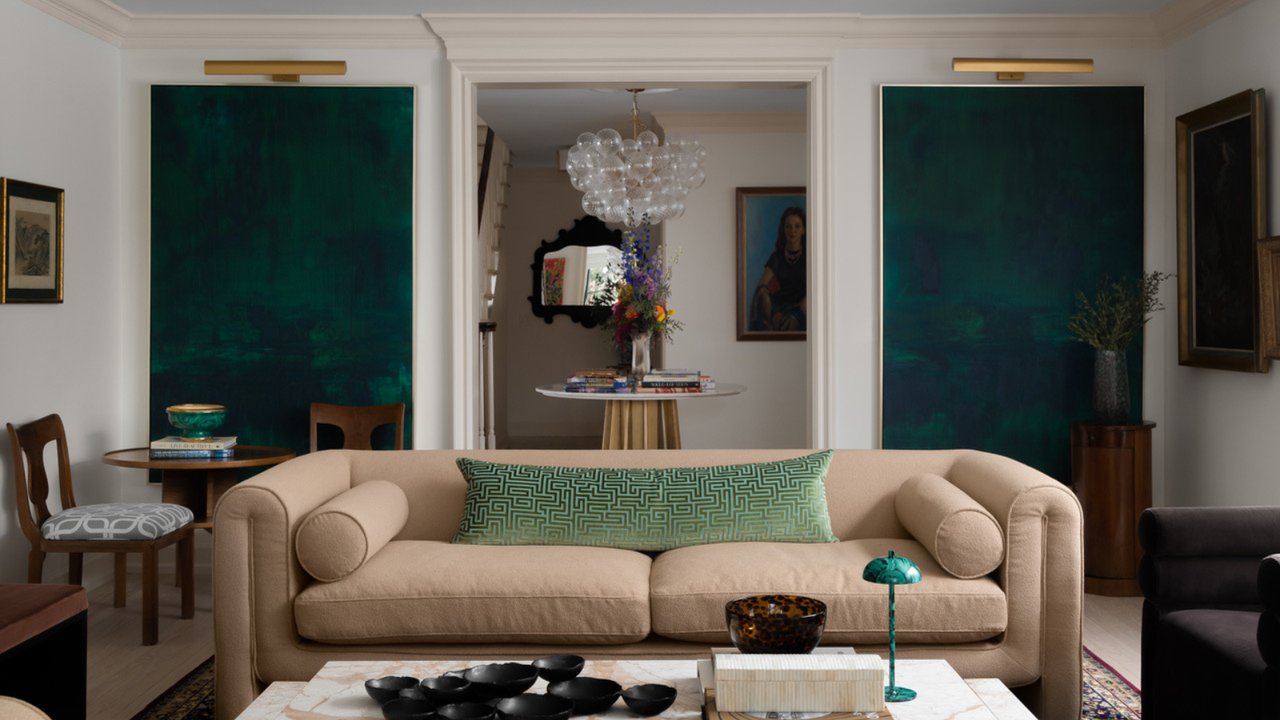
There's something inherently pleasing about things that match – from matching pillows on a couch to matching paintings on either side of a room. These elements create a sense of cohesion, balance, and order, all thanks to the rule of symmetry.
As one of the most basic but most important principles of interior design, symmetry is the act of arranging the same or similar elements to mirror or match each other in a room, creating a sense of harmony in the space. Often, people introduce symmetry in design without even realizing it – simply because it feels natural and satisfying to the eye.
'Symmetry instantly introduces a sense of order. It settles a room,' explains Jade Joyner, Principal Designer at Metal + Petal. 'When the eye can take in a space without searching for balance, the whole environment feels more grounded. It’s a wonderful way to create formality, but it can also make a modern room feel clean and architectural.'
What is Symmetry in Interior Design?
Interior designer Molly Miller describes symmetry as 'one of those quiet design tools that does a lot of heavy lifting,' she says. Just as Jade mentioned above, Molly says that symmetry can create order in a space. 'When things line up, the space feels calmer, more grounded, and more intentional, even if the rest of the room is layered and collected, or heavy on color or texture,' Molly tells me. '[Symmetry] creates a natural focal point, sets a rhythm, and lets the architecture, which also often relies on symmetry, really shine. Think of it as the design equivalent of a deep breath.'
How to Use Symmetry In Interior Design
The principle of symmetry in interior design can be incorporated into any room of a home, and it can look different from context to context. Symmetry can be created on a variety of different scales, too. Some people may prefer formal interior design schemes with perfectly symmetrical layouts, while others may prefer design schemes with subtle symmetry and slight asymmetry.
However, one of the easiest ways to establish symmetry in a room is through simple decor choices. Jade explains that styling matching table lamps or sconces is one of the most basic examples of symmetry in interior design, as is hanging artwork in pairs or grids. Symmetry can be less obvious, too, like designing a room with subtly matching textures.
Since lots of designers rely on symmetry in their work, I've asked some to explain just how to use this design principle in interiors. Below, find their advice on how to create visually appealing and balanced design schemes with symmetry.
1. Choose a Perfectly Symmetrical Scheme
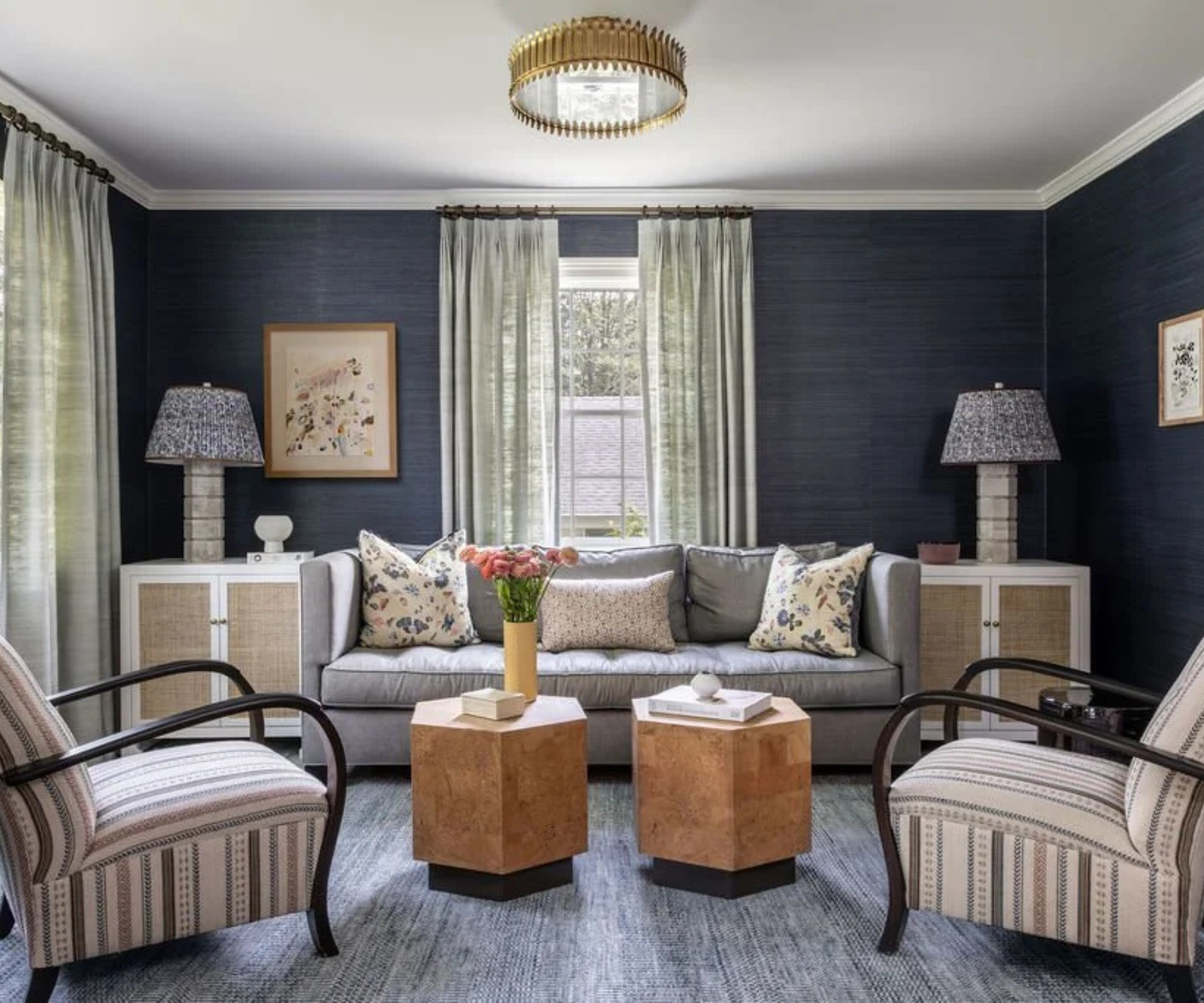
If you split a room down its central axis and each side mirrors the other, that means the room is perfectly symmetrical – just like the formal living room above, designed by Molly Miller. Although not meant for every space, perfect symmetry is best when you 'want a space to feel clean, tailored, and quietly elegant,' Molly explains.
'This navy sitting room commits more formally to symmetry, and it pays off with a calm, tailored elegance,' Molly tells me. 'The centered sofa, twin cabinets, matching lamps, and perfectly paired chairs create a steady, grounding rhythm. The paired drinks tables reinforce the heartbeat, while the styling and artwork soften the formality just enough. The result is as intended – polished, welcoming, and confidently classic.'
Since symmetry relies on repetition to create order, structure, and stability in a room, it can look its best in formal settings, just like this room.
2. Add Formality to a Bedroom
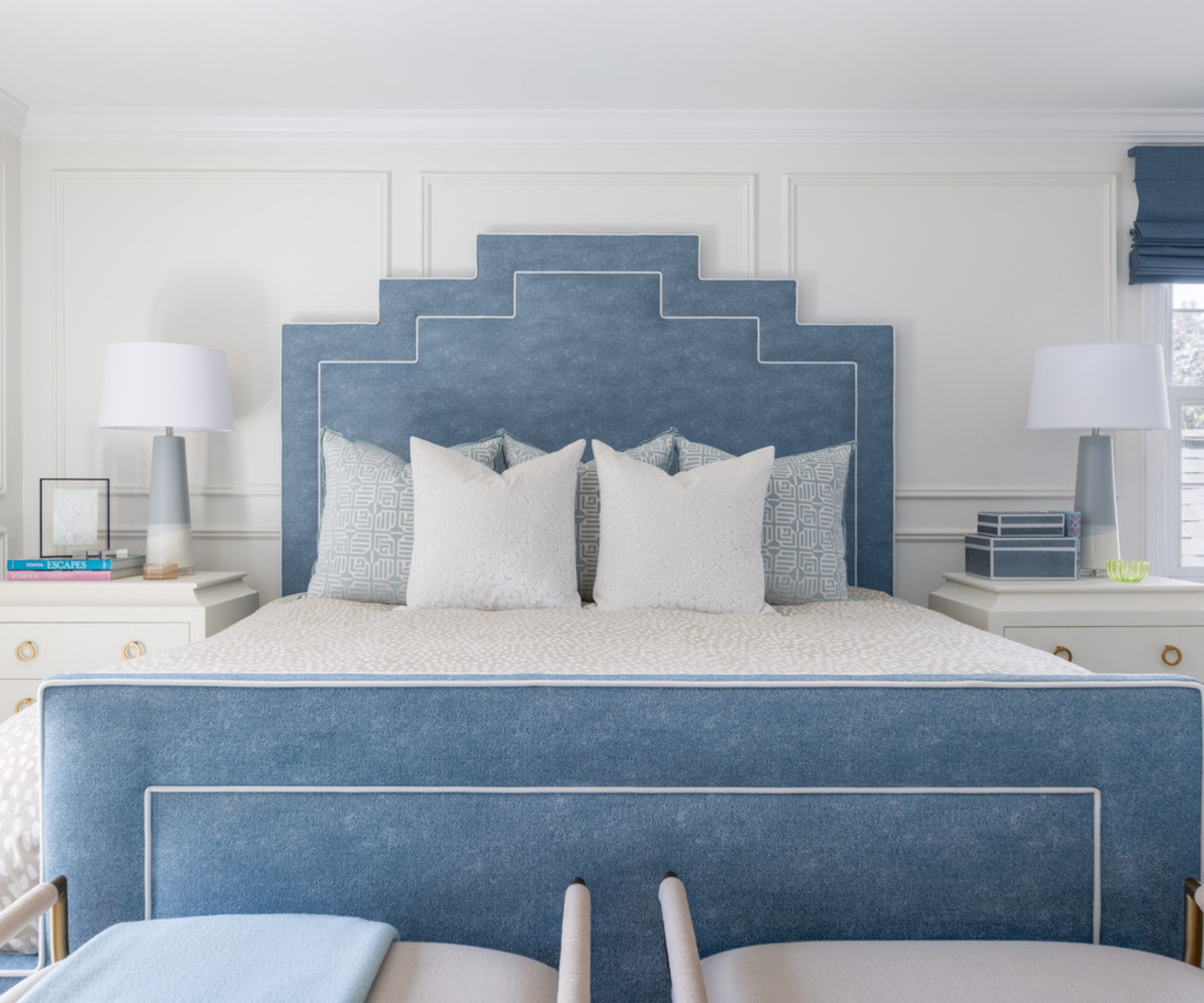
Bedrooms and symmetry go hand in hand. Because these rooms are typically centered around the bed, a symmetrical design is a natural choice. And since symmetry is known to establish a sense of calm stability, it can be great for bedrooms.
'Symmetry can help create balance and harmony, which can influence how comfortable and visually pleasing a space feels. When objects, colors, or shapes mirror each other, a room feels stable, grounded, and calm,' Jessica Brooks explains. Jessica is the Director of Design and Operations of Decor & More, the studio responsible for the stylishly symmetrical and cozy bedroom above.
According to Jessica, the best way to ensure that a room feels cohesive but not overly 'matchy' when working with symmetry is to keep the main furnishings symmetrical, but use styling to add variety to the scheme. 'Examples are matching nightstands, but different objects on each,' she says, just like in the bedroom above. These subtle differences add a level of visual interest that complements the already established symmetrical design scheme without disrupting the balance or flow of the room.
Positioning matching lamps on either side of your bed is an easy way to create symmetry and cohesion in a bedroom. Sold as a set of two, these lamps can do just that.
Just as Jessica has styled matching pillows on the bed above for a symmetrical look, you can do the same to create a sense of harmony in your bedroom. With its inviting texture and soothing colors, a few of these pillows could make that happen.
If your bedroom features two matching nightstands, switch up their styling so the scheme doesn't look too 'matchy'. This trinket tray would be a stylish feature to include on one.
3. Use Symmetry as an Anchor
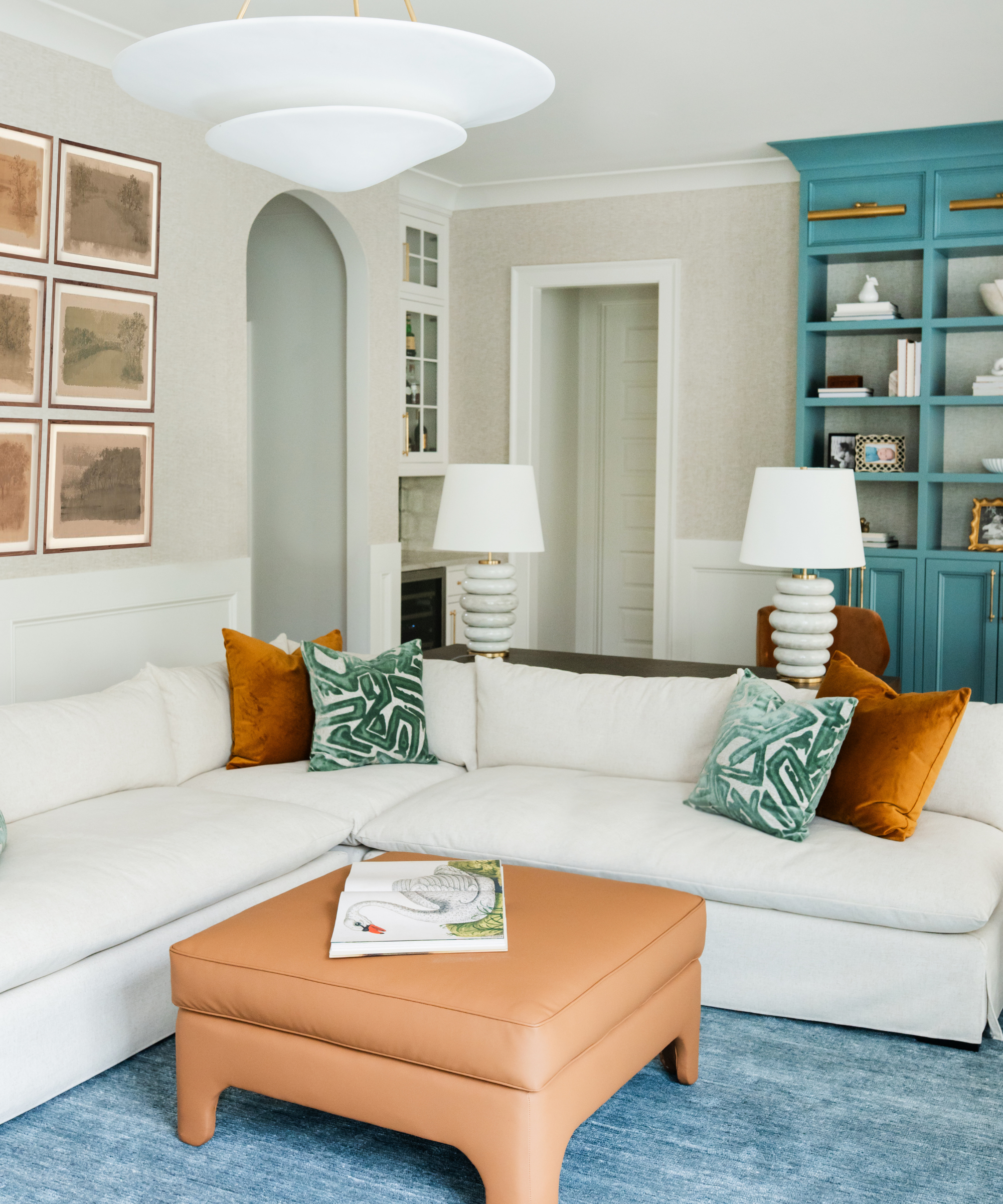
Although symmetry is most often admired for its immediate visual impact, it also has a less obvious role of grounding a space and establishing order before the introduction of other stylistic elements.
According to Jade Joyner, the designer of the room above, 'symmetry is what allowed the contemporary elements to breathe inside a more traditional architecture,' she explains. 'The paired sofas, balanced lighting, and mirrored sightlines create a strong backbone for the room allowing me to layer in more modern shapes and bold, masculine lines without losing the softness and warmth the clients wanted.'
In a way, symmetry becomes an anchor, a grounding feature, or as Jade calls it 'a reassurance'. 'It keeps the space feeling tailored and intentional, even as we introduce sculptural or unexpected pieces,' she says.
4. Be Guided by Symmetrical Architecture
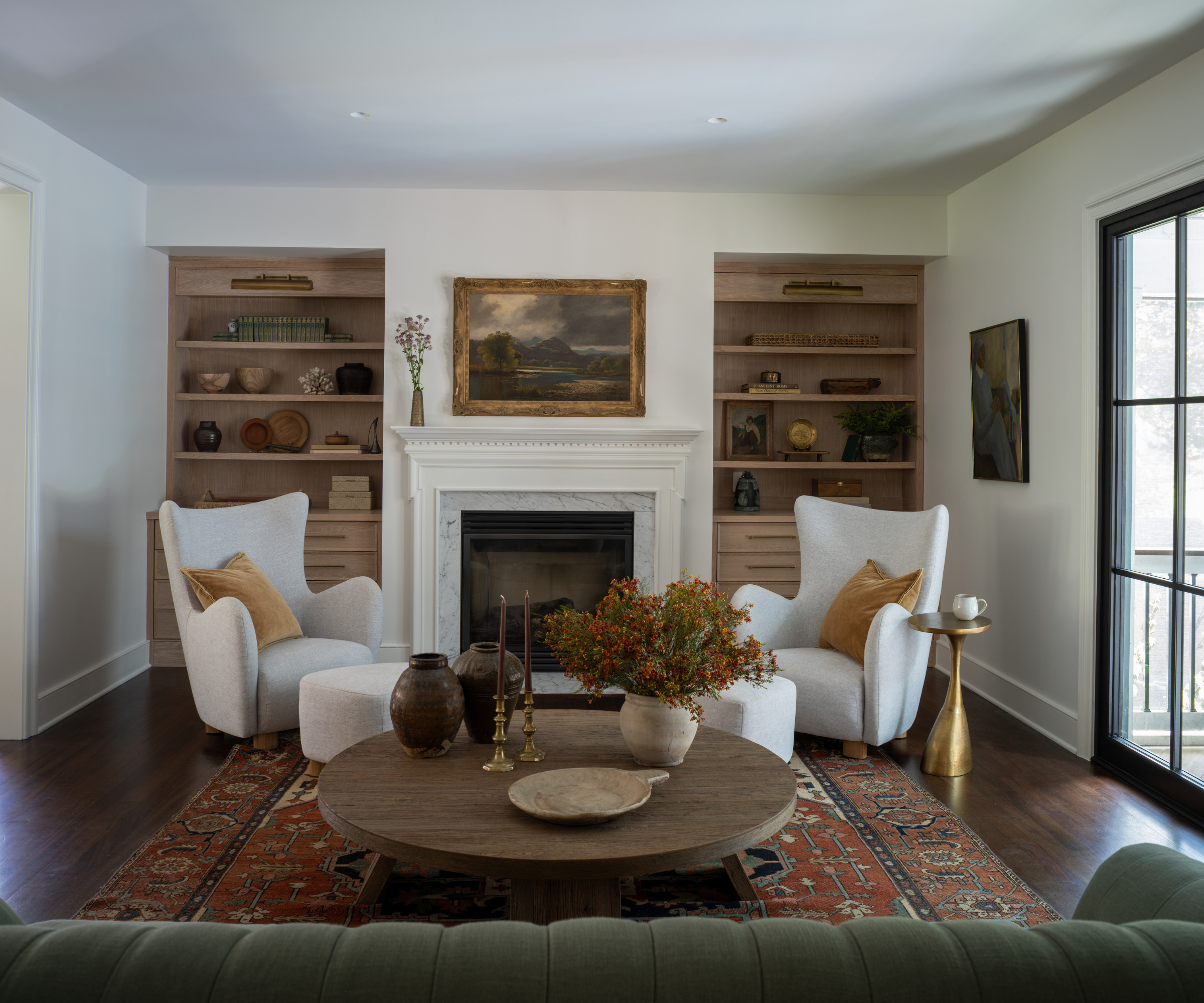
When designing any room, it's always a good idea to recognize the room's permanent architectural elements so that you can understand what furnishings and decor choices will best suit the space. In the room above, interior designer Liz Mearns did just that – she let the inherently symmetrical architecture guide her design decisions.
'In this room, the architecture itself sets up a really strong, calming symmetry: the fireplace is centered, flanked by matching built-ins and a pair of identical chairs. That framework immediately gives the room a sense of order and lets your eye rest on the fireplace and the landscape painting above it,' Liz explains.
However, instead of designing the rest of the room to look perfectly symmetrical, Liz opted for slight asymmetry on the shelves and coffee table – a design choice that makes the room feel that much more natural. 'The shelves are styled differently on each side, there’s a small brass table on only one side of the seating area, and the objects on the coffee table are arranged in a more organic way,' Liz explains of the space. 'You still feel the balance, but it doesn’t read as rigid or formal.'
5. Create an 'Almost-Symmetrical' Styling Moment
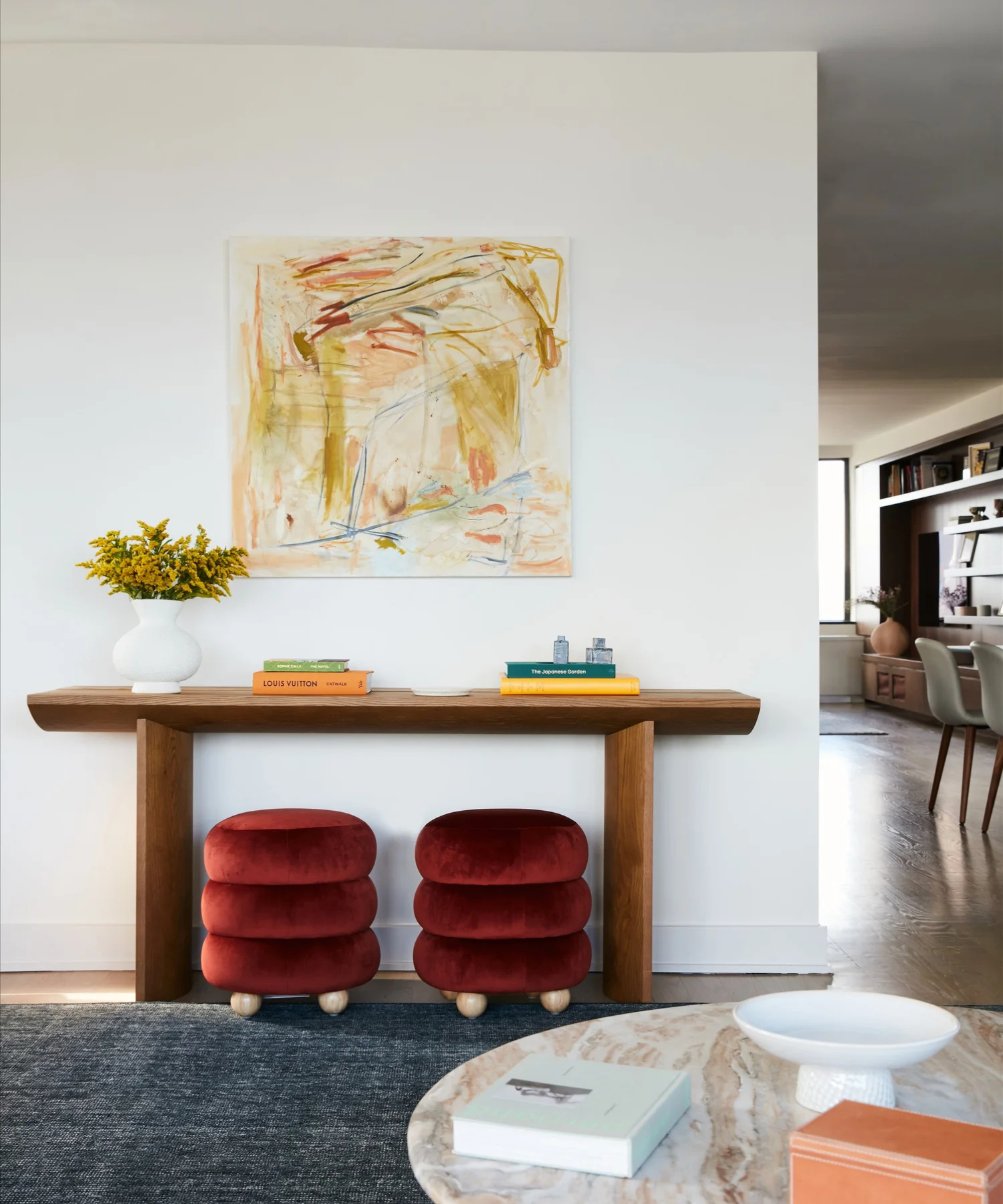
One of the best things about symmetry is that it doesn't need to be used on a large scale to be effective. Sure, a living room with a grand symmetrical layout can look nice, but so can an almost-symmetrically styled console table against a blank wall – like this one designed by Molly Miller.
'This console vignette leans on 'almost-symmetry' to feel balanced without losing its cool,' Molly explains. 'The matching stools and centered artwork set the stage, giving the vignette its quiet backbone. Then, the asymmetrical styling steps in – light, effortless, pops of color, so the whole scene reads modern and lived-in.'
Although not as statement-making as a symmetrically designed room, this styling moment is just as impactful – it establishes rhythm, cohesion, and order without trying too hard. As Molly says, 'it’s that perfect hit of 'I planned this… but not too much'.'
Just as Molly's done in the image above, you too should style a floral arrangement on your console table vignette. It'll add some color to the scheme and create a slight asymmetrical layout.
This ottoman can act as a vibrant pop of color under a console table vignette. Pair it with a second one to create a stylishly symmetrical design scheme.
For trinkets, receipts, or any miscellaneous objects, this small storage box could be an ideal addition to a console table vignette. Style it alone for a subtle statement of asymmetry.
6. Allow Symmetry to Create Order
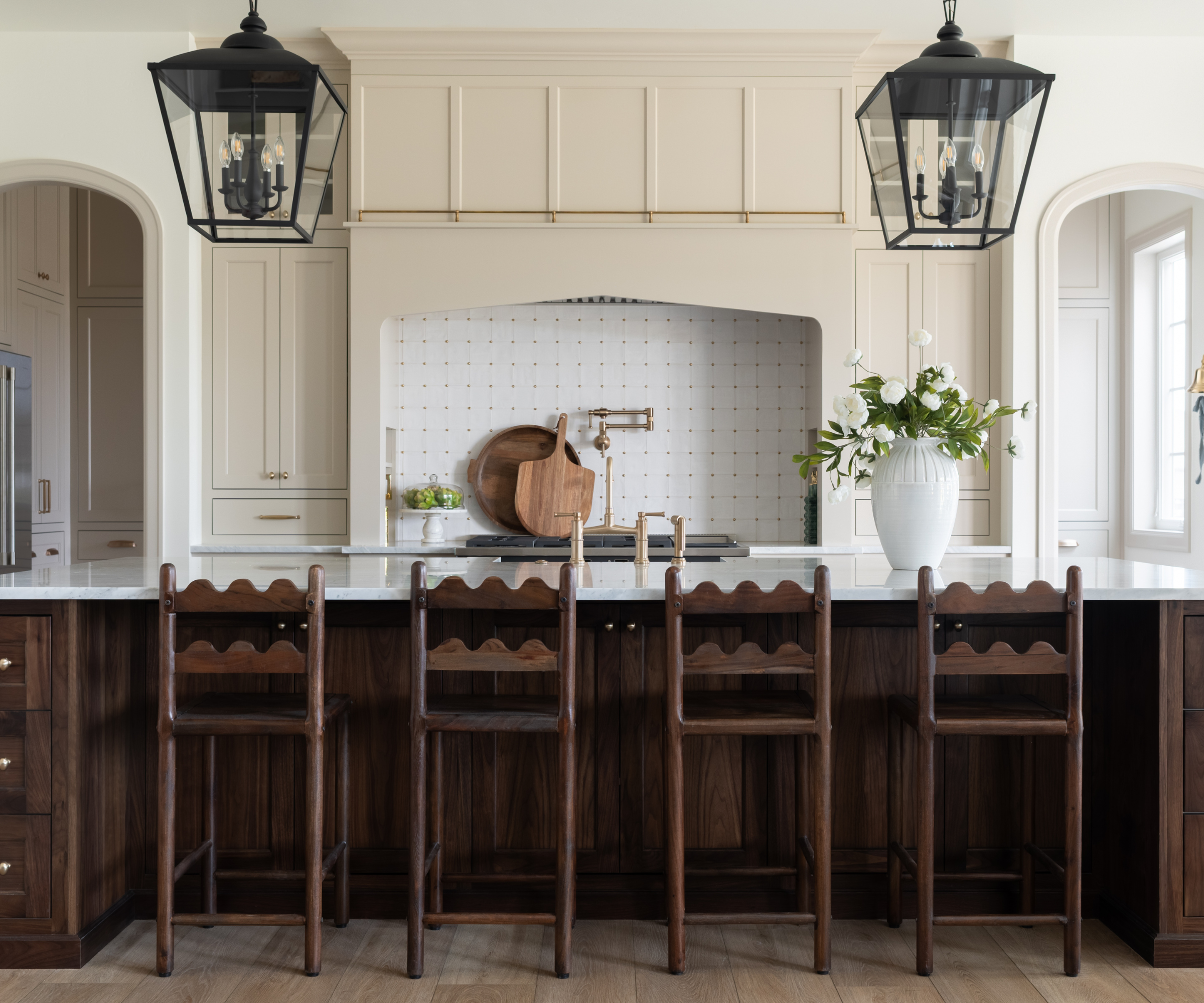
Kitchens are inherently one of the busiest rooms in the home. Because of that, it can be beneficial to design these spaces with the principles of symmetry in mind. This way, the kitchen can look organized and feel balanced even at its busiest moments.
In the cozy kitchen above developed and designed by Meg & Co. Designer Homes, symmetrical design elements ground the space and simultaneously enhance its cohesion. 'Symmetry sets the tone in the kitchen, giving the entire space a clear sense of order and purpose while still feeling easy to live in,' Mandy Hodges explains, Lead Designer at Meg & Co. 'By centering the range, hood, island, and pendants, everything feels naturally aligned, and in concert with the matching arched doorways, helps draw your eye to the statement backsplash with the solid brass upholstery tacks accenting the warm white tile.'
From the matching pendants to the matching chairs and even the matching architectural features, symmetry in this kitchen creates a strong foundation for a space that'll receive constant use but never look disconnected.
7. Give a Bathroom a Sleek Look
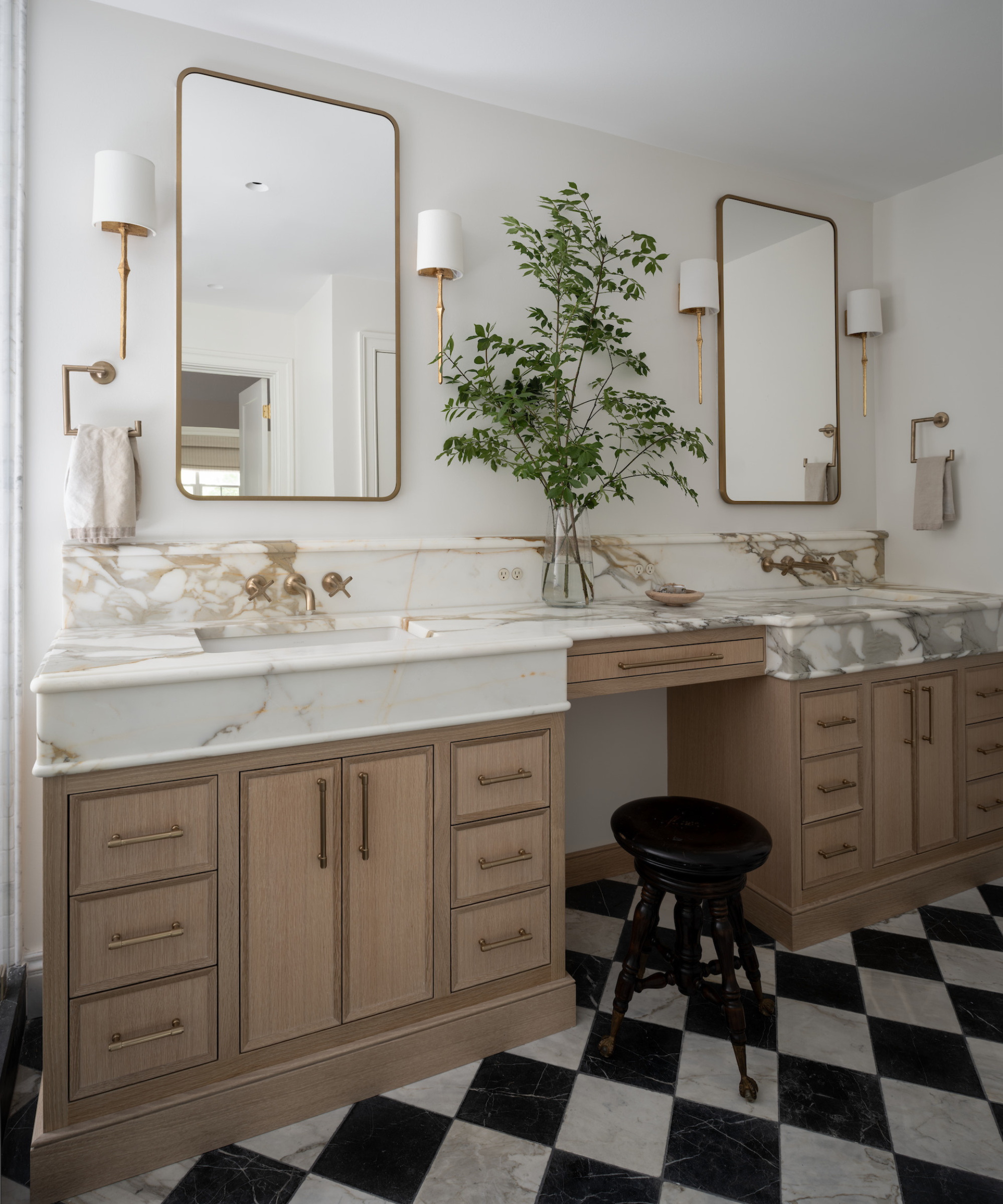
You can't go wrong with symmetrical bathroom ideas. Not only can they make a bathroom look more cohesive and visually appealing, but they're practical, too, as they can keep the space organized and tidy.
That's just the case with this symmetrical bathroom designed by Liz Mearns. With a double vanity, matching cabinetry, identical mirrors, and even matching wall sconces, this bathroom setup is as symmetrical as they come. Because of the symmetry in its design, this bathroom is sleek, clean, and inherently calming – an ideal place to start and end every day.
8. Complement Symmetry with Color
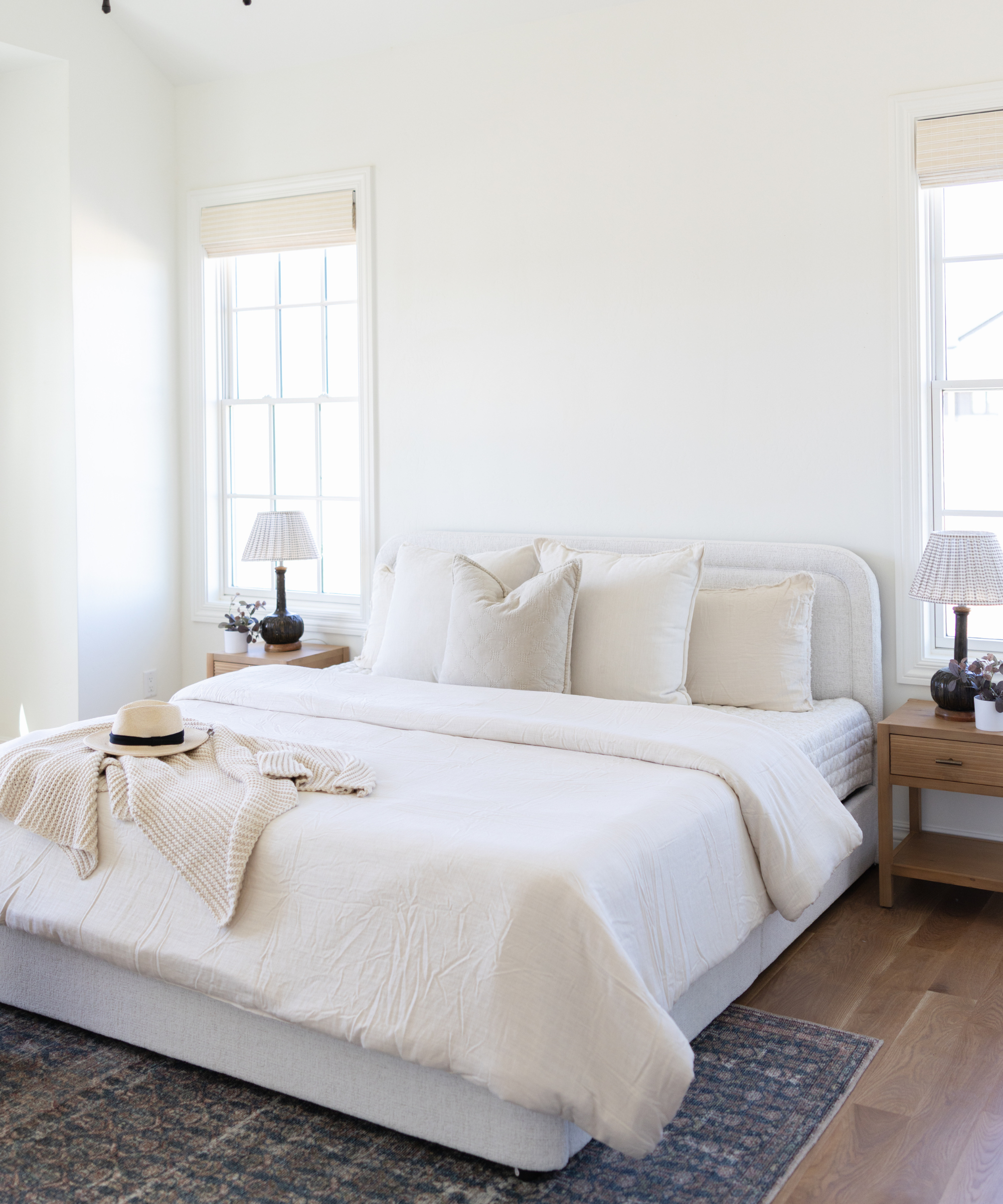
Symmetrical design naturally brings a sense of order and calmness to any room. Because of that, choosing a neutral color scheme for a symmetrically designed room can enhance the balance and serene nature of the space – just like the relaxing bedroom above designed by Meg & Co. Designer Homes and Mandy Hodges.
'The symmetrical layout of this guest bedroom brings a feeling of harmony and flow. Matching windows, nightstands, and lighting create a sense of quiet order, while the soft layers and neutral tones keep it warm and inviting,' Mandy explains of the room's design. 'The result is a space that feels restful, enduring, and effortlessly pulled together.'
You can enhance the calming nature of a symmetrical bedroom with decor choices in soft, neutral colors, like this blanket. It'll complement decorations in a similar shade, and enhance the room's cozy, calming feel.
Even with a darker-toned base, this table lamp can still act as a complementary detail to a soft, neutral bedroom. Plus, styled as a pair with a matching lamp on another nightstand, this lamp duo will create consistency and symmetry within the room.
With two of these pillow covers, you can create a symmetrical look on your bed. Not only that, but because of its muted, soft color, this pillow can amplify the soothing nature of an already symmetrical room.
9. Remember Not Everything Needs to Be a Perfect Match
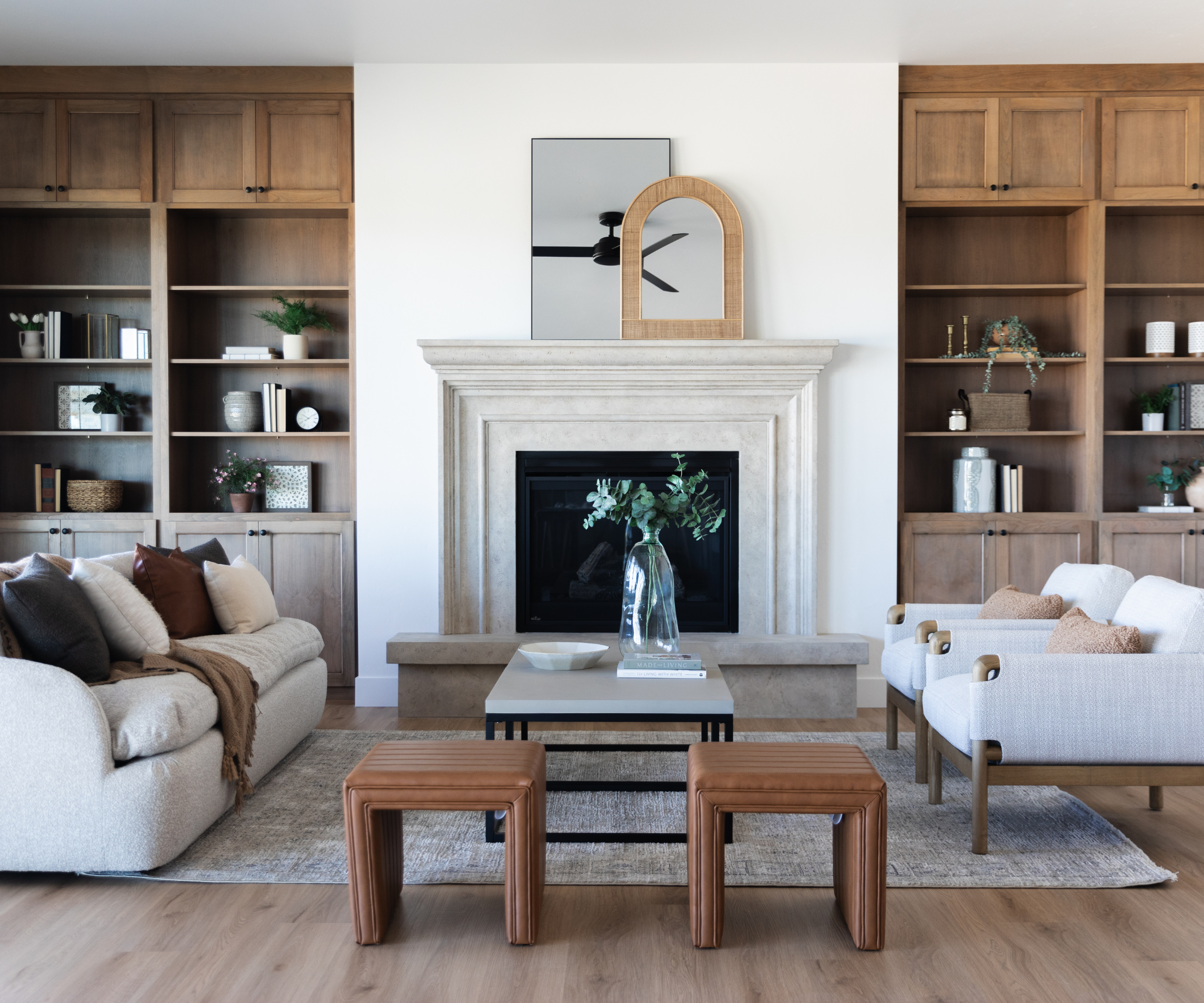
Here's the thing about symmetry – even though it thrives off of order, it doesn't always need to create a perfect match. Sometimes, the most impactful rooms are the ones designed with some symmetrical elements and some asymmetrical elements.
In the living room above, Mandy Hodges relied on a strong symmetrical framework to ground the space and complemented the symmetrical elements with quieter asymmetrical features. 'Subtle asymmetry comes through in the furnishings, styling, and layered textures, which keeps the room from feeling too formal or repetitive. That mix creates a space that feels thoughtfully composed, yet relaxed and lived in, rather than perfectly mirrored,' Mandy explains.
Although some argue that perfectly symmetrical rooms are out of style, the truth is that it all depends on what is most pleasing to your eye. Sometimes, a mix of symmetry and subtle asymmetry can make for the most visually impactful rooms – rooms that are still cohesive and balanced, but are not overly 'matchy'.
FAQs
Why is symmetry so important in design?
'Symmetry creates a sense of balance and ease in a space,' Mandy Hodges explains. 'It helps a room feel calm, welcoming, and thoughtfully put together, giving the eye a natural place to rest and the home a timeless, familiar feel.' Although it's very simple, symmetry is a very important design principle because of the atmosphere it can create in a room.
How do you design with symmetry and asymmetry in mind?
'I use perfect symmetry when I want a space to feel timeless. A room that steadies you the moment you walk in. But I’m careful not to overuse it. Too much symmetry can be predictable,' Jade Joyner explains.
To create the most visually appealing symmetrical scheme, Jade recommends using symmetrical design to anchor the room and asymmetrical styling to bring the room to life. 'This keeps the room from feeling static,' Jade says, and it also ensures balance in the design scheme, too.
As one of the most basic rules of interior design, symmetry can ensure harmony and order anywhere – from the styling of a small console table to the layout of an entire room. Whether you prefer perfect symmetry or slight asymmetry, this principle can help establish rhythm in interior design that's not only pleasing to the eye, but comfortable and calming, too.