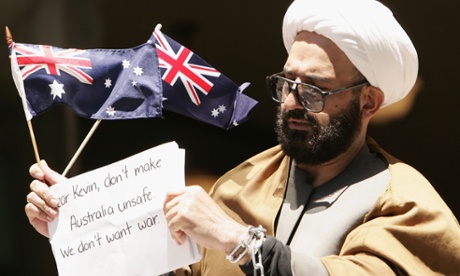
George Brandis has defended Australia’s intelligence agencies and warned against hasty, ill-informed criticism as questions mounted about why the gunman in the Sydney siege was not on a watchlist given his history.
The attorney general, who is responsible for the Australian Security Intelligence Organisation, said the term “watchlist” appeared to mean different things to different people and warned against “loose” criticism of the agencies until it was clear what decisions had been made and why.
The treasurer, Joe Hockey, said on Thursday: “How we missed him is a source of immense frustration to us. Particularly given that we have given more resources to our security agencies.”
While expressing “great confidence” in police and security agencies, Tony Abbott said on Wednesday: “We do need to know why he seems to have fallen off our security agencies’ watchlist, back in about 2009 … I don’t know why he dropped off the watchlist in those days – I really don’t – and that’s one of the reasons why we need this inquiry; so that we can find out why he dropped off the watchlist and try to ensure that people only go off the watchlist if they really are no longer a potential threat and, plainly, this individual was.”
But asked why Asio had stopped monitoring Man Haron Monis, Brandis told ABC radio: “I think we have to be careful with the word ‘watchlist’ because it means different things to different people.”
He said Asio had various levels and methods of surveillance.
“What has been claimed in the media is that what appears to have been a current 2008/9 Asio investigation [into Monis] was discontinued in, so it is said, around 2009. I have asked Asio to identify exactly what decision was made, when it was made and on what grounds and by whom,” Brandis said.
“… I would counsel against loose terms like ‘drop the ball’, if an investigation was current some years ago and it was discontinued there would have been reasons why that decision was made at the time and we need to know what those reasons were.”
He pointed out the extra funding of $640m over four years had been announced only in August.
Asked whether the Lindt cafe siege had exposed holes in the national security system, the opposition leader, Bill Shorten, also defended the agencies.
“I have a lot of confidence in our security agencies and police … there are crazy people out there but not many of them, and our police are absolutely top notch … it is important we have the inquiry, but I go back to where we started. … the security agencies and police really are excellent,” he said.
Abbott and the New South Wales premier, Mike Baird, have launched an urgent review into the lessons state and federal agencies could learn from the lengthy Martin Place siege, which ended with the death of two hostages and Monis on Tuesday morning.
The review, to be completed by the end of January, will be headed by the secretary of the Department of the Prime Minister and Cabinet and the secretary of the NSW Department of Premier and Cabinet.
The terms of reference require an examination of “information held by commonwealth and NSW agencies about Man Haron Monis for the period prior to and following his arrival in Australia up until the siege, including how any information relevant to public safety was shared between, and used by, agencies”.
Abbott and Baird have also asked the reviewers to check whether powers such as control orders could have been used in relation to Monis’s activities of security concern.
The terms of reference also include any lessons learned by the NSW and Australian federal police about the handling of the siege, including co-ordination between agencies and effectiveness of public communication.