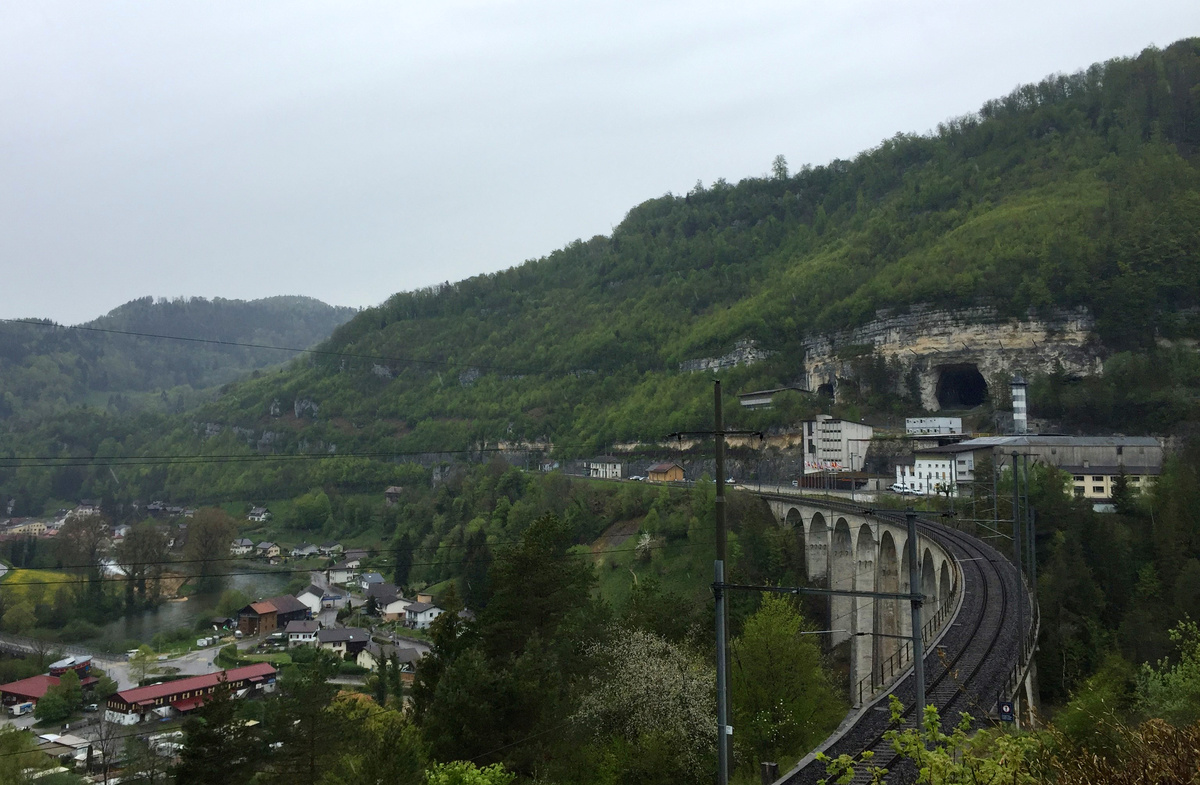
SAINT-URSANNE, Switzerland (Reuters) - Swiss scientists are injecting carbon dioxide into rock deep inside a mountain to discover if the gas leaks out or if it can be locked away to stop it contributing to climate change.
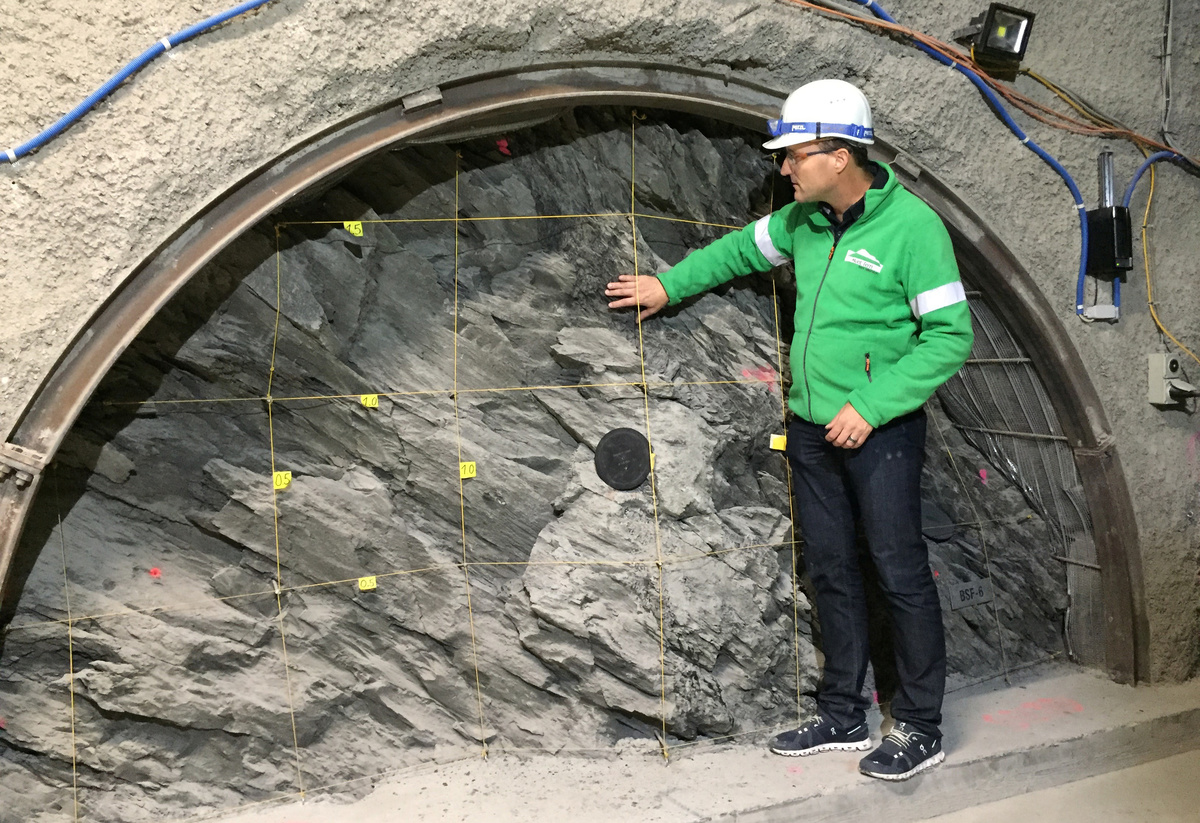
Inside Mont Terri in the Jura Mountains, a layer of impermeable clay could potentially trap carbon dioxide, the main greenhouse gas causing global warming.

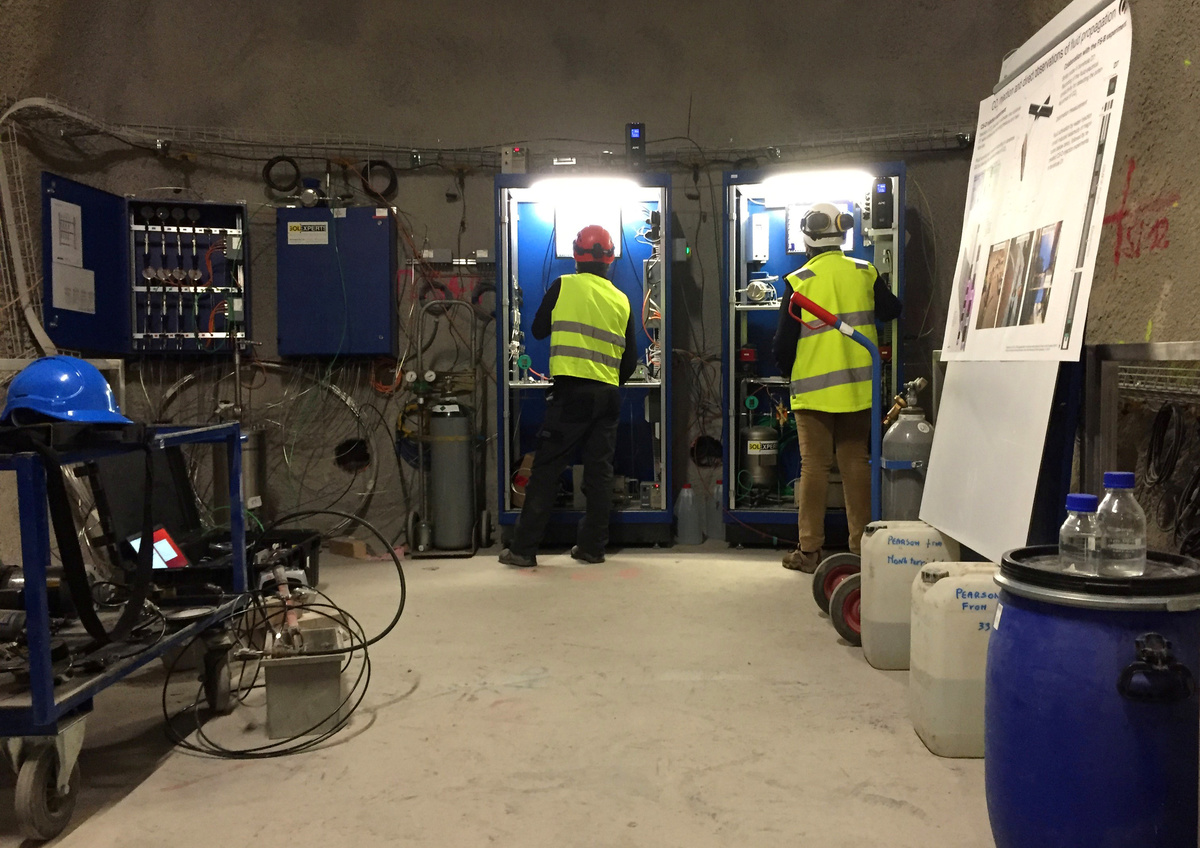
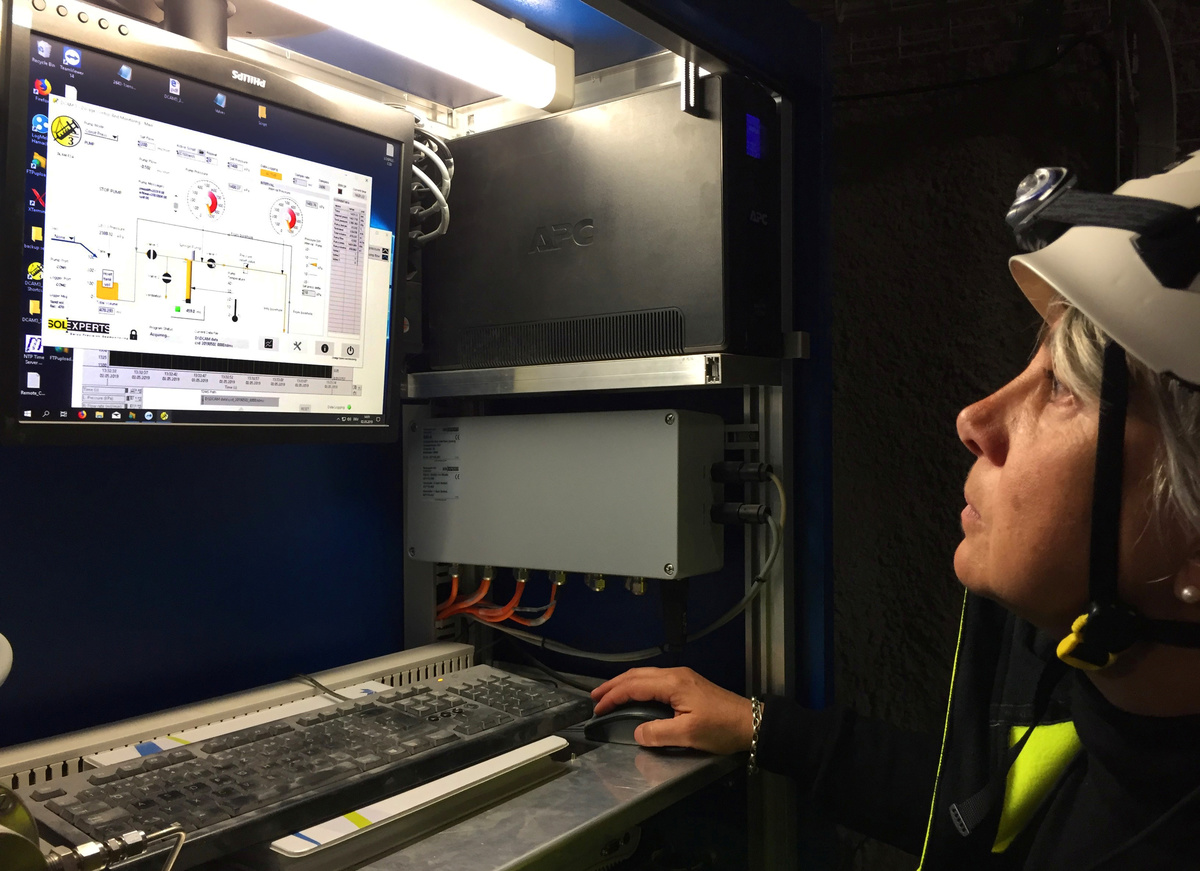
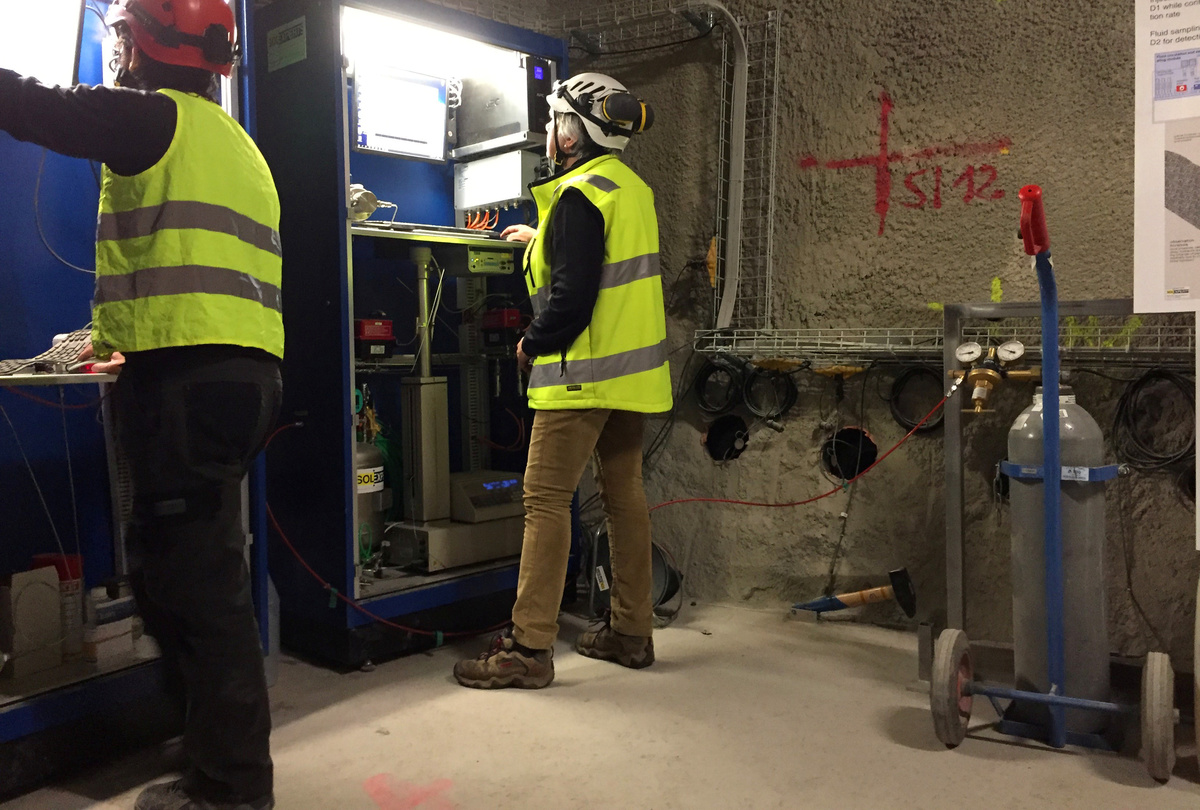
At a laboratory deep inside the mountain, scientists have begun pumping carbon dioxide dissolved in salt water into the rock. They will see if the gas will interact with the clay and whether a faultline will allow it to seep out.
The first eight-month phase of the experiment involves a tiny volume of carbon dioxide (CO2), with 500mg of carbon dioxide pumped into the rock through a borehole.
"If this rock has a fault in it, is it possible that the CO2 comes up through the fault. This is what we want to answer," said chief investigator Alba Zappone, a researcher at Zurich's ETH University.
Geological storage of CO2 already exists, but existing sites are usually in uninhabited places, such as the Algerian desert or under the Norwegian North Sea, said Christophe Nussbaum, the Mont Terri project manager.
"What is new here is that, if one day we want to stock CO2 in Switzerland, which is a densely populated region, we need to make sure that the CO2 won't migrate into the surface and contaminate, for instance, drinking water sources. This is really one of the major stakes here," Nussbaum said.
Swiss citizens produce an average of about 5.8 tonnes of CO2 annually, he said.
The project is supported by Switzerland, France, Canada, Japan and the United States, as well as energy firms Total, Chevron, ENI and BP.
But environmental organizations like Greenpeace are worried that the project's findings could turn into a "right to pollute" and detract from efforts to reduce emissions, which are driving a disastrous rise in global temperatures.
"What worries us is not only that these technologies are being developed, but to see that in the meantime the necessary efforts needed to limit greenhouse gas emissions are not being made," said Mathias Schlegel, spokesman for Greenpeace Switzerland.
(Reporting by Marina Depetris, writing by Tom Miles, Editing by Angus MacSwan)