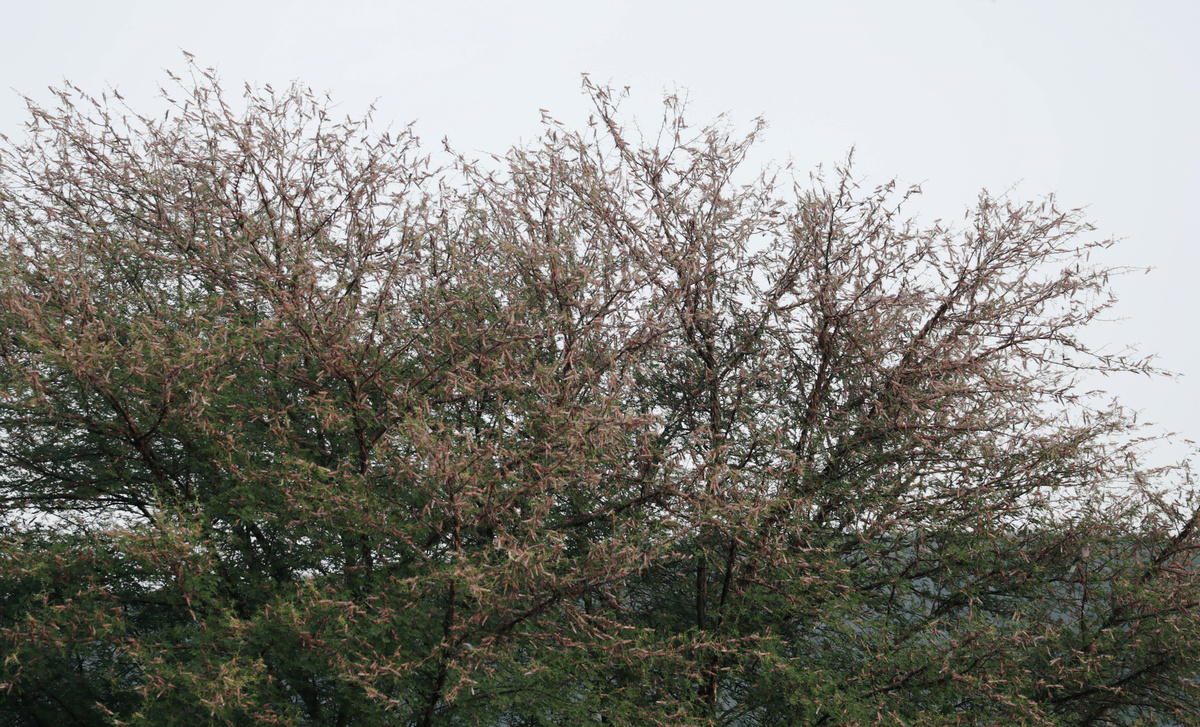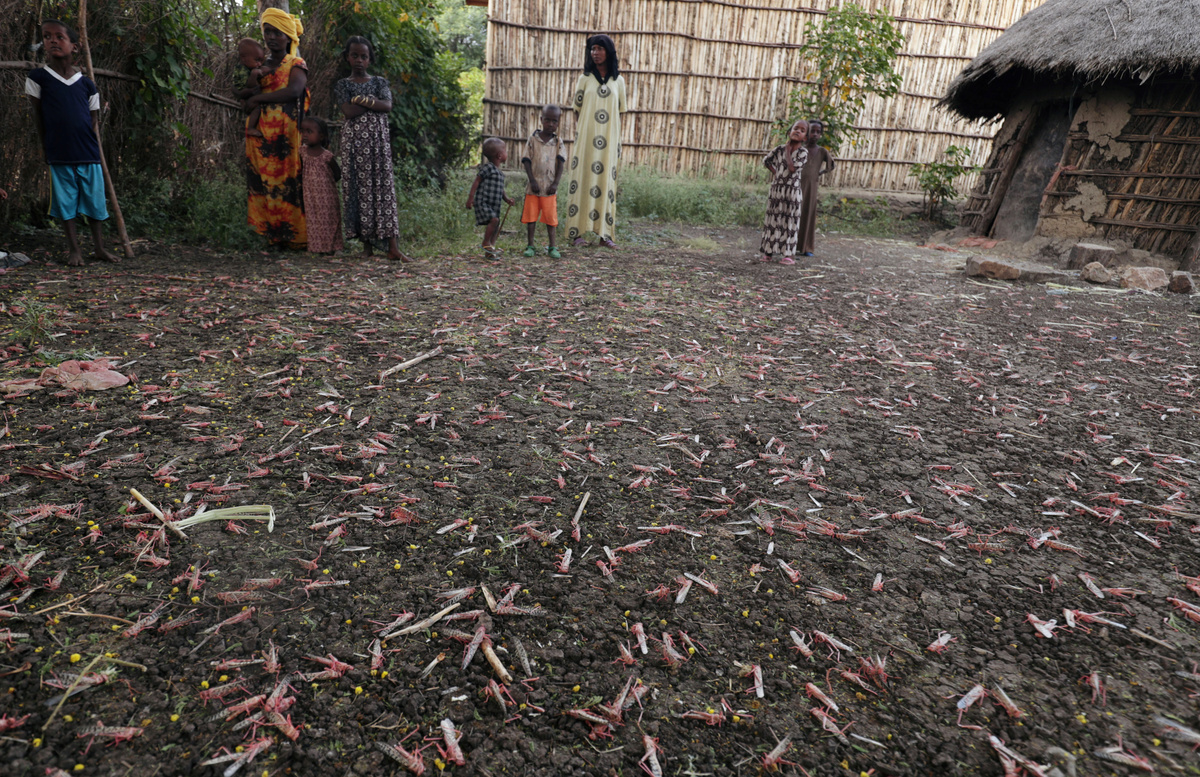
Mother-of-ten Marima Wadisha screamed, threw rocks and in her desperation even fired bullets at the locusts that descended on her sorghum fields in northeast Ethiopia.
But the insect swarms were so relentless that her entire crop - her family's only source of income - was destroyed.
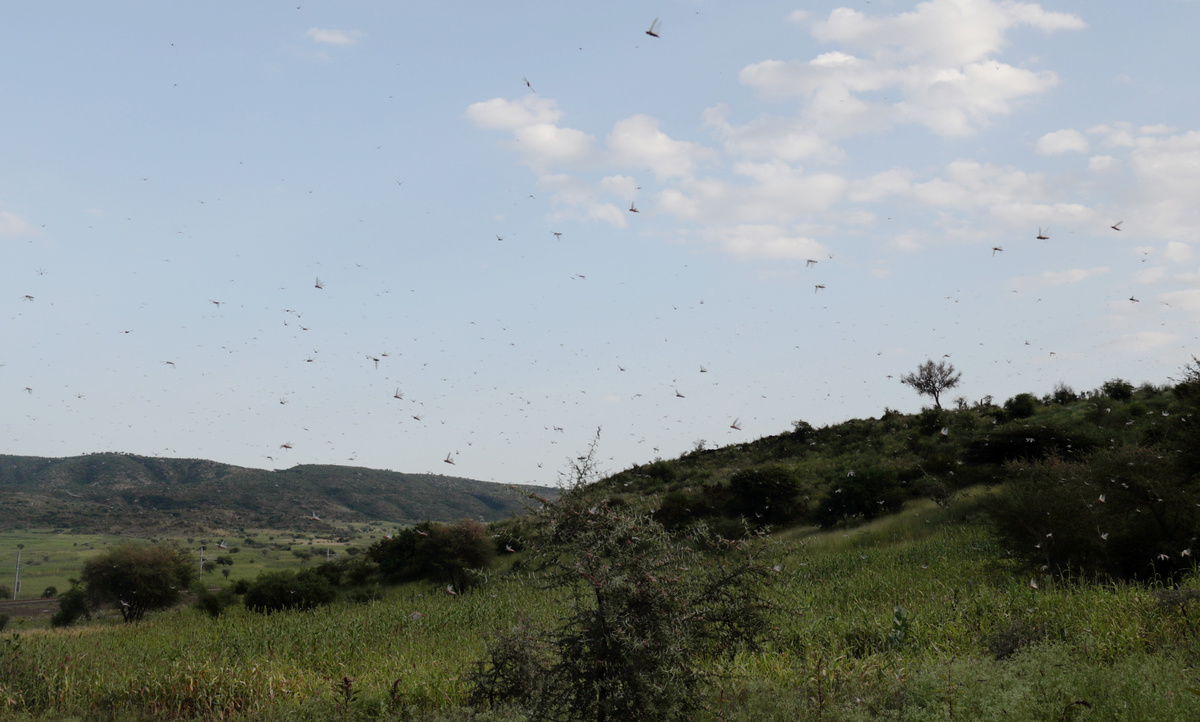
"They never left for a week. We are left with an empty harvest, we tie our waist and cry day and night. How can (I) feed ... my children like this," the widow said, surrounded by five of them as she held a bundle of damaged sorghum.
The locust invasion is Ethiopia's worst in 25 years, United Nations food agency FAO says.
It has damaged an estimated 200,000 hectares of land there since January, threatening food supplies - a single square kilometre swarm can eat as much food in a day as 35,000 people - and the livelihoods of millions.
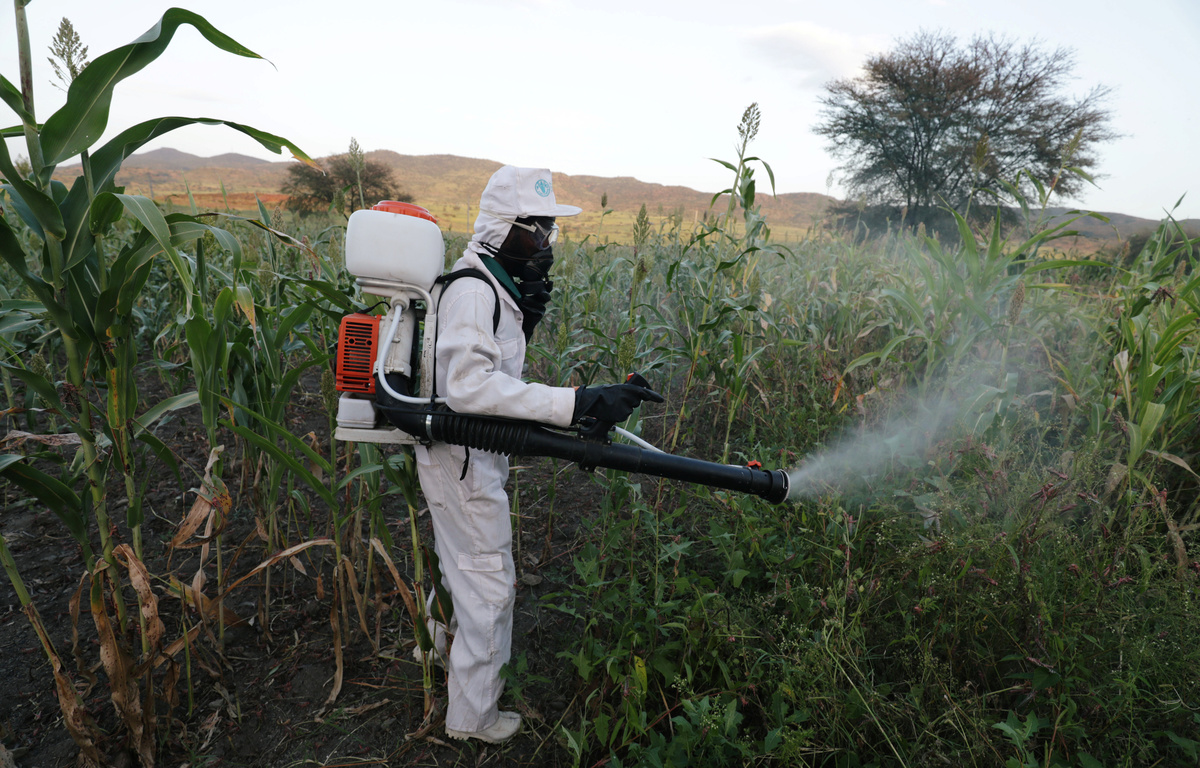
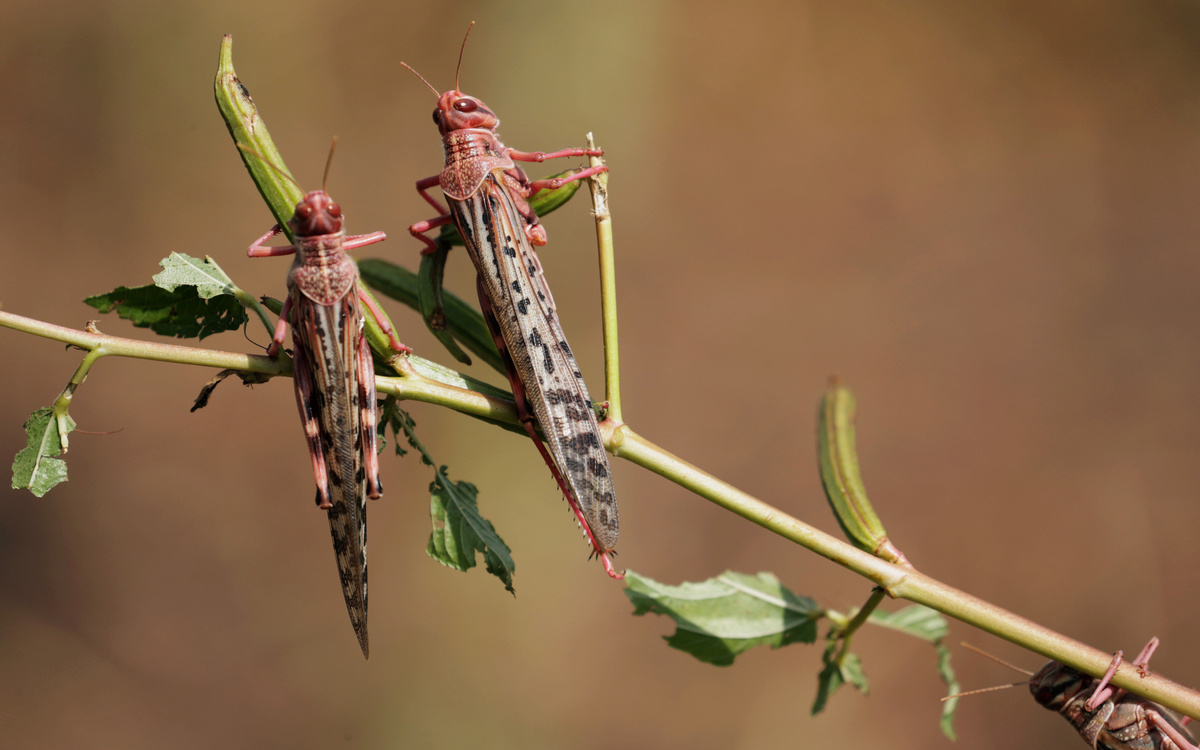
It is part of a once-in-a-lifetime succession of swarms that have plagued East Africa and the Red Sea region since late 2019, with the coronavirus pandemic exacerbating the crisis this year by disrupting the FAO's supply chain of pesticides and other equipment to fight them off.
"The biggest challenge now in the region is here, in Ethiopia and we are working on that together with our partners like the FAO," said the Desert Locust Control Organization's Eastern Africa Director for Eastern Africa Stephen Njoka.
Conflict and chaos in Yemen, where some of the swarms originated, have made spraying pesticide by airplane at source impossible. That combined with unusually heavy rains have swelled the swarms spreading across Ethiopia.
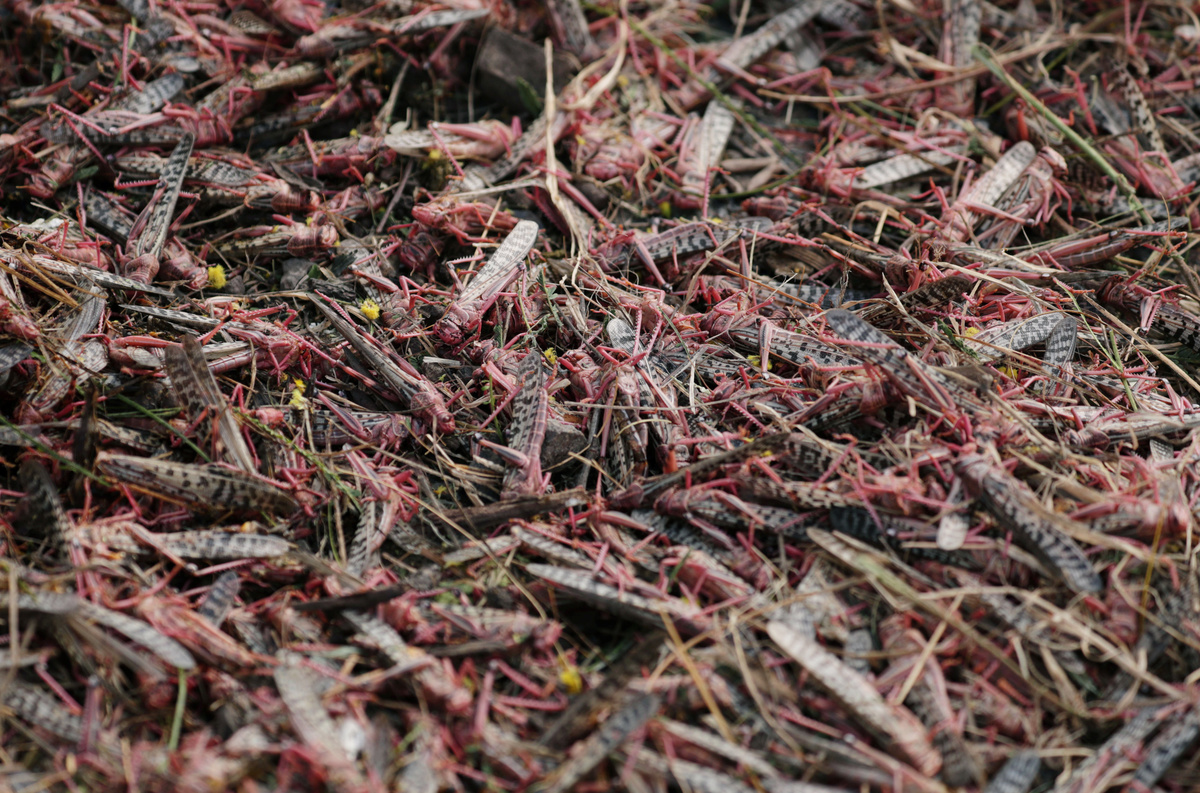
The World Bank has said the insects could cost East Africa and Yemen $8.5 billion this year, and the FAO's Ethiopia representative Fatouma Seid fears the pattern of destruction will be repeated next year.
"Infestation will continue into 2021. We are being re-invaded and the swarms will then go to Kenya," she said.
(The story Reworks language to reflect she is a woman with 10 children)
(Reporting by Tiksa Negeri; Writing by Giulia Paravicini; Editing by Maggie Fick, John Stonestreet and Jonathan Oatis)