Sweden sits on the edge of the Baltic Sea, shares borders with Norway and Finland, and is mostly known for its forests, fjords, and very good furniture. Not exactly what you'd picture when someone says "island nation." And yet, according to a 2013 survey by Statistics Sweden , this Scandinavian country is home to a staggering 2,67,570 islands, more than any other country on the planet. That number puts it comfortably ahead of Norway, Finland, and even the archipelago nations of Southeast Asia that most people would assume are the obvious winners. The catch? Fewer than 1,000 of those islands are actually inhabited.
Get breaking news anytime, anywhere. Download the TOI app now!
Sweden's 2,67,570 islands: What the official count actually means
The figure of 2,67,570 comes from Sweden's own national land survey agency, Lantmäteriet, which maps every landmass surrounded by water as counted through its real estate and water mapping system at a scale of 1:10,000. Statistics Sweden then compiled this into their official coastal and island statistics, giving us the number that now sits at the top of every global ranking.
But here's the thing about island counts they're not as straightforward as they sound. Different countries count differently. Sweden includes any piece of land permanently above water and naturally formed, no matter how small. Other nations use stricter size thresholds. This is why rankings can shift between sources, and why comparing island numbers across countries is a bit like comparing apples to very soggy oranges. Even so, Sweden's number is so far ahead of the competition that it holds its position regardless of which method you use.
The total land area covered by all these islands comes to around 1.2 million hectares that's roughly 3% of Sweden's entire land area. And in 2013, over 1.6 million people, about 17% of Sweden's population at the time, were living on one island or another. A big reason for that high percentage is that some of Sweden's most densely populated urban areas, including parts of Stockholm and Gothenburg, are technically built on islands.
How the Ice Age built Sweden's island landscape
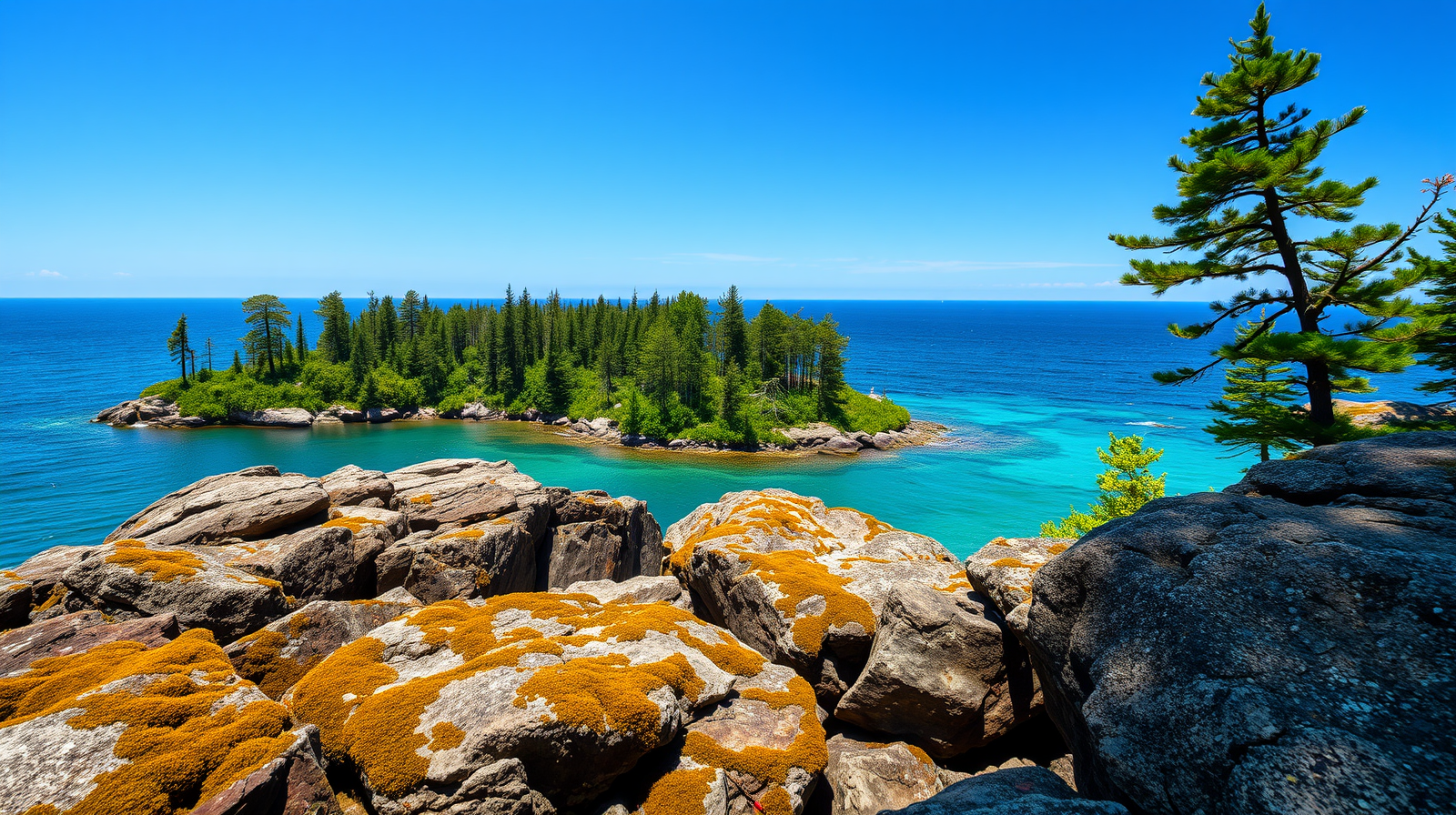
The reason Sweden has so many islands is not political or administrative; it's geological, and it goes back roughly 10,000 years. During the last Ice Age, a massive sheet of ice several kilometres thick blanketed the whole of Scandinavia. As described in research on Sweden's glacial landscape published through the UNESCO World Heritage documentation for the High Coast and Kvarken Archipelago , when that ice eventually retreated, it left behind one of the most fragmented, sculpted coastlines in the world.
Glaciers are essentially slow-moving grinders. They carved deep grooves into the bedrock, created valleys and basins, and deposited enormous quantities of debris as they moved. When the ice melted, rising sea levels filled all those carved depressions with water and what were once hills and ridges became islands. The smooth, polished rock surfaces you see on Swedish islands today are direct evidence of glaciers having scraped across them for thousands of years, sometimes exposing bedrock that formed over two billion years ago.
This process, called post-glacial isostatic rebound, is still technically ongoing. Land that was compressed under kilometres of ice is still slowly rising, meaning Sweden's coastline is, in a very literal sense, still being reshaped. Research published in Geografiska Annaler on inherited landforms and glacial impact in southwest Sweden notes that glacial erosion exaggerated hilly relief while flat landscapes largely stayed flat, which explains the extreme fragmentation of Sweden's coastal terrain.
The Stockholm Archipelago and Sweden's most famous island clusters
Sweden's capital is itself spread across 14 islands, connected by more than 50 bridges. But zoom out from the city and you're looking at the Stockholm Archipelago a network of around 30,000 islands and islets scattered between Lake Mälaren and the Baltic Sea. It is one of the largest and most visited archipelagos in Europe, drawing tourists every summer who come to sail, kayak, and island-hop between towns like Vaxholm, Sandhamn, and Grinda.
Then there's Gotland, Sweden's largest island and the biggest in the entire Baltic Sea. Its capital, Visby, is a UNESCO World Heritage Site, ringed by a 14th-century medieval wall and full of cobbled streets and ruins that speak to centuries of Viking and Hanseatic trade history. In the north, the Bothnian Bay archipelago gives visitors a chance to see the Northern Lights from an island setting, which is not something you'd normally associate with island travel.
How Sweden compares to the rest of the world in island count
Second place on the global island ranking goes to Norway, with around 2,39,057 islands, also glacially shaped, also mostly uninhabited. Finland comes in third with roughly 1,78,947 islands. The pattern is clear: the countries carved most aggressively by Ice Age glaciers ended up with the most fragmented, island-dense coastlines.
Japan, a country people typically think of as the classic island nation, has around 14,125 islands as of a 2023 resurvey by the Geospatial Information Authority of Japan , nearly double the previous official count of 6,852, but still a fraction of Sweden's total. Canada and Chile follow further down the list with around 52,000 and 43,000 islands respectively. The United States, despite its Pacific and Caribbean territories, sits at roughly 18,617.
What makes Sweden's number so striking is not just its size, but where it comes from a mainland European country that nobody thinks of as tropical, maritime, or particularly island-heavy. It's a reminder that geography doesn't always match the assumptions we bring to it, and that some of the most dramatic landscapes on Earth were built not by sun and sea, but by ice. Ice, it turns out, is a more prolific architect than any force the tropics can offer. Sweden's coastline is a record of pressure and retreat written in stone and water, a landscape shaped by absence, still slowly rising toward the sky ten thousand years after the weight that formed it finally melted away.