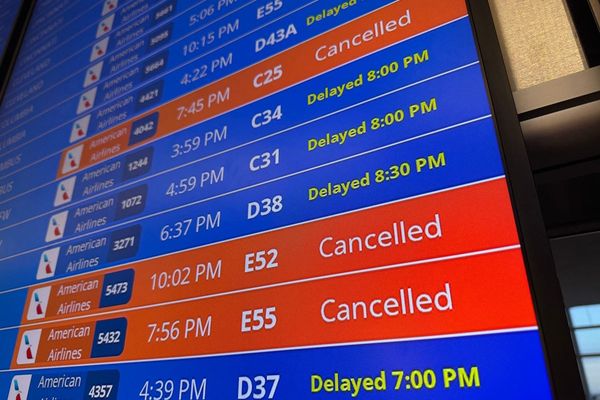
Most of Britain is about to be plunged in to stricter lockdowns as millions more across the North and the Midlands could be placed into Tier 3.
West Yorkshire will be placed under the strictest level of Covid restrictions from Monday.
The area - home to an estimated 2.3 million people - includes the cities of Leeds and Bradford.
Bradford currently has the highest rates in the county, with 483.5 cases per 100,000 of the population.
The neighbouring areas of South Yorkshire, Greater Manchester and Lancashire are already under tier three.
Julian Hartley, chief executive of Leeds Teaching Hospitals NHS Trust, said the city’s hospitals were currently caring for 268 Covid patients - a figure higher than in the first wave of the pandemic - and he expected this to keep rising.
Health Secretary Matt Hancock said: “We continue to see a worrying rise in cases right across the country, and it is clear decisive action is needed.
"These restrictions are challenging for us all, but it is only by working together and following the rules that we will bring down the rates of infection.

“A failure to act now will only lead to longer disruption and greater economic damage.”
Communities Secretary Robert Jenrick said the Government will “try everything in our power” to avoid a “blanket national lockdown”, adding: “You can’t have a stop-start country.”
But Home Secretary Priti Patel said: “I think at this stage of course we can rule nothing out.”
Talks between ministers and local leaders in Birmingham and the West Midlands are ongoing.
Next week pubs and businesses in the region could close and its residents face a ban on socialising at the same time as swathes of the country are moved up to Tier 2.
Confirmation of the Tier 2 changes means 32 million people in England will be in one of the two stricter categories of restrictions as severe measures also cover most of Scotland and all of Wales.
Ian Ward, leader of Birmingham City Council, said: “Given the rising case rate a move to Tier 3 would seem to be inevitable.”
Further north, Teesside Tory MP Jacob Young said he thought the Tees Valley will be placed in the toughest Tier 3 restrictions “within the next week or so” as North East political leaders met this afternoon.

With Nottinghamshire due to enter Tier 3 on Friday, 8.7million people across the country will be living under the most severe controls by the end of this week.
Mr Jenrick also refused to rule out London and its nine million residents being next to face the tougher Tier 3 restrictions.
He said: “ You can see from the figures that the virus is in a bad place in all parts of the country.”
Areas moving from Tier 1 (medium) to Tier 2 (high) from Saturday include East Riding of Yorkshire, Kingston-Upon-Hull, North East Lincolnshire, North Lincolnshire, Dudley, Staffordshire, Telford, the Wrekin, Amber Valley, Bolsover, Derbyshire Dales, Derby City, South Derbyshire, High Peak, Charnwood, Luton and Oxford City.
This means that more people in England will be in Tier 2 (23.9 million) than in Tier 1 (23.7 million).
Hospitals across many of these areas have started postponing routine procedures and appointments to cope with rising Covid-19 admissions.

Miriam Deakin, director at NHS Providers, which represents hospitals, said: “We would urge the government to take a cautious and pre-emptive approach which means being tougher and quicker in its response.”
Nottinghamshire director of public health Jonathan Gribbin said admissions at its hospitals had “exceeded wave one by around 40%”.
He added that the infection rate among the over-60s has been “leading to the most severe pressure in the whole care system and the NHS”.
Restrictions due to come in for the region include banning alcohol sales in shops, supermarkets and off licences after 9pm.
Betting shops, beauty services and most indoor entertainment and tourism venues will close.
The measures are on top of standard Tier 3 rules which mean people must not socialise with anybody they do not live or have formed a support bubble with.

Pubs and bars must close, unless they serve “substantial” meals and people should avoid travelling into or outside the area other than for work, education or for caring.
Also, France enters a second lockdown from Friday and Germany imposed a four-week partial lockdown with Chancellor Angela Merkel warning of a long, hard winter ahead.
The majority of Scots will be placed into Level 3 of the new five-tier coronavirus restrictions from Monday, with the rest of the country in either Levels 1 or 2, First Minister Nicola Sturgeon announced.
Wales is already in middle of a planned national “fire break” lockdown.
The latest data from the Test and Trace system shows that 126,065 people tested positive for Covid-19 in England in the week to October 21.
This was an increase of 23% in positive cases on the previous week and the highest weekly number since it began at the end of May.
The Government said a further 280 people had died within 28 days of testing positive for Covid-19. There had been a further 23,065 lab-confirmed cases in the UK.
There were 8,595 patients with coronavirus in hospital beds across England on Tuesday October 27, according to NHS England.
This is up from 6,072 on October 20 and more than double the 4,105 beds occupied with confirmed Covid-19 patients on October 13.
The North West had the highest number of beds occupied with coronavirus patients on Tuesday at 2,566, up from 2,099 on October 20.
The new data, published yesterday showed there were 743 coronavirus patients in mechanical ventilation beds in England on Tuesday, up from 560 last week.
Separate Public Health England data showed cases rising for all age groups except 10 to 19 year-olds.