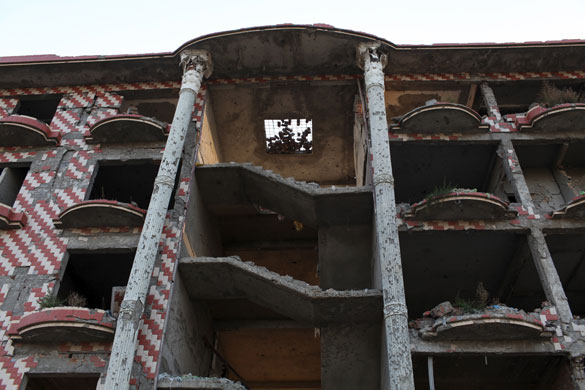
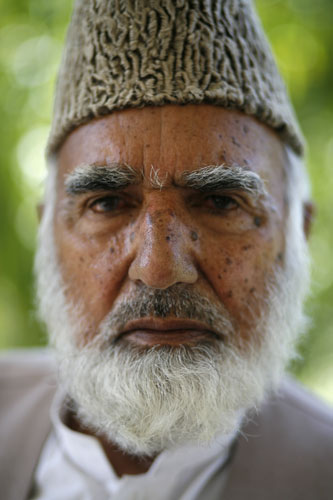
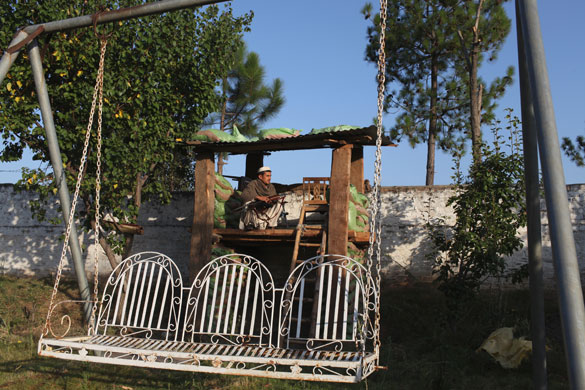
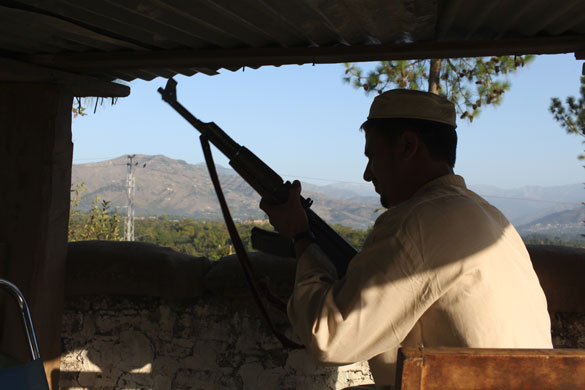
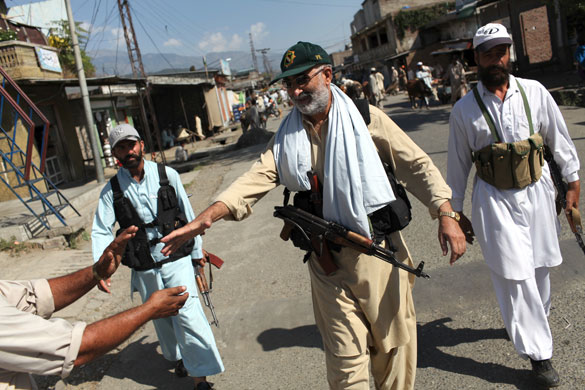
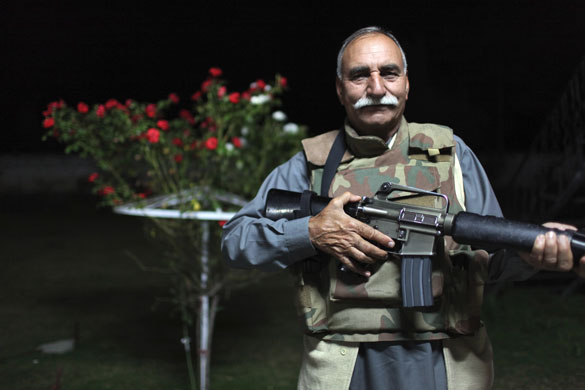
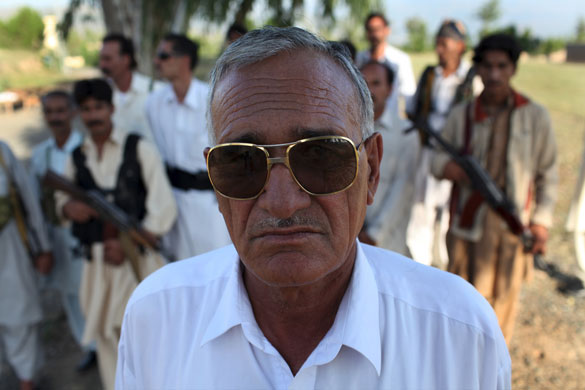
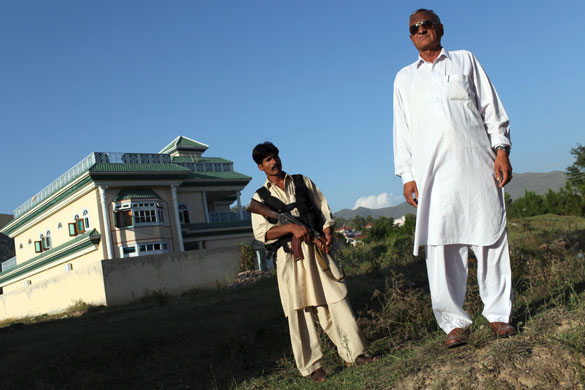
A building destroyed by a suicide bomber in MingoraPhotograph: Declan WalshAfzal Khan Lala, an 82-year-old politician and landlord, in Matta, Swat valley. Khan refused to leave the area during the recent fighting between the army and Taliban, even though his house was attacked with rockets. Earlier in the conflict he was attacked by the Taliban and shot twice. He set up a lashkar, or village militia, to prevent further Taliban incursions into the area. He describes the lashkar as a "village defence committee"Photograph: Declan WalshNasir has raised a lashkar, or village militia, of more than 1,500 men to keep the Taliban at bay. But he does not have complete confidence in the locals: the guard pictured here comes from Khyber tribal agency, 90 miles to the southwestPhotograph: Declan Walsh
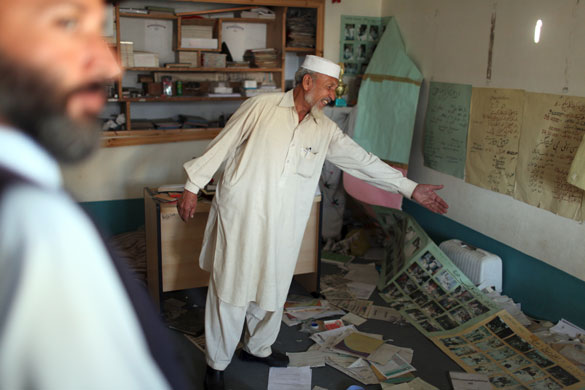
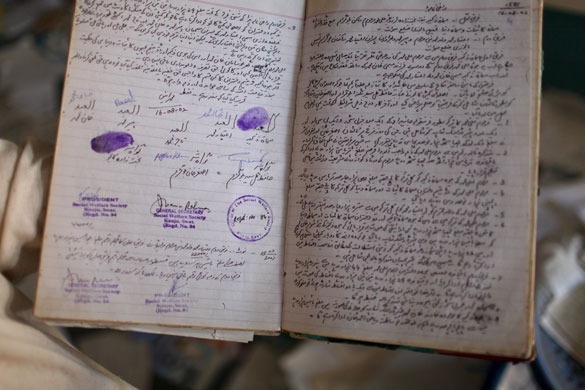
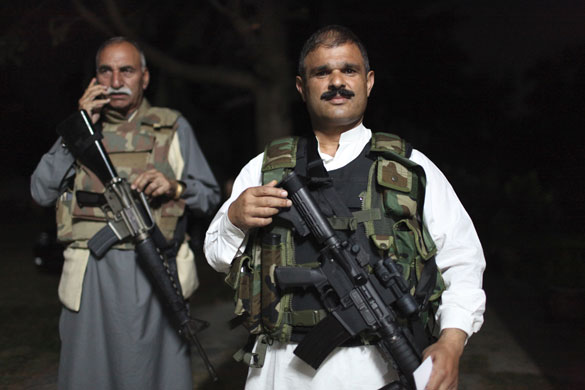
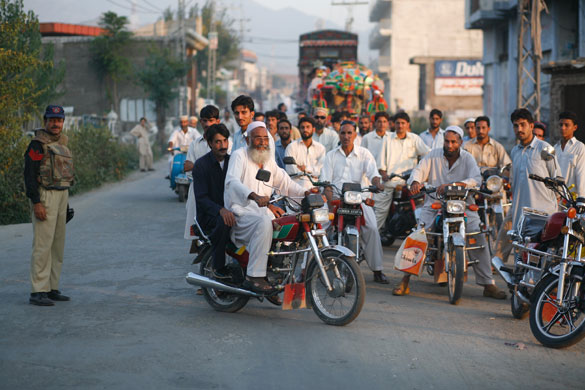
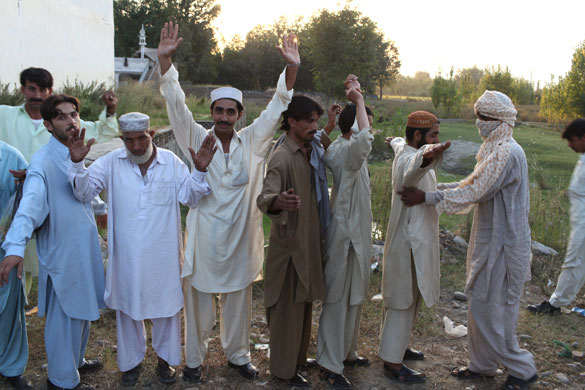
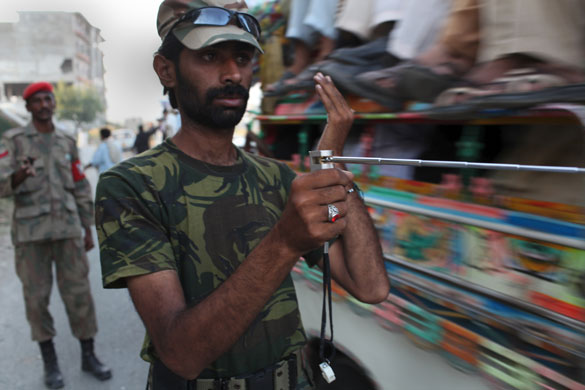
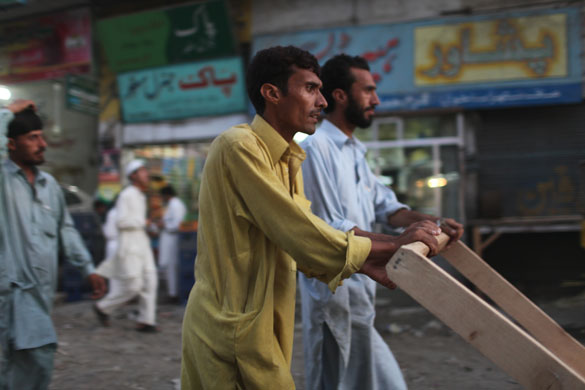
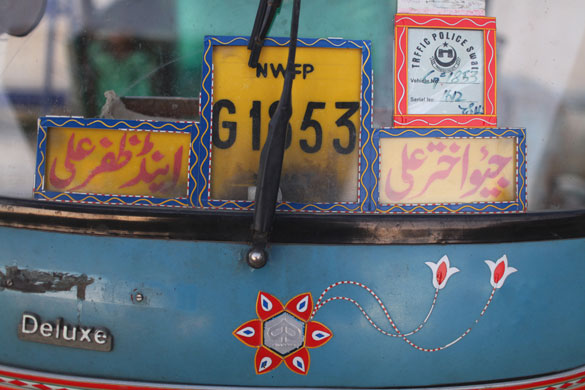
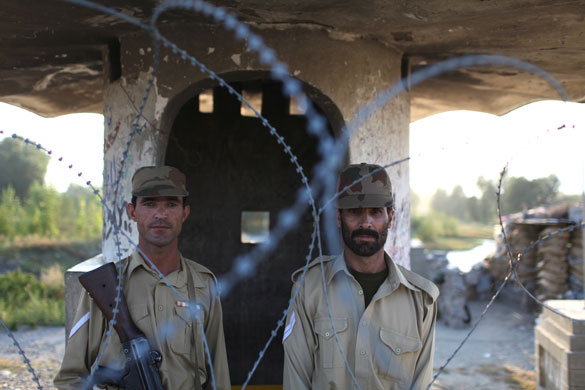
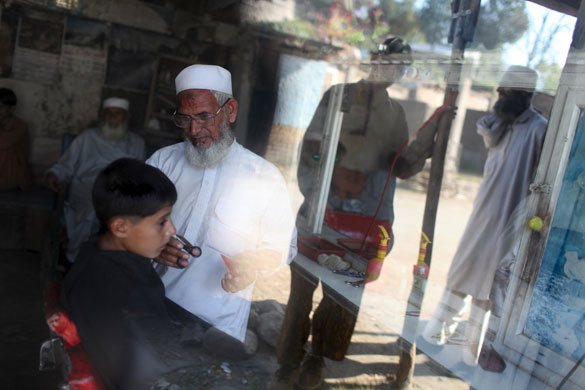
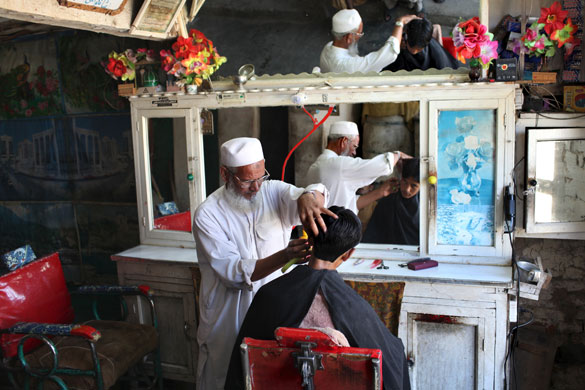
A bodyguard protecting Jamal Nasir Khan, the mayor of Swat, at his property in Matta, a district that was controlled by the Taliban earlier this yearPhotograph: Declan WalshDr Muhammad Naeem Khan, a doctor in Matta district, walking to the local hospital where he works. He carries a Kalashnikov because he is part of the newly formed village militia formed to fend off any future Taliban inflitration into the areaPhotograph: Declan WalshInam Ur Rehman, a tribal elder and self-styled peace negotiator, points to the damage his office incurred during fighting between the Taliban and the army in recent months. Now that security has returned to the area, Rehman heads one of six lashkars, or village militias, created to keep the Taliban at bay. "The lashkar gives confidence back to the people. Before they were afraid to speak out against the Taliban; now they dare to act against them," he saidPhotograph: Declan WalshInam Ur Rehman, a tribal elder and self-styled peace negotiator, points to agreements between the army and Taliban that he helped strike before full-scale hostilities erupted this summerPhotograph: Declan WalshJamal Nasir Khan (right) the nazim, or mayor, of Swat, armed with an American M-4 rifle, at his cousin Majid Ullah Khan's (left) home in Matta district. Nasir was forced to leave his home by the Taliban two years ago after attacks on his familyPhotograph: Declan WalshMajid Ullah Khan, a landlord armed with an M-16 rifle, at his home in Matta district. Taliban violence forced Khan to leave his home last year. Now he has returned but travels using a bulletproof jacket and gun. Along with his cousin, the Swat nazim, or mayor, Jamal Nasir, he is helping to lead a village militia of more than 1,500 to prevent further Taliban incursionsPhotograph: Declan WalshMotorists prepare to cross the Ayub bridge outside Mingora, the main town in Swat valley, which was the scene of heavy fighting recently between the army and TalibanPhotograph: Declan WalshA masked Pakistani army intelligence officer searches men for weapons and explosives, and tries to identify possible Taliban fugitives at a checkpost on the outskirts of MingoraPhotograph: Declan WalshPakistani soldiers check passing vehicles for traces of explosives outside MingoraPhotograph: Declan WalshPeople crossing the Ayub bridge outside Mingora, which was the scene of heavy fighting during the recent battles between the army and TalibanPhotograph: Declan WalshResidents return to the bazaar in Mingora, the main town in Swat valley, which was deserted during heavy fighting last summer but now bustles with tradePhotograph: Declan WalshA rickshaw bearing registration documents for Swat and North West Frontier province, in Mingora, after the defeat of the Taliban in Swat valleyPhotograph: Declan WalshKhan was forced to flee Swat in 2008 after the Taliban destroyed 28 of his properties, razed his orchards and killed 12 relatives and employees. Now he is living in the house of a Taliban commander who has fledPhotograph: Declan WalshSher Shah Khan, a landlord who is influential in Kanju district of Swat valley, with a member of the 2,000-strong lashkar, or village militia, he has set upPhotograph: Declan WalshSoldiers standing guard at the Ayub bridge on the edge of Mingora in Swat valleyPhotograph: Declan WalshUmer Jan, a 55-year-old barber in Matta district, Swat valley, is back at work after spending months in a centre for internally displaced people in Mardan district. Under the Taliban he was forbidden from shaving men's beards. Now his 18-year-old son has joined the "community police", a new force of locals given one month's training to help prevent Taliban re-infiltration into the valleyPhotograph: Declan WalshUmer Jan, a 55-year-old barber in Matta district of the Swat Valley, is back at work after having spent months living in a centre for internally displaced people in Mardan district. Under the Taliban he was forbidden from shaving mens' beards. Now his 18-year-old son has joined the "community police", a new force of locals given one month's training and paid 75 a month to help prevent Taliban re-infiltration into the valleyPhotograph: Declan Walsh
Sign up to read this article
Read news from 100’s of titles, curated specifically for you.