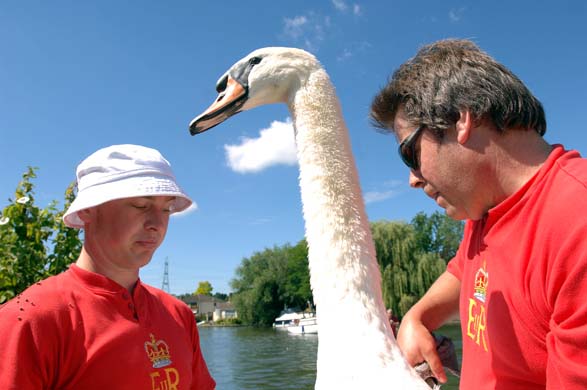
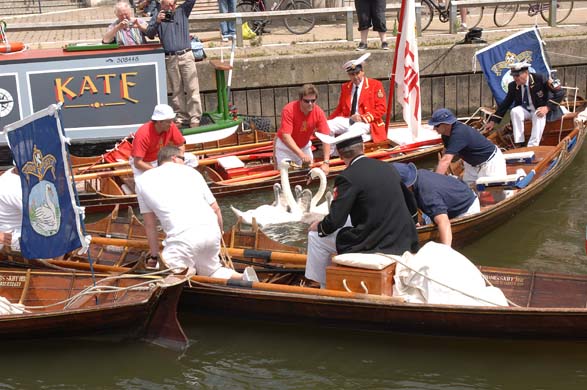
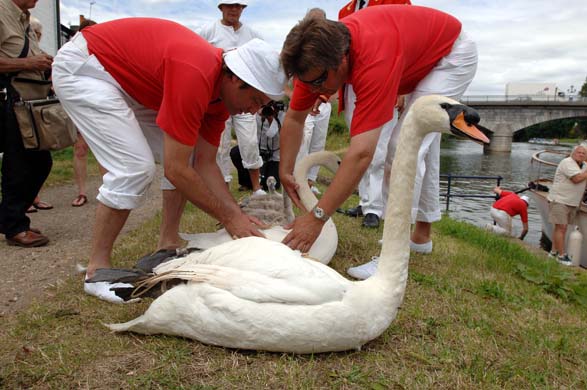
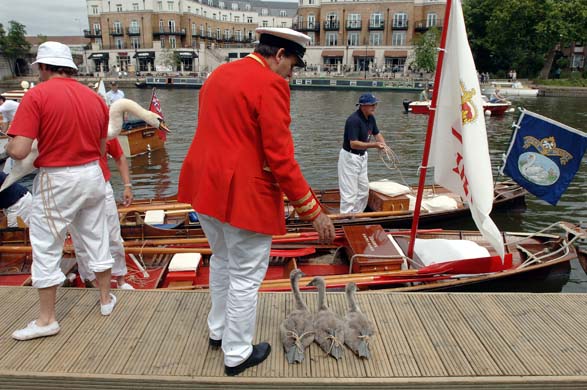
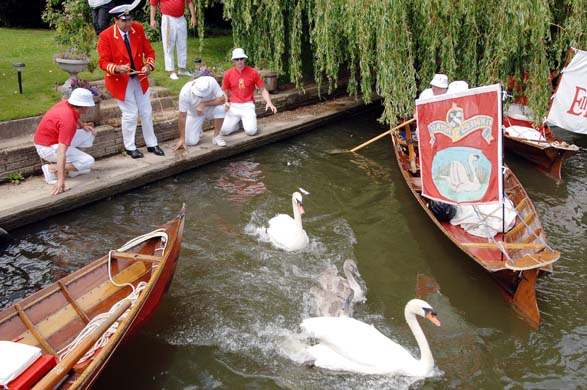
It's a beautiful summer's day on the Thames in London and the first swan of the day eyes up the Queen's official swan marking crewPhotograph: Martin Godwin/freelancerThe ceremony of swan upping dates from the twelfth century and takes place during the third week of July each year. The Queen's swan marker, David Barber, and his crew surround the swans Photograph: Martin Godwin/freelancerSwan upping dates from medieval times, when the Crown claimed ownership of all mute swans at a time when swans were considered an important food source for banquets and feastsPhotograph: Martin Godwin/freelancer
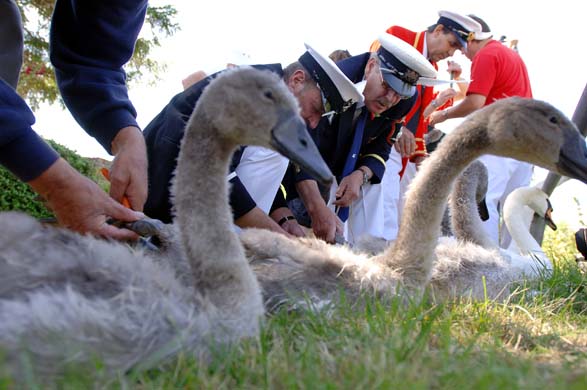
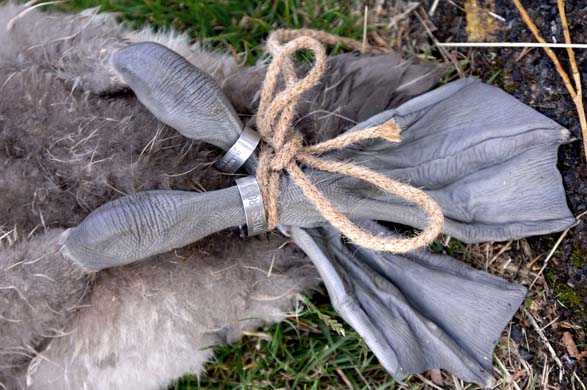
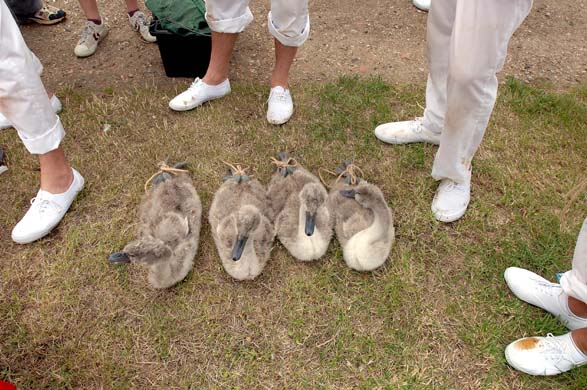
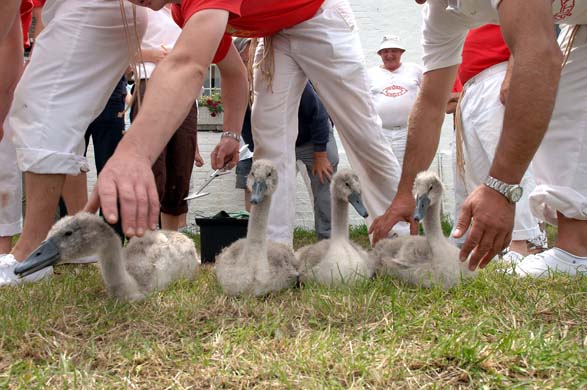
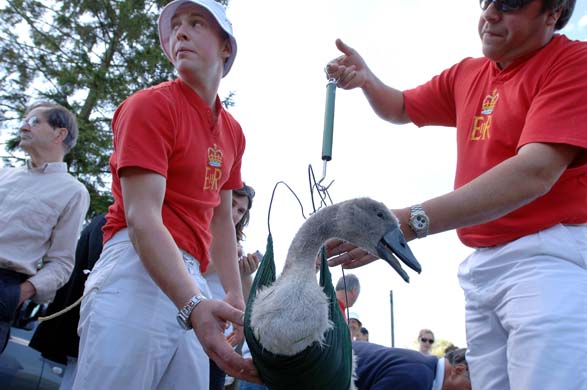
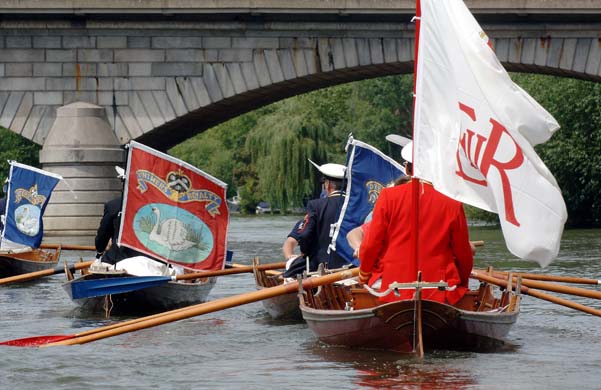
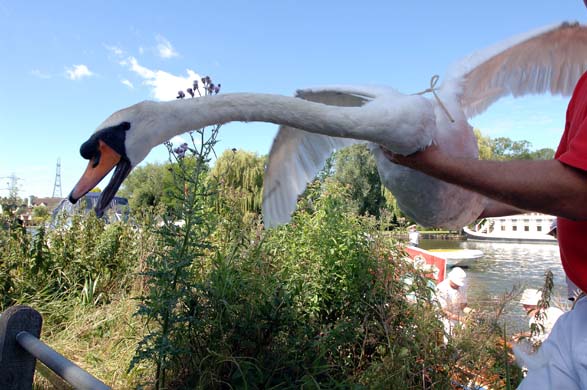
Centuries ago royal ownership was shown by nicks on the beak of each swan. Nowadays royal swans are left unmarked, and upping has become a census and health checkPhotograph: Martin Godwin/freelancerIt has always been the duty of the Queen's swan marker to count the young cygnets each year and to ensure that the swan population is maintained. Here David Barber prepares three cygnets for their health check Photograph: Martin Godwin/freelancerA string bow holds the cygnet's feet together, allowing them to be tagged, counted and weighedPhotograph: Martin Godwin/freelancerCygnets wait in line to be checkedPhotograph: Martin Godwin/freelancerToday, the Crown retains the right to ownership of all unmarked mute swans in open water, but the Queen only exercises her ownership on certain stretches of the Thames and its tributariesPhotograph: Martin Godwin/freelancerThe mute swan has been a much prized bird for many years. It appears to have been given Royal status in the 12th century, and thereafter, if a privately owned swan escaped, it became the property of the CrownPhotograph: Martin Godwin/freelancerThe Queen's swan marker and swan uppers fly their appropriate flags and pennants as they make their way upstream over five daysPhotograph: Martin Godwin/freelancerDiving for escape ... while nowadays they are counted and marked swans are rarely eaten. More common threats on the river include discarded fishing line and hooksPhotograph: Martin Godwin/freelancerHappy families ... a family of swans is released by swan uppers after being checked, weighed and taggedPhotograph: Martin Godwin/freelancer
Sign up to read this article
Read news from 100’s of titles, curated specifically for you.



.jpg?w=600)