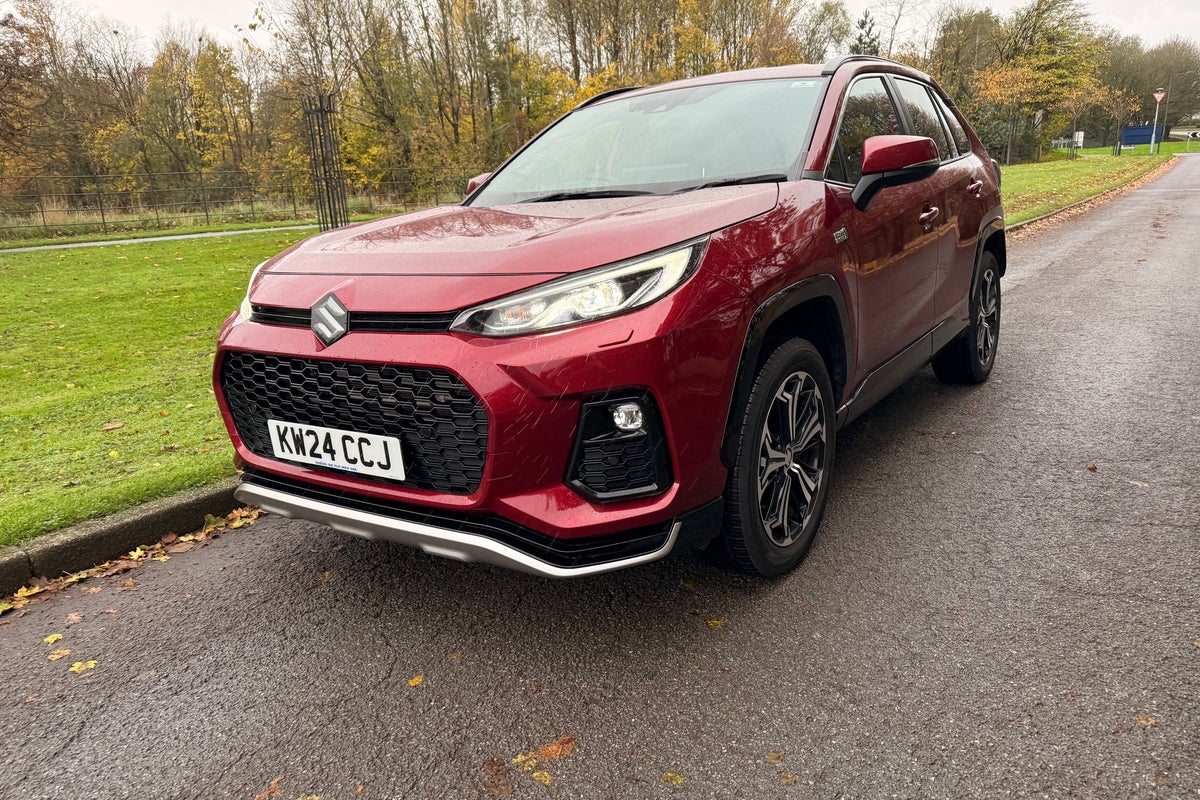
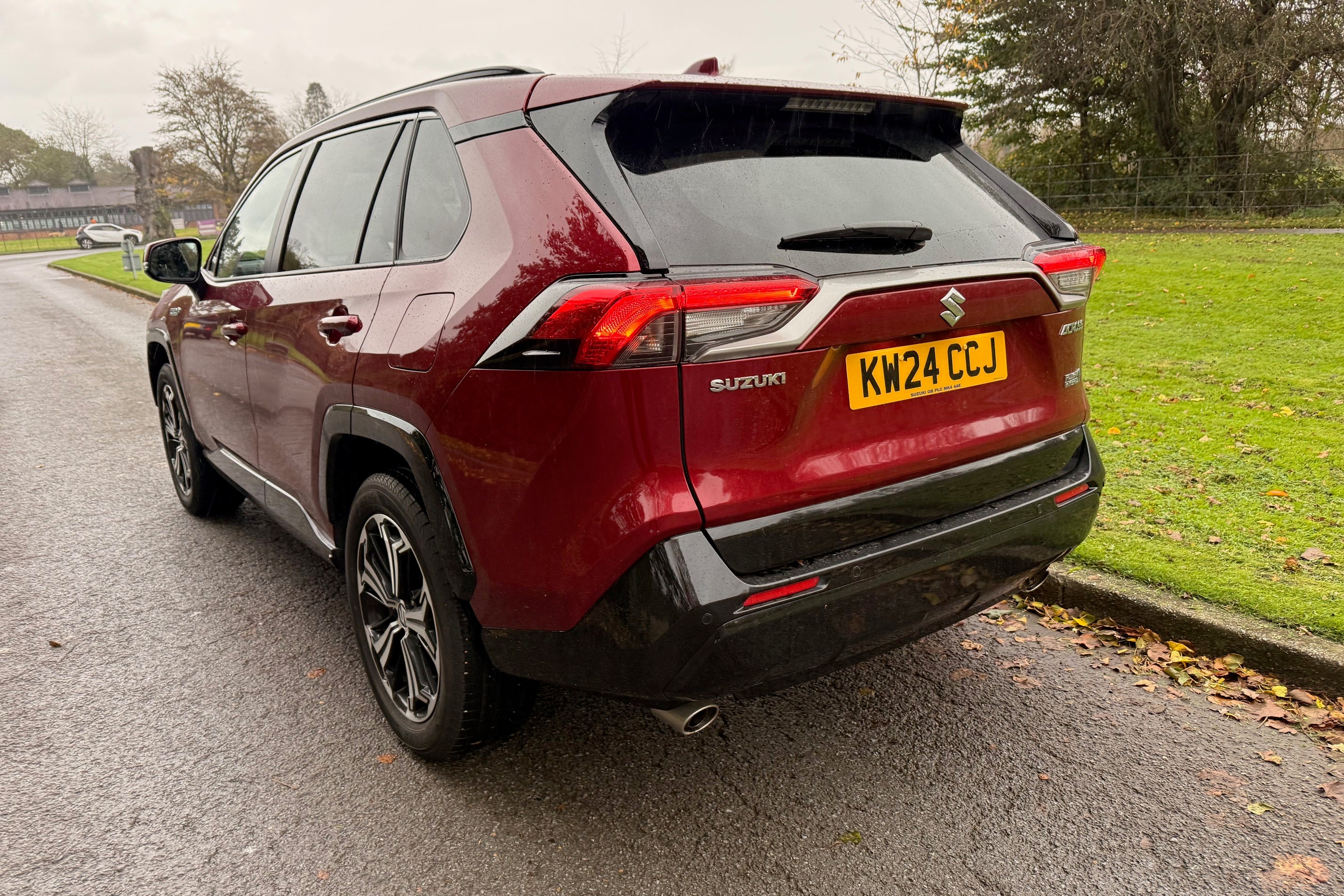
You would be forgiven for doing a double take when you look at the Suzuki Across for the first time, as its design closely mirrors that of the Toyota RAV4. And there’s a very good reason for that resemblance. The Across is part of a collaboration between the two Japanese carmakers. It’s a situation we are seeing a lot more of these days, to cut down development costs. It also offers Toyota access to markets where Suzuki is very strong, especially India.
But it’s not just a straightforward case of replacing a few badges. Suzuki has put its own stamp on the car with a completely redesigned front end, amongst other styling cues.
Toyota has a wealth of hybrid know-how and that has now been transferred to the Suzuki Across, which sees a 2.5-litre petrol engine working with two electric motors and an 18.1kWh battery pack.
There is just the one trim level, which carries quite a heavy price-tag for a Suzuki of £49,679, making it almost double the price of any other car in the company’s line-up. But for that customers get a car that’s packed with every creature comfort imaginable and it covers practicality bases well too, which is always a plus-point on any family-focused SUV. It also has the bonus of being all-wheel drive which is becoming more and more appreciated with our ever-changing weather patterns.
How we tested
We tested the Suzuki Across on a mix of roads, including busy town centres, winding country lanes and a lengthy motorway run in some of the worst driving conditions imaginable – thank you, Storm Claudia!
Suzuki Across: From £49,679, suzuki.co.uk
Independent rating: 7/10
- Pros: Sharp acceleration, practical, generously equipped, decent EV-only range
- Cons: Pricey for a Suzuki, e-CVT transmission can be noisy under heavy acceleration, feels light when buffeted by high winds
Suzuki Across Specs
- Price range: £49,679
- Battery size: 18.1kWh
- Maximum EV range: 46.6 miles
- Engine: 2.5-litre petrol
- Claimed range: 565 miles
Battery, range, charging, performance and drive
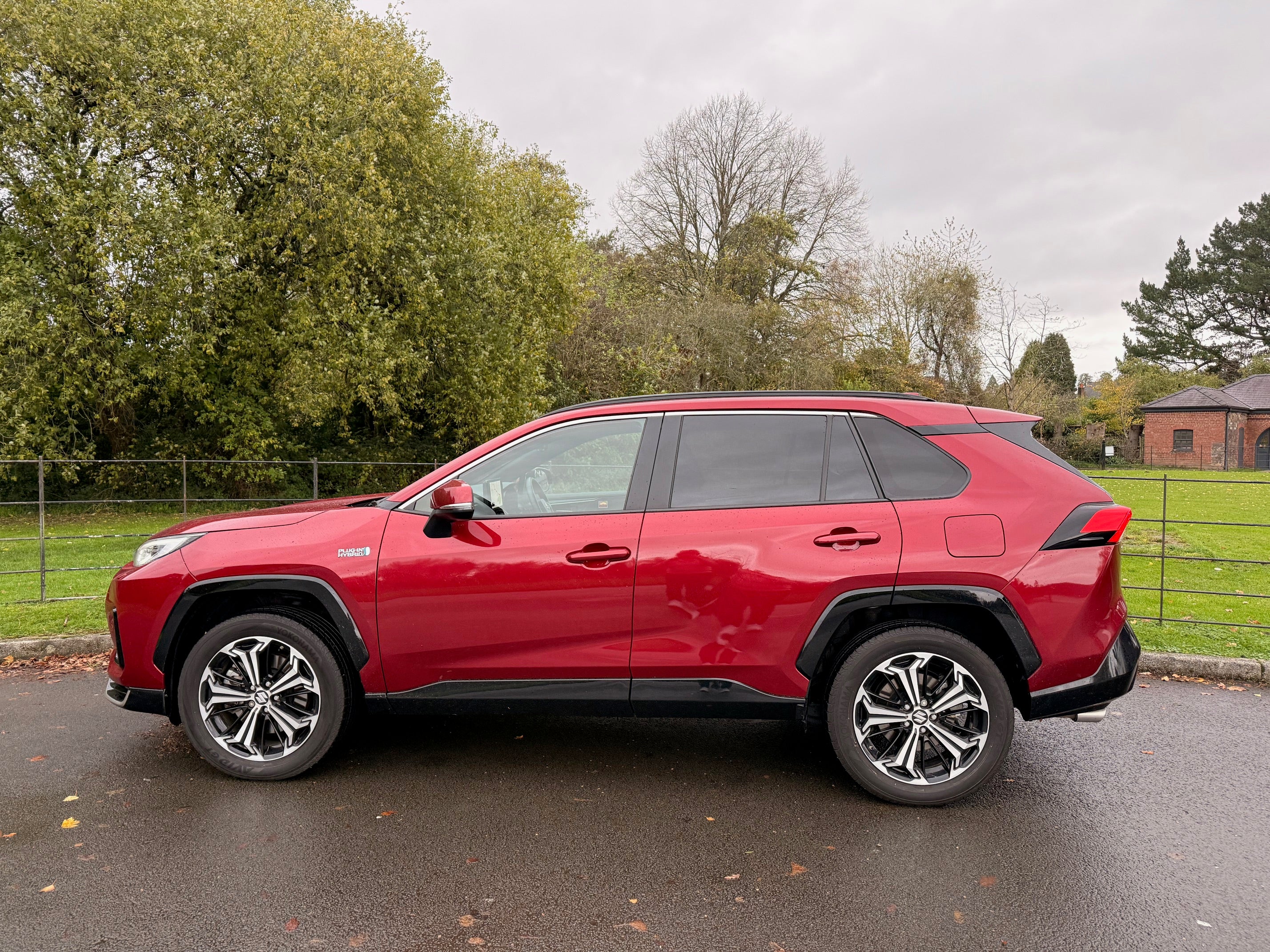
Powering the Suzuki Across is a four-cylinder, 2.5-litre petrol engine working in tandem with an 18.1kWh battery and two electric motors, one on each axle, for four-wheel drive. With 302bhp, the Across can complete the 0-62mph dash in a very impressive 6.0 seconds and it tops out at 112mph.
The electric-only range of 46.6 miles is fine and should easily cover the average daily commute for most people, and that in turn helps to keep day-to-day running costs low. When longer journeys are needed, there is the very capable petrol engine to fall back on and the car can deliver a WLTP-tested 42.9mpg on a combined run. We were seeing close to that figure during our week-long test.
While there is no traditional gearbox, the Across features an e-CVT automatic system which is certainly efficient enough provided you don’t floor the accelerator pedal too quickly. Do that and it will put in quite a protest before accelerating smoothly away.
The vehicle is confident when fizzing through country lanes with decent grip and nice balance, and the elevated seating position results in unobscured all-round driver visibility. That said, the wide B pillars do obscure the over-the-shoulder view a little, but the car has cameras and sensors to help when reversing.
It’s an SUV that can happily sit at 70mph on longer motorway journeys for hours on end. I drove 130 miles during November’s Storm Claudia on the M4 and, despite being buffeted slightly by high winds, the Across didn’t miss a beat. There are three drive modes, called Eco, Normal and Sport, which slightly alter the performance of the vehicle, plus a Trail mode for added 4x4 traction.
At higher speeds the refinement levels take a hit, with quite a lot of road surface and wind noise filtering into the cabin, and expect a high-pitched drivetrain whine if you are too eager with the throttle too.
Charging the 18.1kWh battery via a 7kW home or work-based wallbox takes about 2 hours and 45 minutes. Additionally the car can be charged on the fly using the petrol engine via the Battery Charge mode. There is also an EV-only mode to drive just using the existing electric range, along with an automatic EV/HV setting to get the best combination of battery and petrol power.
Interior, practicality and boot space
When it comes to comfort and practicality, the Suzuki Across, just like the Toyota RAV4, covers all bases effectively. There is an eight-way powered seat and ample manual steering wheel adjustment, so finding a comfortable driving position is simple enough. The seats and steering wheel can also be heated against the winter blues.
The quality is appealing enough without being garish in any way, so expect to see a neat mix of fabric and synthetic leather upholstery, a leather-wrapped steering wheel and plenty of soft-touch surfaces.
There is room for a driver and front seat passenger to stretch out and, even with the seats pushed well back, a couple more adults or trio of children can sit comfortably in the back. The outer rear seats are also heated for extra cosiness.
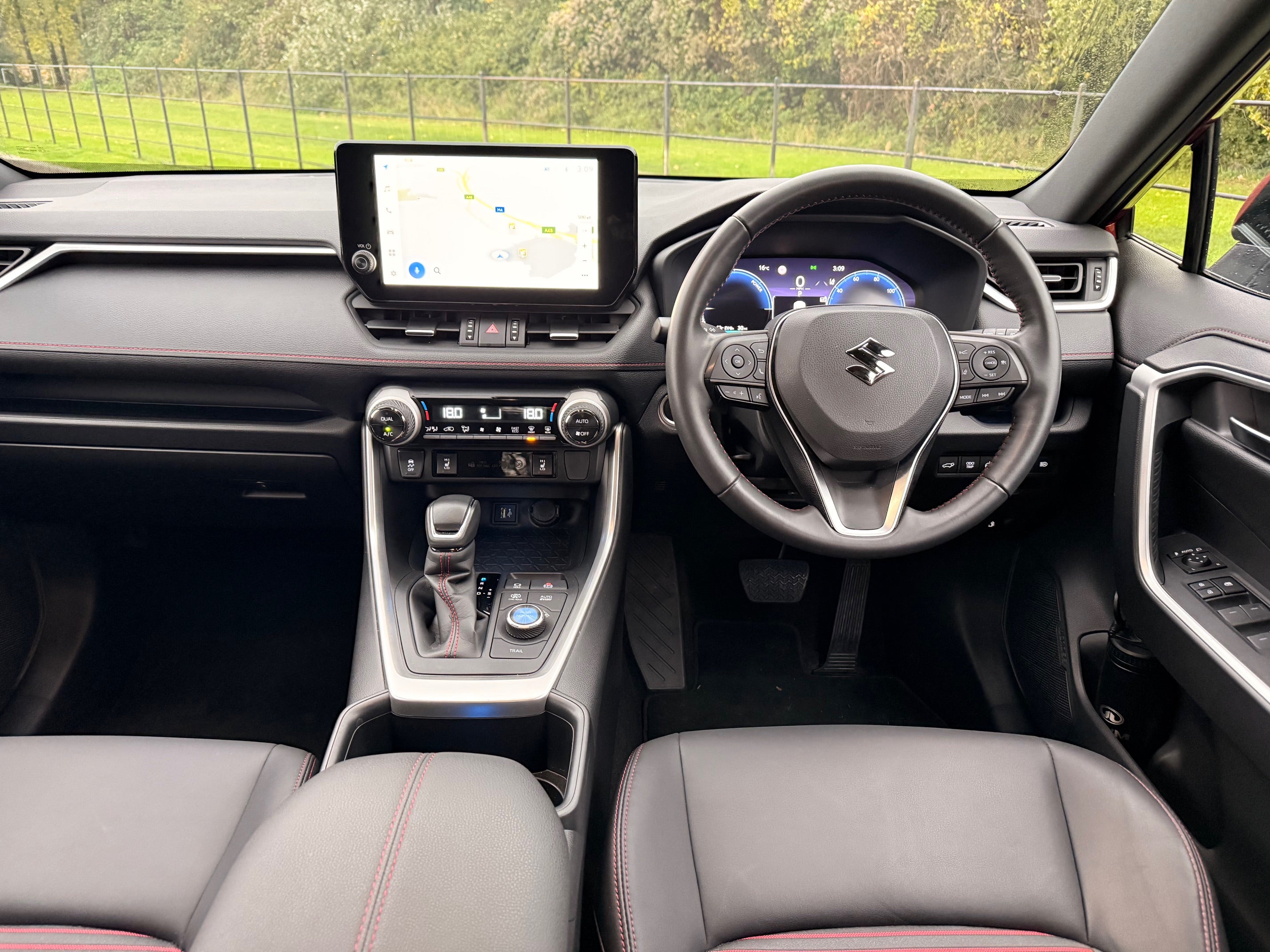
The boot is accessed via a powered tailgate with a kick function so it can be opened hands-free if carrying shopping bags, and it can accommodate 490 litres of luggage with a retractable cover to keep goods hidden away from prying eyes. Drop the 60:40 split-folding rear seats and the storage capacity increases to 1,168 litres which is ample room for a couple of pushchairs or several sets of golf clubs, complete with a trolley or two.
Additionally, occupants will find a range of handy storage compartments scattered throughout the car. These include a glovebox, front and rear cup holders, a central cubby, door bins with bottle holders, seat-back pockets, trays, a sunglasses holder, and a handy compartment for coins at the end of the dash.
And with its AWD capabilities and a towing limit of a braked 1.5 tonnes, the Suzuki Across is all geared up for adventurous weekend family breaks.
Technology, stereo and infotainment
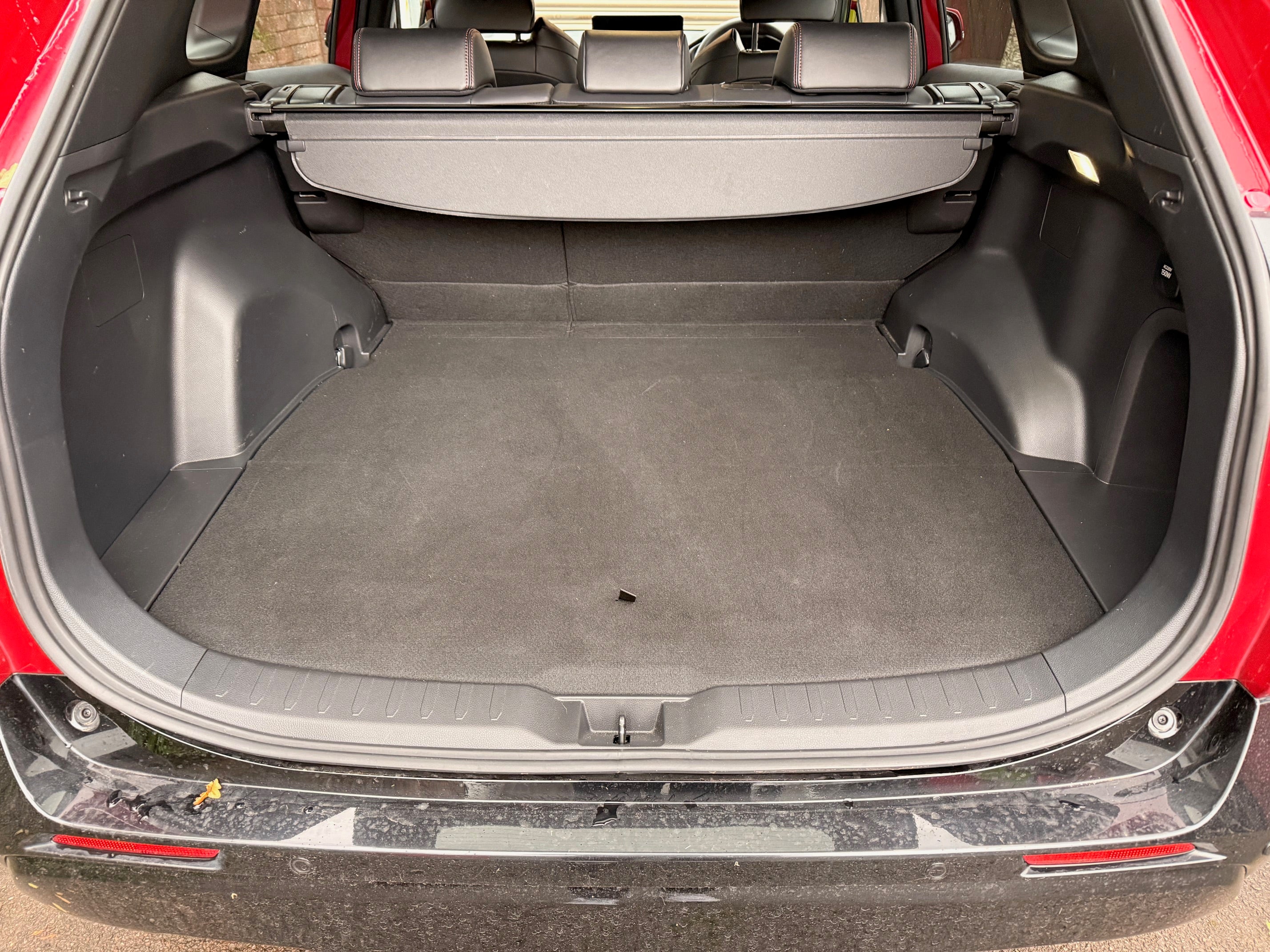
The Suzuki Across boasts a feature-rich, but exceptionally user-friendly cockpit with everything designed to be easy to access and operate. There is no overly elaborate and or irritating technology – it’s just got everything you need in a nicely wrapped package with clear readouts and a 10.5-inch colour touchscreen that responds quickly to inputs.
It takes a matter of seconds to connect a smartphone via wireless Apple CarPlay or wired Android Auto, and creature comforts include a navigation system, Bluetooth, a DAB radio, a reversing camera and plenty more besides.
All the important numbers, such as speed and remaining EV range, are clearly shown on the 12.3-inch driver display. There’s nothing flashy about the interior of the Across, but it does everything you ask of it without any unnecessary fuss.
Prices and running costs
With just the one, well-equipped Suzuki Across model available, the pricing could not be simpler and the need for any optional extras will also be few and far between. The car costs £49,679, which is certainly expensive for a Suzuki. In fact, the model that is currently priced closest to the Across is the all-new e-Vitara at £26,249.
Unfortunately, that quite hefty asking price means the car falls into the government’s Expensive Car Supplement category for vehicles costing in excess of £40k. That will add an extra £425 to annual bills from years two to six.
With its carbon emissions figure of 22g/km, the first year road tax bill will be £110, increasing to £195, the standard fee, after 12 months. However, owners will be able to save money by keeping the car’s 18.1kWh battery topped up and using the 46.6 miles of EV range as often as possible. Additionally, the combined fuel efficiency figure of 42.9mpg is pretty good for a family SUV with all-wheel drive.
The Across sits in insurance group 39 and any business driver looking to run the car will see a Benefit in Kind tax rating of nine per cent.
The Suzuki Across is sold with a standard three-year, 60,000-mile warranty, but this can be extended to 10 years or 100,000 miles (whichever comes first) if the car is serviced at an authorised Suzuki workshop.
Suzuki Across rivals
- Toyota RAV4
- Honda CR-V PHEV
- Ford Kuga PHEV
- Skoda Karoq
FAQs
How long does it take to charge?
If using a 7kW home charger, the 18.1kWh battery can be fully charged in about 2 hours, 45 minutes.
How much does it cost - is it worth it?
There is just the single version of the Suzuki Across which costs £49,679. That’s quite a price-hike for a Suzuki and a good £20k more expensive than any other model in the line-up. But with so many underpinnings shared with the highly respected Toyota RAV4, it could appeal to buyers wanting the Suzuki badging.
Does Suzuki replace batteries for free?
There’s a three-year or 60,000-mile cover for the vehicle itself, although this can be extended to 10 years or 100,000 miles if the vehicle is serviced regularly at a Suzuki-authorised workshop.
Why trust us
Our team of motoring experts have decades of experience driving, reviewing and reporting on the latest EV cars, and our verdicts are reached with every kind of driver in mind. We thoroughly test drive every car we recommend, so you can be sure our verdicts are honest, unbiased and authentic.
The verdict
If you’re a fan of the Toyota RAV4, there’s no reason why you won’t like the Suzuki Across, as they share much of the same DNA. It’s generously equipped, practical, easy to drive, and looks smart enough, but that just-shy-of-£50k price-tag could be a step too far.
The Independent EV Price Index November 2025
Lexus NX review: Did this plug-in hybrid miss the starting gun?
Lexus RX review: Big enough to live in, good enough to live with?
Best used electric cars 2025: Top 10 second-hand EVs to buy
Toyota Prius review: Radical reinvention of a hybrid icon
Volvo V60 review: Classy and understated plug-in hybrid estate
10 best cheap electric cars: Affordable EVs worth ditching petrol and diesel for