Cotton is all around us: in our clothes, our furniture, our sheets and towels, even our bank notes. To meet global demand, millions of smallholder farmers cultivate 25m tonnes of cotton annually, with a further 250 million people working in cotton production. Their livelihoods depend on it. But growing cotton conventionally poses risks to the environment, workers’ health and our future supply of fresh water. Some 2,500 litres of water are required to produce one tshirt, according to the Water Footprint Network.
The Better Cotton Initiative (BCI) seeks to tackle these issues head on. Established in 2009, BCI is a multi-stakeholder initiative supported by 500 companies, including major businesses such as H&M, Nike and IKEA. It unites people across the cotton supply chain in a collective effort to produce Better Cotton – cotton that is cultivated in a way that respects the environment, boosts farmers’ incomes and strengthens the industry. BCI already reaches around 1 million farmers in 20 countries, including India, Pakistan and China, some of the world’s biggest cotton producing nations. And 39 major brands have made public commitments to increasing the proportion of Better Cotton they source.
Ultimately, BCI aims to have 5 million Better Cotton farmers producing 8.2m metric tonnes of Better Cotton annually by 2020. That’s around 30% of global cotton production.
“We want to transform global cotton production by making Better Cotton a truly mainstream commodity,” says Patrick Laine, BCI’s CEO. “This means striving for continuous improvement and supporting a system that makes good business sense.”
Introducing the Better Cotton Standard System
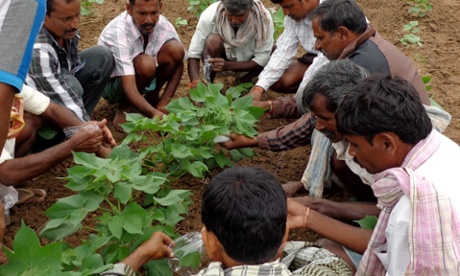
The Better Cotton Standard System is a method developed by BCI to help cotton farmers reduce their use of harmful pesticides and fertilisers, water crops efficiently, protect soil health and natural habitats and improve working conditions. Farmers receive comprehensive training, and monitor their results in line with the standard’s exacting criteria. By cultivating Better Cotton, they save money, increase their yields and improve their incomes. The standard is based on productivity, rather than premiums, encouraging farmers to focus on making improvements and helping to create a steady source of supply. Importantly, BCI works to forge a clear route to market for Better Cotton by raising awareness of how it benefits businesses at every stage of the supply chain.
Promising results
BCI farmers in India and Pakistan reduced their water use by 14% and cut their pesticide use by 24% in 2013 compared to farmers not using BCI techniques, with farmers in Pakistan increasing their use of organic fertilisers by 85%. Meanwhile, they expanded their yields by nearly 20% and saw profit increases of up to 44%. BCI is currently exploring how these changes are affecting farmers’ health and wellbeing.
And Better Cotton continues to gain ground in the world cotton market, too. In 2014, some 8.8% of global cotton production was comprised of Better Cotton (up from 3.7% in 2013), and BCI has its sights set on reaching 11.5% in 2015.
“Cotton production businesses and traders are seizing the opportunity to reduce risk and secure future business by purchasing a high quality, responsibly grown commodity,” explains Laine. “Meanwhile, brands have access to a sustainable, commercially viable option for cotton.”
A brand perspective
Involved since the beginning as a founding member, H&M collaborates with the BCI to drive progress, and invests approximately €850,000 (£606,000) annually in farmer training. The company aims to source 100% of its cotton from sustainable sources by 2020, including from Better Cotton, organic and recycled cotton. By 2013, Better Cotton already accounted for 16% of H&M’s use of more sustainable fibres.
“Cotton is our most important raw material by volume, so it’s vital to our long-term business success,” explains Henrik Lampa, H&M’s environmental sustainability manager. “It’s our responsibility to help safeguard cotton’s future and the BCI’s approach offers a smart, pragmatic and inclusive way to achieve this. We’re working with our supply chain to help build momentum as we increase the proportion of Better Cotton in our collections.”
“H&M has been a brilliant pioneer for the programme,” adds Laine. “The H&M team has gone beyond financial support and really got involved on the ground, visiting the cotton fields to see firsthand how their investment is making an impact.”
Looking to the future, Laine is confident that Better Cotton will represent 30% of global production by 2020, and believes this will trigger a powerful chain reaction.
“Soon after we achieve our 2020 goal, we will reach a ‘tipping point’,” he concludes. “More and more companies, governments and farmers will realise that producing Better Cotton is the right thing for people, the environment and business. We will keep adding scale and impact, until eventually, there will be no need for BCI to exist.”
Content on this page is paid for and produced to a brief agreed with
H&M, sponsor of the sustainable fashion hub.