The property sector is entering a new phase of sustainability-driven transformation as developers, financiers, capital market regulators and supply chain partners align around Thailand Taxonomy, a national framework designed to accelerate the transition to a low-carbon economy.
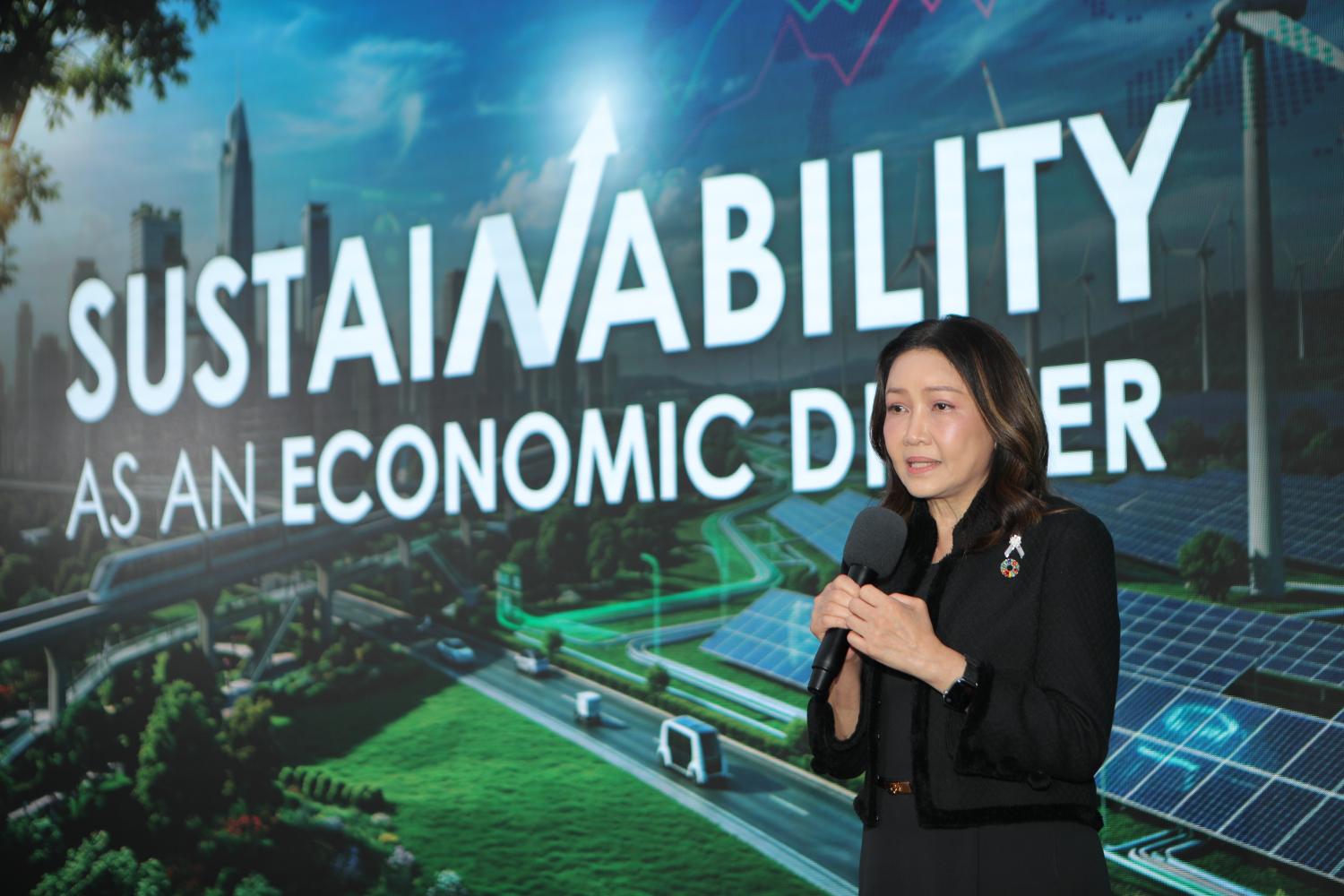
At the Green Up 2026 forum on Wednesday hosted by SET-listed developer Sansiri, industry leaders said sustainability is no longer a voluntary initiative or branding exercise, but a new business capability that will determine long-term competitiveness.
FUTURE-READY ASSETS
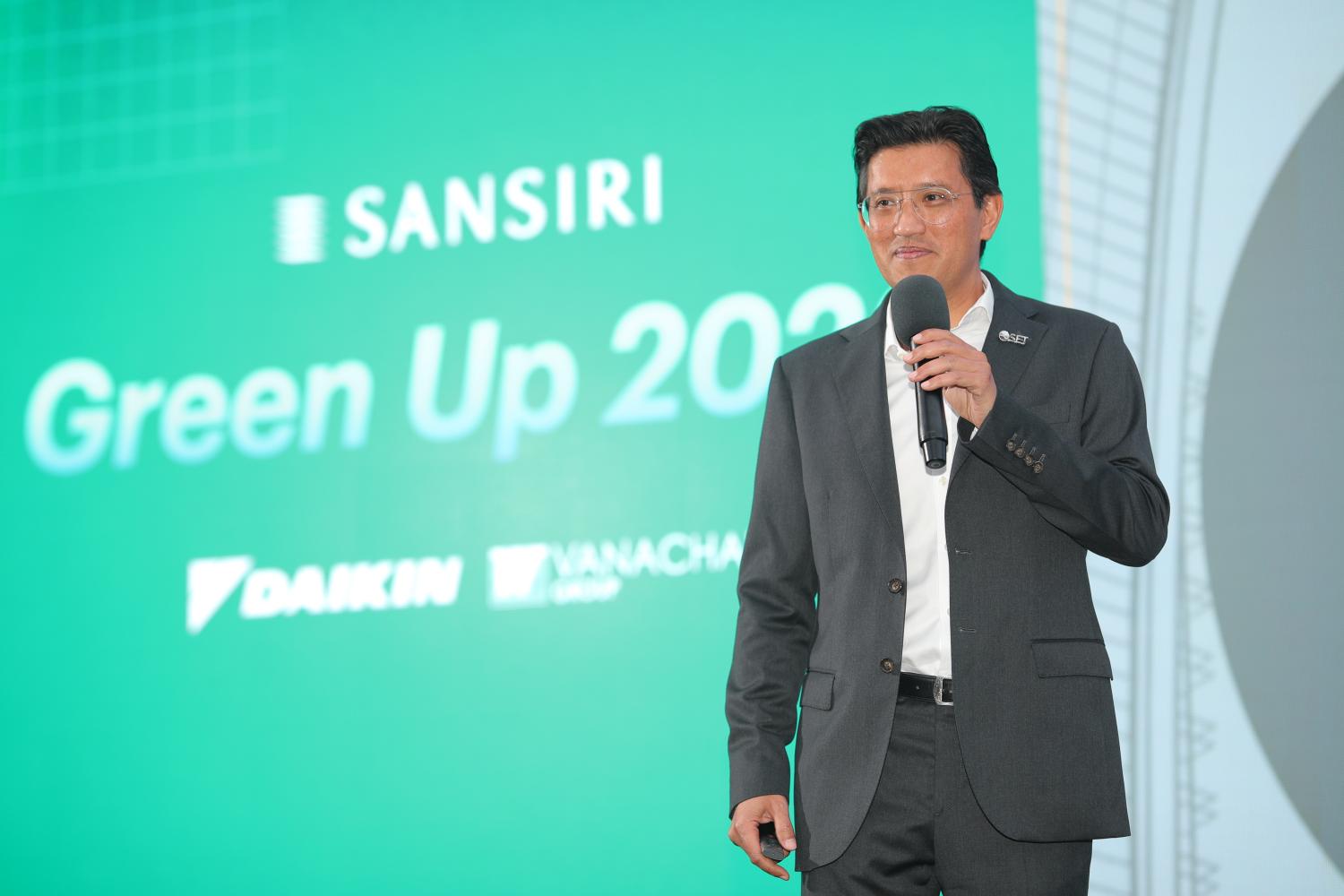
Uthai Uthaisangsuk, president of Sansiri, said sustainability has been embedded in the company's business strategy over the past decade and is now shaping decisions across its entire value chain.
"Sustainability is not a trend. It is a new capability that organisations need in order to remain competitive in the future," said Mr Uthai.
He said environmental responsibility should not be viewed as a burden, but as an opportunity to create value for customers, partners, communities and the planet.
"We are not only reducing negative impacts. We are creating positive value and moving towards a regenerative future," said Mr Uthai.
Future-ready assets will increasingly be assessed by their ability to adapt to climate change, improve operational efficiency and demonstrate measurable environmental performance, he noted.
Sansiri set a target to achieve net-zero emissions by 2050 and is working with more than 4,000 suppliers and contractors under its sustainability framework.
Mr Uthai said Thailand Taxonomy provides a common standard to validate environmental performance and support access to sustainable finance.
The company recently secured green financing support from Kasikornbank (KBank) and has six projects worth more than 4 billion baht under green loan programmes.
Three prototype projects -- Widen by Sansiri, PTY Residence Sai 1 and The Standard Residences Hua Hin -- have become benchmarks for low-carbon development, he noted.
SUSTAINABILITY MATTERS
Asadej Kongsiri, president of the Stock Exchange of Thailand, said sustainability has become a critical pillar of trust in global capital markets.
"ESG [environmental, social and governance] is no longer simply a CSR [corporate social responsibility] initiative. It is a key economic mechanism and an important factor in capital allocation decisions," he said.
Although Thailand contributes only around 0.69% of global carbon emissions, the country remains highly vulnerable to climate-related risks.
"If no action is taken, Thailand's GDP could decline significantly in the coming decades due to climate impacts on sectors such as agriculture and tourism," said Mr Asadej.
Investors worldwide are increasingly directing capital towards companies capable of demonstrating long-term value creation through sustainability, he noted.
The value of ESG-related investment products in Thailand has risen sharply, growing from around 20 billion baht in 2017-18 to 159 billion baht last year.
Mr Asadej said Thailand Taxonomy helps bridge international sustainability frameworks with practical business implementation and investment decisions in Thailand.
FINANCE DRIVES TRANSITION
Kattiya Indaravijaya, chief executive of KBank, said sustainability has evolved from a corporate responsibility issue into a core economic driver.
"In the past, many companies viewed ESG as a CSR activity or an optional advantage. Today, the world operates under a new set of rules," she said. "Companies that successfully adapt will gain competitive advantages, secure better access to funding and strengthen long-term growth prospects."
Sustainable finance continues to expand rapidly, with global ESG bond issuance rising from US$179 billion in 2019 to around $1 trillion in 2025, said Ms Kattiya.
Major institutions such as BlackRock and Goldman Sachs continue to increase their commitments to sustainable and transition finance.
Thailand's ESG bond market also rebounded strongly, with sustainability-linked bond issuance rising from 86.4 billion baht in 2020 to 208 billion last year.
KBank developed a customer transition framework covering awareness-building, carbon measurement, emissions reduction planning and green financing solutions.
To minimise the risk of greenwashing, the bank increasingly relies on Thailand Taxonomy as a credible assessment framework, she noted. Sansiri is the first and only developer to qualify under the building sector criteria, said Ms Kattiya.
REGENERATIVE SHIFT
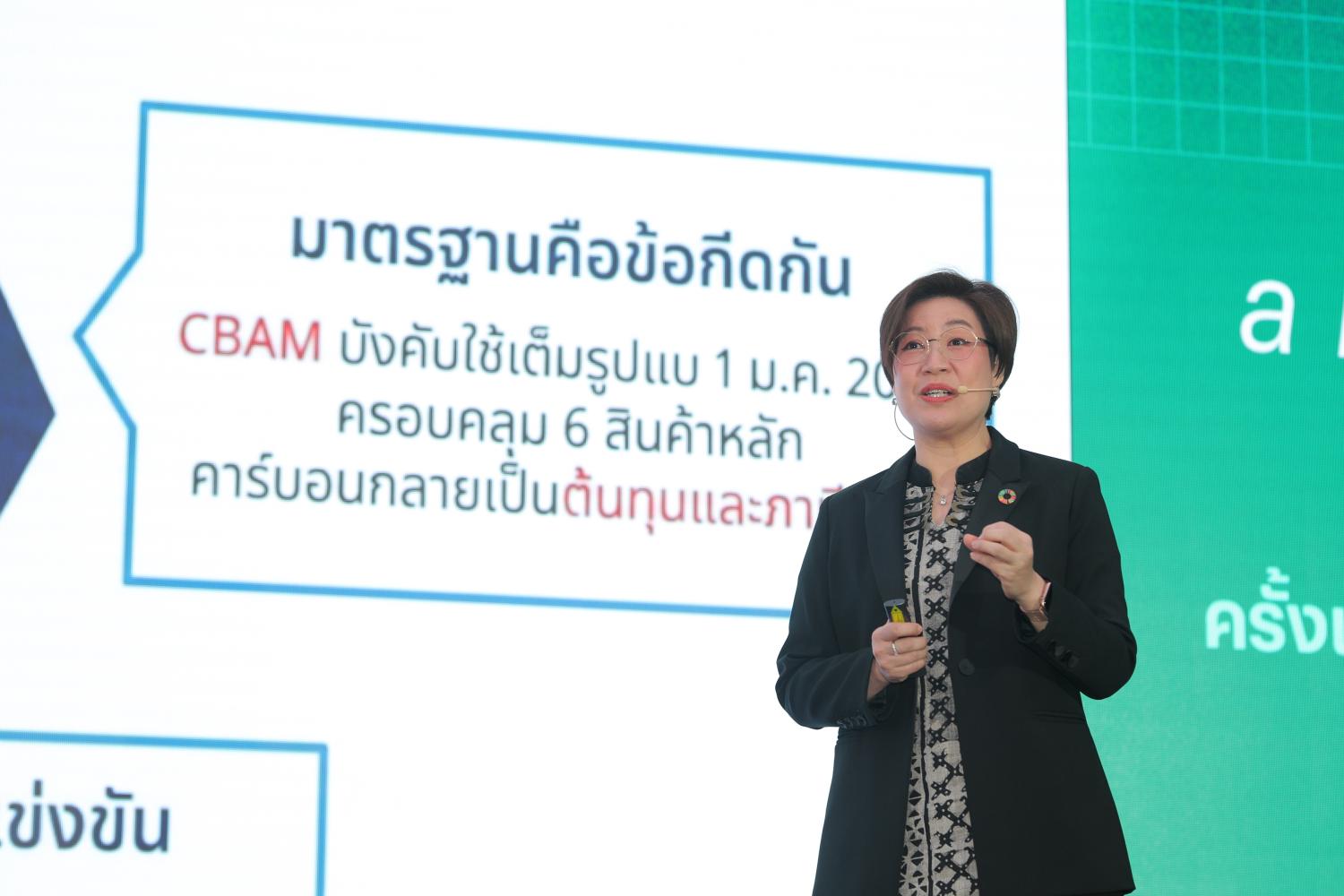
Thanyaporn Krichtitayawuth, executive director of UN Global Compact Network Thailand, said global sustainability standards are rapidly becoming business requirements rather than optional commitments.
"Global standards will not wait for anyone," she said. "Markets are increasingly judging businesses based on verified data, not good intentions."
Ms Thanyaporn noted global investment is shifting towards climate solutions and clean energy, with annual investment exceeding $2.2 trillion. Sustainability is evolving beyond impact reduction towards regenerative business models that actively restore ecosystems and create positive outcomes.
The EU's Carbon Border Adjustment Mechanism, which moved to full implementation on Jan 1, is a major catalyst for supply chain transformation, she said. Businesses seeking long-term competitiveness will increasingly need to align with international carbon standards and transparency requirements, said Ms Thanyaporn.
Looking ahead, Sansiri plans to launch a Biodiversity Flagship initiative by the end of 2026 as part of its next phase of sustainability development.