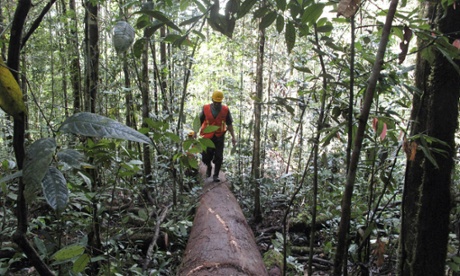
Kim Carstensen believes the best way to approach sustainability is to see how people are affected from a sociological standpoint, he reveals in this Q&A. Carstensen is director general of the Forest Stewardship Council, the nonprofit group helping to certify more than 186.41 million hectares of sustainably managed forests and more than 5,000 companies across the US and Canada. He also spent 21 years with the World Wide Fund for Nature (WWF).
A World Wide Fund for Nature (WWF) interview describes you “enjoying yourself immensely with your own company” before becoming FSC Director General in 2012. Describe your work prior to FSC.
After working with the WWF, my wife, Camilla, and I rode our bikes 6,000 miles from Denmark to Malta and back. This yearlong, refreshing experience helped reconfirm my overall career trajectory – finding effective ways to combine environmental and social interests. This trip also later inspired our sustainability consulting company. We worked with companies during the lead-up to the Rio+20 conference, which revisited the UN conference on environment and development from 20 years earlier.

We observed that while everyone talked about a green economy, few cared to define what a green economy means. With NGO colleagues from India, Brazil, China and Tanzania, we tried defining a green economy integrating people’s welfare, natural values and resources, division of labor, power, and access to resources. How do we become – and help companies become – green in that sense?
Your first task for the WWF-Denmark in the late 80s was ensuring the WWF-Denmark portfolio in Africa actually helped people. What did you help fix?
The clever and very enthusiastic biologists leading environmental groups like WWF in the 80s realized they must engage people in order to protect nature and conserve wildlife. WWF hired me to help design projects in Africa built on dialogues with people to understand their interests and ensure that the projects helped people, while protecting the natural resources.
One project was just after the West Africa drought disasters made famous by Bob Geldof’s Band-Aid effort. We helped people in the Sahara recover from the drought, while protecting threatened wildlife, cheetahs, hyenas and antelope. Our first idea was teaching herders to manage nature better – redirecting water to better regenerate grasses, managing small trees and bushes. However, the herders revealed their larger problem was their lost earnings to deal with the drought – crashed prices prevented them selling their animals. Our idea was helping the herders send the animals south where drought did not hurt prices, thereby allowing them money for food and new animals. By analyzing the real motivations, we provided alternative solutions.
What first inspired your sustainability work? Describe your boyhood.
Embarrassingly, I’m a city boy from Denmark who grew up far from nature. But with my grandfather, a book printer, I enjoyed from age three beautiful, big colorful photo books like the Time series on the African savanna or the American prairies. I’d dream about engaging with this nature.
Twenty years later, in the Serengeti as a biology student at the University of Copenhagen, I saw the migration of wildebeest and realized if my life goal was loving and helping nature, studying biology was not enough. I must understand people and society, so paradoxically I became a sociologist to help wildlife and rainforests.
Was this approach radical?
Certainly, few social scientists were interested in biology or nature conservation at the time. Biologists who began talking about indigenous peoples and their role in conserving tropical rainforests in the 70s drove the notion that to meaningfully help nature in Africa, Latin America or Asia, we must understand people. So while I was out of sync among sociologists, I was in sync with the environmental movement. I felt very modern and ahead of my time.
Describe your happiest moments with the FSC.
In a happy meeting in Finland, one FSC Finland board representative explained how FSC helps them better protect the grazing reindeer under FSC certified areas versus areas outside. The other representative told me how FSC helps forest workers get safer, healthier and happier lives. I heard fighting for sustainable forest management makes a real difference.
I felt equally validated working with researchers from the Center for International Forestry Research (CIFOR) in Indonesia who studied the difference in social terms between FSC certified forests versus noncertified forests in the Congo. When exploring every single social issue – mothers’ health, education levels, financial income and water access – every facet looked consistently better than noncertified forests. Few development or government activities create such consistent results.
When it comes to sustainable timber and forests, what worries you the most?
I worry the continued growth in global consumption of natural resources doesn’t correlate with sustainability. Every year developers still clear vast tropical forests for urban growth, palm oil, agriculture and plantations – we witness this steady forest decline globally. Nor have the agriculture, forestry, mining and infrastructure sectors found solutions for this resource scarcity. We must work collectively to stop destroying forests.
What gives you hope?
I’m encouraged the FSC has grown its global reach of certified areas and companies, in spite of six years of economic crisis and other priorities – companies and people want more responsible forest management.
Describe the challenges for farmers owning sustainably managed forests.
Making ends meet and doing the right thing is challenging. People manage sustainable forests for social, emotional, spiritual and financial reasons. The FSC, whose job is defining sustainable forest management, must ensure the documentation and certification process for doing the right thing is easy and pays off.
Many thoughtful consumers would likely buy FSC products if they understood the primary benefits of certification. What are some of the challenges of reaching this market?
Our organization hasn’t effectively communicated in plain English to ordinary people. For caring consumers, we must show what results from forest managers doing the right thing by sharing the stories of the people, plants and animals thriving in a well-managed forest. We are developing storytelling materials, while asking our partners to help show why FSC forests make a difference for people, water resources and wildlife.
FSC partners with businesses that share its commitment to responsibility. The organization has a longstanding relationship with Domtar, a Fortune 500 paper manufacturer that operates 13 mills across the United States and Canada. Domtar was the first company to offer an FSC certified line of copy paper – and today, its EarthChoice product line represents the widest range of FSC certified papers on the market.
Content on this page is provided by Domtar, supporter of the Vital Signs platform.