There is a lot that is commendable about Tony Hutchinson's article arguing that retrofitting in housing is too expensive, and we should demolish and start again. It serves as a warning that we can get carried away with a specific solution to a problem – that of energy use and carbon emissions linked to domestic housing stock.
There is a great deal of common sense in his outline assessment of the business case for whether to retrofit or not. However, in playing devil's advocate on one side we risk some loss of traction in shifting the argument in the other direction.
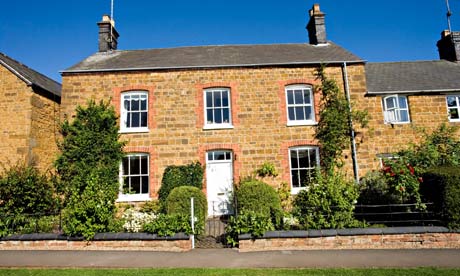
Firstly, while a sound business case is an excellent starting point for a commercial investment decision, what we're actually talking about are people's homes, with all the social, cultural and political meaning that holds. Business case or no, 66% of the UK's properties are owner occupied. Turfing owners out of their period homes and demolishing them while new builds designed to PassivHaus standards are constructed, while technically feasible, would be something akin to political suicide for the government that implemented the policy.
Meanwhile if we demolish the 7m homes that might be uneconomic to retrofit, do we have the capacity to replace them? The UK has consistently failed to hit new-build targets and even at the peak building rate of the last decade, we only managed some 185,000 new homes in 2006. If we start to demolish at the rate required to address our emissions targets, we would create a major challenge for the construction industry.
Hutchinson also highlights the risks of quality for retrofit; there are equivalent issues of quality that have the potential to create a gap between "as designed" and "as built". Skills and quality are an issue for the construction industry full stop.
Finally, if carbon is our goal, what does this mean for the demolition of all of this stock? Where do all the materials go? What is the embedded carbon of this demolition and new construction?
I am in full agreement with the final point that we need to understand the costs and benefits in a clear and logical way. As Hutchinson says: "Of course there are a range of intangible factors around the social consequences of clearance and demolition and the loss of aesthetically pleasing buildings."
However, I would disagree they are intangible to the people who live in those homes and communities. If we are going to build rational models of cost and benefit we should accept that places and communities, while inconveniently difficult to put a price on, have huge value to people. The decision to retrofit or demolish should do more than relegate these ideas to the status of "intangible assets".
Sustainability is complex. When we build business models that try to address all the issues in the time frames required, we often fail. Whatever the models tell us, new build or retrofit, moving towards a low-carbon built environment is a major task.
Dr Will Swan is a senior lecturer in retrofit at the University of Salford
This content is brought to you by Guardian Professional. Join the housing network for your chance to share your ideas and expertise with colleagues