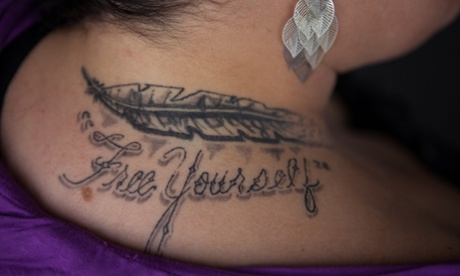
Underneath the feather that stretches across the back of Erica’s neck, the words Sin City are still just about visible. A mark from her time on the streets of Columbus, Ohio, trafficked and controlled by a street gang of the same name.
The tattoo meant that Erica belonged to them. They would feed her, clothe her and supply her with whatever drugs she needed to get by, but she was their property and any money she made was theirs as well. Even after she managed to get free, the words on the back of her neck pulled her once again to those same streets.
Then she came into contact with Survivors Ink – a grassroots project run by trafficking survivor Jennifer Kempton, who was herself branded four times by the men and gangs who controlled her. Erica applied for one of Survivors Ink’s tattoo grants and Jennifer raised the money to get her tattoo covered up.
Erica says the words now tattooed on her neck, “Free yourself”, have helped her reclaim her identity.
“It was freeing myself from bondage,” says Erica. “It’s the best thing I ever did. I don’t belong to anyone but myself. Sin City on my neck doesn’t define me any more.”
Hundreds of thousands of women and children are trapped in America’s thriving domestic trafficking industry. Pimp-led prostitution is considered to be one of the most flourishing and brutal of all forms of trafficking in the US.
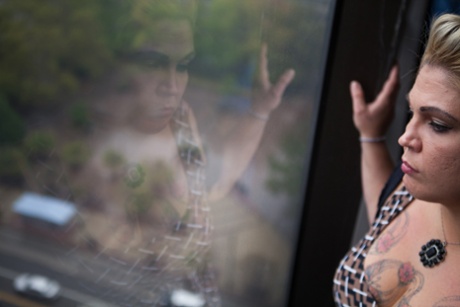
Branding, whether through tattoos or intentional scarring, has become a disturbing trend seen throughout the country. Melanie was tattooed on her breast by her trafficker.
“To me that tattoo meant that I could never escape. With that on my body I would never be free.” She says if you met her two years ago you wouldn’t recognise her.
“Now I’m clean and free from the streets. I am a different person and getting that terrible tattoo covered up with these beautiful flowers and butterflies was the main thing that helped me survive.”
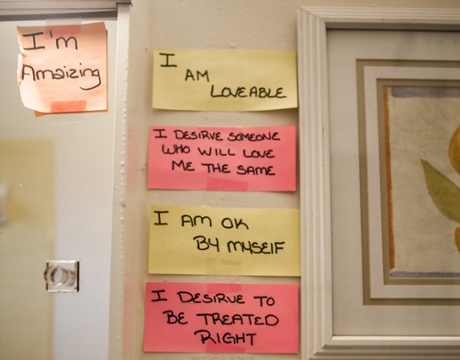
The walls of Melanie’s small apartment are covered in positive affirmations and mantras written on colourful Post-it notes. “I am learning to love myself again but it’s hard. Every day is a battle,” she says.
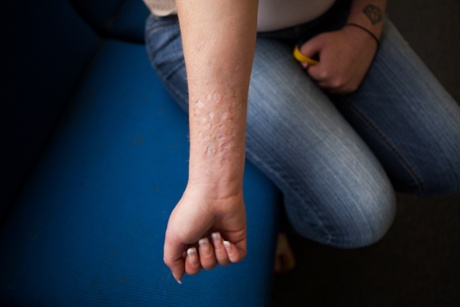
Kristin, still only in her 20s, was cut and intentionally scarred by the man who was trafficking and controlling her. She is also waiting for her Survivors Ink funding to come through.
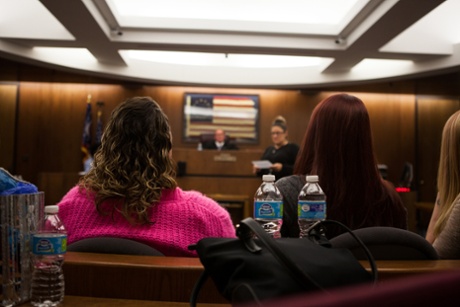
Now she has been clean for more than a year and, like many of the women that Jennifer helps, is attending Ohio’s innovative changing actions to change habits programme (Catch), an intensive multi-year probation and rehabilitation scheme for women who are facing jail for soliciting charges.
Those who run Catch say that practically all the women they help have been trafficked at some point during their time on the streets.
“I don’t want to live like that any more and I am changing my life, but this scar reminds me of that time every day,” says Kristin. “I don’t think people understand what it is like out there, it isn’t fun and it’s hard to move forward when I have to look at this every day.”
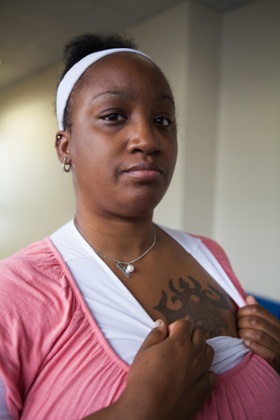
Tonetta still carries the gang tattoo she was branded with on her body. She has applied to Survivors Ink but Jennifer is struggling to raise the funds for the 19 pending applications on her list.
“It’s very difficult because it constantly reminds me of a very dark time in my life and the idea I can get rid of it from my body is an opportunity for me to change the way I look at myself, which is a beautiful thing. It will be like I am brand new and can start a brand new life, like a total makeover of the way I view myself.”
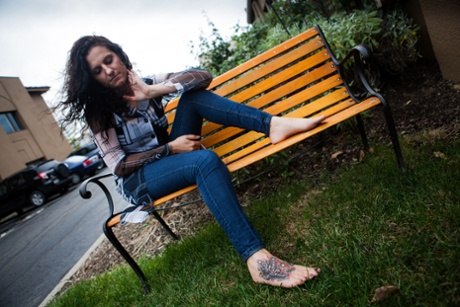
Christina is the latest woman to have her branding covered up through Survivors Ink. Like all of the women helped through Jennifer’s organisation, she had her tattoo done by local tattoo artist Charles “Chuck” Waldo.
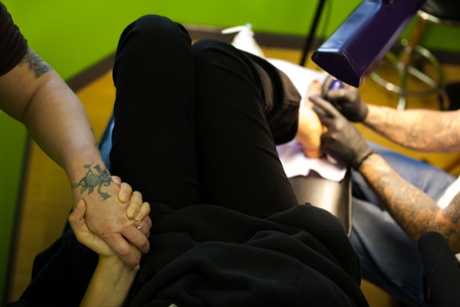
Waldo covered up Jennifer’s tattoos after meeting her and now works for free for Survivors Ink.
Christina’s foot was tattooed with the name of her husband and abuser, who bullied, beat and finally trafficked her out of their home. “I came from a childhood of violence so I thought if my mum put up with it then I could too,” she says. “I gave up everything for him and he just used me. Now I am freeing myself from bondage forever.”
Although they have never met before, Christina and Jennifer hold on to each other while Waldo works on the cover-up.
“This whole experience has been so intense,” says Christina. “I never thought it would mean so much to see that tattoo gone. It’s a blessing.”
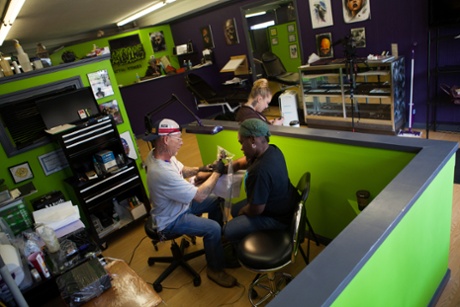
Jennifer also brought Ruthie to get a big scar on her arm covered up. A bout 10 years ago, Ruthie’s trafficker poured boiling oil over her arm as a punishment for trying to leave. Now, finally, she is getting it covered with a cross and the name of two of her children.
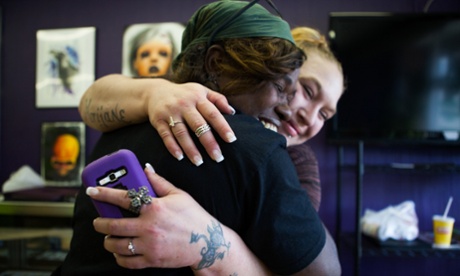
“We women and children shouldn’t have to bear this,” she says as Waldo begins the tattoo. “We are not possessions or property, we are all children of God and I pray that today will give me an escape from what happened in the past.”
After her tattoo is finished Ruthie is beside herself. “I can’t believe it has finally gone,” she says, looking at her arm. “Now I am free.”
For Jennifer, the work she does through Survivors Ink is also a way of healing herself after years of violence, addiction and abuse. “This job is my purpose,” she says. “Helping these women is the most important part of my own recovery. If I can do this for one woman I am helping undo some of the evil that visited us all.”
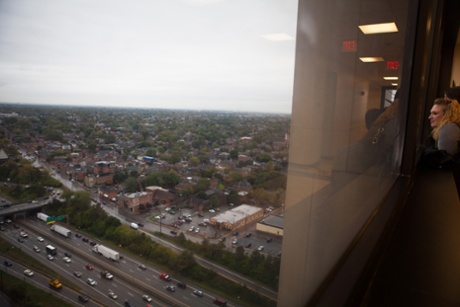
Part of the problem, says Jennifer, is that few people realise trafficking is happening in their own neighbourhoods.
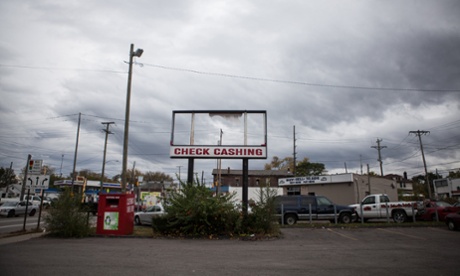
“Where other people see drug addicts and prostitutes I see human trafficking,” she says. “It’s happening right here, right now but nobody wants to accept it. They always think it is happening to people in other countries, but it’s right under their own noses.”
After an abusive childhood and a history of violent, destructive relationships, Jennifer ended up in the Bottoms, a poor downtown neighbourhood in Columbus.
“Living there was horrible. The apartments were rented to dope boys and I was expected to make money to supply our addiction from those dope boys even though I was pregnant. That place is where Salem, my boyfriend but also my trafficker, started physically abusing me during my pregnancy. My memories of that place are of misery and horror.”
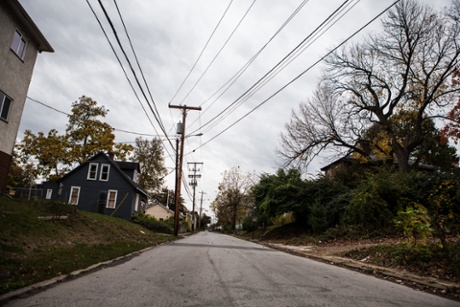
Jennifer’s brandings also happened in dope houses in the Bottoms. “To me, what happened there was that I was taken apart as a person and since then I’ve been trying to put myself back together.”
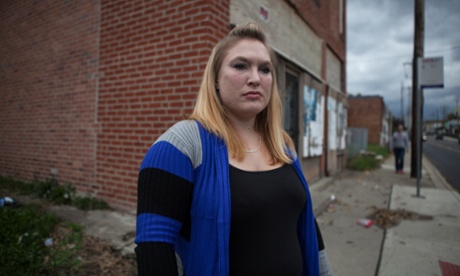
Now the only time she returns to the Bottoms is to do outreach work, to help other women still on the streets get help or protection.
Moving on and getting your life back together for trafficking survivors isn’t just about recovery, it’s about learning to live again, says Jennifer.
“You can’t get a job, society judges you, you have to learn to do everything again,. Many women don’t make it out alive, and many go back to that life after they’ve managed to escape because they feel they don’t belong in any other place.”
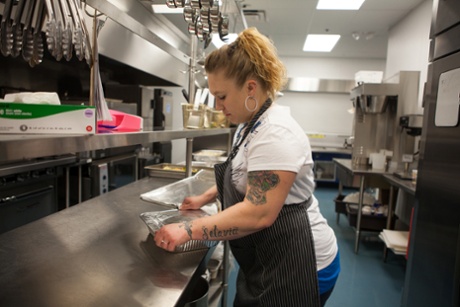
Jennifer has been clean for a year ; she is running Survivors Ink and is back living with her grandmother. She also has a job, working in catering at Freedom a la Carte, a social enterprise that helps trafficking survivors get back into employment.
“I survived and I’m never going back,” she says. “And I’m going to work damn hard to try and help other women get their lives back as well, because nobody deserves the life I was living.”