Many startups are the fruit of friendships, relationships or even frustrated colleagues putting their heads together to create their own business venture. Since setting up a company is pretty hard graft, having a co-founder to work alongside can provide plenty of benefits – and, as the phrase goes, two heads are better than one.
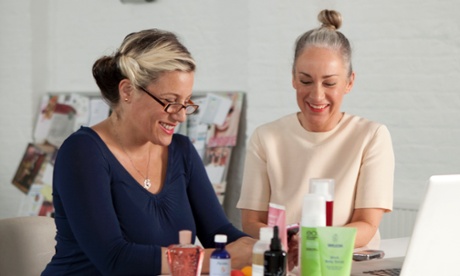
That’s the belief of Millie Kendall, co-founder of London-based beauty retailer BeautyMart, which she set up two years ago with Anna-Marie Solowij, a former beauty director of Vogue who she’d known for almost 20 years.
“I don’t like working in isolation,” says Kendall, who previously set up the now discontinued make-up brand Ruby & Millie with Ruby Hammer. “I like working with other people. I know my limits – I know what I can and can’t do.”
It was the same philosophy that brought together Andrew Watkins with his former colleague Daniel Taylor to establish York-based creative agency Eko Create.
Eight years into their partnership, and Watkins says he couldn’t imagine working solo. “It’s safety in numbers, isn’t it? You’ve got someone beside you – someone to bounce ideas off and tell you if it’s a stupid or not.”
Many co-founders set out explicitly defined roles from the outset. Take the husband and wife team behind baking business York Cakes, which also runs cookery classes through its York Cookery School arm. Kate Clarkson set herself as the ‘face’ of the business while her husband Fraser took up the responsibility for ‘everything behind the scenes’.
“Think of me as the gliding swan with Fraser being the swan legs,” she jokes. Kate Clarkson is responsible for the practical side of the business such as making and decorating the cakes, teaching classes and exhibiting at wedding fairs, while husband Fraser manages the admin, handling corporate business enquiries and kitchen hire, and the networking.
Kate Clarkson believes that her and her husband’s different skill sets complement each other and help create a stronger business compared to if she was running York Cakes solo.
“Fraser’s knack for dealing with people is one of our best assets, so I tend to stand back when it comes to dealing with enquiries for the cookery school and networking events,” she says.
At BeautyMart, Kendall focuses on retail, logistics and marketing, while Solowij’s remit is managing the editorial content and buying – both tapping into their respective skills and experience.
However, while they both gain from having separate fields of expertise, Kendall says she likes a business partner who can step into her boots as and when required.
“For me, it was important to work with someone who can do what I do if I’m not around. With Anna it’s great as she can work just as well on the retail side, which she had no experience in before BeautyMart, and the fact is if we need a press release writing, which is my remit, Anna can do that too. There’s a lot of crossover.”
However, with a high proportion of businesses failing as a result of conflict among co-founders, it’s wise to address any potential issues early on.
While Kendall says her working relationship with Solowij has been “plain sailing”, she does admit that one area needed tackling – her talkative nature.
“The only thing is I talk all the time so Anna tells me to shut up a lot. That’s why we moved into separate offices in March. I’m in the ‘noisy room’ with the merchandising and buying staff. You know, when you look at you spreadsheets all the time you need to talk about normal things! Anna does a lot of writing so she’s in the ‘quiet room’ with the rest of the editorial team.”
Likewise at Eko Create, the co-founders have found a way to appreciate each other’s different way of working – so while Watkins works from his home in Leeds, his business partner works from their office in York.
“I’ve not even spent a whole day there in the eight years that we’ve worked together. Dan is quite happy to travel to and work in the office, but I’d rather sit in my office in the garden.”
For the Clarksons, the challenge was that they were both relying on the income from a business they were just getting off the ground.
“We knew that setting up a business together and relying solely on ourselves for our income was always a huge risk but we said that, in time, we’d both rather look back and say we were proud that we took that step into the unknown rather than regret never giving it a go.”
One of the challenges of setting up a business with a friend, colleague or partner is that it can overtake all aspects of your life and throw that personal relationship out the window. So how can co-founders maintain a decent work-life balance?
Clarkson admits that their work and relationship boundaries do overlap, but with a child to consider, they make sure they have time away to be a family – not just a business.
“We plan and, essentially, book, lots of short trips away whenever we know we have a window – if we just left it until nearer the time, we’d just fill it with more work!”
Starting a business can be exciting – but it can also be frantic, tiresome and tough, and bring out the worst in people, and not least test relationships. Kendall says it helps if you’ve known your business partner for a long time and if that person shares similar values.
“I’d known Anna for about 20 years and over that time, through meetings and events, I knew she had honesty and integrity. Whenever I had a meeting with Anna, she was never late and she was always attentive. Choosing a co-founder is a lot more tactical than you think.”
Working together for seven years in pretty close proximity stood Watkins and Taylor in good stead for Eko Create. They’d built a strong working relationship and friendship – even becoming best friends.
“We’ve only had two arguments in all the years we’ve worked together and even then it was just about when to take holidays so that’s pretty good going,” says Watkins. “If we hadn’t been successful then it might have been different.”
Whether it’s your friend, spouse or former colleague, business is still business, so it’s wise to create an exit strategy that allows any of the founders to walk away from the business or provides options to buy out the other party.
Finally, running a business together can be like a marriage – you need to work at it. Clarkson advises startups to be 100% honest with each other at all times.
“You absolutely can’t run a business on assumptions or by being concerned with being nice to each other all the time. Try to be considerate but you must absolutely trust each other to be honest.”
Content on this page is paid for and produced to a brief agreed with Xero, sponsor of the business essentials hub.