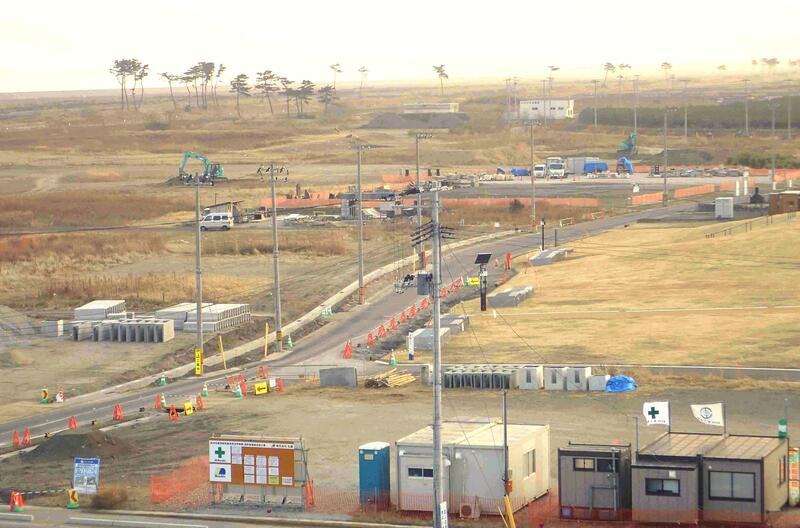
Nearly 40% of the residential land wiped out by the tsunami following the Great East Japan Earthquake remains vacant in Iwate, Miyagi and Fukushima prefectures, a Yomiuri Shimbun survey has found.
Municipalities have tried to attract businesses to use the vast extent of vacant land, but the coronavirus crisis has been hampering their efforts.
The survey was conducted in January and February on 26 municipalities which carried out disaster management projects that promoted the collective relocation of affected residents to higher ground or inland areas, and also purchased their land.
The total area of land purchased by the 26 municipalities was 2,280 hectares -- equivalent to 45 Tokyo Disneyland parks -- of which 36%, or 814 hectares, has gone unused. Compared with a similar survey conducted in 2018, 9% more land had been purchased in the recent survey, while the percentage of unused land also increased by 24%.
As to why the land utilization has not progressed, 20 municipalities said many of the sites purchased are non-adjacent, making it difficult to offer them in sufficiently large blocks, while six municipalities said companies that had plans to do business there have withdrawn due to the virus outbreak.
Twenty-four of the municipalities have turned vacant plots into parks or greenery spaces, but by keeping the land as public property, they are missing out on tax revenue, such as from fixed property taxes.
Sixteen municipalities have developed such land into industrial complexes with the aim of benefiting from tax revenues paid by companies. The town of Shinchi, Fukushima Prefecture, however, responded that it was difficult to attract companies without improving national subsidies and tax breaks.
-- Outbreak frustrates planning
"It's a frustrating situation ahead of the 10th anniversary of the earthquake," a Sendai city government official said.
A local company was planning to build a soccer field and campground on about 20 hectares of land that was wiped out by the tsunami in the city's Wakabayashi Ward by 2022, but the project was canceled in November.
The company's spokesperson said, "We were refused financing from banks on the grounds that they could not expect that the project would attract customers in the future."
The planned site accounts for 20% of the total land that the city purchased from the former residents affected by the disaster.
In Minami-Sanriku, Miyagi Prefecture, the town government had been negotiating with several companies in the food, fishery and other industries since 2019 over the use of its vacant land, but the discussions have stalled since February last year. According to the town, the companies are struggling with downturns in their businesses and are "far from entering a new business."
Of the 95 hectares of the town's quake-hit land, 60% is still vacant.
In Rikuzentakata, Iwate Prefecture, a 23-hectare agricultural theme park has been contracted by Tokyo-based leading restaurant chain Watami Co. Some sections within the park will open on March 11, commemorating the 10th year since the disaster, but the opening of its restaurants will be postponed for six months because they do not expect to attract customers.
"We will make the park ready for customers to come when the coronavirus crisis is contained," a Watami spokesperson said.
Read more from The Japan News at https://japannews.yomiuri.co.jp/