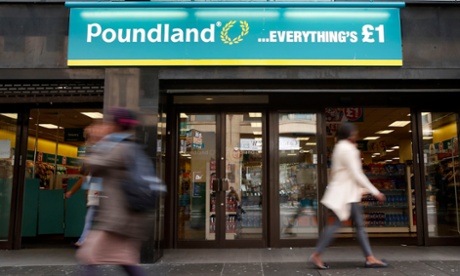
The rise of Poundland owes little to the arrival of austerity Britain. The chain has achieved £1.1bn of annual sales mostly because it is good at what it does. This is a slick logistical outfit with a keen sense of how to poach sales from a wide range of retailers, and how to take a pound shop offer to a mainstream audience.
Poundland’s products run from batteries to cleaning fluid to screwdrivers to reading glasses to sweets. If Woolworths had been half as efficient it would still be in business.
The breadth of the offer ought to have persuaded the Competition and Markets Authority that Poundland’s proposed £55m takeover of smaller rival 99p Stores would be good for competition. A bigger Poundland – adding 250 stores in the UK to the current 550 – should cause slightly more headaches for the likes of B&Q, Boots, the supermarkets and others.
Instead, the competition watchdog last week came up with the baffling ruling that the 99p deal “gives rise to a realistic prospect of a substantial lessening of competition in 80 local areas where the companies currently overlap”. Nonsense. Almost every product Poundland sells is available at a large Tesco; that is decent protection against underhand attempts to tweak quality or product sizes.
In the face of the CMA’s initial ruling, Poundland has three choices. It can walk away from the deal; it can agree to shed 80 stores and proceed; or it can opt for an in-depth investigation.
A full inquiry would not be cheap, since competition lawyers do not work for pound shop rates, but let’s hope chief executive Jim McCarthy takes the aggressive route. It would be fun to see the CMA attempt to defend in detail a decision that looks bizarre. Haven’t the watchdogs got bigger things to worry about, like their review of retail energy prices?
Politicians have a duty to write clearer tax laws
How do you tell the difference between legitimate corporate tax planning and aggressive tax avoidance? Here is Nick Boles for the Conservatives replying to this question, posed on Tuesday by a member of an audience of accountants and business people: “If you’ve got an idea of something you’re going to do, go to a nurse in your local hospital and explain it to her for three minutes. If she thinks it’s pretty reasonable, it’s OK. If she gets pretty angry with you it probably isn’t.”
Labour’s Chuka Umunna replied in similar vein. If business folk think politicians’ language is “extreme and hyperbolic” then “you want to hear what we hear from our constituents on the doorstep”.
Neither answer, one suspects, satisfied the questioner since the eternal plea from one corner in the business world is that politicians should change the tax laws if they are unhappy with current ones.
But both politicians’ appeal to common sense is not quite the cop-out it might seem. Aggressive tax avoidance can indeed be hard to define under the UK’s overly complicated tax rules, even before some multinationals have explored the delights of Luxembourg. But most sensible people can identify dodgy practices when they see them. The directors of most companies, too, will know when they’ve exploited loopholes unfairly.
None of which deflects from politicians’ long-term duty to write clearer and better tax legislation, and to push the OECD to act faster. In the short term, though, politicians and governments should not be so shy about naming and shaming. Boles said he couldn’t explain to a shopkeeper in Grantham why he’s paying a higher proportion of his profits in tax “than lots of very well-known companies with very, very well-known brand names”. He then declined to name those well-known companies. If you mean Google and Amazon, spit it out.
ISAs are more exciting than racehorses for Peter Hargreaves
“I never really enjoyed the board meeting part of the job,” says Peter Hargreaves, who co-founded Hargreaves Lansdown, the fund supermarket, in 1981. On Tuesday he came off the board of the FTSE 100 company but will remain an employee, a sort of super-consultant. Fair enough. He owns 32% of the company, so, within reason, can do as he wishes.
But the long goodbye, which started five years ago when Hargreaves gave up the job of chief executive, may have a lot longer to run. “I’ve owned racehorses and winning a big race is not as exciting as being in this office on the last day of the tax year,” he says. Processing ISA transactions is not everybody’s idea of fun, but he seems to mean it.