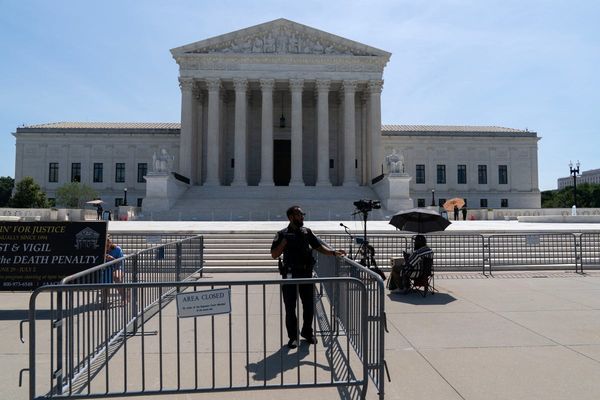
The Supreme Court is set to hear arguments Wednesday about President Donald Trump’s effort to redefine birthright citizenship, in a case experts said could confine Congress’ power to define who is considered part of the nation.
The case turns on the president’s executive order to disallow citizenship for children born in the United States to undocumented immigrant parents or those with temporary legal status, a major change to more than a century of legal precedent.
Much of the administration’s legal argument in the case focuses on the 14th Amendment, which provides that all people born in the U.S. and “subject to the jurisdiction thereof” are eligible to be citizens. Children covered under the executive order don’t meet that latter requirement for citizenship, the administration argues.
A ruling in favor of the administration could redefine who can become a citizen without the say-so of Congress, which has already weighed in multiple times defining, and expanding, birthright citizenship through federal law.
That’s surfaced in court filings from those challenging the executive order, who argue that decades of immigration law incorporated the commonly held understanding that everyone born in the United States was a citizen by birth, particularly laws passed in 1940 and 1952.
Those laws, the challengers argue, included a centuries-old understanding of citizenship that dates to English common law, with certain specific exceptions, such as for the children of diplomats.
“Where there is not one whit of textual or historical support, the Court should not impute to Congress the extraordinary intent to shatter this cornerstone of American life,” their brief states.
John Fortier, a senior fellow at the American Enterprise Institute, pointed out that Congress has altered the definition of citizenship multiple times, including citizenship rules for those born in American territories, Americans born abroad to citizen parents, and for Native Americans.
“Congress has changed the definition of who has birthright citizenship over the years,” Fortier said.
Trump signed the executive order to change birthright citizenship on his first day of his second term. The order was soon challenged by states, expectant parents and civil rights groups, then temporarily blocked by multiple federal judges.
This is the second time the case has reached the justices. Last year, the Supreme Court ruled in favor of the Trump administration and restricted lower courts’ ability to issue nationwide injunctions in the birthright citizenship cases.
Then, in July, a wave of federal courts considering the challenges ruled against the order again. The justices are expected to issue a decision in the case, one of the most high profile of the second Trump administration, before the close of the term at the end of June.
The Trump administration in a court filing focused on 19th century debates around the 14th Amendment, as well as echoing the president’s policy arguments about allowing the children of undocumented parents to obtain citizenship.
“Aliens could obtain the priceless gift of U.S. citizenship for their children by violating the United States’ immigration laws — and by jumping in line ahead of others who are complying with the law,” the brief said.
The laws passed in the 1900s “incorporates the actual constitutional standard, not just how it was perceived at particular times,” the brief said.
Stephen Yale-Loehr, a retired professor of law at Cornell University who is an expert in immigration law, said upholding the executive order would represent a “diminution of congressional power,” because Congress is supposed to have authority over changes to immigration and citizenship.
Ruling in favor of the Trump administration would also mean allowing a whole swath of changes to federal and state governments without congressional authorization, Yale-Loehr said.
“If Trump’s executive order is upheld, this would be the largest expansion of federal red tape in decades, because hospitals and state records agencies would have to become surrogate immigration agents to determine whether the parents of a newborn child have proper immigration or citizenship status,” Yale-Loehr said.
Conchita Cruz, co-executive cirector of the Asylum Seeker Advocacy Project, told reporters that upholding the executive order would have implications for a wide range of federal laws that assume children born in the U.S. are citizens. For instance, the law does not allow asylum claims for children born in the U.S.
“Instead, you have an executive order that is not sort of speaking about any of those things because this is not the way to address the type of thing that is a policy change, this is not the way to do it that it is legal,” Cruz said.
Mark Graber, a law professor at the University of Maryland, pointed out that a ruling in favor of the Trump administration would effectively undermine what Congress meant to do with the Reconstruction Amendments, which were passed after the Supreme Court’s Dred Scott decision and Congress passed the Civil Rights Act of 1866 over a veto by President Andrew Johnson.
“It would really limit congressional power over the post-Civil War amendments, it would place the power to implement them largely in the hands of the institutions least likely to implement them at the time they were ratified,” Graber said. “I mean in the short term, Congress is just as happy to have the president win in court, at least Republicans in Congress.”
Lawmakers weigh in
Briefs from congressional Republicans focused mostly on what Congress meant in the 1860s when it debated ratification of the 14th Amendment and made scant mention of the later immigration laws.
A brief from a group led by Rep. Claudia Tenney, R-N.Y., argued that the federal law on immigration “mirrors” the Citizenship Clause of the 14th Amendment, and thus the Supreme Court’s constitutional interpretation should apply to the statute as well.
In their own brief at the court, a group of more than 200 Democratic members of Congress argued that for more than 100 years, federal law has adopted birthright citizenship under the common understanding.
Even if the Trump administration can convince the justices that the 14th Amendment excludes undocumented and temporary immigrants, that does not change longstanding federal laws, the Democrats said.
Starting in 1866, Congress passed laws that embraced a broader meaning of birthright citizenship than the administration offered, including later in 1940 and 1952.
“If the Court should issue a new interpretation of the Fourteenth Amendment, it will be Congress’s decision—and no one else’s—whether to change the statute accordingly,” the brief said.
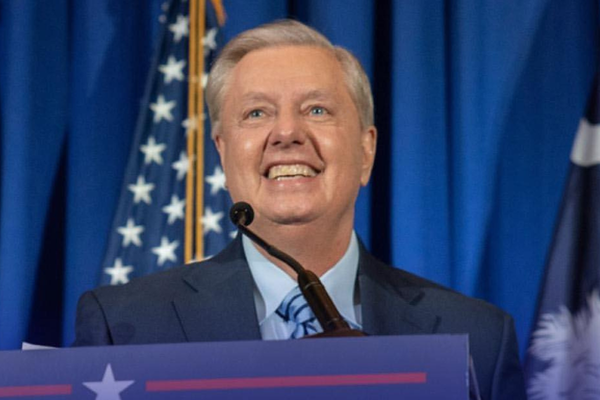
The brief also pointed out that Republicans have introduced more than two dozen bills to change birthright citizenship since 1997 and none have been passed by Congress. That includes in the current Congress, with a bill that Sen. Lindsey Graham, R-S.C., introduced last year to codify provisions of Trump’s order in federal immigration law.
The case is Barbara v. Trump.