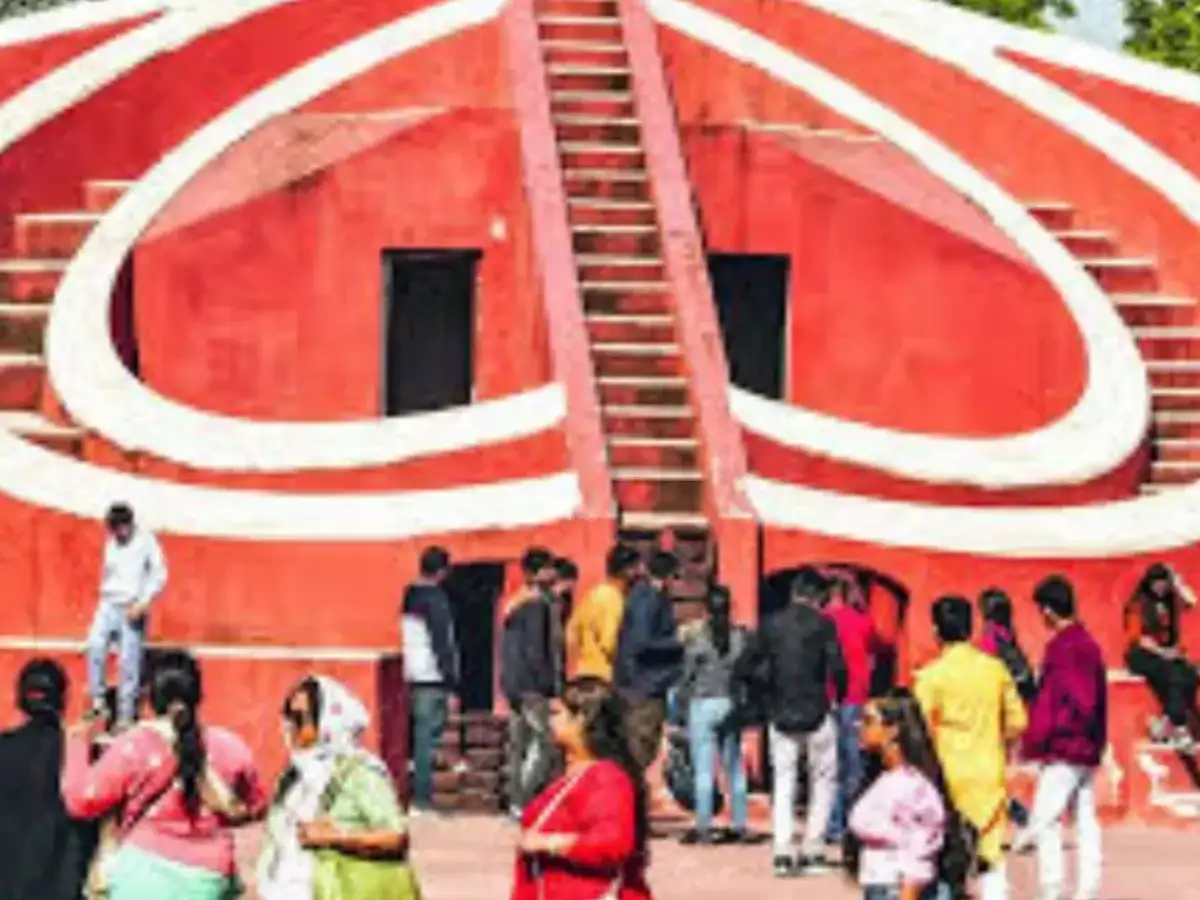
The Delhi government and police are set to respond to the Supreme Court’s query on a plea seeking an alternative protest site to Jantar Mantar, bringing renewed focus on the long-running debate over balancing the right to protest with the rights of residents and commuters.
The Supreme Court recently agreed to consider the plea, calling it an “important issue” and seeking responses from the Delhi government and police on whether another location can be identified for protests and demonstrations in the national capital.
The issue dates back more than 15 years. In 2011, the Dhawandeep Residents Welfare Association, representing residents of a building on Jantar Mantar Road, approached the Delhi High Court complaining that frequent protests and demonstrations were disrupting access to their building.
The residents alleged that processions, dharnas and demonstrations were held at the site throughout the year, with continuous sloganeering. Some protesters allegedly set up tents and temporary shelters and stayed for extended periods, including bathing, sleeping and cooking near residential buildings.
The residents also raised concerns about unhygienic conditions, littering and stagnant water, alleging that police and the New Delhi Municipal Council (NDMC) had failed to ensure clear access to the building.
Delhi High Court had sought alternative protest site
During the earlier proceedings, the Delhi High Court issued general directions for maintaining cleanliness at Jantar Mantar and surrounding roads.
The court also recorded the Delhi government's submission that authorities were attempting to identify another suitable location for processions and demonstrations, but that the process would take time and require consensus.
While disposing of the PIL, the High Court stressed that authorities must protect the right to freedom of speech and peaceful expression while also ensuring that protesters do not infringe upon the rights of others.
The court observed that protesters cannot “hold the public to ransom” and that a balance must be maintained so the rights of all parties are protected.
The petitioner association later continued to raise complaints with the police, including allegations of violations of rules and disruption caused by loud demonstrations, citing the High Court's observations.
Supreme Court restored Jantar Mantar as protest site
The Supreme Court had addressed the issue of protest venues in Delhi in 2018 when it restored Jantar Mantar and Boat Club as legitimate locations for demonstrations.
The apex court struck down a previous ban on protests at Jantar Mantar imposed by the National Green Tribunal (NGT), holding that citizens have a fundamental right to peacefully assemble and demonstrate.
The Supreme Court had said there could not be a complete ban on protests and sit-ins at the two locations and directed the Centre to frame guidelines for granting permission for such events.
The latest plea once again puts the spotlight on the challenge of finding a location in Delhi that allows citizens to exercise their right to protest while minimising disruption to residents, traffic and public life.
(With inputs from TOI)