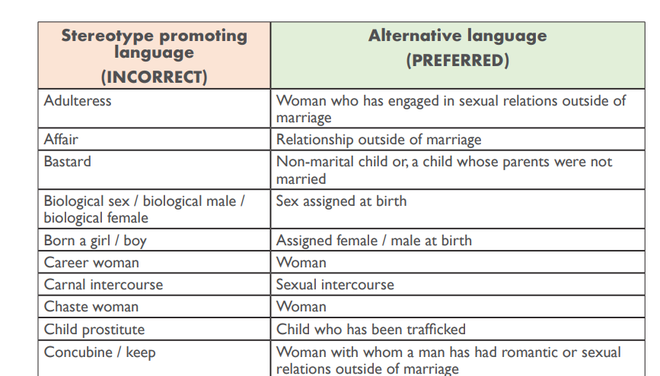
Career woman, fallen woman, faithful or obedient wife, eve-teasing, hermaphrodite: the Supreme Court has identified these phrases, among others, as gender-unjust terms which are often heard in Indian courts. In a new handbook released on Wednesday, the top court offered the correct terms that should be used instead: woman, woman, wife, street sexual harassment, intersex.
The 30-page Handbook on Combating Gender Stereotypes aims to free the judiciary and the legal community from the mechanical application of gender stereotypical language in judgments, orders, and court pleadings.
Announcing its publication in open court, Chief Justice of India D.Y. Chandrachud said that he hoped the handbook would mark a significant milestone in the journey towards a more just and equitable society.
In his foreword, the Chief Justice underscored the oft-forgotten fact that “predetermined stereotypes in judicial decision-making contravenes the duty of judges to decide each case on its merits, independently and impartially”.
False assumptions
The handbook deals with the “so-called inherent characteristics” of women. One of the identified stereotypes is the idea that women are “overly emotional, illogical, and cannot take decisions”. The reality is that a “person’s gender does not determine or influence their capacity for rational thought”, the handbook points out.
It also refers to assumptions made about a woman’s character based on her expressive choices, such as the clothes she wears, and her sexual history. Such assumptions may impact the judicial assessment of her actions and statements in a case involving sexual violence. For instance, they diminish the importance of consent in sexual relationships.
The importance of language
“Reliance on stereotypes about women is liable to distort the law’s application to women in harmful ways. Even when the use of stereotypes does not alter the outcome of a case, stereotypical language may reinforce ideas contrary to our constitutional ethos. Language is critical to the life of the law. Words are the vehicle through which the values of the law are communicated. Words transmit the ultimate intention of the lawmaker or the judge to the nation. However, the language a judge uses reflects not only their interpretation of the law, but their perception of society as well,” Chief Justice Chandrachud explained.
As an example, the top judge pointed to how the Code of Civil Procedure 1908 had previously referred to persons without financial means as “paupers”.
“In recognition of the fact that language conveys certain ideas about its subject and can either recognise or diminish the dignity of such persons, the statute was amended and the word ‘pauper’ was replaced with the word ‘indigent’,” Chief Justice Chandrachud wrote. The purpose of the amendment of the Code was not legal, but a recognition of the humanity of the people it had previously referred to as ‘paupers’, he said.