The Supreme Court has ruled in favor of a Colorado therapist who challenged state law preventing mental health providers from using widely discredited “conversion therapy” against LGBT+ young people, what advocates called a “painful” and “reckless” decision that will reverberate across the country.
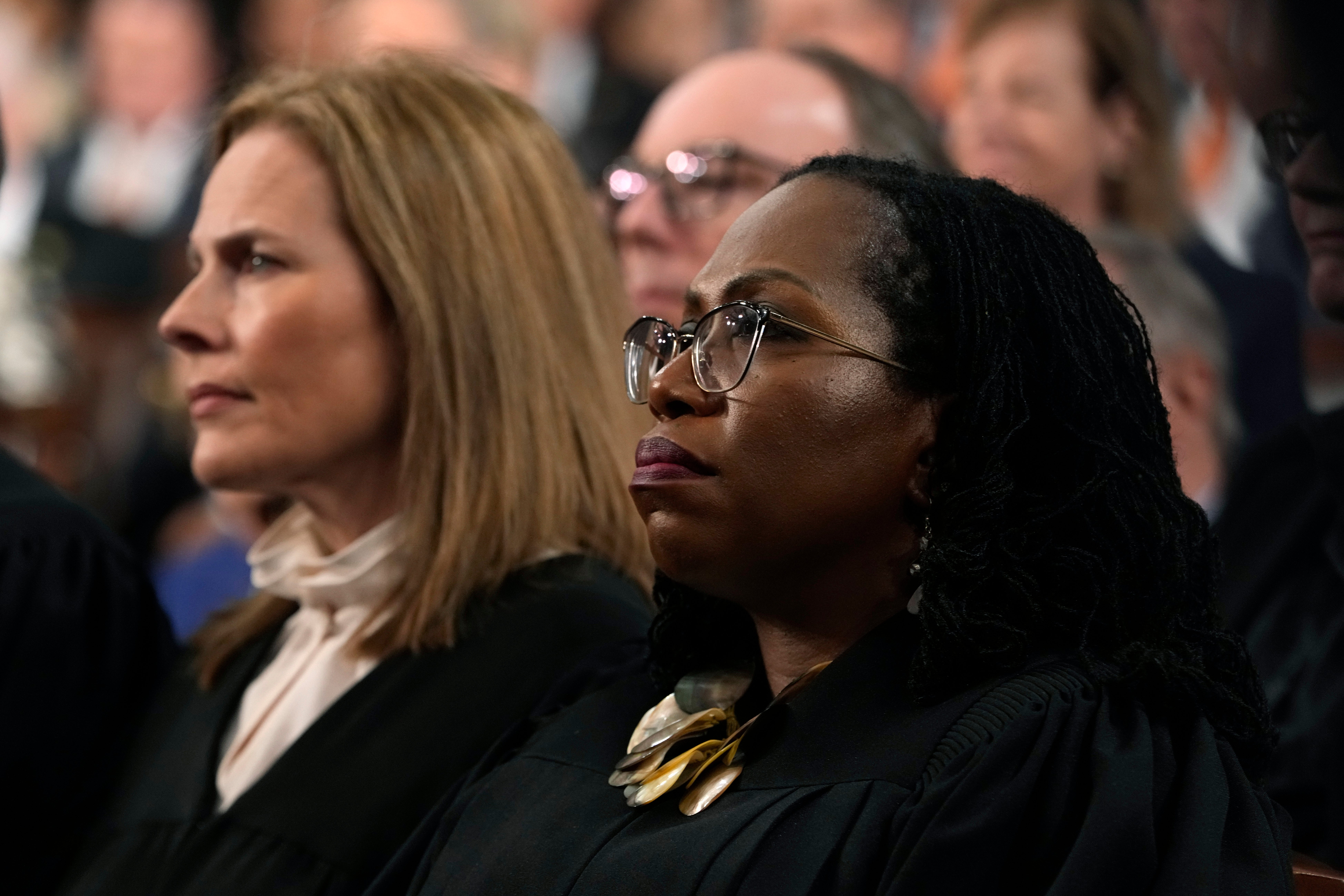
The high court’s nearly unanimous decision, with only liberal Justice Ketanji Brown Jackson dissenting, is likely to impact more than 20 states with similar laws against trying to change a young person’s sexual orientation or gender identity or expression.
“Ultimately, because the majority plays with fire in this case, I fear that the people of this country will get burned,” Jackson wrote in her dissent.
“Before now, licensed medical professionals had to adhere to standards when treating patients: They could neither do nor say whatever they want,” she wrote.
“And, to be completely frank, no one knows what will happen now,” she added. “Who knows? Certainly not the majority. It appears to have made this momentous decision without adequately grappling with the potential long-term and disastrous implications of this ruling. The fallout could be catastrophic.”
Tuesday’s decision marks a “tragic step backward” that imperils thousands of lives, according to Jaymes Black, CEO of the Trevor Project, the nation’s leading crisis intervention and suicide prevention group for for LGBT+ young people.
LGBT+ youth subjected to conversion therapy are more than twice as likely to attempt suicide compared to their peers, according to the group. Major medical and mental health organizations have condemned the practice.
The Supreme Court’s 8-1 ruling, written by conservative Justice Neil Gorsuch and published on Transgender Day of Visibility, is a “reckless decision” that “means more American kids will suffer,” according to Kelley Robinson, president of the Human Rights Campaign.
The court has “weaponized free-speech in order to prioritize anti-LGBTQ+ bias over the safety, health and wellbeing of children,” she wrote. “So-called ‘conversion therapy’ is pseudoscience, not real therapy.”
In their decision, the justices argued that Colorado law trampled on the First Amendment rights of conservative Christian therapist Kaley Chiles, who claimed the state’s law regulates speech, not conduct.
“The First Amendment stands as a shield against any effort to enforce orthodoxy in thought or speech in this country,” Gorsuch wrote for the majority.
Mathew Shurka, who has campaigned against banning conversion therapy in Colorado, survived the practice under a licensed therapist from ages 16 to 21. In his brief to the nation’s high court, Shurka detailed the “devastating impact” of his experience and the likelihood that countless others may be vulnerable to similarly dangerous and debunked therapy if the state’s law is struck down.
“The years of conversion therapy brought Mathew nothing but increased isolation from his family, worsening depression, and suicidal ideation,” Jackson wrote in her dissent, noting that the harms inflicted on Shurka also extended to his family and loved ones.
Lamda Legal counsel Carl Charles, who was subjected to conversion therapy at 15 years old, said the practice “destroyed important relationships and created shame and fear that took time and effort to undo.”
Charles was among 17 survivors who wrote a brief to the Supreme Court through the Conversion Therapy Survivor Network detailing the harms of conversion therapy they experienced.
“For many survivors, it is a reverberating life-long harm,” Charles said. “I am fortunate to have been able to transcend the trauma of that experience, to celebrate my identity as a transgender man, and to nurture a loving relationship with my husband. But so many young people do not have the familial or community support to withstand the impact of this unethical practice.”
The stories of conversion therapy survivors “are filled with heartbreaking examples of shattered family connections and separation from faith communities that once sustained them,” according to Polly Crozier, director of family advocacy at GLBTQ Legal Advocates & Defenders.
The court’s decision “does not change the science, and it does not change the fact that conversion therapists who harm patients will still face legal consequences,” she said.
Chiles was represented at the Supreme Court by Alliance Defending Freedom, an influential right-wing Christian legal advocacy group that brought several challenges to abortion rights to the nation’s high court, including successfully pushing to overturn Roe v Wade, and other cases involving LGBT+ discrimination.
“When my young clients come to me for counsel, they often want to discuss issues of gender and sexuality. I look forward to being able to help them when they choose the goal of growing comfortable with their bodies,” Chiles said in a statement after Tuesday’s ruling.
“Counselors walking alongside these young people shouldn’t be limited to promoting state-approved goals like gender transition, which often leads to harmful drugs and surgeries. The Supreme Court’s ruling is a victory for counselors and, more importantly, kids and families everywhere,” she said.
Colorado’s law does not prevent therapists from helping young people discuss their sexual orientation or gender identity, but the state prohibits conversion practitioners from pressuring youth toward changing them.
Similar laws are in place in at least 23 states following a wave of research finding that such practices increase risk of suicide and poor mental health outcomes while splintering families, with parents and caregivers often blamed for their child questioning their orientation and identity.
“This is not the outcome we wanted, but our community has dealt with difficult outcomes time and time again throughout our history,” said Black with the Trevor Project. “And we will deal with this, too.”
If you are based in the U.S. and seek LGBT+ affirming mental health support, resources are available from Trans Lifeline (877-565-8860) and the LGBT Hotline (888-843-4564), as well as The Trevor Project (866-488-7386 or text START to 678-678).
If you are experiencing feelings of distress, or are struggling to cope, you can speak to the Samaritans, in confidence, on 116 123 (UK and ROI), email jo@samaritans.org, or visit the Samaritans website to find details of your nearest branch.
If you are based in the U.S., and you or someone you know needs mental health assistance right now, call or text the 988 Suicide & Crisis Lifeline at 988. This is a free, confidential crisis hotline that is available to everyone 24 hours a day, seven days a week.
If you are in another country, you can go to www.befrienders.org to find a helpline near you.
Here's a look at birthright citizenship, and how the world sees it, as Supreme Court case looms
SCOTUS is set to weigh birthright citizenship; here’s what US judges have said
Supreme Court rules against Colorado ban on ‘conversion therapy’ for LGBTQ kids
Arizona debates permanent Charlie Kirk memorial at state capitol
JD Vance is releasing a new book in biggest 2028 hint yet
Vance and Rubio are front-runners for 2028 — but only one went to secret donor summit