Get all your news in one place.
100’s of premium titles.
One app.
Start reading
The Guardian - UK
The Guardian - UK
Politics

Supporting female health workers

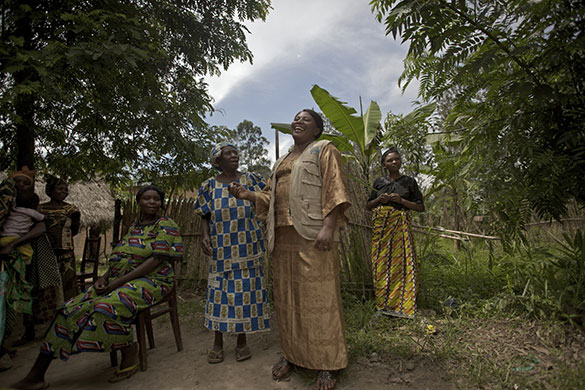
Women Health Workers: A woman laughs alongside other listening women
In 2009, Merlin health workers in DRC handled more than 130,000 cases of gender and sexual violence. 59% of women were raped while working their farms by men in uniform. Immaculée is a Sexual and Gender Based Violence co-ordinator in Binza. She teaches women about what to do if they are faced with the threat of rape. Rape is being used as a weapon to destabilise whole communities.
Photograph: Merlin/Frédéric Courbet, Panos Pictures
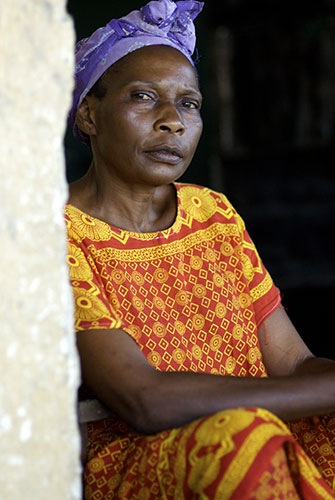
Women Health Workers: An African woman sits looking seriously to camera
Tamasha is a midwife in the Democratic Republic of Congo. Still plagued by conflict and insecurity, female health workers in eastern DRC are working in some of the most challenging environments imaginable, risking their lives every day. They are often not even paid. Merlin is campaigning to support health workers in crisis countries. To find out more please visit www.handsupforhealthworkers.org
Photograph: Merlin/Frédéric Courbet, Panos Pictures
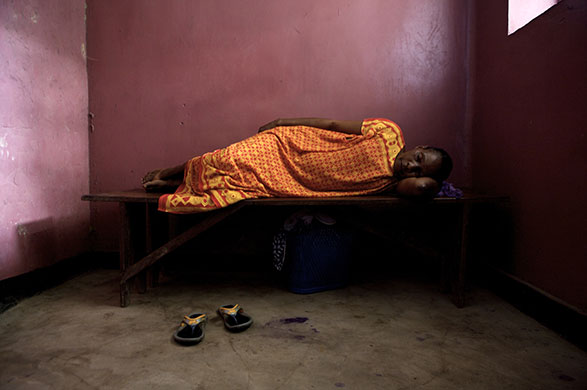
Women Health Workers: A woman lies on a wooden bench
On call for the night shift, Matron Tamasha rests on a wooden bench. Conditions are basic in Congolese health centres, many do not even have safe drinking water or electricity. Medicines are difficult to get and sometimes run out, so it is hard to treat even simple infections. If there are basic materials, like rubber gloves, there are usually only a few pairs to go round. Merlin is campaigning to support health workers in crisis countries like DRC.
Photograph: Merlin/Frédéric Courbet, Panos Pictures
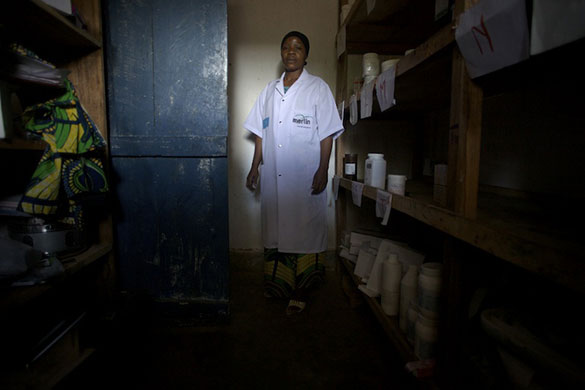
Women Health Workers: A healthworker stands amongst the drugs she's trained to administer
Francoise Kavira is a Merlin-trained pharmacist at Kisharo health centre in DRC. She prescribes women who have been raped with PEP Kits (Post Exposure Prophylaxis). These kits have drugs to prevent unwanted pregnancies, infection from HIV and other sexually transmitted diseases. She's lost count of the number of women she treats every week: "We see far too many women and children. Rape is destroying our community - we live in constant fear."
Photograph: Merlin/Frédéric Courbet, Panos Pictures
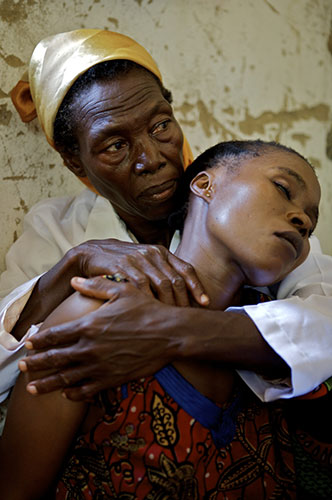
Women Health Workers: A woman healthworker holds another woman in her arms
Maternal mortality is a serious issue in DRC and rose from 990 in 2000 to 1,100 in 2008. Collette is the only midwife in a maternity ward that serves more than 5,500 people - here she cares for Sabina, a 25 year old girl suffering a miscarriage. Collette has worked as a midwife for 32 years. Her expertise has developed through on the job learning - the only formal training she received was provided by UK medical aid agency Merlin.
Photograph: Merlin/Frédéric Courbet, Panos Pictures
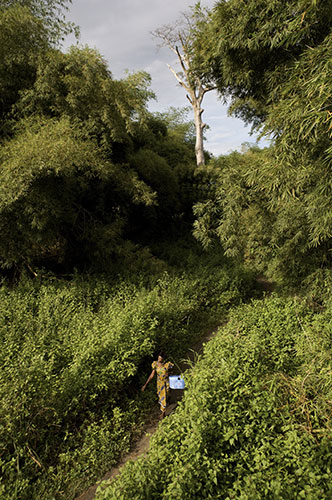
Women Health Workers: A woman walks along a path in rural Africa
Nowhere is the shortage of health workers felt more acutely than in remote rural areas and countries caught up in conflict like DRC. Many of the skilled workforce refuse to live in remote rural areas and conflict zones because of the difficult conditions, insecurity and risk of violence. This health worker, Anne, has a five and a half mile walk to the referral health centre where she works.
Photograph: Merlin/Frédéric Courbet, Panos Pictures
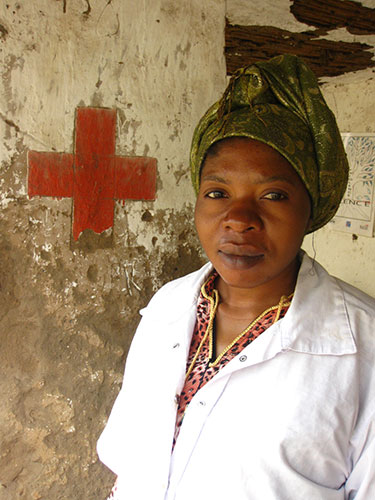
Women Health Workers: A female healthworker looking to camera
Katanga is a nurse in DRC. Like many other women in her position she is working to help rebuild the lives of survivors and their families affected by ongoing conflict. "Health workers are important but because of the conflict the health sector has been neglected by the government. We need to have better wages and be respected for what we do."
Photograph: Merlin
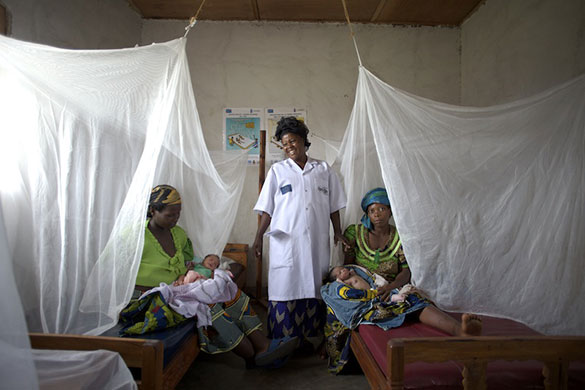
Women Health Workers: A healthworker smiles with two proud new mothers beside her
Arlette Kavira is head nurse at Merlin-supported Kiseguro health centre. Here she stands happily next to two babies she delivered. Yet Arlette has seen her fair share of hardship: "This is a very insecure place for everyone, but especially health workers. We recently had one of our nurses assaulted by unidentified men after they robbed the clinic."
Photograph: Merlin/Frédéric Courbet, Panos Pictures
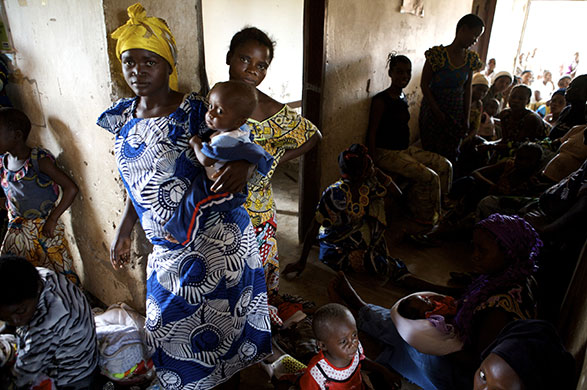
Women Health Workers: A woman and her baby stand in a busy Health Centre
In the early hours of the morning a queue starts forming at Louboa General Hospital. The World Health Organisation sets the minimum number of doctors, nurses and midwives needed to deliver basic care at 2.3 well-trained health care providers per 1,000 people. In DRC last year there were only 0.54 to every 1,000 people.
Photograph: Merlin/Frédéric Courbet, Panos Pictures
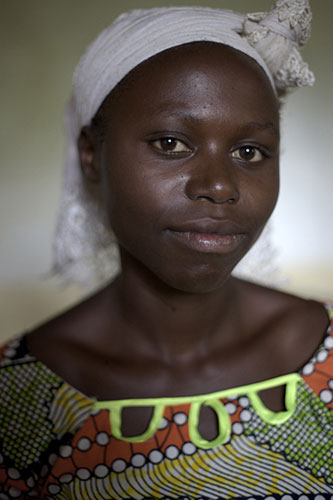
Women Health Workers: An African teenager smiles at the camera
Henriette is a peer educator in sexual and gender based violence, trained by Merlin. Just 19 years old, from Buramba village, Henriette wanted to help her village after her friend was raped. "I want to help as many women as I can, but my education is low. I was forced to stop school when my father was killed after armed men robbed our house and killed him. I'm passionate about what I do: I can’t stop the rape, but with Merlin’s help I can make sure women don’t get unwanted pregnancies and contract HIV.”
Photograph: Merlin/Frédéric Courbet, Panos Pictures
Sign up to read this article
Read news from 100’s of titles, curated specifically for you.
Already a member? Sign in here
Related Stories
Top stories on inkl right now
One subscription that gives you access to news from hundreds of sites
Already a member? Sign in here
Our Picks
Fourteen days free
Download the app
One app. One membership.
100+ trusted global sources.