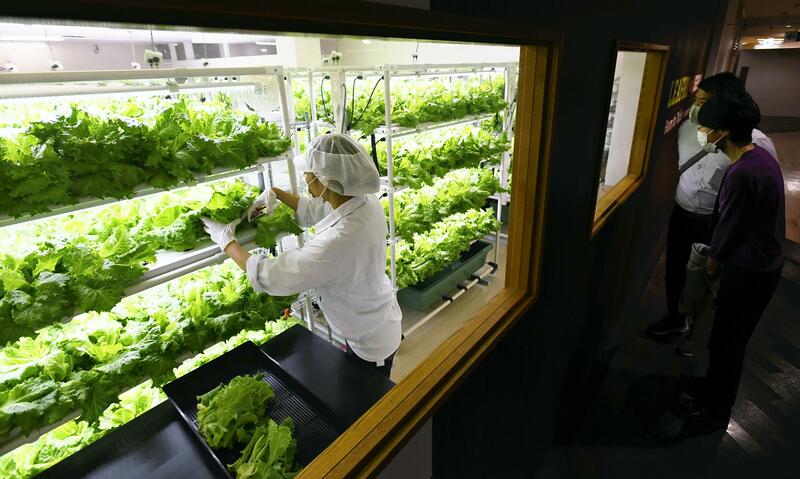
A bright LED light shone over green-leaf lettuce, which had been hydroponically grown to about 20 centimeters, as the lettuce swayed in the breeze from a blower.
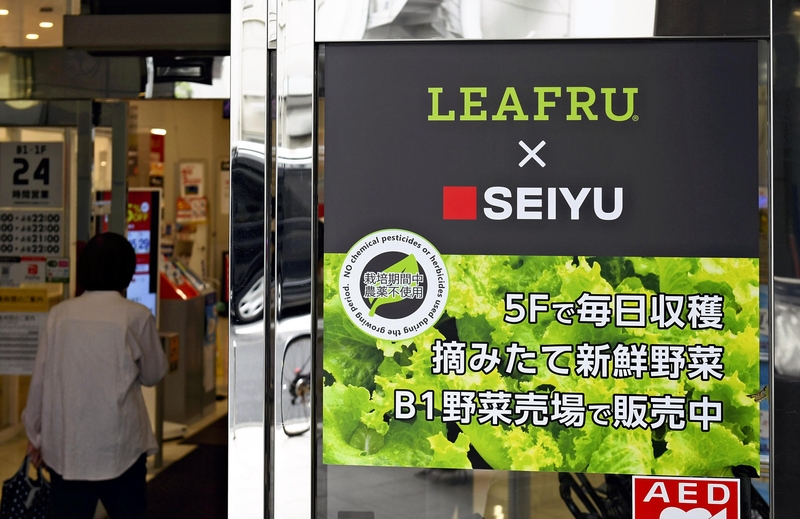
The vegetable factory on the 5th floor of Seiyu Omori Store in Shinagawa Ward, Tokyo, has been in operation since March and covers about 160 square meters. What was once an English school and massage parlor is now the vegetable factory. Lettuce can be harvested about 35 days after sowing, which is about half the time required for open-air cultivation. Every day, 365 lettuce plants can be harvested, and in about 30 minutes, they are lined up in the vegetable section on the first basement floor. Lettuce from the Omori store is also shipped to nearby stores.
"The water used in the factory is recycled to reduce costs," said Shogo Shimazaki, 35, of Plants Laboratory, Chuo Ward, who was involved in the development of the vegetable factory. "In the future, we would like to consider adding more cultivars to meet demand."
The practice of growing lettuce and other vegetables at in-store vegetable factories has taken root in Tokyo and elsewhere in Japan, becoming an appealing production method that provides a fresh, stable supply of produce while being environmentally friendly.
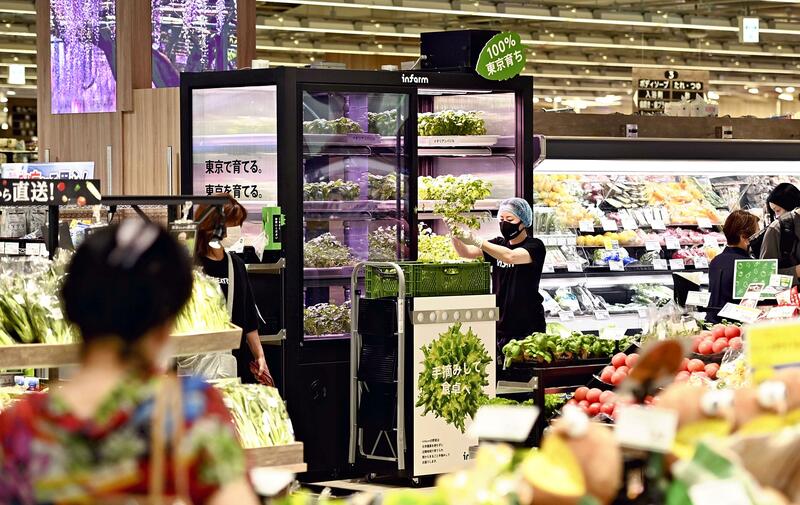
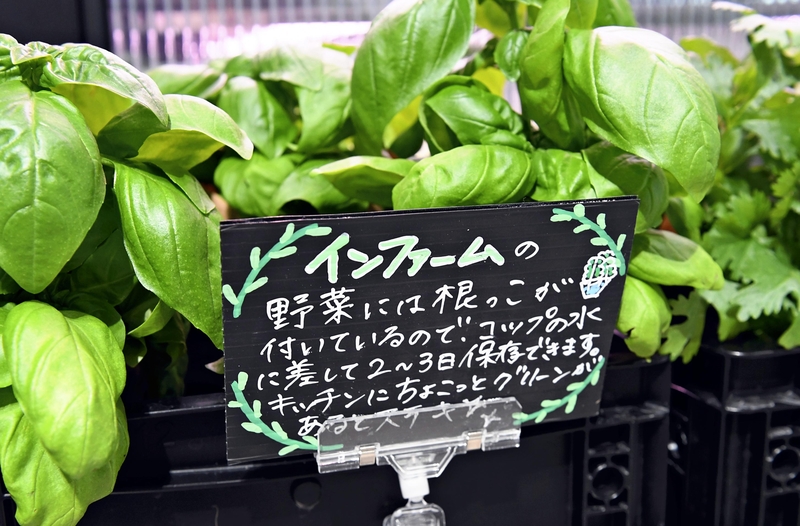
At the Summit Gotanno store in Adachi Ward, Tokyo, a hydroponics system is situated right next to the produce section, where its selection of fresh coriander, Italian basil and other plants entices the eyes of shoppers.
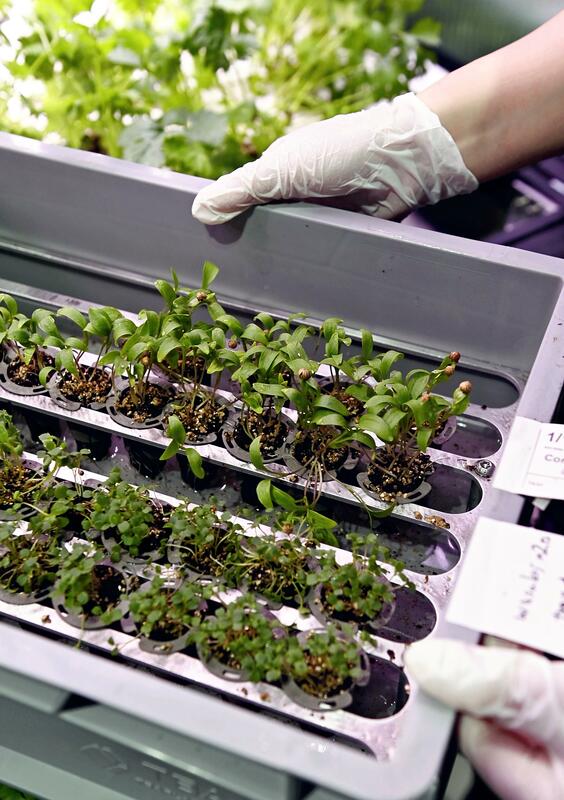
The setup, about 2.3 meters high and 1.9 meters wide, is made by Infarm, a German agricultural venture. The temperature and intensity of light are controlled remotely from Berlin. Twice a week, store employees harvest the herbs then restock the shelves with new seedings.
"Growing vegetables in the store means the quality and price are not affected by the weather, and it also helps reduce food mileage," the environmental impact of transporting food, said Ikuo Hiraishi, 58, president of Infarm's Japanese subsidiary. "By showing customers where the vegetables are grown, we can also give them a sense of security."
As interest blossoms over quality food, vegetables grown in supermarkets might become a matter of course.
Read more from The Japan News at https://japannews.yomiuri.co.jp/