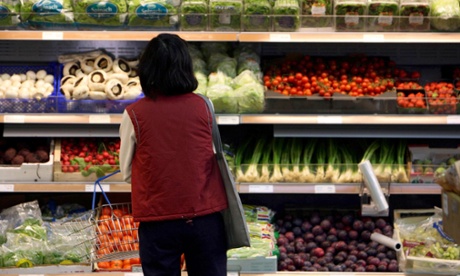
Britain’s supermarkets are struggling to attract newly cash-rich consumers who are using their extra spending power to buy luxuries they denied themselves when incomes were being squeezed, according to the latest retailing health check.
Food sales fell for the first time this year in July, according to the monthly British Retail Consortium-KPMG sales monitor, in a month when overall sales rose 2.2% on a year earlier.
The report indicated that increasing wages and falling shop prices were giving consumers more disposable income, which they were spending on furniture, textiles, home accessories and footwear.
Helen Dickinson, director general of the British Retail Consortium, said: “Despite being a slight slowdown compared with last month, today’s sales growth of 2.2% compared with this time last year reflects the continued hard work by retailers to tap into increasing consumer demand.
“Consumers remain content to budget carefully on their necessary food outlay and spend that little bit more on purchases they have perhaps deferred.”
The survey pinpointed an improving housing market and the beginning of school holidays as other reasons for the growth in retail activity. Sales of non-food goods online rose by 14.7%, compared with July 2014.
David McCorquodale, head of retail at KPMG, said: “Retail sales remained positive in July as improved consumer confidence is slowly winding its way to the tills.
“Looking ahead, retailers will be hoping more summer sunshine coupled with confirmation that interest rates will stay at 0.5% will keep consumer confidence riding high into August.”
Bad weather during the second half of July was blamed for a tailing off in food and drink sales as consumers spent less on barbecues and picnics.