The death of four men who had taken pills they thought were ecstasy is the result of the government’s “illogical and punitive drug policy”, a former drugs tsar has said.
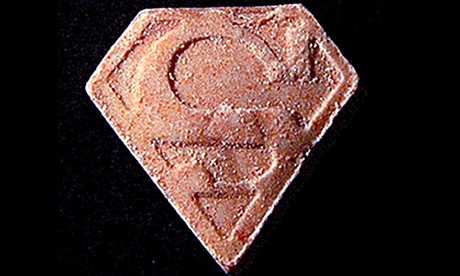
MDMA is the chemical name for ecstasy but the pills bearing a Superman emblem that have been linked to four recent deaths, three in Suffolk and one in Telford, are believed to have been made with a high concentration of the chemical PMMA.
Suffolk police said on Monday that they had seized more than 400 pills matching the description of those believed to have been taken by two Ipswich men stashed in a public place in the city.
Writing for the Guardian, Dr David Nutt, who was sacked as the government’s senior drugs adviser in 2009 after criticising its decision to toughen the law on cannabis, said that PMMA and its close relative PMA have been responsible for the majority of deaths, amounting to more than a 100, in recent years attributed to ecstasy by the media.
“Their re-emergence is directly due to the international community’s attempts, via UN conventions, to stop the use of MDMA by prohibiting its production and sale,” he writes.
“The emergence of the more toxic PMA following the so-called ‘success’ in reducing MDMA production is just one of many examples of how prohibition of one drug leads to greater harm from an alternative that is developed to overcome the block.”
Nutt, the Edmond J Safra professor of neuropsychopharmacology at Imperial College London, made the comparison with the rise in demand for more poisonous hooch when alcohol was prohibited in the US during the 1920s and the rise in production and injecting of heroin after smoking opium was banned.
He explained that the UN banned a number of precursor chemicals to MDMA, including safrole. As safrole supplies dropped chemists switched to chemically similar aniseed oil. “Unfortunately the product that results from using the MDMA production process with aniseed oil is PMA or PMMA,” he writes. “Hence these substances only exist because of the blockade of MDMA production. That in itself wouldn’t particularly matter if they were not more toxic than MDMA.”
Nutt said there should be testing facilities for users, without fear of prosecution, as are available in the Netherlands, or safe doses of pure MDMA available to registered users.
“In the meantime we should accelerate the testing of seized tablets and make public their contents and strengths on internet databases, so that all users can check what they might be taking,” he writes.
The chief superintendent of Sufflk police, Jon Brighton, said the seizure of 400 pills on Sunday night was a significant development in its investigation into the death of the two Ipswich men.
“If these prove to be the same as those linked to these cases, we will have gone a significant way towards reducing the risk of further serious injury or deaths linked to this particular ecstasy pill,” he added.
A man has been charged and two men have been bailed after arrests made as part of the investigation into the deaths. A 19-year-old Ipswich man, Adrian Lubecki, has been charged with being concerned in the supply of ecstasy and possession with intent to supply a class B drug. He has been remanded in custody and will appear at Ipswich magistrates court on Monday.