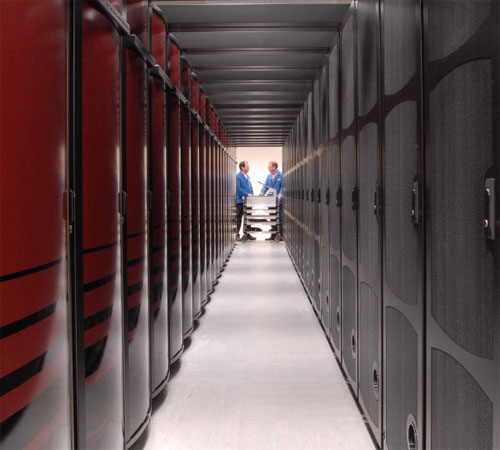
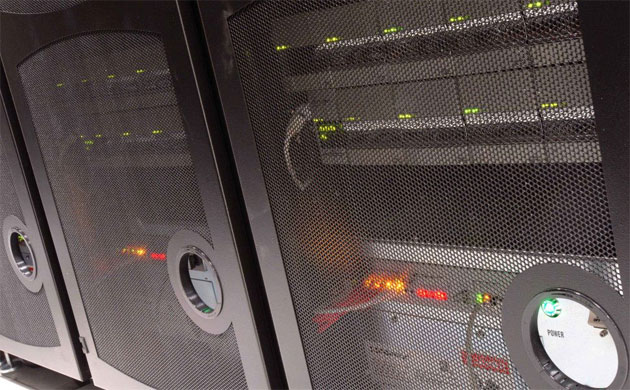
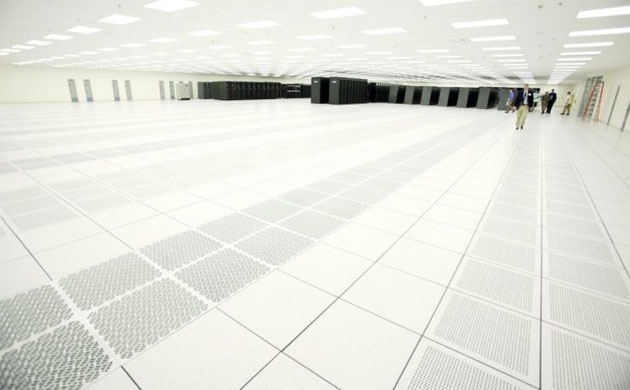
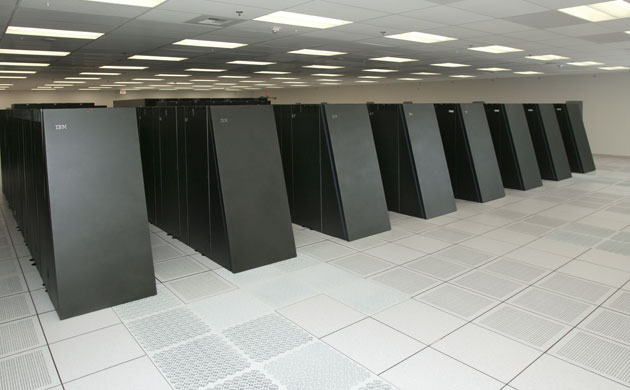
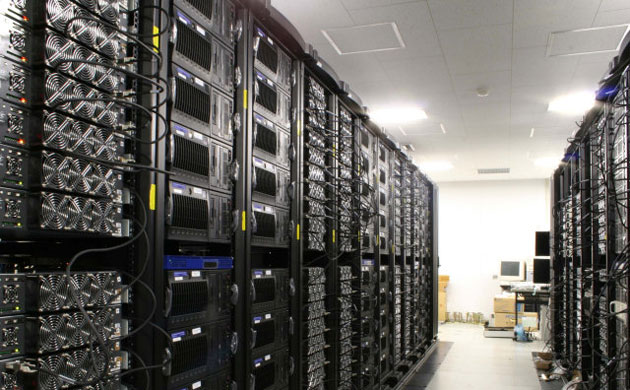
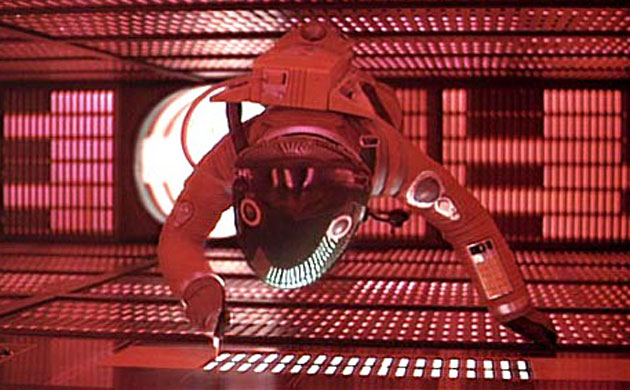
Britain's most powerful supercomputer HECToR (High-End Computing Terascale Resource) will be used to simulate everything from climate change to atomic structuresPhotograph: PRHECToR will run at speeds of up to 63 teraflops - carrying out 63 trillion calculations a second (equivalent to every person on the planet performing 10,000 calculations every second). But it's a slouch compared with the world's best supercomputers, ranking only 17th in the world.Photograph: PRRanked number one in the world by top500.org is the BlueGene/L supercomputer, which can crunch numbers at a rate of 478.2 teraflops - around eight times faster than HECToR.Photograph: PR
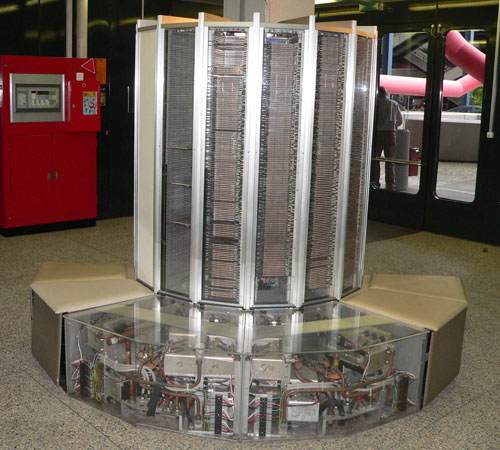
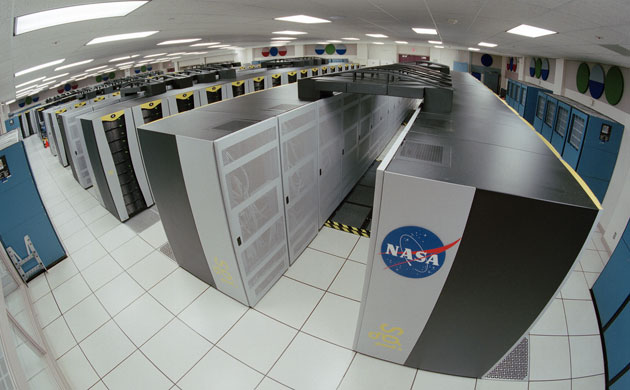
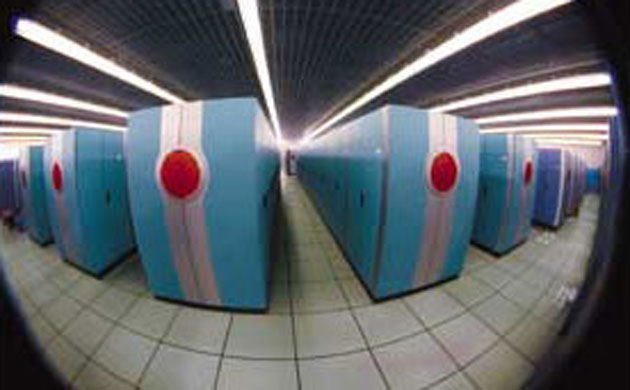
BlueGene is a joint project between IBM and the US Department of Energy's National Nuclear Security Administration and is installed at Lawrence Livermore National Laboratory in California, where it is used to simulate biomolecular phenomena such as protein folding, among other things. In April 2007, an IBM team and the University of Nevada ran a simulation of half a mouse brain for 10 seconds.Photograph: PRSynonymous with supercomputing, the first Cray-1 system was installed at Los Alamos National Laboratory in the US in 1976. The machines made the eccentric founder of Cray Research, Seymour Cray, a celebrity. According to Personal Computer World, he attributed his success to elves he met while digging a tunnel under his house: "While I'm digging in the tunnel, the elves will often come to me with solutions to my problem."Photograph: Public domainColumbia is NASA's most powerful supercomputer, used to simulate everything from the weather to supernova explosions and coronal mass ejections. It was named in honour of the crew of the ill-fated space shuttle Columbia. Photograph: PRThe fastest supercomputer in Europe (and the second fastest in the world) was plugged in at Jülich Research Centre in Germany in November 2007. On a good day JUGENE can reach speeds of 223 teraflops.Photograph: PRJUGENE (an IBM BlueGene/P) is said to be at least seven times as energy efficient as any other type of supercomputer, a feat it achieves by using many small, low-powered chips connected through five specialised networks.Photograph: PRThe developers of MDGRAPE-3 at RIKEN in Japan announced in June 2006 that their new machine could make one thousand trillion calculations per second (1 petaflop). This is three times as fast as IBM's BlueGene/L, which occupies the number one spot in the top500.org supercomputer league. RIKEN's baby does not qualify for the top500 because it is not a general-purpose machine: it specialises in molecular dynamics, in particular predicting protein structures. Photograph: PRThe Earth Simulator in Japan was the fastest supercomputer in the world from 2002 to 2004, when it was overtaken by BlueGene/L. Developed to run global climate models, the building where it is housed has several features to protect the computer from natural disasters: a wire nest hangs over it to shield the machine from lightning and rubber supports cushion it during earthquakes.Photograph: PRThe holy grail of supercomputing is artificial intelligence. Fictional supercomputer HAL (Heuristically programmed ALgorithmic computer) of 2001: A Space Odyssey was sentient and capable of reasoning, speech and language processing, and lip-reading. After HAL killed the other crew members of the Discovery, sole survivor David Bowman disabled him by removing modules from his central core one by one.Photograph: Public domainNo matter how smart the supercomputer, you still have to know what to ask it - and how to interpret the answer. Deep Thought, created by a hyper-intelligent race of beings in Douglas Adams' Hitchhiker's Guide to the Galaxy, took 7.5m years to come up with the ultimate solution to Life, the Universe, and Everything - 42.Photograph: PR
Sign up to read this article
Read news from 100’s of titles, curated specifically for you.