
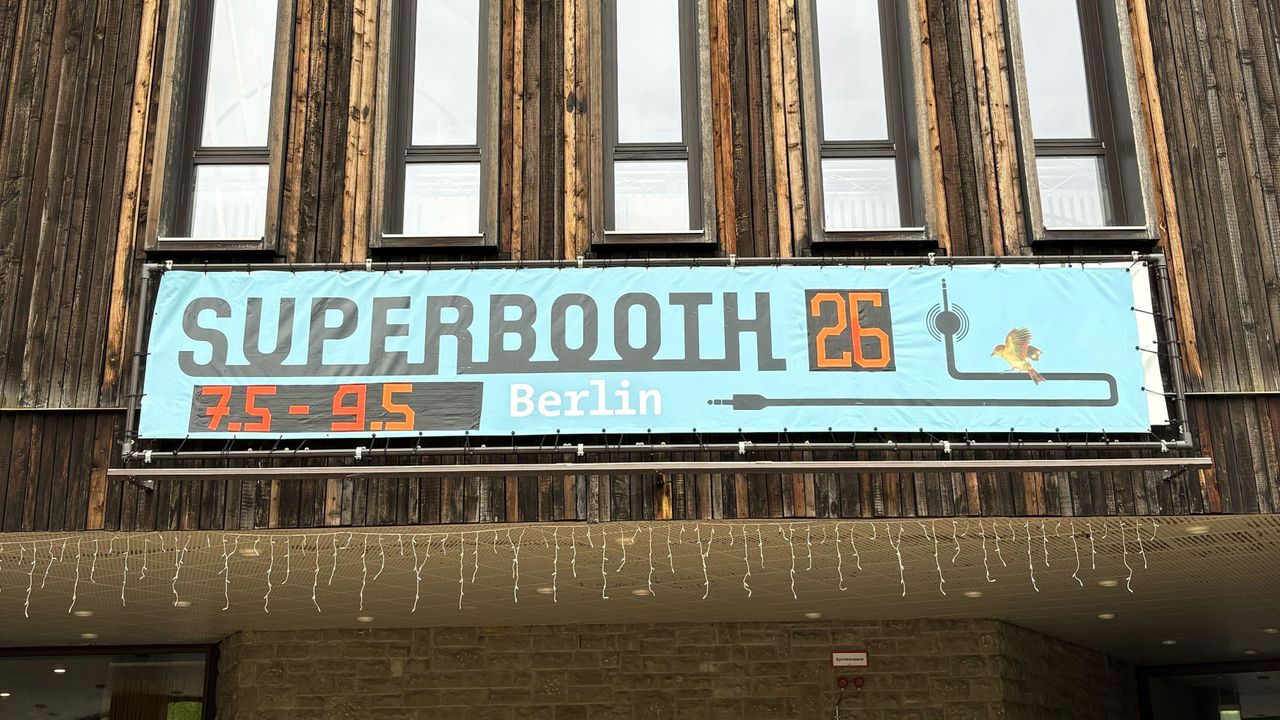
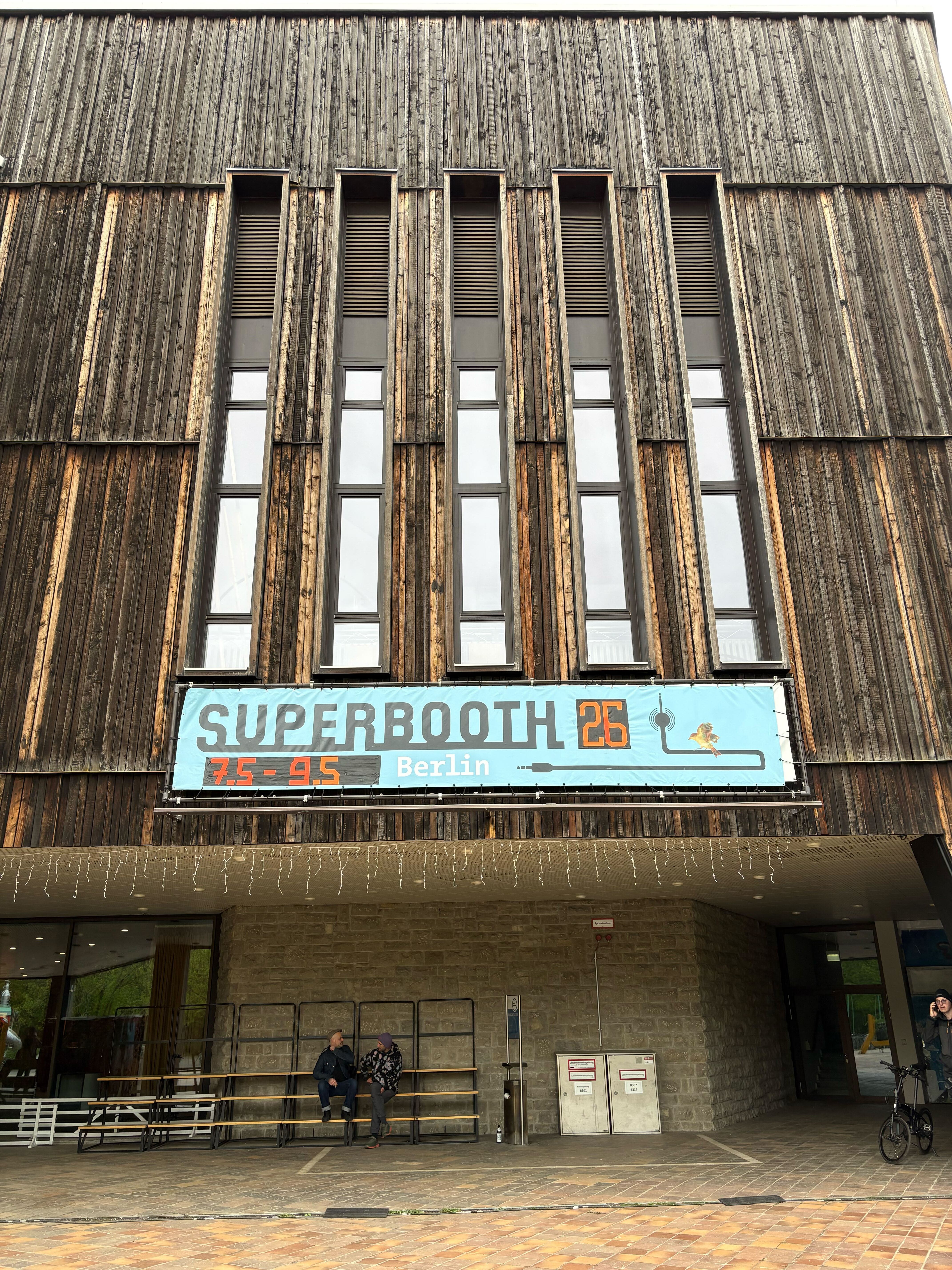
It's now a full decade since the first dedicated Superbooth show took place in Berlin, but the origins of the event date back further than that.
Founded by the team behind Berlin instrument store SchneidersLaden, Superbooth grew out of the now-defunct Musikmesse show in Frankfurt. Since 2017, Superbooth has taken place on a regular basis in the tranquil, wooded grounds of the FEZ centre south of Berlin city centre.
Part industry trade show, part synth nerd jam session, the three day event plays host to many of the biggest brands in music technology, but also numerous smaller, newer and often innovative outfits.
More so than the NAMM Show – which takes place in California each January – Superbooth has become the de facto event for music tech brands to announce and showcase new gear.
And, it's live...
Cre8audio Programm is a CV and MIDI sequencer that blends playability and algorithmic generation
Cre8audio has unveiled Programm, a MIDI and CV sequencer designed to bridge “the gap between human performance and algorithmic generation.”
Programm has 12 sequencer tracks that can be used in a mix and match fashion across its analogue and MIDI outputs.
There are four monophonic melodic tracks, which can be used as distinct sequencers when output via MIDI, or via two sets of analogue pitch, CV and gate outputs. These are joined by eight percussive sequencer tracks, each of which has its own analogue trigger output.
Programm is designed to be used both for precise programming and for generating randomised ideas. Each step can be configured via pitch, gate length, ratcheting, CV/CC, note offset, and step condition parameters.
Each sequence can have its own individual length up-to 64 steps. The device can save 64 patterns as well 32 multi-pattern songs.
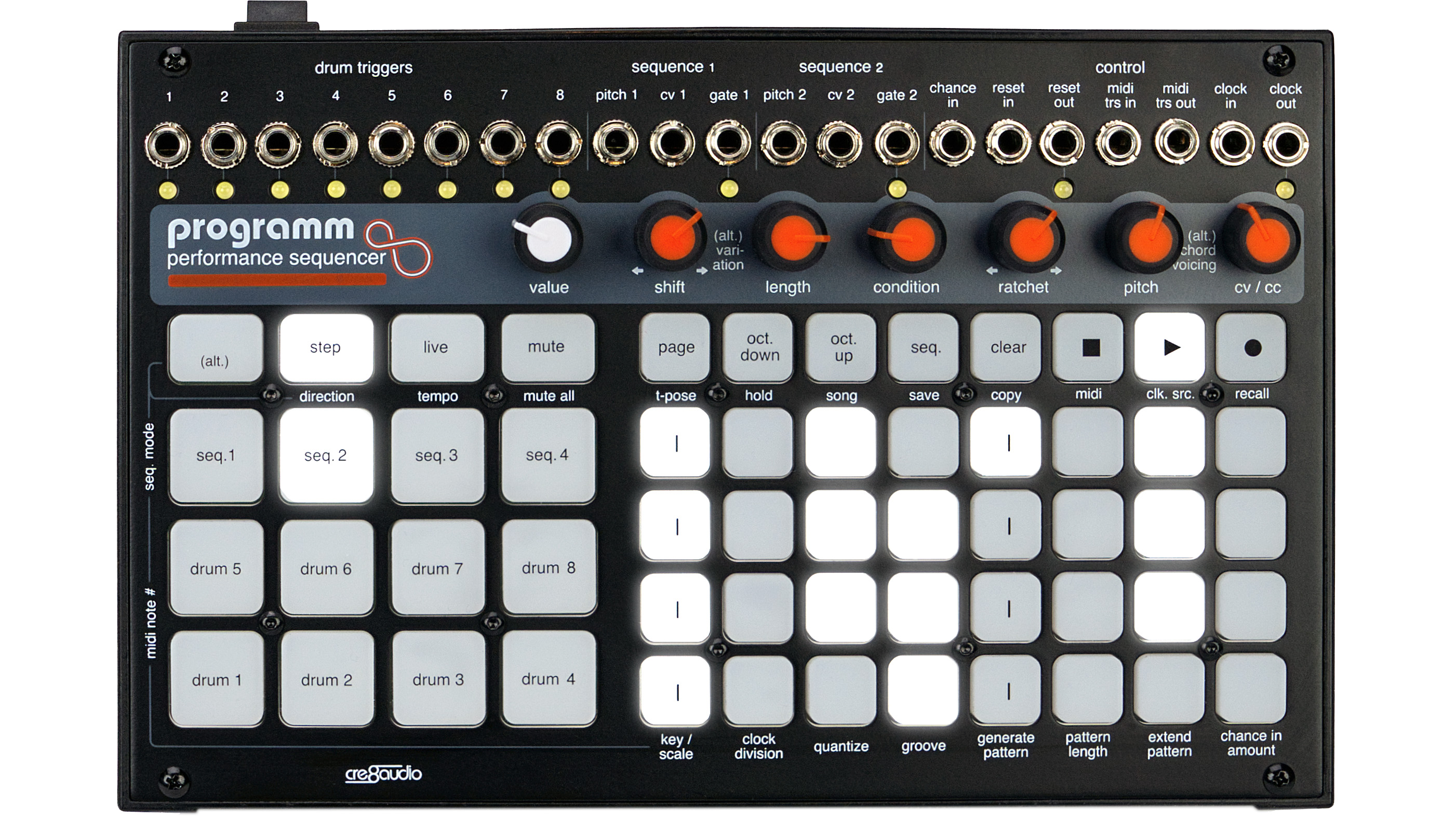
The melodic sequencer tracks can be used in four modes – mono, chord, arp, and chip, which combines the chord and arp functions. The sequencer can make use of key and scale functionality, as well as six groove modes that Cre8audio says “expand far beyond classic swing”.
Plinky 12 is an expressive touch synthesizer available with three swappable faceplates for “different kinds of musical thinking”
German developer Making Sound Machines has announced Plinky 12, a trio of touch-focused instruments with swappable faceplates, each of which makes use of the same core hardware design and a shared synth engine.
Plinky 12 is, essentially, a single instrument, although its interchangeable panels allow it to function in a multitude of different ways. According to its developer, this concept means that “it can become different instruments built for different kinds of musical thinking”.
This one-button synth could be the wildest idea to come out of Superbooth 2026
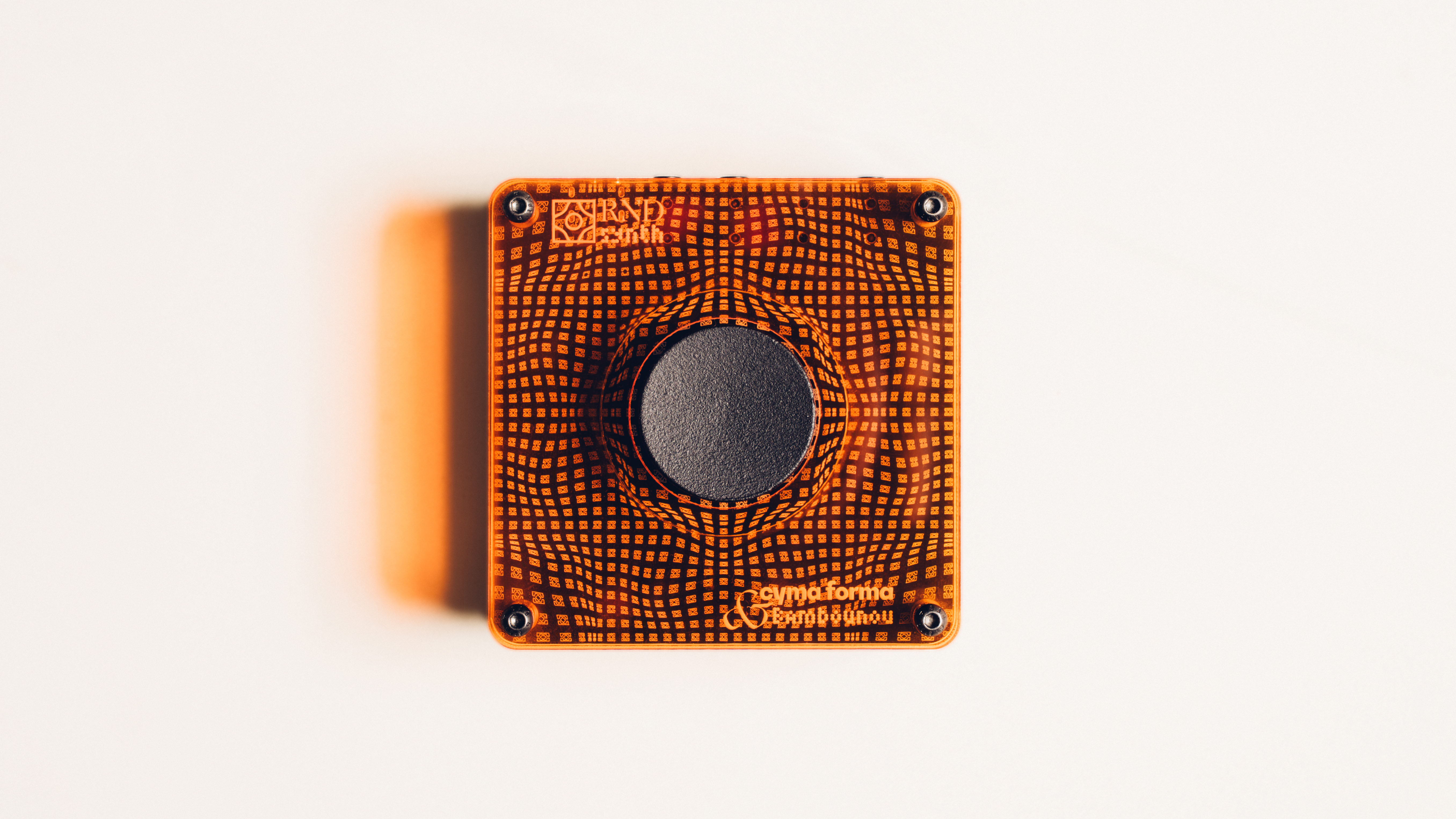
We last heard from boutique synth-makers Cyma Forma back in 2024, when the Parisian tinkerers unveiled ALT, a quirky analogue “soundscape synthesizer” with a Synthi-style pin matrix and patch-modulating light sensors.
Just in time for Superbooth, Cyma Forma has returned with its second instrument, another three-letter marvel that takes an even more innovative approach to sound design: RND (pronounced “Random”).
Undoubtedly the most minimalist synth we’ve ever come across, RND is a compact box with an interface made up of a single button. That’s it. No keys, no knobs, no faders, and no display, just one button that generates a randomized musical idea with every press.
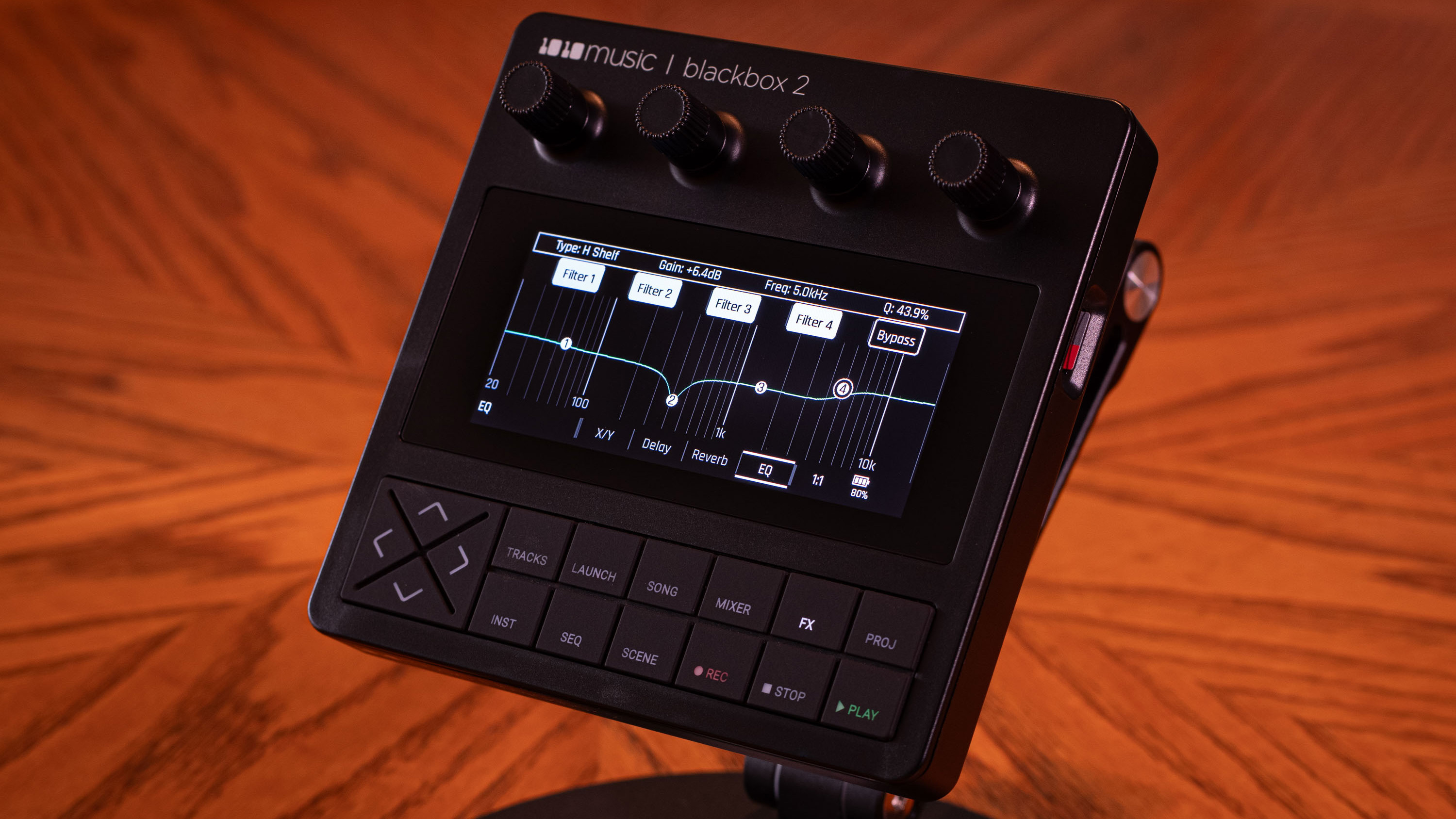
Between the likes of Akai Sample, Teenage Engineering’s KO II and Casio’s forthcoming sampler, we’re living in something of a golden age of portable samplers. 1010music claims that its newly-updated Blackbox 2 sampler is "heir to its own portable sampler throne."
If that's true, it faces some Westeros-levels of rivalry. Let battle commence.
Whoever comes out on top in the Game of Thrones Affordable Samplers, 1010's latest has a lot going for it.
Like its predecessor, the Blackbox 2 is a portable, touchscreen-equipped instrument that houses a self-contained sampling workstation within a compact, rugged device. However, for version 2 1010 has significantly reworked the interface, adding a larger touchscreen and new layout that promises an improved workflow.
The central feature of this new look Blackbox is its four-inch hi-res colour touchscreen, which is used as the primary interface for sequencing and sample editing. A bank of four multi-use rotaries sit directly above the screen while a bank of transport and navigation buttons are placed below.
Blackbox 2 is a four-track workstation that can load up-to four one-shot, loop, slicer or multisample instruments, with the one-shot and loop instruments capable of supporting 16 samples per-patch. Blackbox 2 expands the song-creation features of the original, introducing new launch, scene, song, mixing and effect screens for editing various elements of the composition.
Unlike its predecessor, which required an external power source, Blackbox 2 contains its own rechargeable battery, allowing for 3hrs of fully portable use. It also adds USB-C host and device ports capable of transmitting multichannel USB audio and MIDI.
Blackbox 2 is scheduled to arrive in July, priced at $649.
Sound the synth kalimba klaxon!
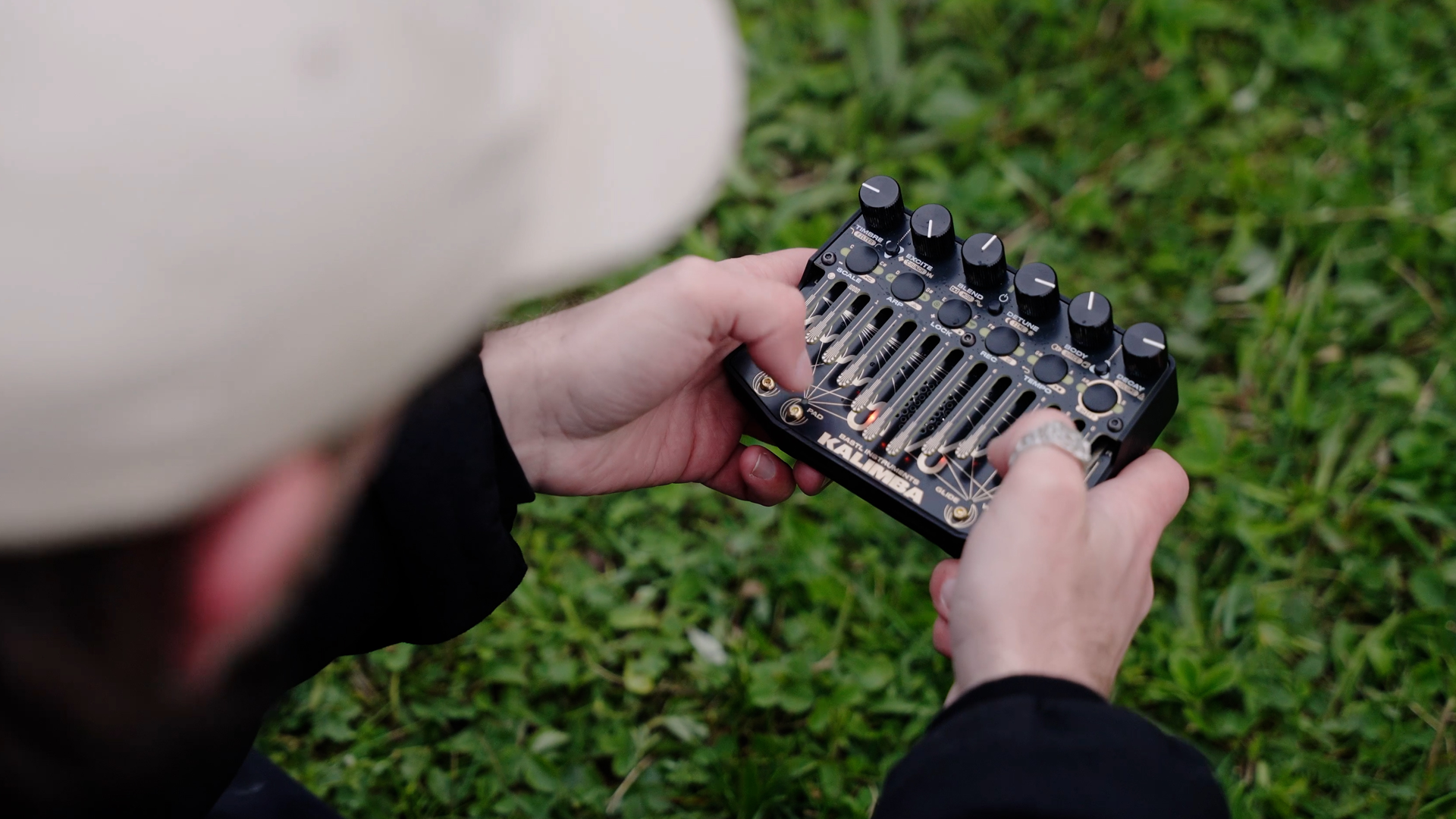
After three long years of development, Bastl Instruments today launched Kalimba - a typically quirky hybrid synth/instrument that resembles – you guessed it – a kalimba, complete with playable tines.
To operate, Kalimba relies on tiny microphones, touch sensors and an accelerometer to yield all manner of expressive sounds. All of which are housed within a physical design that is inspired by the traditional kalimba, tines and all.
There seems to be a theme emerging at this year’s show, of prioritised expression and more traditional-instrument based-routes into exploring sound, and the handheld Kalimba is no exception. “Treat it like an acoustic instrument, it will answer like one” Bastl say.
Playing the tines at varying intensities excite the internal physical modelling and FM engines, thanks to the instrument’s internal microphones. The internal accelerometer acts as both an exciter for the physical modelling engine and also filters the left and right channels of the FM engine, as the device is physically rotated.
Honestly, it looks incredibly fun to us. We'll bring you a demo as soon as we can.
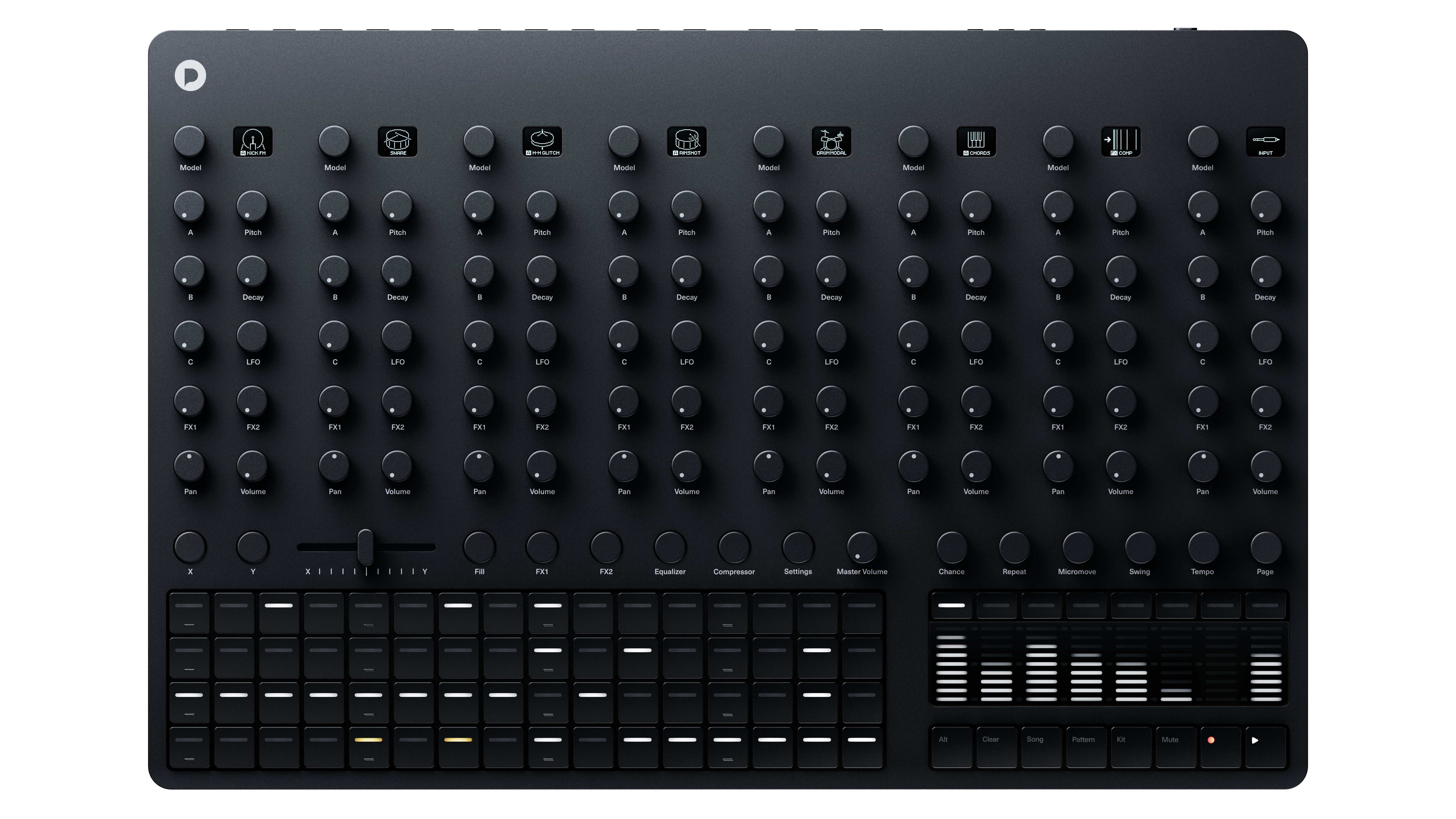
Polyend is a brand that likes to keep us guessing. Fresh off the back of unveiling its AI-assisted effect pedals at NAMM, the Polish company has now unveiled a top-end hybrid analogue-digital drum machine that looks set to rival the likes of Roland's TR-1000 and Elektron's Analog RYTM.
Housed in an aluminium body reminiscent of Polyend’s Synth or Play hardware, Drums is an eight-track drum machine that combines analogue, digital and sample-based sound generation.
Its four analogue voices are based on modern SSI chips that produce two VCOs, an additional noise source and a third digital oscillator that can be used for creating layered sounds or set up for frequency modulation. Each analogue voice also packs a multimode VCF and envelope-controlled VCA.
The remaining voices can make use of a variety of digital synthesis engines or samples. According to Polyend, options include “more than forty instruments, each with its own sub-mode mutations, giving users hundreds of sound options to choose from.” These digital tracks also have acces to eight individual LFOs to provide modulation.
For sequencing, Drums makes use of what Polyend calls its “most intuitive sequencing system so far.” This involves a combination of fills, probability, micro-timing, parameter locks, pattern chaining, generative tools and multiple track play modes. Drums can also save and recall up-to 64 patterns, 64 drum kits and 48 song arrangements.
The drum machine also has an ‘XOY’ fader, which allows users to fluidly morph between two versions of a drum kit during performances. There’s also a broad selection of effects, available as sends, inserts or part of the master chain. Effects can be sequenced per-track making, in the words of Polyend, “effects part of the rhythm rather than something added only at the end of the signal chain.”
“Drums is a return to the fundamentals that defined Polyend from the beginning,” says Polyend CEO Piotr Raczyński. “We wanted to build the drum machine we would want to use and own ourselves. Something uncompromising in sound, materials, and workflow. Like our earliest instruments, Drums is made in small batches, with close attention to every detail, and built to stay relevant for decades.”
Drums is available for reservation now via a refundable $500 deposit, with the first run of units due to ship in around three or four months. The retail price will be €/$2,699, and Polyend says there will be quantities available at launch.
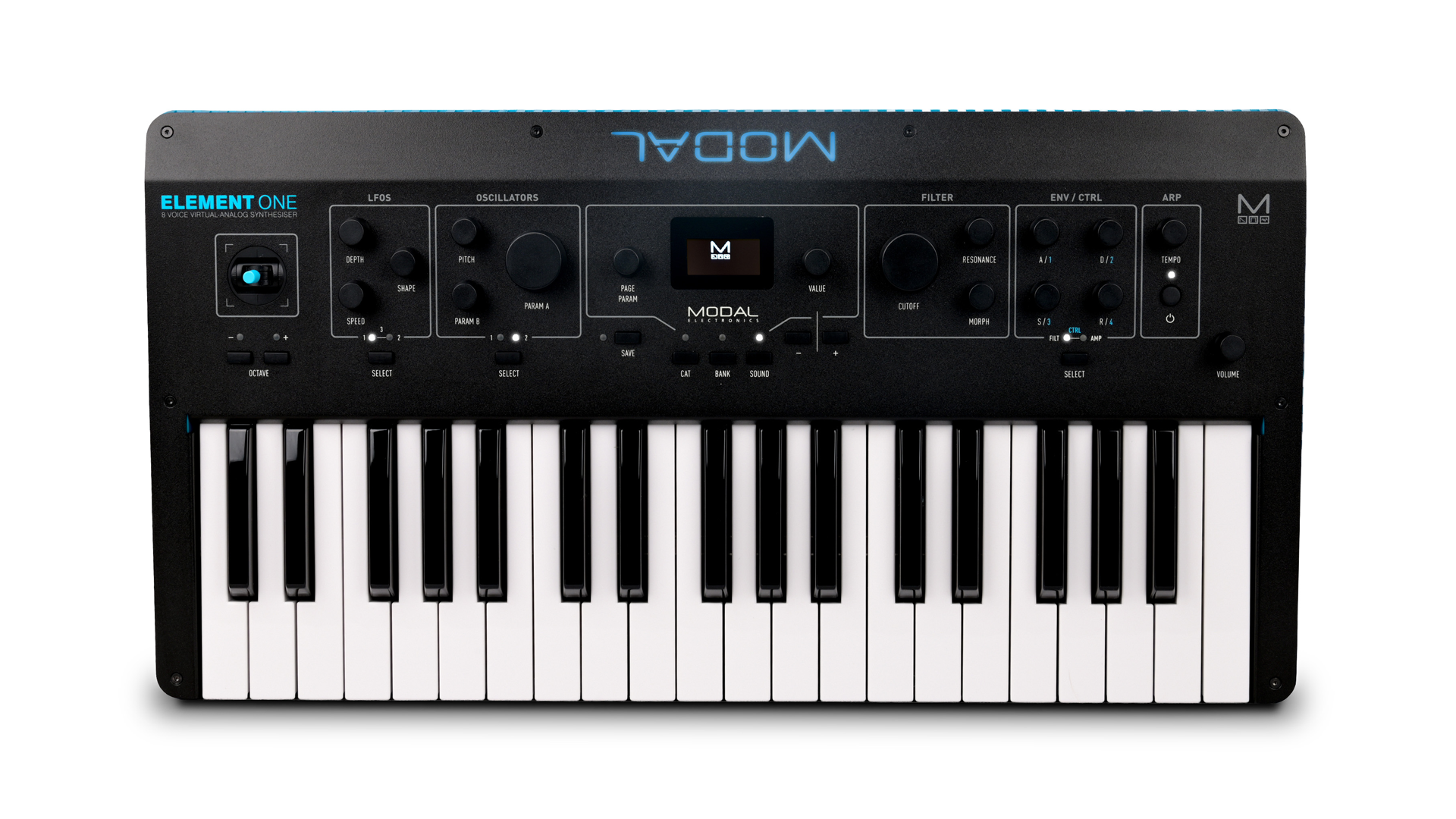
We knew that Modal Electronics, the maker of the extraordinary Argon and Cobalt workstations, had something new for us… and today, launching simultaneously with the first day of Berlin’s Superbooth 2026 show comes the Element One, a diminutive 37-key synth designed for musicians who, in Modal’s words, ‘want to play with sound’ albeit without requiring any deep technical knowledge.
Developed in collaboration with the world-renowned Axel Hartmann Design team, the 4.5kg minimalist steel and polycarbonate-enclosed Element One’s ultra-reactive USP is spotlighted by expressive aftertouch and a versatile 4-axis joystick.
Then, there’s 17 direct-access control knobs for instantaneous sound shaping. It looks like the perfect antidote to tedious menu-scrolling…
The Element One is being posited as more of a responsive instrument, then - an instrument that attendees of this year’s Superbooth can test out with their own hands over at Modal’s booth (H101).
"Element One is for musicians and producers who want more sound and more expression without turning into full-time programmers," says the Modal team. "It doesn’t ask you to learn the rules; it dares you to play."
But that simplicity belies the fact that, under the hood, the Element One sports some impressive specs: 64 high-resolution oscillators (up to 8 per voice) can provide textured warmth right through to more modern-leaning sounds. Then there’s 30 resonant filter types including morphable and static options.
Element One is available through authorised retailers for MSRP 649 €/ or MAP $599 .
Read more >>>
The MusicRadar team has touched down on the Superbooth show floor. Stay tuned for demos and opinions as we get hands-on.
Roland's AI stompbox is coming...
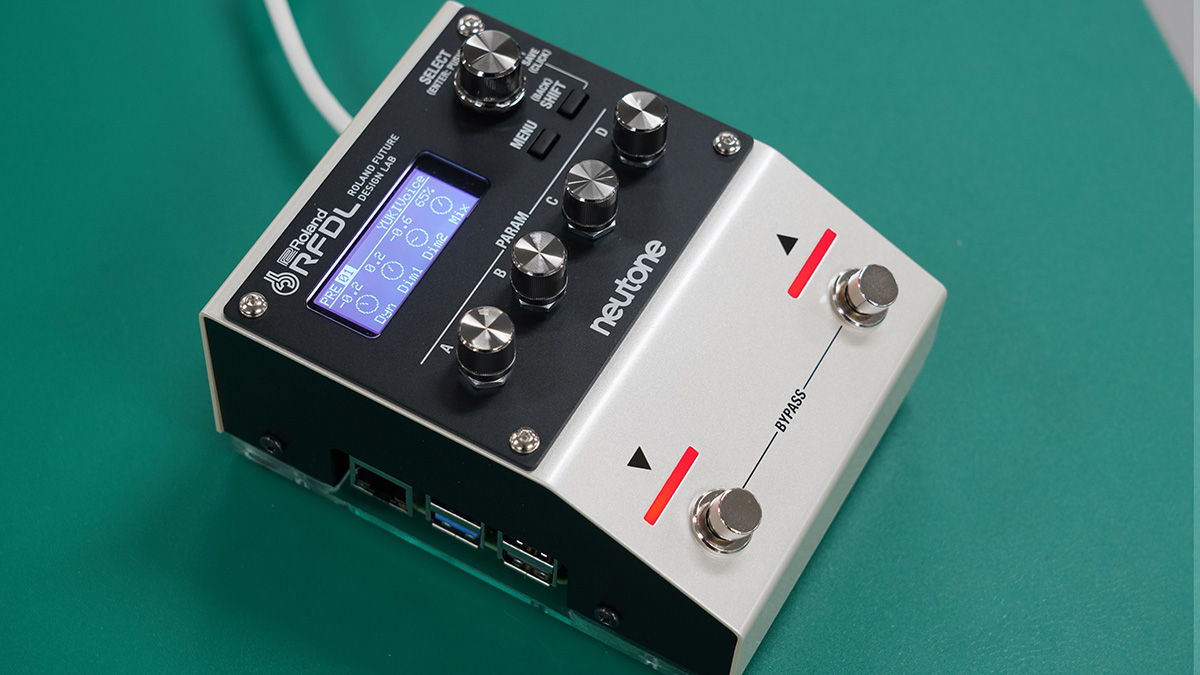
Announced last year, Roland’s Project Lydia – a neural sampling stompbox that enables you to apply the tonal qualities of a trained AI model onto an incoming audio signal – has now reached the second phase of its development, bringing it closer to becoming a fully realised commercial product.
Various changes and improvements have been made since we first got wind of the device, which comes from Roland's Future Design Lab. This innovation wing of the company was founded in 2024 “to help design the future of music creation”.
What musicians want that future to look like is very much open to question so, perhaps wisely, Roland has made the changes to Lydia based on demos, industry showcases and global surveys.
The result is a refined hardware design that promises enhanced flexibility, such as easier Raspberry Pi 5 installation and standalone USB MIDI controller operation. There’s also fully integrated I/O, which does away with the need for an external USB audio interface, and an onboard LCD display for easier navigation and real-time parameter feedback.
User preset memories are now part of the package, so control settings can be stored, and MIDI connectivity has been added for deeper control, automation and integration with other studio and live gear.
We’re still a way off from Lydia being something that you can actually buy, but Roland says that the first prototype generated strong interest, which prompted it to have a good think about where to go next with it.
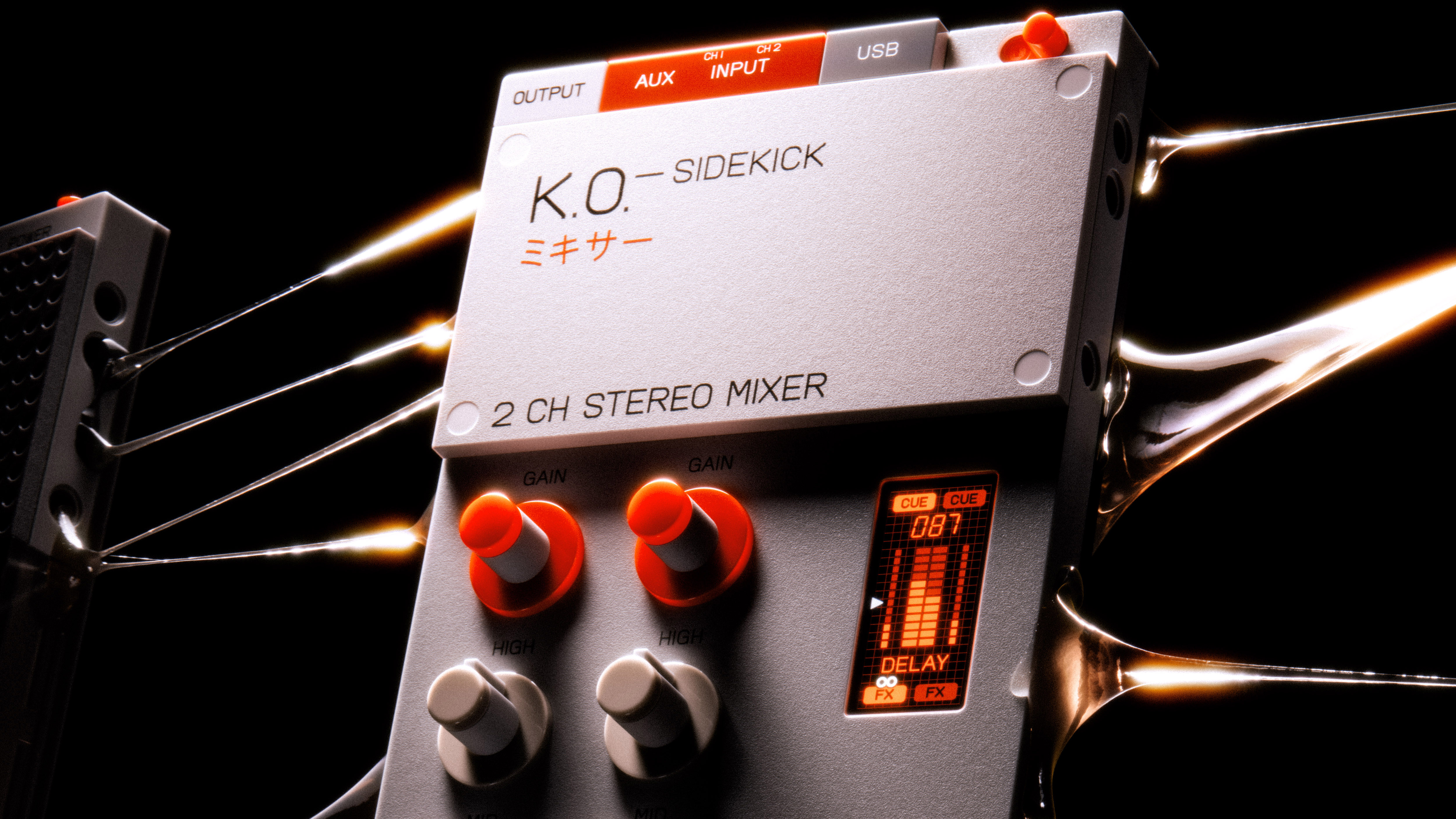
Teenage Engineering has launched a new hardware mixer to join its EP family of portable samplers.
The EP-136 KO Sidekick is a two-channel mixer with integrated audio interface, making it ideal for connecting portable gear – such as the EP samplers – to a DAW setup. The EP-136 is more than a functional utility though, boasting a variety of creative effects and performance tools more commonly seen on DJ mixers.
As Teenage Engineering says: “The plan was to build a mixer for the KO II but it became more of an effect-box with a built-in sequencer. Quite cool actually.”
Teenage Engineering’s EP range kicked off in late 2023 with the arrival of the EP-133 KO II – an evolution of the company’s tiny PO-33 K.O!, which was part of the company’s Pocket Operator range. Despite a few limitations, the EP-133 was very easy to love, thanks in part to being far more affordable than many of Teenage Engineering’s other recent releases.
The EP-133 was followed by a run of sequels that have all been more niche and eccentric, including the medieval-themed EP-1320 and reggae-orientated EP-40.
The EP-136 looks like a release with more mass market appeal than those latter entries, and thankfully lands at a temptingly-accessible price point of €/£189. (It’s worth remembering that Teenage Engineering’s last portable mixer landed at an eye-watering price of £1199.)
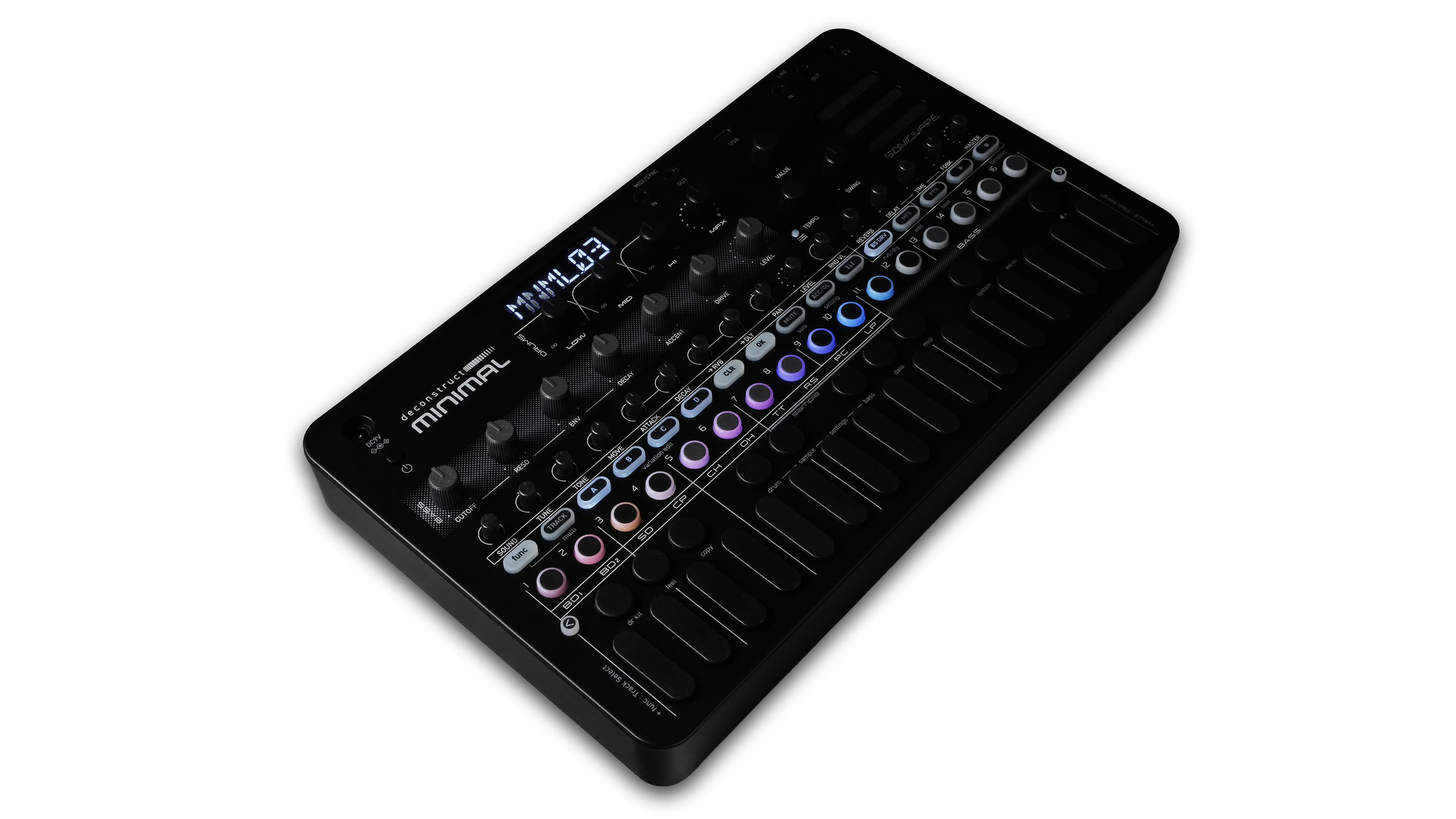
Japanese synth brand Sonicware has announced Deconstruct Minimal, a new hardware groovebox said to be “built on the rhythmic and pitch drift of legendary drum machines”.
Sonicware is perhaps best known for its Liven series, a range of compact digital synths that specialise in lo-fi sounds and ambient textures. According to the company, Minimal marks the first entry in a new range designed to sit alongside the Liven instruments.
“While the Liven series focuses on sound itself — making it easy to create music tailored to each sound engine — the deconstruct series focuses on musical structure, analyzing and reconstructing it to enable deeper musical expression.”
Described as being ‘designed to create hypnotic minimal grooves’, Deconstruct Minimal is a 10-track groovebox featuring a drum machine accompanied by a virtual analogue bass synth and sampler capabilities.
The sequencer tracks are designed for creative drum programming, equipped with per-track accents, sub-steps, randomised velocity, swing and phrase rotation. Rather than channeling the sound of vintage drum machines, Minimal instead aims to recapture the ‘groove DNA’ of classic hardware by replicating the grooves of vintage machines, along with their subtle drifts in rhythm and pitch drift.
Modal Electronics Element One demo
It’s been a bit of a rocky road for Bristol-based synth-makers Modal Electronics in recent years, but after making a comeback in 2024 under new ownership, the company has returned with its first new instrument under the restructured brand. A “repackaged” version of Modal’s Cobalt8, the Element One streamlines that concept to deliver a $599 virtual analogue synth aimed squarely at music-makers that value playability and ease-of-use over complex sound design.
Minus the sequencer, Element One is essentially the same synth as the Cobalt8 under the hood. Its sound engine has eight voices of polyphony, powered by 64 high-res oscillators shaped by 40 unique algorithms, and this opens up a sonic vocabulary that’s impressively broad for a VA synth: we spent a solid 20 minutes auditioning its bank of pads, getting lost in an ocean of atmospheric textures before we even had a chance to dive into the other preset categories. The 4-axis joystick remains as fun as it was on the Cobalt8, too, giving you expressive control over pitch, mod and a ton of modulation destinations – combined with the channel aftertouch there’s plenty of scope here for expressive performances that go well beyond the keyboard.
Element One’s physical design was developed in collaboration with renowned synth designer Axel Hartmann, resulting in a clean and stripped-back interface that’s noticeably more accessible than the Cobalt8. Modal tells us that Element One places “performance at the centre”, shifting the synth’s target market towards musicians and novice synthesists. The knob-twiddlers haven’t been forgotten, though, and if you’re someone that likes to get deep into sound design, you still get the same level of control as Cobalt8 – you’ll just have to dive a bit deeper in the menus or use the companion desktop app to access some of the more advanced parameters. Taking the Cobalt8’s sophisticated sound engine and placing it in a more approachable package strikes us as a smart move, and Modal tells us the Argon8 and Carbon8 could be next in line for the same treatment.
Polyend Drums sound demo
Polyend says Drums is the most ambitious project its ever worked on, a hybrid analogue/digital drum machine that’s “built without compromise”, and that’s evident from the moment you lay your hands on it – this is a premium piece of kit with a premium price tag, and at $2,699, it’ll be competing with beasts like Roland’s TR-1000 at the very top end of the market.
Though its sleek and stylish design is undeniably eye-catching, Drums’ distinctive interface has us in two minds. Dialling in patterns on its 4x16 grid of backlit pads is fast and fun, the per-track level meters are a nice touch, and we’re big fans of the instrument’s X0Y fader, which lets you trigger fills and morph between kits and patterns on-the-fly, opening up a whole host of possibilities for creative transitions. The instrument’s knob-heavy top half could take some getting used to, though, with a grand total of 96 rotaries jostling for position and key parameters spread across multiple displays that are a touch on the small side.
Workflow aside, though, Drums’ sound is impressive. Though the pre-production unit we tested didn’t yet incorporate the four dual-VCO analogue voices you’ll find in the finished product, the digital and sample-based voices still offered a diverse tonal palette, delivering everything from room-shaking kicks, biting snares and crisp hi-hats to more unconventional tones accessible via its sub-mode mutations. This is a drum machine we could get lost in for days, and we get the sense that we hardly even scratched the surface in the time that we had with it – we’ll be heading back to Polyend’s booth tomorrow to dig deeper into the sequencer, which the company tells us is the “most advanced and intuitive” it’s designed yet.
MusicRadar's Matt Mullen gets hands-on with 1010music's new Blackbox 2 sample workstation
What is Korg hiding under here?
Korg’s booth sits squarely in the middle of Superbooth’s entrance hall, a scene-stealing spot that the company has previously used to showcase big new releases. This year, however, the company has hidden away its next big new release under several sheets of plastic film, giving us a tantalising glimpse of a prototype instrument from the established Japanese brand.
What could it be? Not many details are visible underneath the covering, but it’s visibly a 61-key instrument with a healthy amount of knobs and an array of blue LEDs, some arranged above the keyboard in the style of the Logue range’s sequencer. A large screen sits towards the right-hand side, suggesting something in the workstation realm, but who knows? Many are speculating that it could be a successor to the Korg Prologue, an hybrid analogue/digital poly the company discontinued in 2022. When we know more, so will you.

Big music technology news away from the Superbooth show floor: Native Instruments has been acquired by inMusic, owner of Akai, Moog, Denon DJ and others.
It's a move that is sure to divide opinion among users, as MusicRadar's Ben Rogerson writes:
While there will inevitably be concerns that having so many big-name brands under one roof isn’t necessarily good for the industry as a whole, NI’s customers will also be relieved to learn that the products that they’ve invested in should now be supported into the future. Whether Native Instruments will ever be the innovative force it once was remains to be seen, but at least it’s still here.
Is it a filter or is it an instrument? For Erica Synths, the answer is ‘Why not both?’
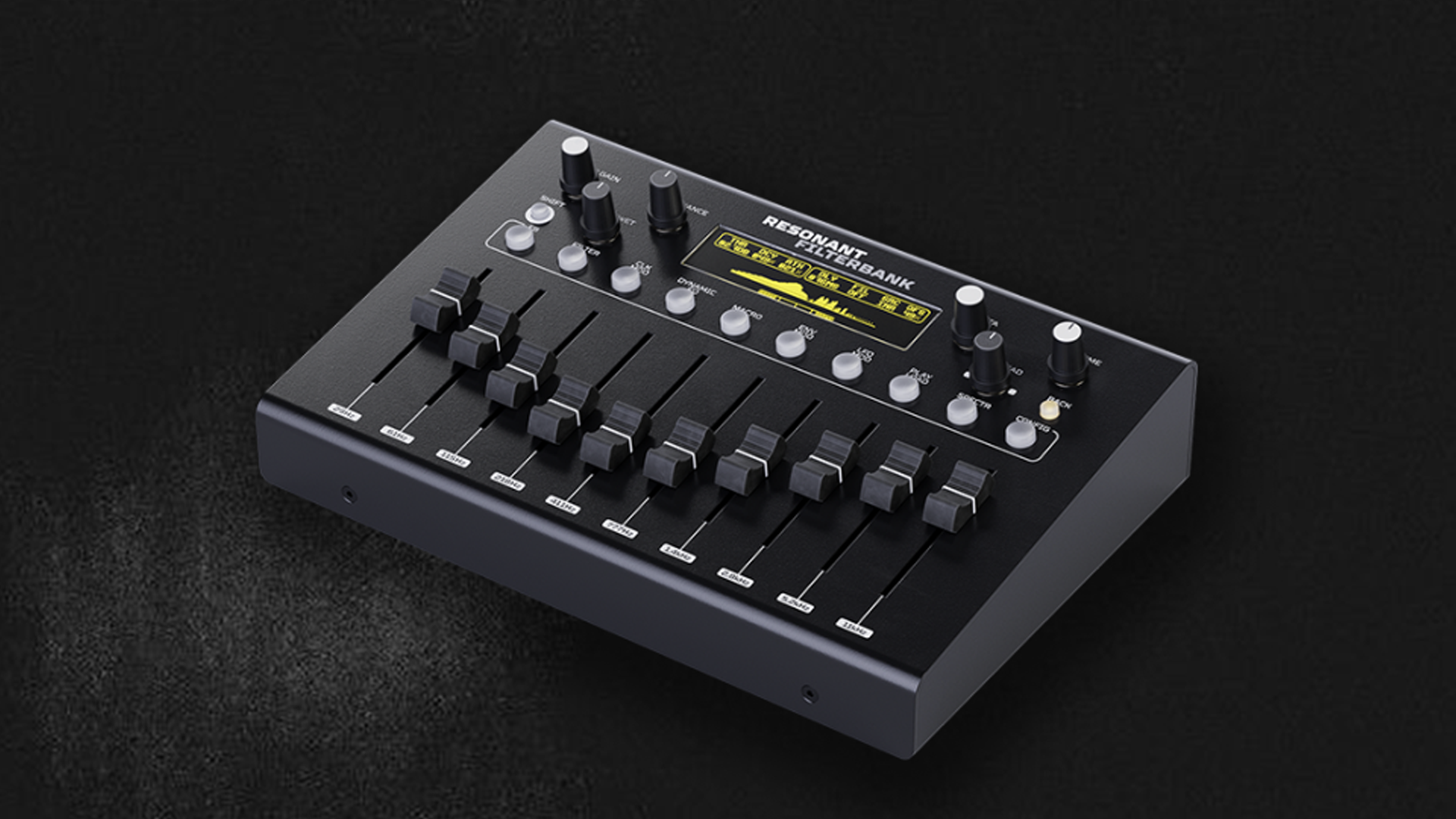
Erica Synths’ big launch at this year’s Superbooth is Resonant Filterbank - an analogue/digital performance and production-friendly effects unit which sports ten bandpass filters to squeeze and maximise your input sounds, cutting and boosting specific frequencies at will.
But this sleek aluminium-housed box is more than just a simple 10-band filterbank, you can also use it as both an unconventional multimode filter or as an instrument in its own right, particularly when you play with the box's various resonance controls.
It can become a standalone instrument via configurable feedback loops. “[It can be used] even as an experimental sound generator for no-input mixer-like setups,” state Erica Synths.
You can use the Filterbank's Clocked Modulation Mode to program specific band positions in a set sequence and build oscillating stereo effects. This is done via 20 independent LFOs and envelope followers which can be assigned to any control parameter. It also features a spectral analyser and a dynamic EQ, making it a lot deeper than you might think upon initial inspection.
Sonicware Deconstruct Minimal sound demo
Japanese brand Sonicware has become a firm favourite among budget-conscious beatmakers in recent years thanks to its LIVEN series, an affordably priced series of grooveboxes and synths each themed on a specific concept. At Superbooth 2026, the company has introduced an entirely new range to sit alongside the LIVEN line: Deconstruct. Where LIVEN was focused on “sound itself”, Sonicware says, Deconstruct explores “musical structure, analyzing and reconstructing it to enable deeper musical expression”.
The inaugural instrument in the Deconstruct series is MINIMAL, a battery-powered budget groovebox that fuses a sampler, drum machine and bass synthesizer, built for the “hypnotic grooves” of minimal techno and minimal house. It’s inspired by vintage drum machines we all know and love, but rather than simply mimicking their sounds, Sonicware has attempted to recreate their “groove DNA”, the subtle rhythmic and pitch drift behind the distinctive character of machines like the TR-808 and TR-909.
Sounds are primarily sample-based, though you get a dedicated synth engine for kick and snare, and the drum tracks are joined by a dedicated bass synth that sounds brilliantly squelchy and acidic, and really packs a punch when you crank the drive up. The sequencer is super versatile, with parameter lock, per-track accents, sub-steps, randomised velocity, swing and phrase rotation, and though the build quality is a little flimsy, it’s hard to complain at this price point. Any qualms were immediately forgotten once we began building up some minimal grooves and tweaking the master effects and 3-band DJ-style Isolator EQ on-the-fly. Minimal had us channelling our inner Ricardo Villalobos in no time, and for only $299, this is not only an impressively flexible groovebox, it’s a whole lot of fun.
This one-button synth could be the wildest idea to come out of Superbooth 2026
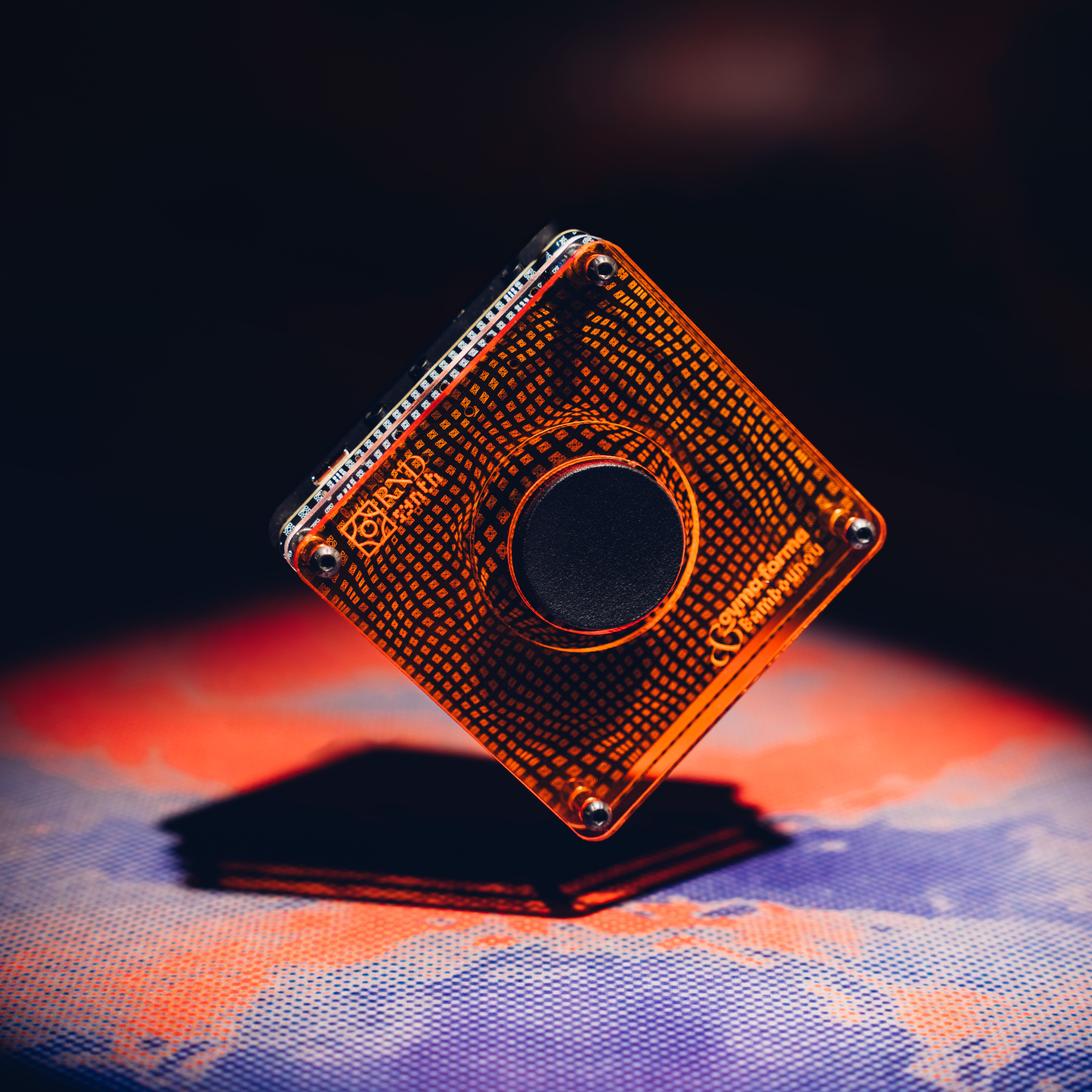
Probably most minimalist synth design we've ever come across, Cyma Forma’s RND is a compact box with an interface made up of a single button. That’s it. No keys, no knobs, no faders, and no display, just one button that generates a randomised musical idea with every press. Hit the button and all of RND's parameters across every feature are assigned weighted random values. Once you’ve hit it a second time, you erase the current idea and create a new one, and those sounds are gone forever.
Based on an idea dreamed up by French producer/DJ Bambounou, RND is a digital synth equipped with eight sound engines covering nine styles of synthesis, along with five styles of filter and a reverb effect. Each randomly generated idea is made up of four instrument tracks populated with a unique patch, and each track gets its own sequence, with melodies, rhythms, tempo and scale all randomised.
It’s a concept that’s sure to divide audiences with its extreme simplicity, but after spending some time hitting RND’s big black button and speaking to its creators, we’re fully on board. The ideas we heard RND create were varied, ranging from minimal ambient soundscapes to uptempo chiptune-style bangers, and you admittedly have to cycle through a few duds – it’s an unpredictable machine, but that’s entirely the point.
Time signatures are randomised across each of its four sequences, so you can get some funky polyrhythms, and thanks to the 4-channel MIDI output over USB, it could also act as a generative sequencer for a broader set-up, if you want to explore beyond RND’s internal sound engines. This obviously won’t replace your go-to synthesizer, and it’s not intended to. Instead, it’s a fun, easy way to spark instant inspiration, an emergency button for those days in the studio when your creativity needs a jumpstart. It’s reasonably priced too, at €125.
Cyma Forma tells us that if all goes well, they’re considering applying the same one-button concept to an effects unit and a drum machine, so watch this space.
Bastl Kalimba is a pocket-sized 'acoustic' synthesizer with motion control
A hybrid of kalimba and synth, Bastl’s Kalimba brought our minds back to Korg Berlin’s Phase8 when we first spotted it – an instrument that’s fundamentally based on the same combination – but the two synths are actually very different in their design.
Kalimba’s interface is made up of playable tines that, when plucked, tapped or touched, are picked up by microphones and touch sensors. These signals act as exciters for the internal synth engines, which combine physical modelling and FM to produce a varied catalogue of sounds, ranging from the conventional to the otherworldly.
There are also touch plates on the back that can be mapped to various parameters for additional control, and an internal accelerometer that’s mapped to both synth engines, so you’re able to manipulate timbres by rotating the device. It’s a pretty wild concept, but for such an esoteric device, it’s not difficult to dive into and begin creating unexpected sounds.
We found so much to explore in such a compact instrument, cycling through the scales, latching the arpeggiator and experimenting with the bitcrusher and distortion to create fuzzy, broken textures. The kalimba is a sweet-sounding instrument, but Bastl’s Kalimba can go very far in the opposite direction, its destructive looper layering, time-stretching and reversing audio to produce unrecognizable results.
It might be inspired by the kalimba, but Bastl’s Kalimba is so much more: a radically imaginative synth that’s one of the most ambitious designs we’ve spotted at this year’s show.
UDO's DMNO is two synths in one
Ziggy is a self-contained West Coast synth for under $1k
Outbox 8 is a godsend for Elektron junkies
Chase Bliss' Big Time is a supersized echo inspired by vintage '80s delays
Plinky 12 can be (almost) anything you want it to be
Roland's Project Lydia is pushing the boundaries of AI sound design