“Super-recognisers” employed by the police for their unusual ability to remember faces they have barely seen and identify criminals may not be as infallible as previously imagined.
Research conducted by scientists at Bournemouth University has revealed inconsistencies in the abilities of these talented individuals that may compromise their ability to solve crimes.
Forces including the Metropolitan Police, as well as governments and security services, make use of these people to identify faces in CCTV footage or pick perpetrators out of crowds.
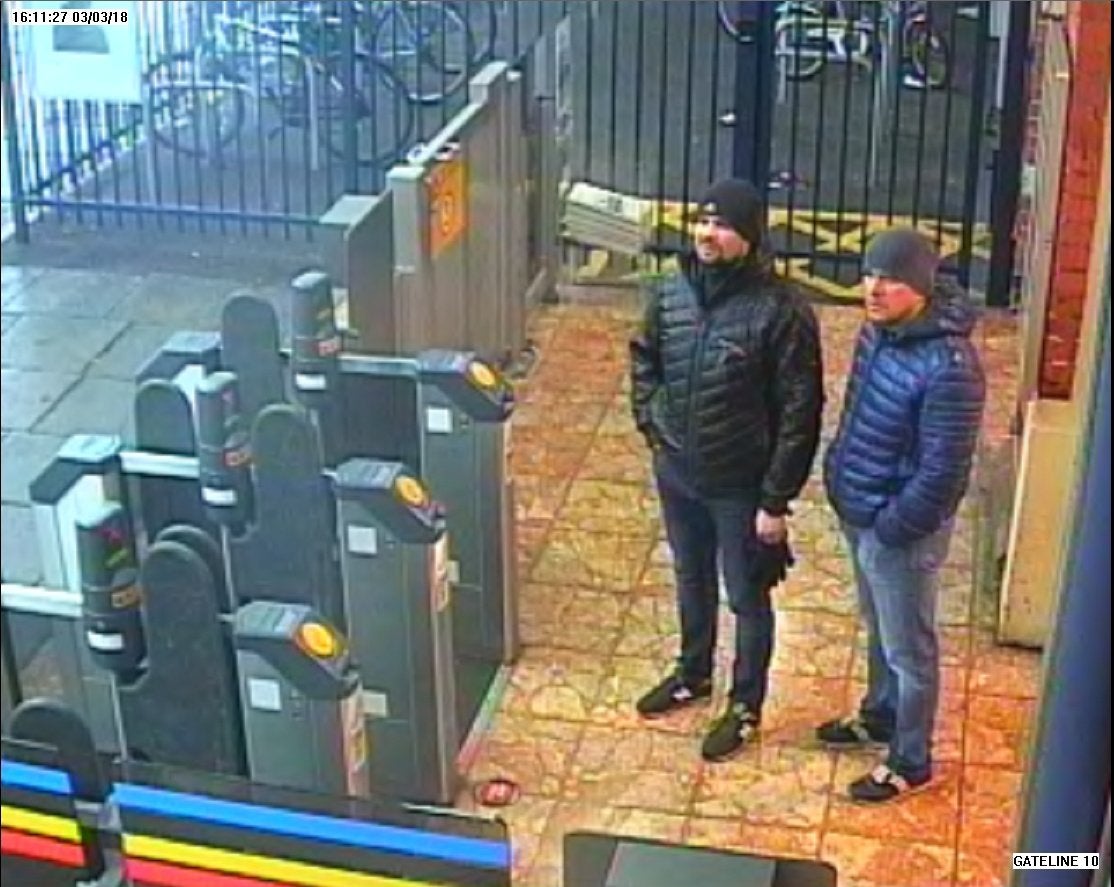
Recently it emerged that the government employed super-recognisers to find the two Russians suspected of carrying out the Salisbury novichok attack.
However, a study presented as part of the British Science Festival in Hull has found that despite being regularly employed in such situations, they may not be as superhuman as reports suggest.
The researchers behind the work suggested the tests currently used to assess super-recognisers may not be robust enough.
“Up until now, little work has considered the screening tests and protocols that should be used to identify top human performers, and current procedures tend to rely on performance on a single attempt at a test of face memory,” explained Dr Emma Portch, one of the study’s authors.
The tests used to assess people with this ability are currently fairly limited, with the Cambridge Face Memory Test being the main example.
What is more, most people who are employed as super-recognisers put themselves forward for the role.
“Our work shows that self-selection alone is not a reliable means of identifying those at the top end of the face recognition continuum,” said Dr Portch.
“It’s also important that assessments to identify super-recognisers are robust and rigorous, including multiple tests that look at both the same and different components thought to underpin face recognition.”
In their study, Dr Portch and her colleagues assessed 200 people who thought they had superior face recognition abilities.
However, they then subjected their participants to three more in-depth tests that measured face memory, face matching and composite-face identification in a crowd.
Within their sample, 40 per cent did not show consistency throughout the tests, raising concerns about the extent of their abilities.
Super-recognisers came to public prominence after press coverage of the Met’s elite team who had helped track down murder suspects and keep tabs on crowds at major events such as the Notting Hill Carnival.
In light of their findings, the scientists are calling for protocols to ensure recruitment of super-recognisers is suitably thorough.
The results of the study were published in the journal Cognitive Research: Principles and Implications.
The Met Police declined to comment on the study.