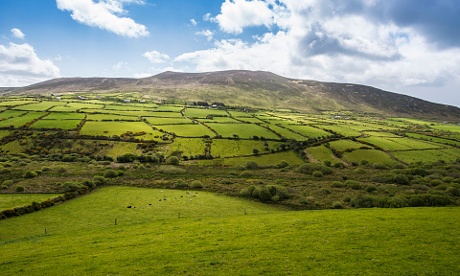
The lush meadows that give the Emerald Isle its vibrant colour are far more than just a pretty patchwork of green. Ireland’s grass pastures are a home for wildlife and provide abundant, nutrient-rich grazing for its small herd of Kerrygold dairy cows. The cows love being outside, and the meadow milk they produce is used to make naturally golden Kerrygold butter, making it the ideal system for livestock, farmers and toast-lovers alike. Pastures are part of a traditional way of farming, stretching back generations; here are some of the reasons why grass is still so super.
Grass makes good milk
Grass is packed with nutrients, and milk from grass-fed cows is naturally rich in beta-carotene as well as containing higher quantities of unsaturated fatty acids (Omegas 3 and 6) than milk from cows fed indoors. The beta-carotene gives Kerrygold butter its golden colour, while Omega 3 and 6 make it creamy-tasting. Not all dairy cows are free to graze on grass. Milk from cows fed a grain-based diet produces butter which is paler in colour.
Irish grass is great
Thanks to its location on the edge of the Atlantic, Ireland has a temperate climate with regular rainfall. It’s not everyone’s idea of good weather, but it’s perfect for growing grass, and 80% of the agricultural land in Ireland is given over to lush green pasture. This is not the case in all milk-producing countries, where some cows are kept indoors, fed grain exclusively and intensively milked.
Kerrygold cows graze freely
Depending on the weather, Kerrygold cows can spend up to 300 days a year grazing outdoors on fresh grass, which is longer than almost any other country in the world. In the spring and autumn, cows spend the long daylight hours outside, while in summer they can graze outside around the clock, every day of the week. Even in winter, Irish cows have a predominantly grass-based diet, eating the silage made from summer grass.
Grass grows in the family
Many Irish farms are handed down through the generations and only a tiny percentage of agricultural land is sold every year – it’s believed that each farm in Ireland changes hands, on average, once every 500 years. These traditions have helped to nurture a wealth of knowledge about caring for the land and animals, which is passed on from each farmer to the next. Irish dairy herds have stayed small, allowing farmers to give each cow special attention when they need it.
Grass-fed cows produce less milk – and that’s a good thing
The grass-led Irish dairy system is less intensive than in countries where cows are kept indoors and fed a grain-only diet. Scientific studies have concluded that cows which graze outdoors on grass are healthier and have a higher life expectancy than cows that are kept indoors. A Kerrygold cow produces less milk than those kept in more intensive systems, but this meadow milk is rich in nutrients and makes creamy, golden butter.