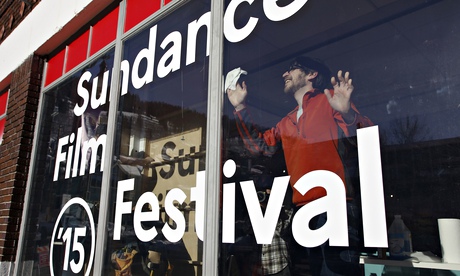
If Boyhood wins the Oscar for best picture as predicted next month, it will be good news not only for the film’s director, Richard Linklater, but for Robert Redford, too.
In the 37 years since Redford started Sundance to nurture independent talent, the film festival has produced a slew of titles that have made the Academy Awards shortlist – including, in recent times, Precious, Little Miss Sunshine, The Kids Are All Right and Winter’s Bone. But Boyhood would be the first to actually scoop the prize (and, if it did, it would be beating another Sundance alumnus, Whiplash).
So Sundance 2014, which also saw the premieres of the likes of The Babadook and Obvious Child, presents a formidable precedent for the programmers. Yet this year’s edition, which opens on Thursday, is fancied as one of the strongest yet seen, with new titles from much-acclaimed directors such as Noah Baumbach – reuniting with Greenberg and Frances Ha star Greta Gerwig for Mistress America – and Napoleon Dynamite’s Jared and Jerusha Hess back in town with faith comedy Don Verdean.
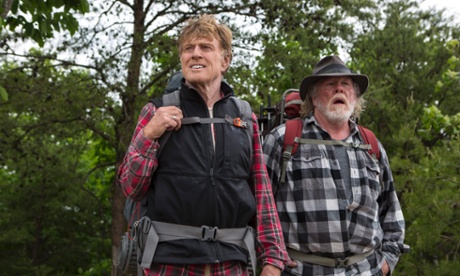
Redford himself has a title playing – an adaptation of Bill Bryson’s A Walk in the Woods, a memoir about hiking the Appalachian Trail with his best friend (played by Nick Nolte). Grandma stars fellow veteran Lily Tomlin as a grieving lesbian helping her granddaughter, while Blythe Danner is another older singleton coping with troublesome offspring – and later-life dating – in I’ll See You In My Dreams.
Meanwhile, Charlotte Rampling and Tom Courtenay are a long-married couple dealing with decades-buried secrets in 45 Years, the new film from Andrew Haigh, whose gay romance Weekend met with much acclaim. The Second Best Exotic Marigold Hotel, in which Richard Gere joins the expat old crusties, is rumoured to be the surprise title.
Yet despite this apparent nod to the mainstream, Sundance’s stock-in trade remains venturing to those places other festivals dare not. One of the most eagerly awaited titles – not least by the 160 lawyers who have reportedly already vetted it – is Going Clear, Alex Gibney’s no-holes-barred expose of Scientology, which apparently features interviews with former members of the church. Other hot-potato documentaries include Chuck Norris vs Communism, about the underground popularity of the star in 80s Romania, and The Wolfpack, about six teenage brothers locked in their New York apartment whose only link with the outside world was movies.
There are also studies of white supremacists trying to take over a small town (Welcome to Leith), amateur pornographers (Hot Girls Wanted), those who perpetrate anti-black gun violence (3½ Minutes), government counterterrorists ((T)ERROR), Kurt Cobain (Kurt Cobain: Montage of Heck), and a man who finds a mummified foot in a grill he buys at a yard sale (Finders Keepers).
In the dramatic categories, too, many envelopes are being pushed. James Franco stars as a gay pastor who attempts to turn heterosexual in I Am Michael, and, in the real-life-based True Story, as an accused killer who steals the identity of a New York Times journalist (played by Jonah Hill).
Comedians go dramatic in Nasty Baby (Kristen Wiig helps a gay couple conceive) and I Smile Back (Sarah Silverman is a horny yet depressed mum in the suburbs). Meanwhile the footprint of Boyhood’s coming-of-age narrative can be seen in Ten Thousand Saints, about a boy who goes to live with his estranged father (Ethan Hawke) in New York, while Saoirse Ronan returns to her parents after 17 formative years with an abductor in Stockholm, Pennsylvania. Ronan also stars in Brooklyn, a romcom directed by John Crowley and adapted by Nick Hornby from Colm Tóibín’s novel.
So as it moves into its own middle age, the festival looks in a strong position to defend its reputation as the thrusting young champion of innovative drama in the face of the blockbuster sequels which dominate the multiplex. Indeed, in a world in which the lower-budget dramas that Sundance specialises in are increasingly seen to be the only movies standing in a world overrun by sequels, the success of the $4m-budget Boyhood could well be seen as a sign of things to come, rather than a blip.
“As the industry has changed,” says Arianna Bocco, senior vice president of acquisitions at IFC Films, “and studios are gravitating more toward superhero films, it’s the indie world that will provide people with jobs. We’re going to see more of it.”