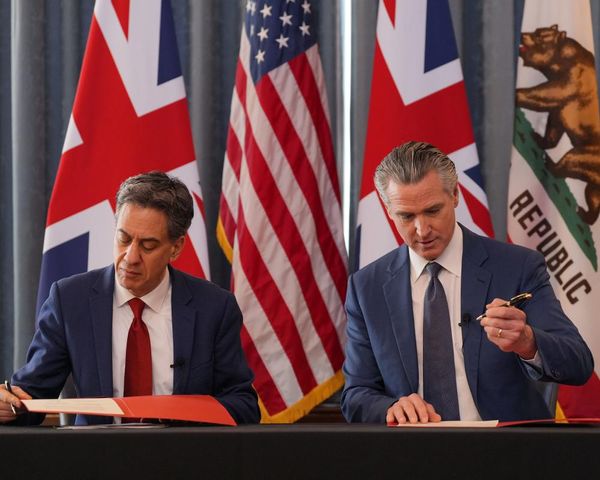
Politicians, industry groups and authorities have criticised the chancellor’s Spending Review for being a “missed opportunity” to support key parts of the economy through the Covid crisis.
Rishi Sunak said his immediate priority was to protect people’s lives and livelihoods as the country continues to battle the outbreak - allocating £55bn to tackle the virus next year.
The Office for Budget Responsibility (OBR) confirmed that the economy will contract this year by 11.3%, the largest fall in output in more than 300 years. Sunak said that "this is an economic emergency", but the country needs to reduce debt levels at some point.
Economic output will not recover to pre-crisis levels until the end of 2022, and “long-time scarring is inevitable” he added.
The OBR forecasted that the UK will borrow £394bn this year, equivalent to 19% of GDP and the highest recorded level of borrowing in peacetime history. Meanwhile, unemployment is set to rise by 7.5% to 2.6m in the second quarter of 2021, before falling every subsequent year, reaching 4.4% by the end of 2024.
Sunak said that the UK Government will provide pay rise to people working in the NHS, but pay rises in the rest of the public sector will be paused next year.
The Trades Union Congress responded: “Workers on the national minimum wage - not least the two million who are key workers - have been let down by the government’s decision to row back on the full planned rise they were promised.”
UNISON general secretary Dave Prentis said: “This is austerity plain and simple. A decade of spending cuts left public services exposed when Covid came calling; the government is making the same disastrous mistake again."
Sunak also announced that spending 0.7% of GDP on foreign aid was "difficult to justify", so this will switch to 0.5%, with the intention to return to 0.7% "when the situation arises".
The SNP's Treasury spokeswoman Alison Thewliss said this was “cruel”. Responding to Sunak’s announcement that the National Living Wage will increase by 2.2% to £8.91 an hour, she argued that it should rise to £9.50, as recommended by the National Living Wage Foundation - adding that the public sector wage freeze comes at the "worst possible time".
Citizens Advice Scotland (CAS) expressed disappointment that the chancellor failed to confirm whether the temporary £20 per week increase to Universal Credit would be made permanent beyond March 2021.
Introduced in March this year as a measure to help people whose income was hit by the Coronavirus crisis, the increase has allowed many households to keep their heads above water whilst the economic impact of the pandemic has continued.
Mhoraig Green, CAS spokesperson said: “Our own analysis of complex debt cases in Scottish CABs has shown that removing the £20 uplift will push more than one in five of these clients into a negative budget, where they are unable to meet their living costs - cutting this support could plunge many people into an income crisis.”
She urged the UK Government to resolve the omission from the spending statement, adding: “While our shell-shocked economy is still dealing with the fallout of the pandemic and unemployment is predicted to increase, strengthening our social security safety net and in turn our overall economy - rather than weakening it through continued uncertainty - should be the priority of government.”
The number of people claiming Universal Credit in Scotland increased 85% since the start of the pandemic - from 256,083 people in February to 473, 457 in October.
The chancellor said that through the Barnett formula, Scottish Government funding will increase by £2.4bn.
Scottish Labour deputy leader and finance spokesperson Jackie Baillie said that the Scottish Government must use these funds to strengthen the NHS and protect businesses. "If we are to recover from this pandemic, we must have a laser-focus on strengthening our NHS and delivering jobs for people all across Scotland.
“There is no point in the SNP hiding funds away for a rainy day when we are in the teeth of an economic deluge."
The Spending Review documents from the Treasury gave more detail on the announced £4bn Levelling Up Fund, which will attract up to £800m for Scotland, Wales and Northern Ireland. This will invest in local infrastructure that has a visible impact on people and their communities and will support economic recovery.
The review also promised to accelerate multi-year projects under four existing City and Growth Deals in Scotland to drive forward the local economic priorities of Tay Cities, Borderlands, Moray and the Scottish Islands.
The £1.5 billion investment in 12 City and Growth Deals, includes £500m for Glasgow, £125m for Aberdeen and £53.1m for Inverness, along with funding to accelerate Tay Cities, Borderlands, Moray and the Scottish Islands Deals from 15 to 10 years.
The UK Government will invest a further £1.1bn to support farmers, land managers and the rural economy, alongside £20 million to support fisheries in Scotland, Wales and Northern Ireland.
There was also a commitment to least one Freeport in Scotland, to be a hub for global trade and investment across the UK, promoting regeneration, job creation and innovation
A further £570m was pledged to support farmers and land managers, with £14 million to support fisheries in Scotland.
Jonathan Geldart, director general of the Institute of Directors, said: “Today’s statement provided a sobering view of the challenge ahead, and funding for infrastructure and skills will be crucial to meeting that challenge.
“Just as significant was what the chancellor didn’t announce - business leaders will be relieved that the Treasury is resisting the temptation to hike taxes on enterprise for now, but will be concerned that Brexit didn’t merit a mention.”
Federation of Small Businesses national chairman Mike Cherry commented: “A Government which claims to be pro-enterprise had very little to say today about the importance of business and private sector job creation.
“This Spending Review was a missed opportunity to help small business owners - not least those who have been excluded from support measures - and brings the need for a pro-business Spring Budget into focus.”