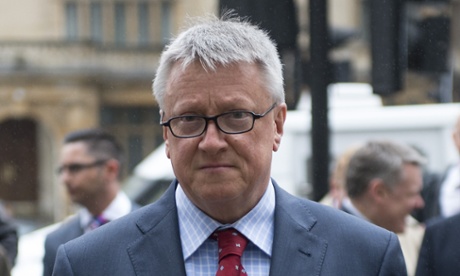
One of the Sun editors recently cleared of corrupt payment charges at the Old Bailey said he believes the legal proceedings have a “very nasty flavour of a war” against tabloid newspapers, which are being “targeted by the establishment”.
The executive editor Fergus Shanahan said the time taken to complete the legal proceedings was “scandalous” and described the three years between his arrest and trial as “a very barren, painful and miserable existence”.
He is still struggling to come to terms with the ordeal, describing the offence he was charged with, conspiracy to cause misconduct in public office, as “an ill-conceived charge that juries are clearly finding hard to understand”.
“I think there’s general agreement now that this is a charge that is proving to be the rock on which cases are floundering,” he told the Press Gazette.
Shanahan, who turned 60 during the trial, was arrested in January 2012 on the back of emails handed to the police suggesting he knowingly approved payments to a Ministry of Defence official.
He chose not to give evidence in court, but jurors heard that the chief reporter of the paper had not told Shanahan the identity of his source, who is now in jail. The reporter, John Kay, was also cleared after the jury were persuaded all the leaks he got from the MoD official were in the public interest.
“I think there’s … general unanimity that all this has a very nasty flavour of a war against the red-top press. In my own case, the prosecutor made no attempt to hide his disdain for the Sun and I think that there’s a widespread feeling that the popular papers – the Sun in particular – are being targeted here by the establishment,” he told the Press Gazette.
He said the trials had “emasculated” newspapers and said lobbyists Hacked Off had got what they wanted to achieve. He said the trials have had a troubling “chilling” effect and journalists were “terrified” to take ring-ins on their newsdesks for fear they could end up in court.
“Newspapers are now are so regulated, internally, with thickets of lawyers and compliance procedures, and scrutiny, and every other check and balance, that the world of newspapers has changed totally and utterly from three years ago.
“And certainly no statutory legislation is needed because I fear, as others have said, that the chilling effect is already there for us all to see.
“We’re in a situation now, I think, where journalists are terrified to sit on newsdesks answering the phone to ring-ins for fear that they’ll end up in the courts. Newspapers think very hard about running investigations, and lawyers’ opinions are sought. And any payments are referred to compliance. So all the internal controls that the left-wing were baying for three years ago have pretty much come about,” he said.
He felt the leader in the Guardian on Monday which said the acquittals were a good thing is significant.
“What matters there is the Guardian is obviously the bible of the leftwing establishment, and the BBC, and the chattering classes, and it’s probably the only paper the CPS is likely to take any notice of.”
Shanahan said he has not made a decision yet as to whether he will return to the Sun.
He said after the initial euphoria of last Friday’s verdict wore off, he expected to be in a happy place, but he wasn’t.
“I thought, I suppose I had some idea, that once acquitted I would be skipping down the lane admiring the daffodils and all would be sunny in the world. But it’s not a bit like that,” he said.
“The thing is that something like this is so stressful, and so painful, and so miserable, that the idea that somehow an acquittal is just like having a switch flick in your head is complete nonsense,” Shanahan said.