There is a long-standing tradition in the sumo world of not allowing women to enter the dohyo ring. There is also a nationality clause that prohibits wrestlers who are not Japanese citizens from becoming elders.
This policy was added in September 1976 as one of the qualifications for obtaining an elder share, which says elders must have Japanese nationality. At present there are 105 elder shares.
In 1972, Takamiyama, who was an American citizen at the time, won the Emperor's Cup at the Nagoya Grand Sumo Tournament, becoming the first foreign wrestler to win the title of the uppermost makuuchi division.
Takamiyama expressed his intention to become an elder in the JSA in the future. However, some JSA members became concerned, saying it might be not good for a foreign national to train wrestlers and get involved in the association's management. The nationality clause was created in response to that opinion.
At the time, the nationality clause inflamed public opinion as an "outrageous anachronism." Facing strong opposition from the public, then JSA Chairman Kasugano -- former yokozuna Tochinishiki -- said: "There will be no change in the JSA's policy on the nationality clause, but we will study this matter if, for example, exceptional cases should be established. And [the nationality clause] will not be officially added [to our rules and regulations] before any conclusions have been reached."
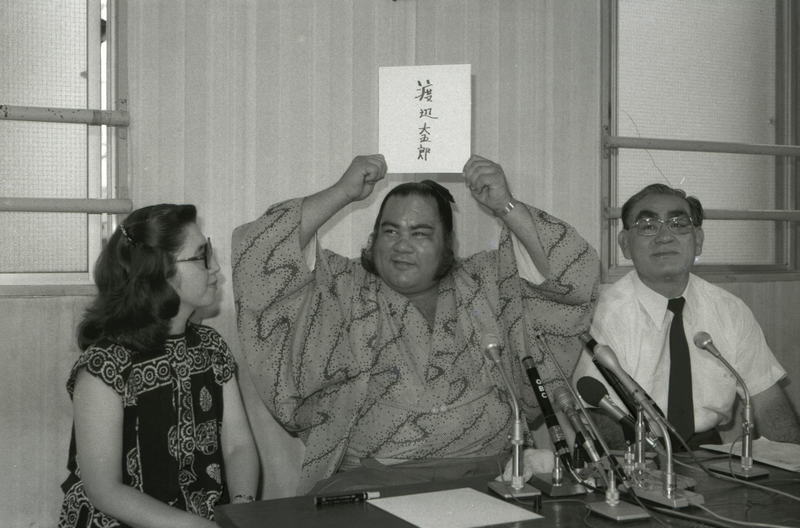
In the end, no exceptional measures were taken, and Takamiyama became a naturalized Japanese citizen in June 1980 at age 35 under the name Daigoro Watanabe, thus obtaining a qualification for becoming an elder.
Takamiyama eventually became stablemaster Azumazeki, training yokozuna Akebono and komusubi Takamisakari, among other wrestlers.
The month after Takamiyama's naturalization, the JSA officially added the nationality clause to its rules and regulations.
In June 1980, there were 10 foreign wrestlers in professional sumo from Brazil, South Korea and the United States.
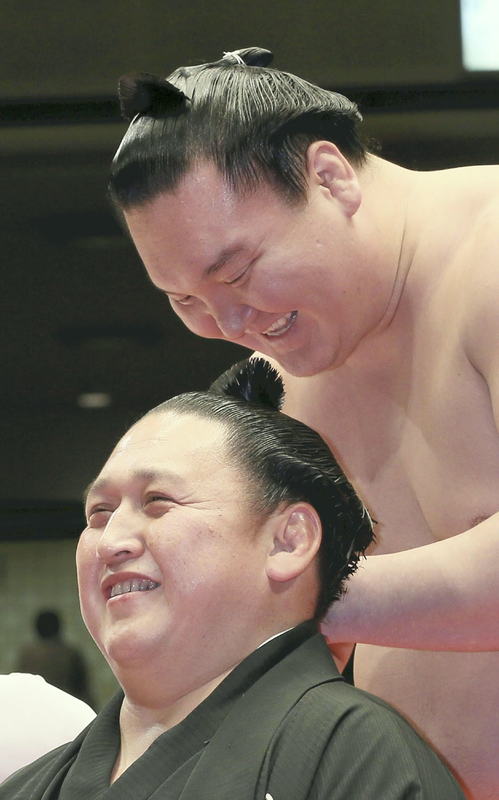
In the banzuke ranking for the Spring Grand Sumo Tournament in March this year, there were 35 foreign wrestlers from 11 countries, including Mongolia, Russia and Bulgaria, with yokozuna Hakuho, who has won 40 championships, heading the list.
Former sekiwake Kyokutenho, a Mongolian-born wrestler who won a tournament title, was naturalized as a Japanese citizen in 2005. Now he helps run a stable as elder Tomozuna.
Considering that Hakuho and some others have reportedly expressed their hope to become naturalized Japanese in the future, it is possible that debates over the pros and cons of the nationality clause will be fueled once again.
-- Miki is a sumo expert.
To find out more about Japan's attractions, visit http://the-japan-news.com/news/d&d
Read more from The Japan News at https://japannews.yomiuri.co.jp/