Now's the perfect season to tuck into a nabe hotpot. Ready-made sukiyaki sauce comes in handy when you want to enjoy sukiyaki in a simple way but there is usually some sauce left over, waiting to be used. And most consumers are at a loss as to how to use the sauce for anything but its intended purpose.
Yuko Kikuoka, a senior nutritionist at Ebara Food Industry Inc., has whipped up a few sukiyaki-friendly alternatives to get the remaining sauce out of the bag and onto the plate.
Sukiyaki sauce varies slightly in density and sweetness depending on the manufacturer and the region where it is sold, but basically it is made from a combination of soy sauce, mirin and sugar. "It's made with a simple combination of basic seasonings, which can be used as an all-purpose seasoning for both Japanese and Western food, regardless of the season," Kikuoka said.
The sauce is often used in gyudon (beef-on-rice) bowls, meat and tofu hotpot, and nikujaga simmered meat and potatoes, but the taste is inevitably similar to sukiyaki.
"Let's get away from the association with sukiyaki," Kikuoka said.
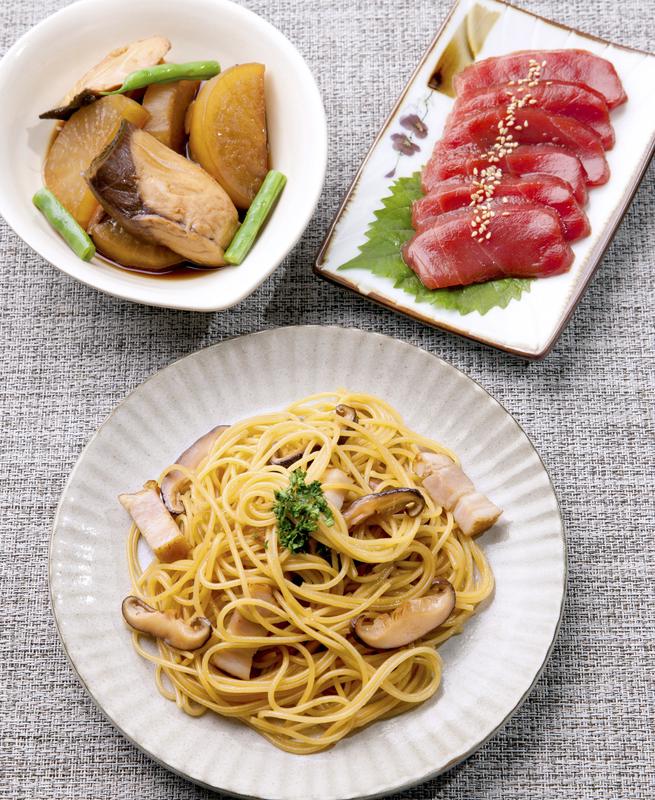
The first dish she suggests here is a Japanese-style pasta with bacon and shiitake mushrooms.
The dish when served is an elegant, soy sauce-flavored pasta with the fragrance of shiitake mushrooms. The taste is so light that it's hard to believe a rich sauce went into making it.
Japanese-style pasta with bacon and shiitake
Ingredients (serves 2):
160g dried spaghetti
100g bacon
3 dried shiitake mushrooms
2tbsp dried shiitake stock
1 piece garlic
4tbsp Sukiyaki sauce
A dash of olive oil
A few parsley pinches
Directions:
1. Cut the bacon into one-centimeter pieces. Soak dried shiitake mushrooms in water, and cut them into thin slices. Don't pour off the shiitake broth -- the liquid in which the dried shiitake has been soaked -- as it is used for seasoning. Cut a piece of garlic into thin slices.
2. Bring a pot of water to boil then add spaghetti. Boil the pasta according to the cooking instructions on the package.
3. Add olive oil and garlic to a frying pan and heat it up. When the aroma emits, add shiitake and bacon. Drain the spaghetti and add the sukiyaki sauce and shiitake broth, then stir-fry the pasta with the ingredients.
4. Serve on a plate, and sprinkle chopped parsley over the pasta.
Sukiyaki sauce is a well-balanced combination of flavors that also makes it a delicious match for fish. The buri daikon yellowtail and radish dish is a fantastic pairing. Just the right amount of saltiness and sweetness seeps into both the daikon and yellowtail, giving it a unique taste.
-- Buri daikon yellowtail
Ingredients (serves 2):
2 slices yellowtail
1¼ daikon
1 knob ginger root
100cc sukiyaki sauce
Green beans (as needed)
Directions:
1. Cut daikon into 1.5-centimeter thick, semi-circular slices and give them a initial quick boil.
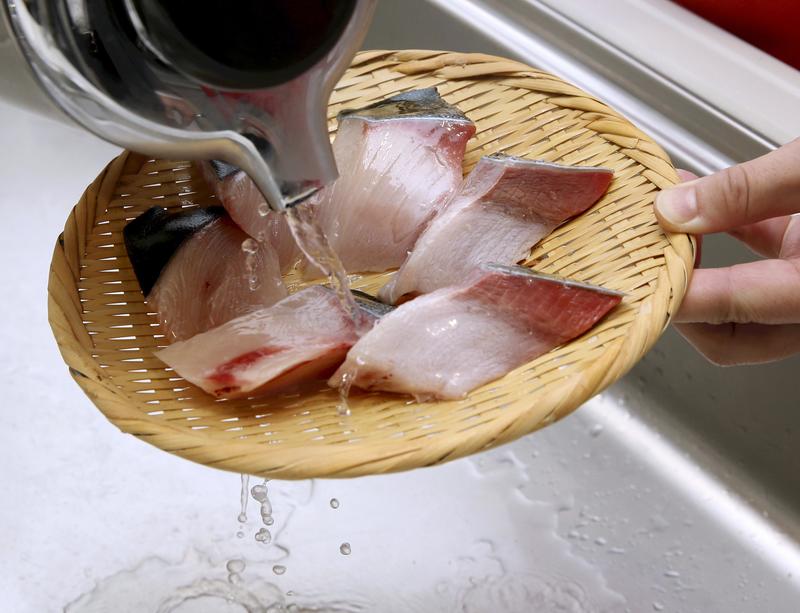
2. Slice a knob of ginger root into thin strips. Cut yellowtail fillets into two or 3 equal pieces, and pour boiling water over them to remove the smell.
3. Put daikon, ginger, yellowtail in a pot and add 300cc of water and sukiyaki sauce before cooking it over a flame. After boiling, place a small lid on the fish, and simmer for 15 minutes over medium heat.
4. Garnish with boiled green beans and serve.
Zuke maguro tuna is also quick and easy to make.
Rather than marinating the tuna in the sauce, it is more like applying the sauce to tuna's surface. When eaten, the slight sweetness of the sauce should spread through the tuna's rich flavor.
-- Zuke maguro tuna
Ingredients (serves 2):
150g tuna for sashimi
3 tbsp sukiyaki sauce
Aojiso herbs (as needed)
Grated white sesame seeds (as needed)
Directions:
1. Cut tuna into thick slices. Spread them out in a container, pour sukiyaki sauce over the slices and let it sit for about five minutes.
2. Garnish with aojiso herbs. Sprinkle sesame seeds over tuna slices and serve.
When using sukiyaki sauce for preparing dishes other than sukiyaki, you can dilute it with water or add sugar or salt, depending on your preference.
Kikuoka recommends to store the sauce in a fridge after the package is opened, and use it up as soon as possible for cooking.
Read more from The Japan News at https://japannews.yomiuri.co.jp/