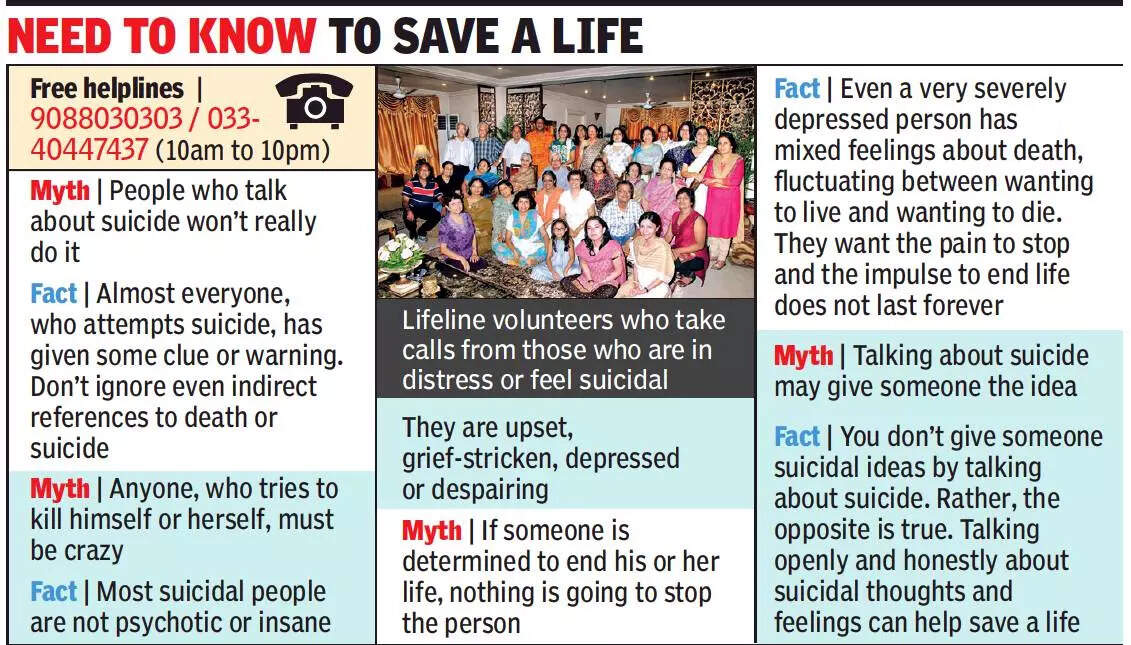
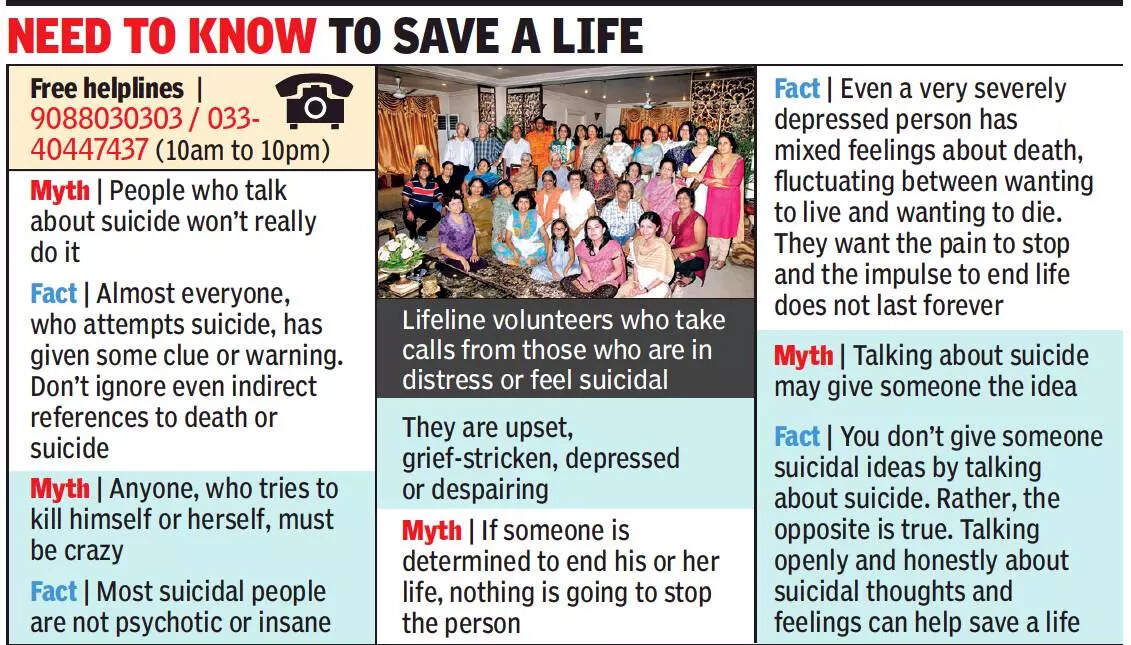
KOLKATA: Calls to a tele-helpline from those who are in distress or feel suicidal have doubled since the onset of the pandemic a year-and-a-half ago while the number of high risk callers — those on the verge of taking their lives — has increased by over 10 times.
“Our volunteers have been taking calls for 25 years now. Over the years, the number of calls has been around 15-20 while the average call duration has been around 30-45 minutes. Also, the volunteers would encounter one high risk caller in two-three months. The pandemic has changed all that. The number of calls has shot up to 30-40 a day while the call duration has increased to 60-90 minutes. And now there is a high-risk caller every week,” recounted Lifeline Foundation deputy director, Molly Thambi.
The sharp rise in the number of calls from distressed and suicidal people has also impacted the volunteers who attend the calls. Lifeline had to organise a special training for volunteers to ensure they could cope with the rise in emotional stress. “The Covid had initially made us vulnerable but we have now become seasoned and emotionally stronger,” said Amitava Ray, who has been a volunteer with Lifeline for nearly 24 years.
While 50% calls have been from people struggling to cope with Covid death in the family, there are also calls from people in financial distress owing to job loss or reduced income due to Covid.
The worst period, volunteers say, was during last year’s lockdown and during the second wave earlier this year. “The ultimate trigger for suicide is the acute hopelessness, which an individual experiences when they have none to talk to, none around to listen to or understand their feelings of terrifying pain. The pandemic has made the situation more acute,” said Suksham Singh, who, along with her husband Ravinder, founded the helpline in 1996 after a setback in their life.
The helpline with 56 volunteers operates from 10am to 10pm and offers confidential, non-judgemental and emotional support. “Wanting to end one’s life is not a continuous feeling. Most suicidal people are deeply conflicted about ending their own lives. There are moments of absolute hopelessness. And then there are times when the person wishes there was an alternative to suicide. Our volunteers try to convince the caller to give life another chance,” said Lifeline trustee Hiteshwar Singh.
Thambi recollected a call she received from a person at Jatin Das Metro station, who wanted to know what Lifeline did. He said he was waiting on the platform for a train to arrive so that he could jump before it and end his misery. While gazing around, he chanced upon a helpline poster and called. “I pretended I was finding it difficult to hear and asked him if he could just step back a bit so that the signal would be clearer. Gradually, he retracted a bit and then a bit more till he was out of the station and conversing with me. That moment of utter despair had by then passed,” she recounted.