Sugar skulls and sacrifice: Damien Hirst and Mexico's death culture – in pictures
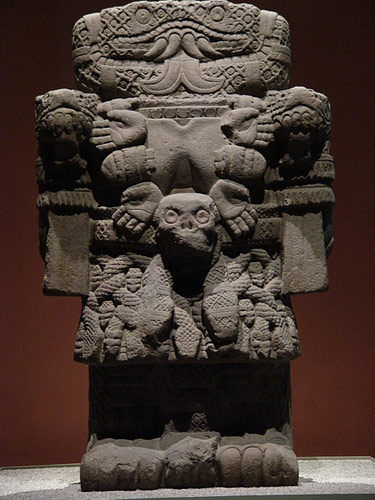
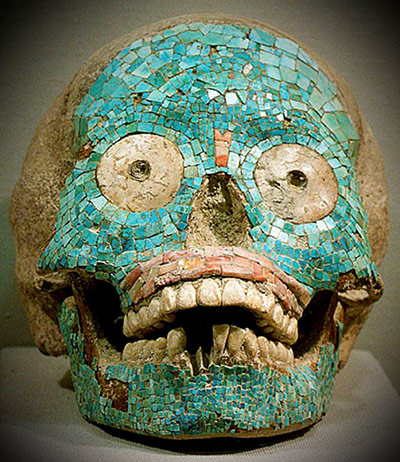
'This Aztec skull, covered in turquoise and coral, was mentioned by Damien Hirst in a preparatory drawing for his diamond skull For the Love of God. The skull is central to Mexican imagery. The Aztecs were devoted to war and a general notion of the certainty of death, and people's proximity to it, was commonly dealt with in art'Photograph: PR'This is an important sculpture of Coatlicue, the Aztec goddess of the land, fire and fertility, life, death and rebirth, and mother of the southern stars. Her head is formed of two snakes, and her skirt is made up of bodies interspersed with rattlesnakes (her name translates as "the one in the skirt of snakes")' Photograph: PR'This skull, found in the state of Oaxaca, belongs to the Zapotec culture. Traces have been found of the civilisation that are up to 2,500 years old'Photograph: PR
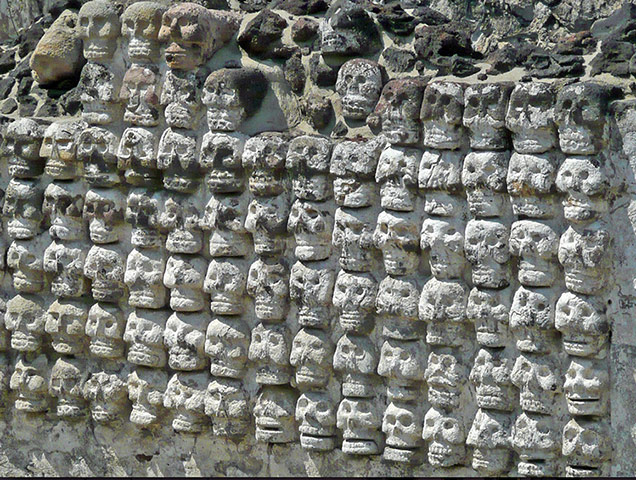
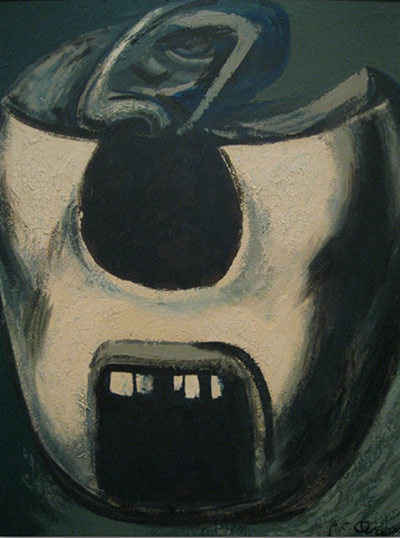
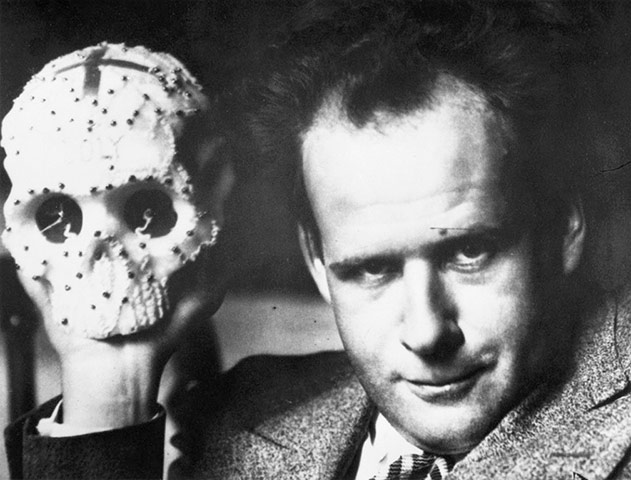
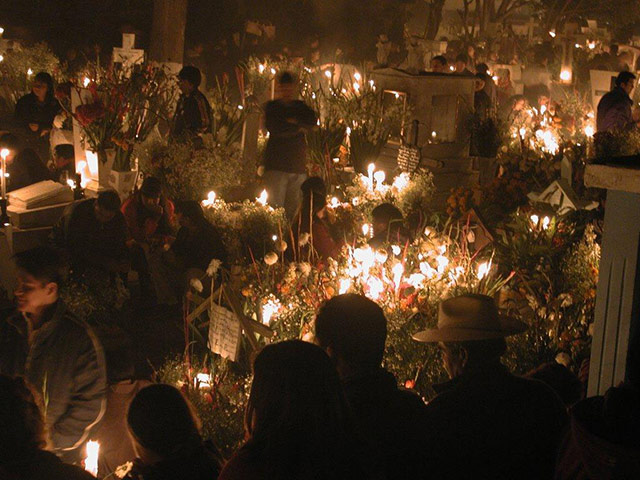
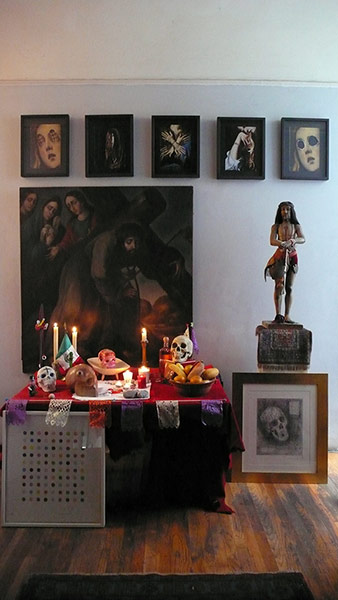
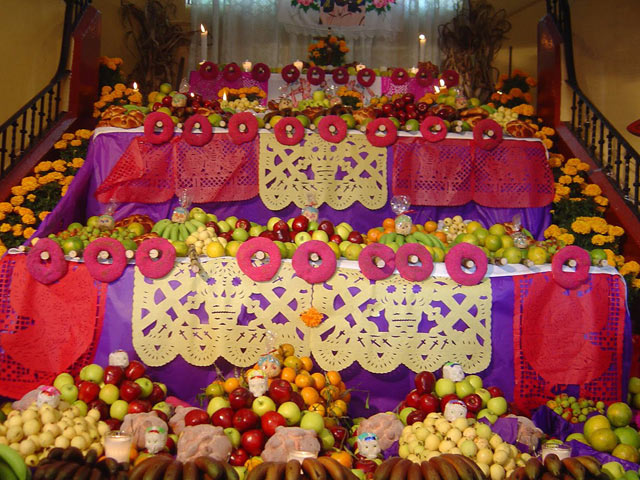
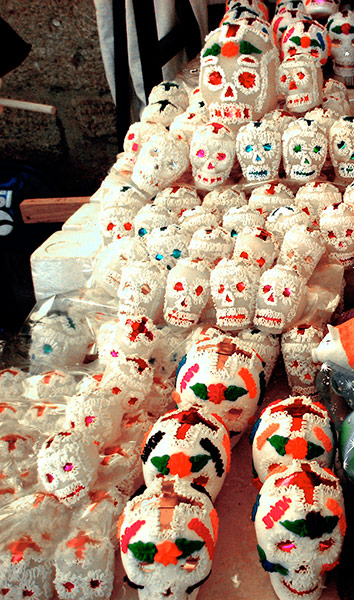
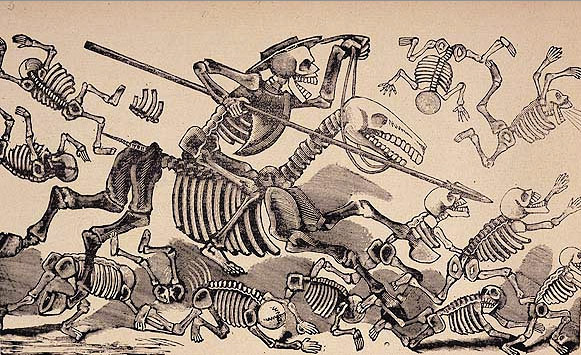
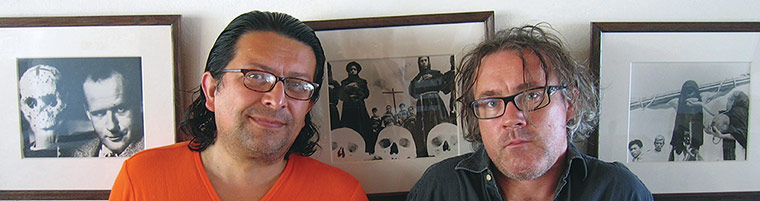
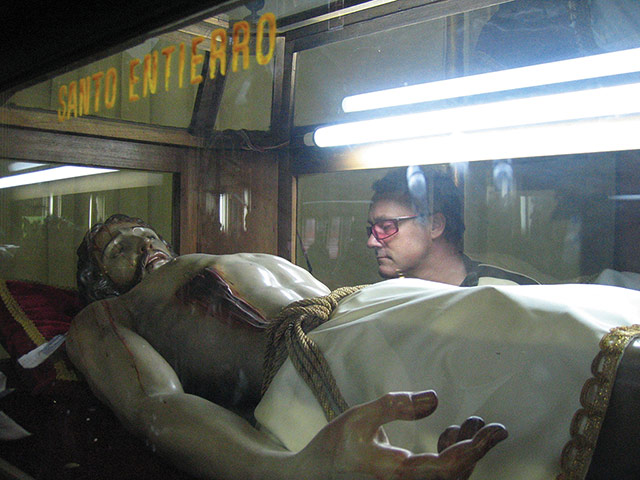
'Tzompantlis were altars made out of wooden poles, where the skulls of sacrificial victims, generally war captives, were placed to honour the Aztec gods. These acts of sacrifice were the most visible expression of the control exercised over the people by the Aztecs'Photograph: PR'Craneo Recortado was painted just before artist José Clemente Orozco died in 1949. Mexican artists regularly seem to turn to skulls in their final stages of life. This is related to the acceptance of the certainty of death that comes with decaying health'Photograph: PR'This is a portrait by Agustin Jimenez (1901-1974) of the Russian director Sergei Eisenstein with a sugar skull. It was taken while Eisenstein was filming his unfinished masterpiece Que Viva México, which would have outlined Mexican culture and politics from pre-conquest civilisation to the Mexican revolution'Photograph: PR'The Day of the Dead is celebrated at the beginning of November. Families welcome the souls of the deceased by laying petals, candles and offerings inside and outside their homes and all the way to their local cemeteries. It is believed that the dead are capable of bringing prosperity – an abundant maize harvest – or misfortune – illness, accidents, financial difficulties – upon their families depending on how satisfactorily these rituals are executed'Photograph: Marcela Chao'A Day of the Dead altar dedicated to the passion of the Christ. 1 November is the day of the "innocent saints" (children and virgins) and 2 November of adults. This tradition has existed since the Aztec times, and in the 16th century the Spanish introduced Catholic elements to the celebrations'Photograph: Rosa Maria Ortega'Altars like these are laid out all over the country in houses and institutions to commemorate the dead. In the Mesoamerican world, there were five cardinal points: centre, north, south, east and west. The main candle is located in the centre and it symbolises fire. A plate of copal (a Mexican plant often considered mystical) is placed in front of the main candle. Christian religious objects like crucifixes are often placed on tables as well, along with piles of food' Photograph: Marcela Chao'Calaveritas are sugar skulls made to celebrate the Day of the Dead. You can find them in every bakery along with a special sweet bread named Pan de Muerto (bread of the dead)'Photograph: PR'Don Quixote (1905), an engraving by Jose Guadalupe Posada, best known for illustrating his famous Calaveras for several publications at the turn of the 20th century. These satirise society under the government of Porfirio Díaz, just before the revolution. Since he died, his images have become associated with the Day of the Dead'Photograph: PR'Myself and Damien Hirst in front of his collection of original stills from Eisenstein's Que Viva México in 2006. Damien's longstanding infatuation with Mexico is down to its interest in death. There is no other country in the world that treats death in the majestic way Mexico does'Photograph: Rosa Maria Ortega'Damien Hirst in front of a 18th-century sculpture of Christ lying in a crystal coffin, taken in Guadalajara Cathedral in 2007. This image is particularly interesting as it echoes the formaldehyde tanks, though he started making tanks way before this. But the instincts behind both the crystal coffin and Hirst's shark are similar: they show the idea of containment, an intention to control the uncontrollable, a glorification of what is inside, and a separation from the human world. What Damien did is similar to a relic container, though he shows the power of nature instead of the power of religion'Photograph: PR
Sign up to read this article
Read news from 100's of titles, curated specifically for you.





.png?w=600)