It has been a month since the Cabinet of Prime Minister Yoshihide Suga was formed Sept. 16. The following is the first installment of a series analyzing Suga's brand of politics.
Prime Minister Yoshihide Suga has a morning routine.
He takes a walk on the premises of the Prime Minister's Office, then eats breakfast at a nearby hotel. On weekdays when there are no major events such as Cabinet meetings, he goes to the Second Members' Office Building of the House of Representatives.
On Oct. 12, he stayed there for about 20 minutes. In recent years, it is unprecedented for a prime minister to make these visits day after day. Suga looks over his letters and decides whether to write or telephone in reply.
A self-made politician, what Suga has stuck to is the viewpoint of ordinary people. He loves to read The Yomiuri Shimbun's "Jinsei Annai" series. (The series is translated into English and published in The Japan News under the title Troubleshooter.) In the series, experts answer readers' vexing personal questions. When Suga was chief cabinet secretary, he had wrote an advice column in the business magazine President. Suga's desire for mobile carriers to lower mobile phone fees is a policy based on the viewpoint of common people.
Dining with influential people has been a valuable opportunity for Suga to gather information. Even after taking office as prime minister, his schedule is still packed with such meetings.
On Sept. 18, his third day as prime minister, Suga had breakfast at a Tokyo hotel with Toyo University Prof. Heizo Takenaka, a former internal affairs and communications minister. Suga served as state minister for internal affairs and communications, working together with Takenaka in 2005 and 2006 during the Cabinet of then Prime Minister Junichiro Koizumi.
Takenaka, one of the brains Suga relies on, advocated the necessity of his idea of an "early small success." Suga's moves to instruct Cabinet members one after another to seek results seem to be aimed at achieving this.
When Suga's inauguration as prime minister became a foregone conclusion, speculation spread in political circles that the House of Representatives would be dissolved in the autumn for a general election. But Suga has made up his mind not to dissolve the lower house at such an early date. He has chosen to give priority to achieving results rather than possibly gaining a firmer foothold through election results.
"I want to work on tasks one by one and get results," Suga told his aides.
-- Full speed ahead
Known as a workaholic, Suga has been sprinting ahead to make accomplishments.
On Oct. 8 at a Tokyo party of the ruling Liberal Democratic Party's Ishihara faction, Suga said, "I want to meet your expectations with a sense of speed."
What Suga had in mind were his campaign pledges during the LDP presidential election, such as lowering mobile phone fees and establishing a digital agency. Since becoming prime minister, he has made visible moves to realize these goals.
Suga, who had been advocating a reduction in mobile phone fees as chief cabinet secretary, said during the LDP presidential election campaign that "they can be cut by 40%."
On the morning of Oct. 2, Suga summoned Internal Affairs and Communications Minister Ryota Takeda to the Prime Minister's Office and instructed him to hear the opinions of people from every walk of life and to proceed fairly. On Oct. 8, Takeda held a meeting at the ministry to exchange opinions among a wide range of people, including single-parent family members, homemakers and elderly people. This meeting was part of the pressure from government on the three major mobile carriers to lower their fees.
For a long time, Suga and Rakuten Inc. President Hiroshi Mikitani have frequently exchanged opinions. Rakuten made a full-fledged foray into the mobile phone business this spring and launched 5G high-speed and large-capacity communications services at the end of September at less than half the monthly rate of the three major carriers. This move could be seen as support for Suga's policy.
The plan to set up the digital agency is being promoted by Takuya Hirai, the minister in charge of digital transformation, who is well versed in digital policy, and Taro Kono, the minister in charge of administrative and regulatory reform. They are looking to make a breakthrough and realize the agency sometime next year.
-- Stubborn streak
Looking at the list of people Suga has meetings over meals with can tell a lot about the challenges he wants to tackle.
"A system to raise the minimum wage is necessary," Suntory Holdings Ltd. President Takeshi Niinami said at a lunch meeting with Suga on Sept. 21. "Therefore, it is very important to develop small and midsize enterprises."
Suga agreed. He has taken on the policy to raise the minimum wage from the administration of predecessor Prime Minister Shinzo Abe, aiming to boost personal consumption.
On Oct. 5, Suga had a breakfast with SBI Holdings Inc. President Yoshitaka Kitao, who is actively investing in regional banks, and exchanged views on restructuring such banks. Realignment of regional banks is a policy that Suga advocated during the LDP presidential election.
Suga's vision for society is "self-help, mutual assistance, public assistance" and "bonds between people." But many of Suga's policies, such as cutting mobile phone fees and realigning regional banks, are seen as placing an emphasis on competition and have been criticized as being neoliberal.
This neoliberalism is aimed at reducing the bloated government and increasing the freedom of economic activities, including through deregulation, to promote economic growth.
Takenaka defended Suga, saying: "Suga is not a neoliberalist. To actually implement policies, realism is needed."
But there are concerns about Suga's stance.
"Against the neoliberal LDP, we have clarified our position of having a 'supportive society,'" said Yukio Edano, the leader of the main opposition Constitutional Democratic Party of Japan, with the next lower house election in mind.
Ahead of an extraordinary Diet session to be convened on Oct. 26, Suga decided to reject the nomination of six new members recommended by the Science Council of Japan. The draft decision was made on Sept. 24 and it was approved Sept. 28. If the prime minister fails to explain the reason in a careful manner, he will face criticism from opposition parties and his Cabinet's approval rating could decrease.
Nevertheless, Suga said, "We have no plans to change the appointment."
Suga has always been open to criticism. His former classmates said he has strength of his convictions.
When Suga was in junior high school in his hometown in Akita Prefecture, he was advised by his baseball coach to change his batting stance, but he stubbornly refused. "It's easier to hit this way," Suga apparently said.
After graduating from high school, he worked at a factory. He then enrolled at Hosei University in Tokyo, two years later than many other students, and joined a karate club.
"Even while working a part-time job, he didn't miss a day of practice," said one of the karate club members in the same year as Suga. "From that time to now, he's the same person."
After becoming a Diet member, Suga's reputation as an "unshakable person" has not changed. For the 1998 LDP presidential election, he defied his faction, even though he was a newly elected lower house member, to support the well-fought but losing bid of former Chief Cabinet Secretary Seiroku Kajiyama, whom Suga admired as a mentor.
When Suga was first elected as a Diet member, Kajiyama had encouraged him, saying, "Politicians need determination." Suga still holds these words to his heart.
Kajiyama was once described as a politician who survived "great troubles." Now is perhaps the time of another "great trouble" as caused by the novel coronavirus pandemic.
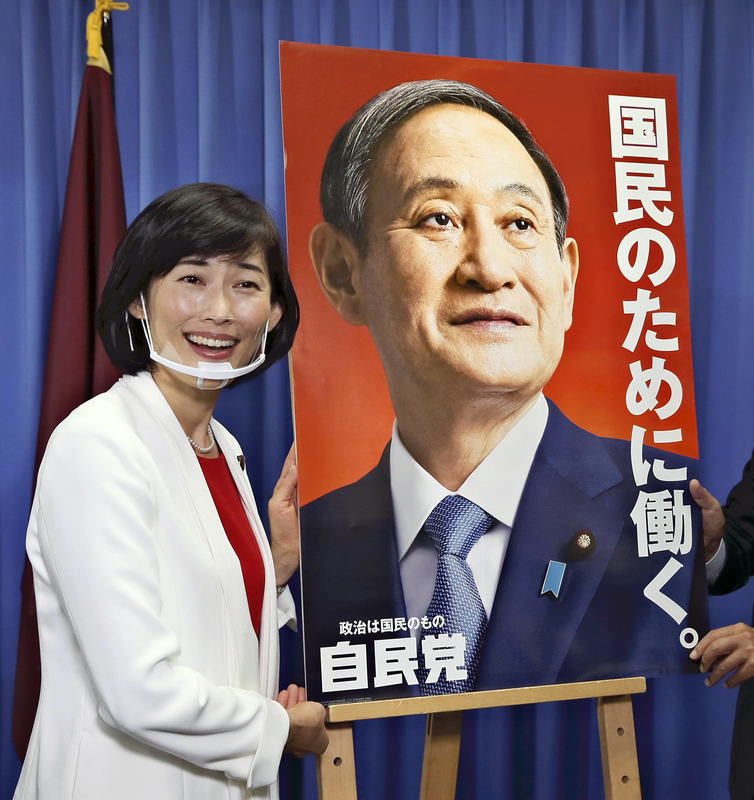
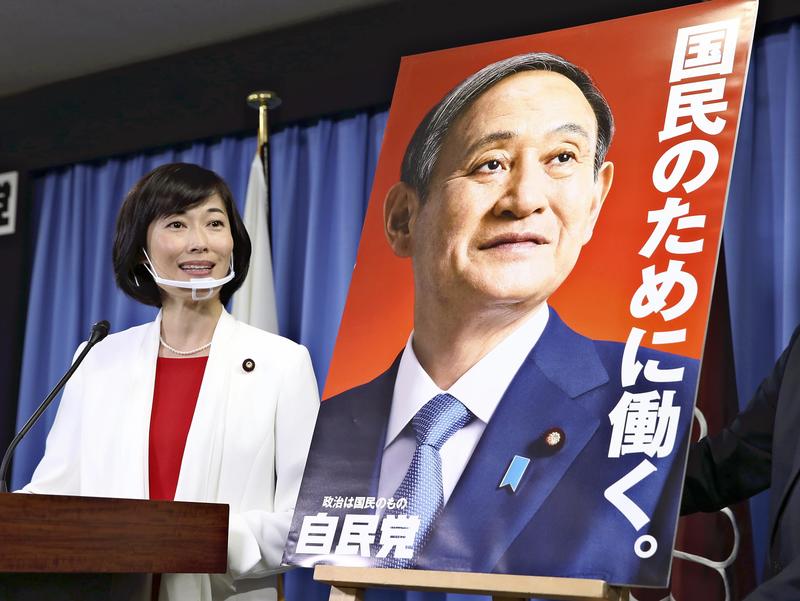
Many of Suga's reforms are related to vested interests, so resistance from bureaucrats and companies is expected. The LDP poster featuring its leader Suga was unveiled on Oct. 13 with the slogan, "We work for the people." Suga's abilities will be tested to see if this slogan can be realized.
Read more from The Japan News at https://japannews.yomiuri.co.jp/