American photographer Eugene Smith (1918-1978) showed the world the truth about Minamata disease. On Sept. 23, a film about him titled "Minamata" and starring Johnny Depp will be released in Japanese movie theaters.
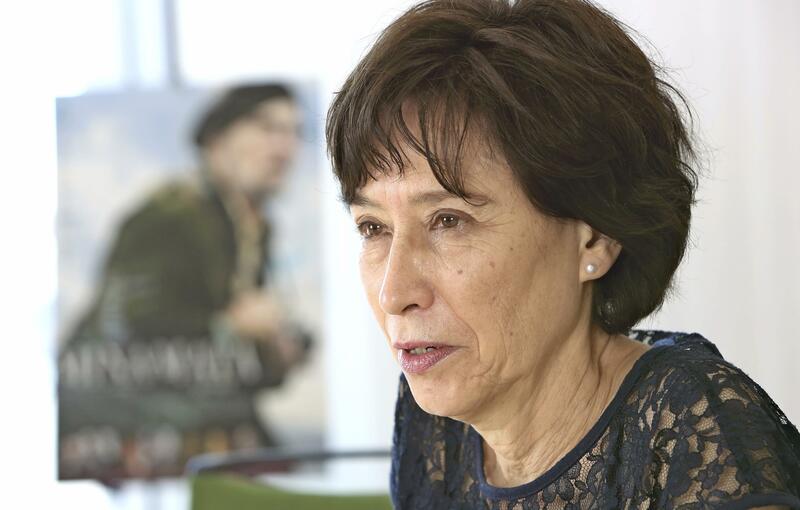
"With patients passing away one after another, I hope this film will be another opportunity for many people to learn about the case," said Aileen Mioko Smith, 71, Smith's former wife who assisted with his work in Minamata, Kumamoto Prefecture.
Aileen and Eugene lived in Minamata from 1971 to 1974 to photograph patients, protests against the company responsible for the illness, and negotiations for compensation. In 1975, they co-authored a collection of photographs titled "Minamata."
The film depicts the course of their work. Directed by Andrew Levitas, the film was shot mainly in Serbia and Montenegro, and partly in Minamata.
Aileen assisted with the film's production. "The driving force behind the movie was Johnny's belief that Minamata disease is not a thing of the past, but an ongoing problem," she said.
The film depicts the photographer, who earnestly meets patients and faces their reality, undaunted by such sabotage as arson at his darkroom.
"Eugene never gave up," Aileen said. "He wanted to capture the injustice of some people being victimized by others' prosperity."
Aileen decided to allow Eugene's photo "Tomoko and Mother in the Bath" to be used in the film. This photo is one of the iconic works in the collection, showing a mother and her daughter who developed Minamata disease in the womb. Aileen had kept this photo under seal for many years, preventing it from being published.
"I felt that the most important thing I must do for this photo now was to present it in the film," Aileen said. "Because I want people to know the patients' true condition."
The patients represent "suffering and beauty," which constitutes the dignity of life, she said.
Born in Tokyo in 1950, Aileen met Eugene Smith while serving as his interpreter. They got married and lived in Minamata, although they later divorced.
In 1983, Aileen received a master's degree in environmental science from Colombia University. She founded a citizens group in 1991 for environment conservation, in which she is still active.
"Eugene would say, 'Journalism must take responsibility for the photographed subjects and the people who see the photos,'" Aileen said. "I want to carefully watch how patients and viewers will feel about this film and react to it."
Read more from The Japan News at https://japannews.yomiuri.co.jp/