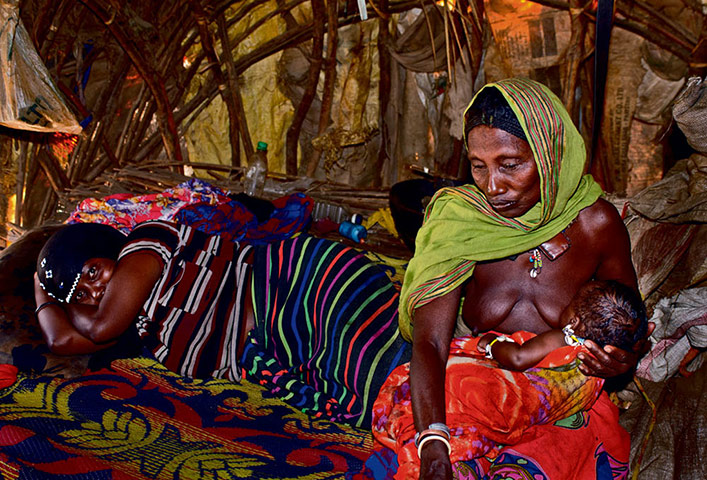
Malika lies in her hut while her mother uses her breast as a comfort for Malika’s daughter. Malika was infibulated (an extreme form of female genital mutilation – FGM) as a child, recut on her wedding night, and suffered a prolonged and obstructed labour which resulted in an obstetric fistula, leaving her leaking faeces and urine. Malika described herself as 'a dead woman' and says she would never circumcise her daughter. SafeHands was instrumental in asking the village clan leader to initiate the process to ensure Malika’s safe arrival at a hospital in Addis Photograph: Nancy Durrell McKenna/SafeHands for Mothers
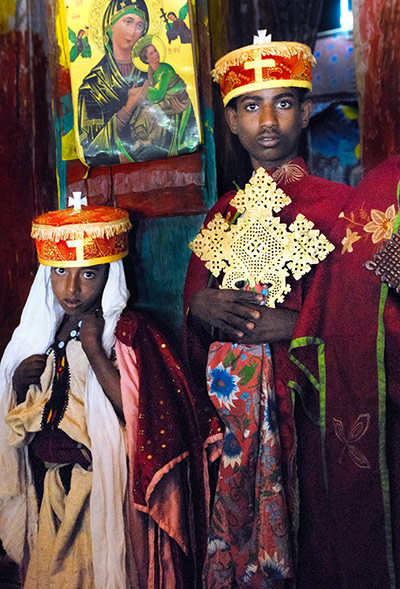
Wube-enat, 10, and her husband Abebe, 15, at their wedding ceremony in an Ethiopian Orthodox church. It is only because Abebe is studying to be a deacon that he is prohibited from consummating his marriage. Nearly half (49.2%) of girls in Ethiopia marry before they reach 18; worldwide, 10 million children a year are forced into marriage. In addition to the emotional damage to child brides, the physical effects of giving birth too young can lead to fistula and other serious conditions Photograph: Nancy Durrell McKenna/Safehands For Mothers
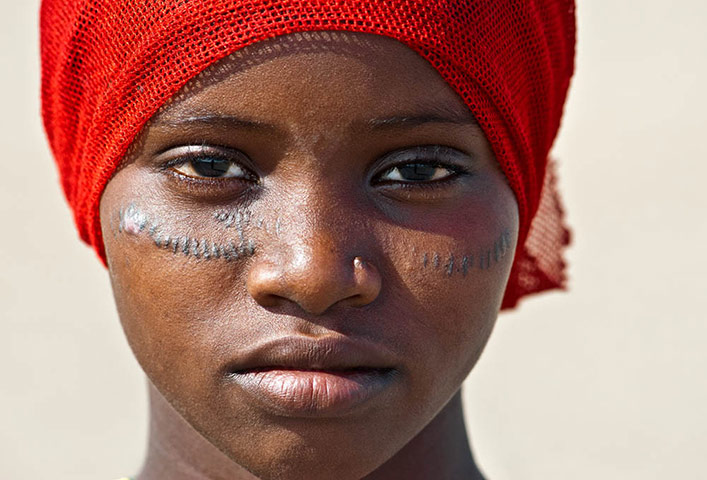
Worldwide, up to 140 million women and children are living with the effects of FGM, including 92 million girls over the age of 10 in Africa. But the problem is not just an African one. FGM is a global practice, and it continues among diaspora communities. It is estimated that 24,000 girls in the UK are at risk of infibulation, with many thousands more at risk of other forms of cutting Photograph: Nancy Durrell McKenna/Safehands For Mothers
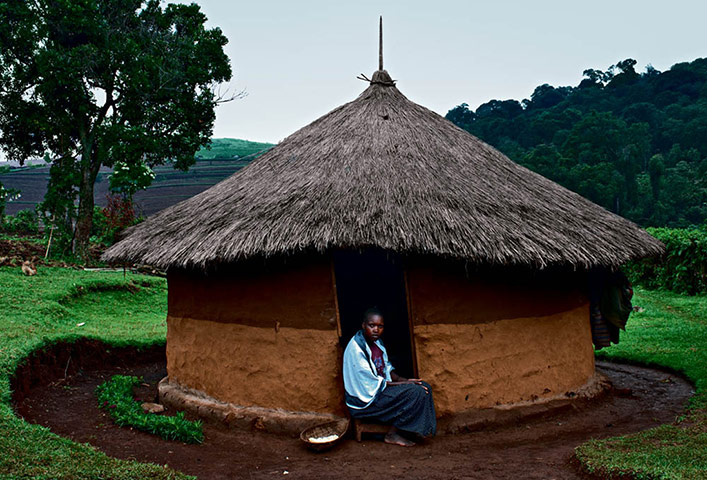
Chebete married when she was 13 and gave birth to three daughters in quick succession. 'I was circumcised because of the pressure from my friends, and my husband told me to be circumcised. The elders told my husband: 'You just try to advise that woman of yours to be circumcised, that way the hormones will be changed, and she will have baby boys'.' Chebete suffered the traumatic consequences of circumcision and eventually gave birth to another daughter. Her husband abandoned her and the children. Chebete and her daughters now live with her mother Photograph: Nancy Durrell McKenna/Safehands For Mothers
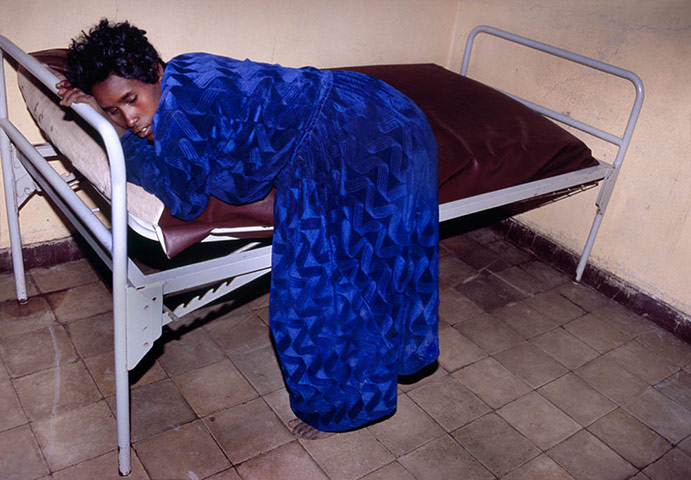
Heavily pregnant, Alem managed to escape her violent husband and walk six days to the nearest health centre. With no one to support her, she faced a lonely birth. Although the health centre was staffed, midwives are stretched to the maximum and many women still give birth on their own. Fortunately, Alem gave birth to a healthy son, but faced an uncertain future. 'For what do I want a child?' With no one to turn to, Alem had her baby adopted Photograph: Nancy Durrell McKenna/Safehands For Mothers
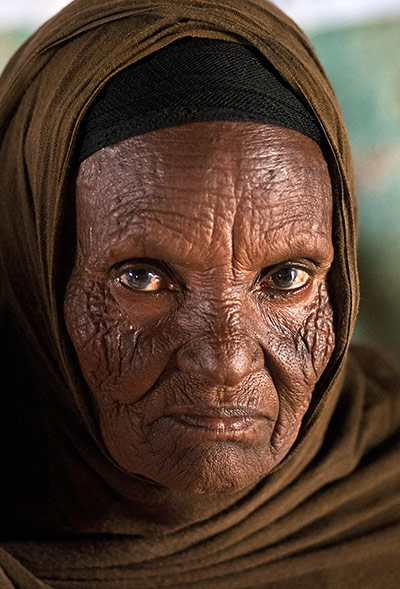
Although FGM is illegal in her region, Halima continues to do it. 'I'll tell you the reason why I do it: I’ve got to look after 10 children. My husband has died and my son has died. If mothers come to me and ask me to do it for them, I’ll do it' Photograph: Nancy Durrell McKenna/Safehands For Mothers
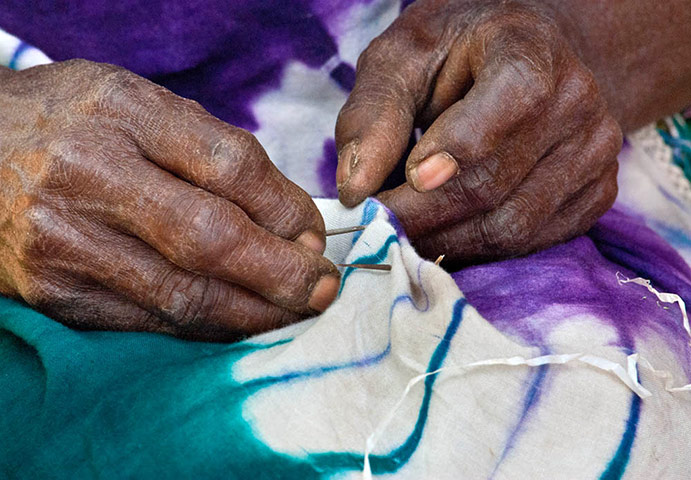
A circumciser demonstrates infibulation, type III, with thorns and thread, on fabric. Type III involves the removal of the clitoris, the labia minora, and parts of the labia majora, which are then pulled together with thorns and thread and sewn up, leaving a small vaginal opening to pass urine and menstrual fluid. A woman may have to be opened before sex and before she gives birth. She may then be reinfibulated, only to be opened again before the next child is born Photograph: Nancy Durrell McKenna/Safehands For Mothers
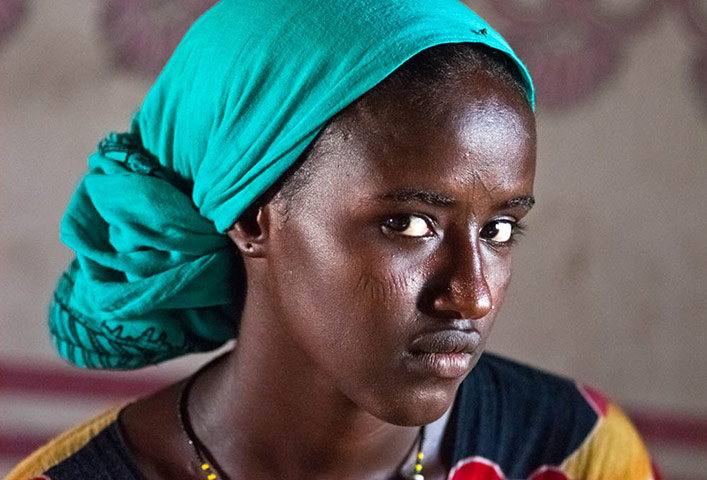
Zahara, 19, describes her wedding night three years previously. 'We were crying the whole night because the part of the body sewn together during the circumcision opens up and it is very painful. It took more than a week.' Her mother Madina listened to the screams of her newly married daughter for several days before the other villagers asked her to intervene. 'After I saw the suffering my daughter had to go through, I decided not to circumcise my granddaughters' Photograph: Nancy Durrell McKenna/Safehands For Mothers
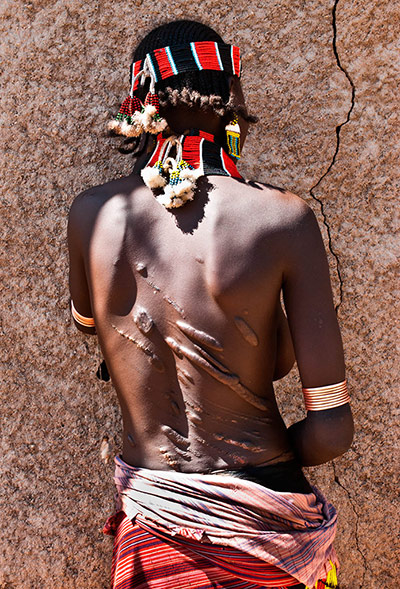
Every year, as a coming of age ritual, young men take part in 'jumping the bulls'. This involves jumping over bulls to demonstrate their manhood. To show their appreciation of the men, women and girls encourage them to flay them with acacia branches. This results in severe scarring but is seen as a badge of honour for the women Photograph: Nancy Durrell McKenna/Safehands For Mothers
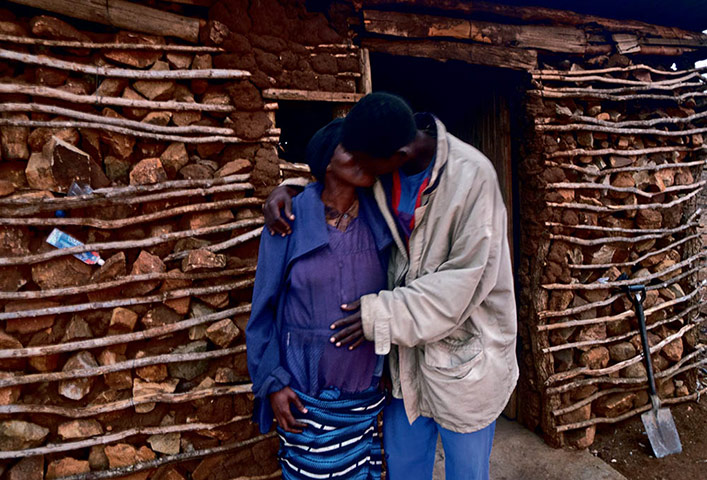
About 26% of the population of Swaziland has HIV. HIV is passed on to an infant either during pregnancy, birth or through breast milk. This can now be prevented, but it is essential that healthcare providers, pregnant women and their partners, people living with HIV, and the wider community, all have the knowledge and skills to manage the epidemic. Thobile and Sfiso are HIV positive. They are expecting their first child. They are dealing with their HIV status with the help of health agencies who provide them with anti-retroviral drugs and support. With proper medication and monitoring, their baby will be born free of HIV. The Prevention of Mother To Child Transmission programme is the first practical way in which HIV can be eliminated. It allows women living with HIV to lead fulfilling sexual and reproductive lives, with the same choices and opportunities as any woman Photograph: Nancy Durrell McKenna/Safehands For Mothers
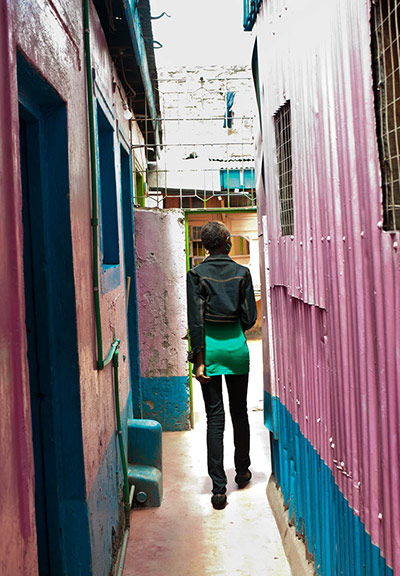
With her parents dead and no relations to rely on, Milap took to prostitution to support her younger siblings. Soon she contracted HIV, but continued to work as a prostitute. 'At the age of 16 I became a sex worker because of financial problems. Yes, I dropped out of school and there’s no other option but sex work. My father was paying my school fees but he passed away, so there was no one to pay for me. I’ve tried looking for jobs like washing clothes, but it is very difficult, so I find it easier to be a sex worker. My health is poor because I am ill … I’ve met men who don’t want to use a condom, but I convince them because I feel responsible for their health' Photograph: Nancy Durrell McKenna/Safehands For Mothers
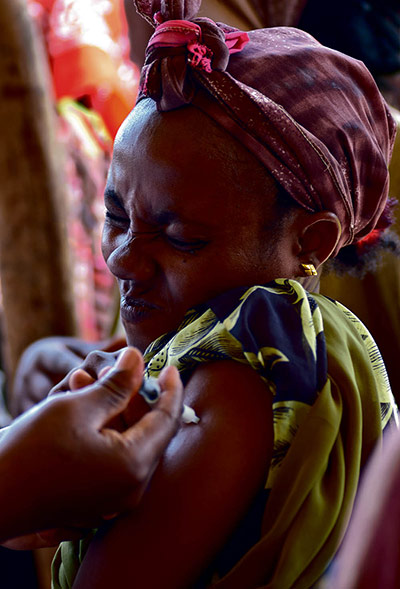
A young woman receives a progestogen contraceptive injection, effective for up to three months. This gives women the opportunity to space their pregnancies and the freedom to choose if or when they have another child Photograph: Nancy Durrell McKenna/Safehands For Mothers
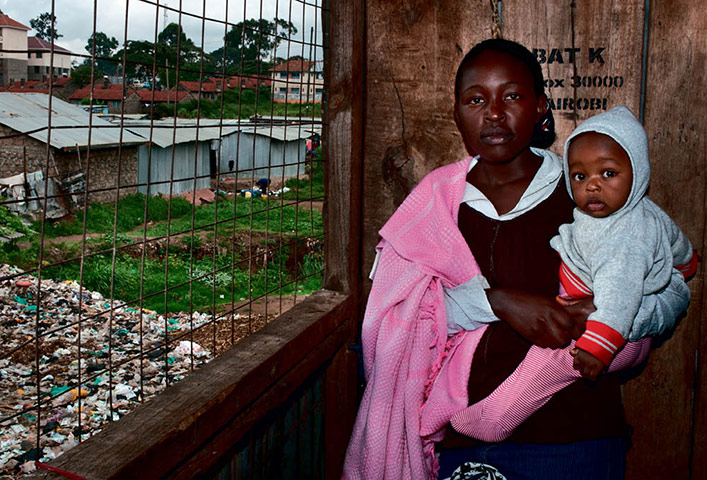
When Shiro refused to have sex with her boyfriend, he asked a group of his friends to rape her. 'They gagged and dragged me into the thick grass and raped me. I was in a lot of pain because I had never had sex with any man. I was just a virgin. A month later, I discovered I was pregnant. I decided to keep the pregnancy because I was afraid I would die if I had an abortion. We depend on ourselves – we struggle to get food and anything we can do to survive. I would like to forget the past and start life over anew.' Abortion is illegal in almost all developing countries, leaving girls to seek help from traditional practitioners, often working in unsanitary conditions. Almost all the 70,000 abortion-related deaths every year occur in developing countries Photograph: Nancy Durrell McKenna/Safehands For Mothers
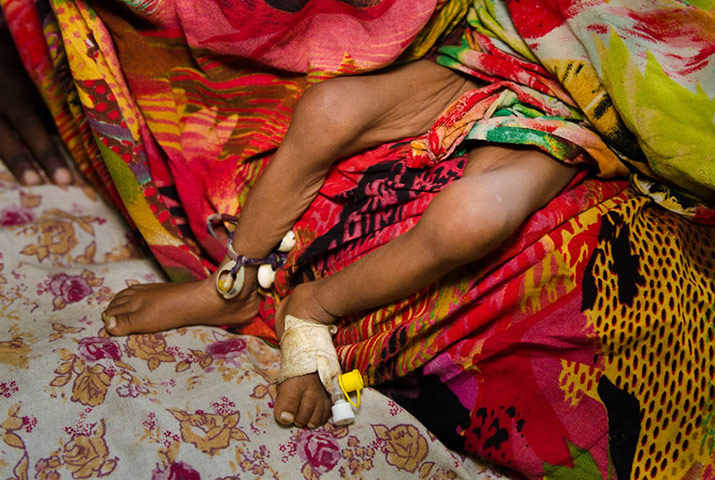
A six-month-old child suffering from malnutrition lies in hospital. On one foot is a canula for a drip to rehydrate her and on the other is a shell anklet to ward off evil spirits. One commonly held misconception is that colostrum, or first milk, is of little value and is therefore not given to newborns. SafeHands for Mothers is producing a film on nutrition and breastfeeding in four regions of Ethiopia Photograph: Nancy Durrell McKenna/Safehands For Mothers
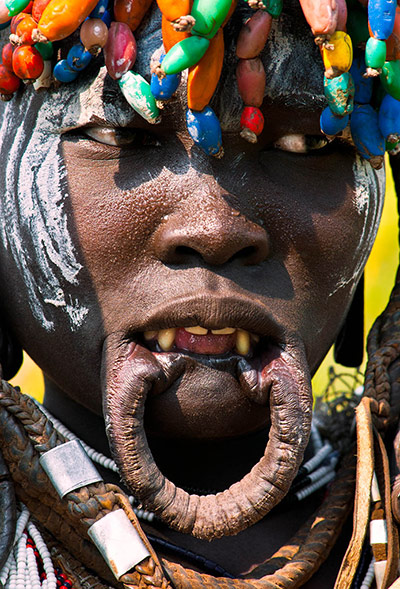
Although seen as a sign of beauty today, lip plates were originally a disfigurement to prevent women from being kidnapped. The gap between her front lip and the flesh below is pierced and gradually stretched. In the beginning a hole is made in the lip with a wooden stick. The stretch continues as successively bigger discs of clay or wood are accommodated by the lip. Generally the two lower front teeth are pulled (or knocked) out to aid the process. The final size of the plates determines how many cattle the woman will receive as a dowry, so the more stretched her lip the better, and the more cattle the woman is worth. Some women have stretched their lips so as to allow plates up to 20cm in diameter Photograph: Nancy Durrell McKenna/Safehands For Mothers
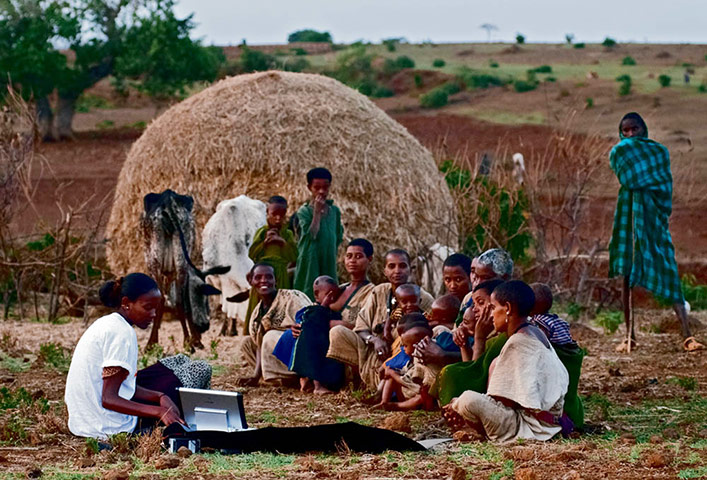
A healthworker shows villagers a SafeHands for Mothers film in a remote village in Amhara. There are approximately 30,000 of these healthworkers in Ethiopia, some of whom have to walk many hours to reach their patients Photograph: Nancy Durrell McKenna/Safehands For Mothers
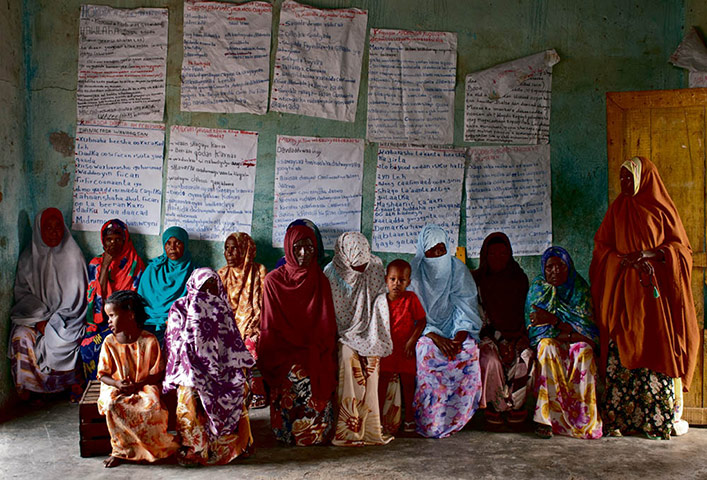
In a desert community, close to the Somali border, village women meet to discuss traditional customs Photograph: Nancy Durrell McKenna/Safehands For Mothers
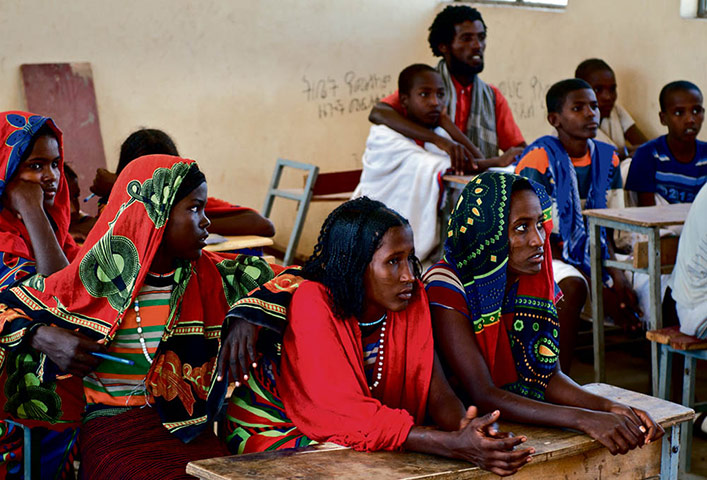
Education and literacy are seen by many as key to eliminating practices such as child marriage, scarification and FGM. In this Afar village, FGM was eliminated 20 years ago but education for boys and girls together is ongoing Photograph: Nancy Durrell McKenna/Safehands For Mothers