Sudan's White Nile marshes polluted by oil production
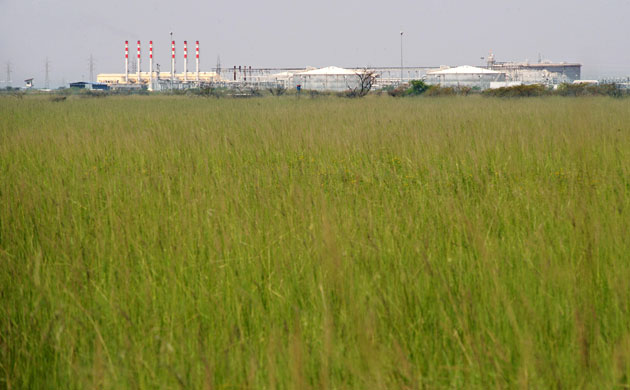
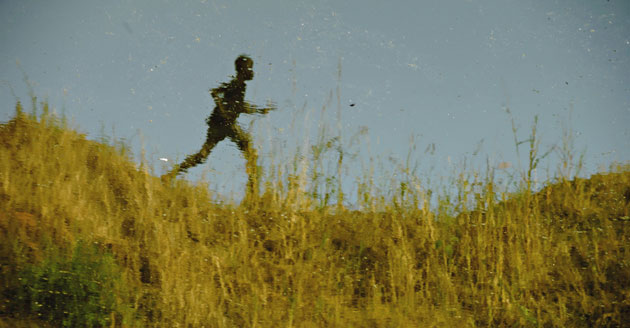
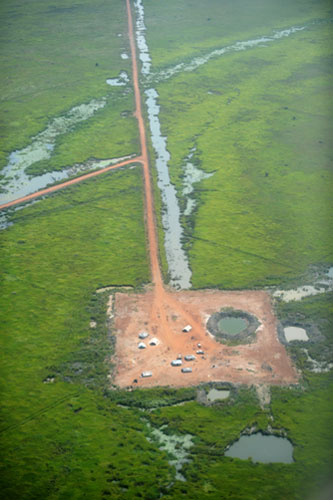
The central processing facility of the Thar Jath oil field rises above tall grass in south-central Sudan. Sign of Hope has urged the facility's operator WNPOC, a subsidiary of Malaysian giant Petronas, to treat the plant's water adequately and prevent seepage, AFP reportedPhotograph: STR/AFP/Getty ImagesA villager is reflected in a bore hole as he runs next to an oil well that is no longer in use in Guit. 'The heavy metal concentrations of these waters will have negative impact on the health situation of the some 300,000 inhabitants of the affected area which covers 4,000 square kilometres (1,500 square miles),' Stieglitz told AFPPhotograph: Roberto Schmidt/AFP/Getty ImagesOil company workers on an oil well platform that rises over the Mala oilfield Photograph: Stringer/AFP/Getty Images
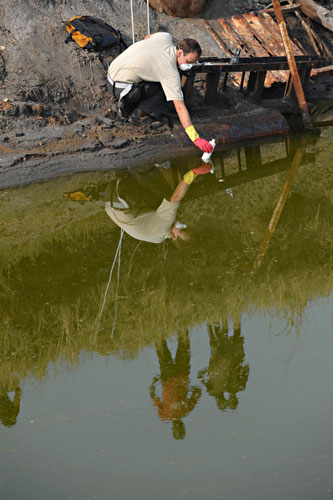
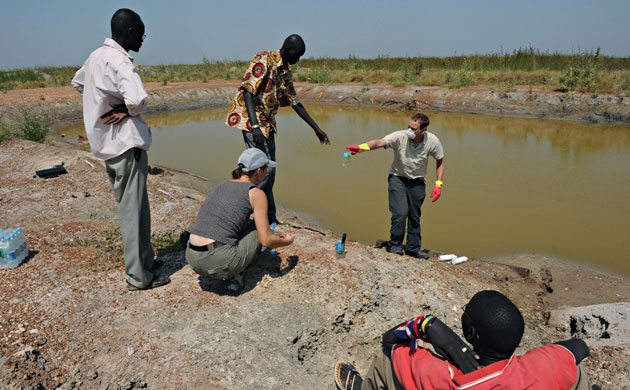
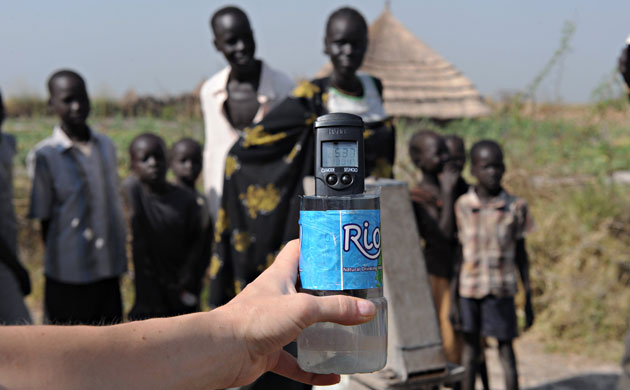
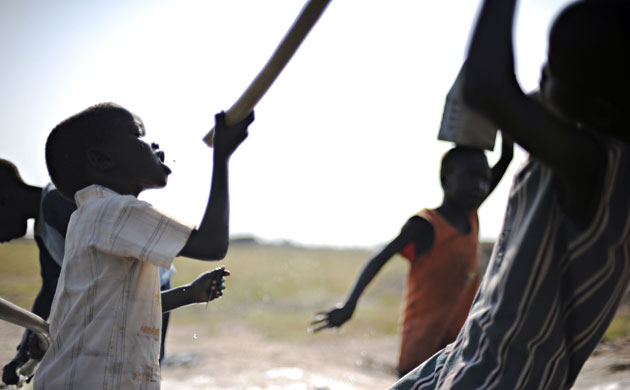
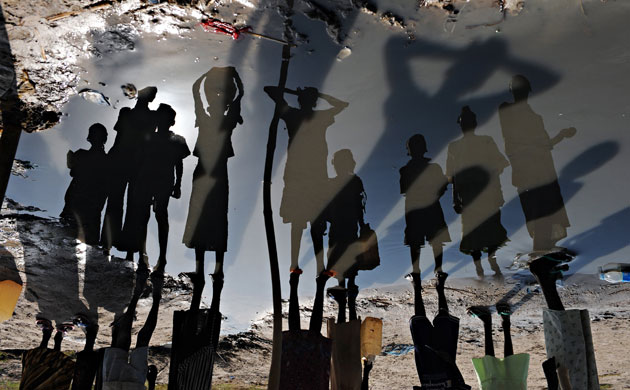
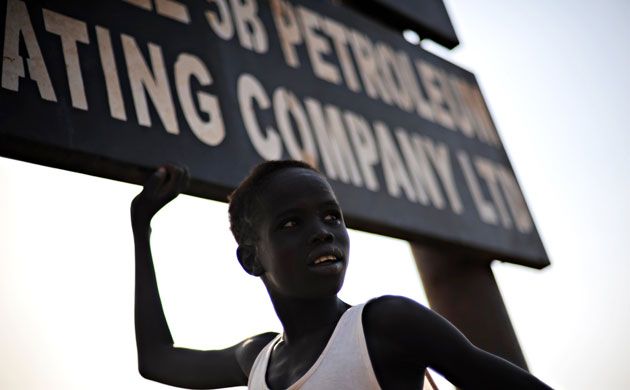
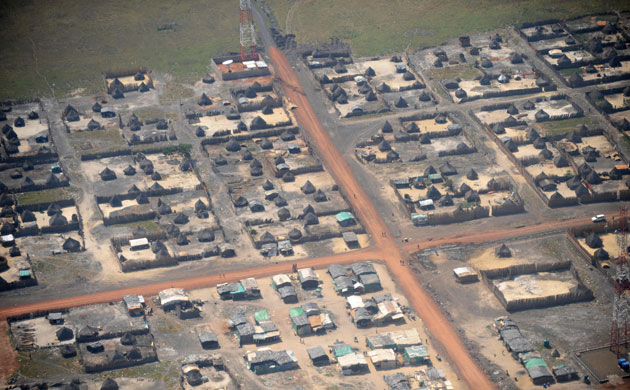
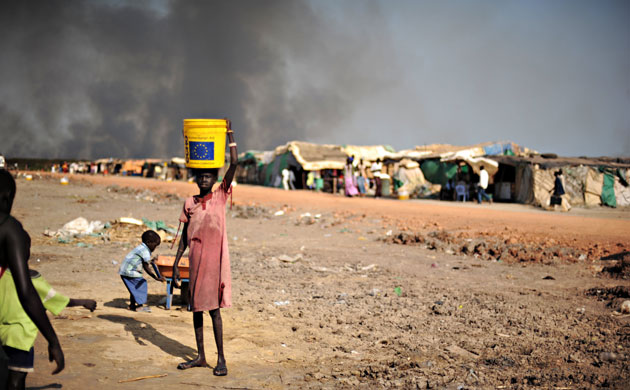
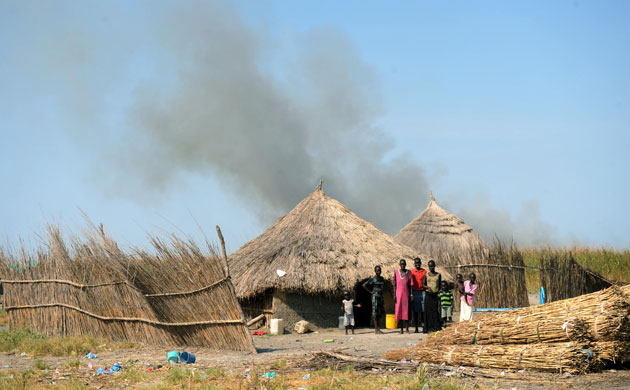
Klaus Stieglitz the vice-president of human rights organisation, Sign of Hope, takes water samples at an abandoned bore hole next to a disused oil well near Thar Jath in south central SudanPhotograph: Roberto Schmidt/AFP/Getty ImagesKlaus Stieglitz takes water samples at an abandoned bore hole next to a disused oil well. 'Oil exploration and exploitation in the oilfields of Mala and Thar Jath pose serious threats to human beings, livestock and the environment,' he told AFPPhotograph: Roberto Schmidt/AFP/Getty ImagesA group of Sudanese villagers watch as water experts take water samples and measurements from a water pump located in the village of NyjaldiuPhotograph: Roberto Schmidt/AFP/Getty ImagesA Sudanese boy holds a water dispensing pipe to his mouth at a water distribution point in the south central Sudanese town of GuitPhotograph: Roberto Schmidt/AFP/Getty ImagesA photo rotated 180° shows Sudanese women and children reflected in a pool of standing water at a water distribution point in GuitPhotograph: Roberto Schmidt/AFP/Getty ImagesThirteen-year-old Peter stands underneath a sign announcing the petroleum company which relocated the village where he and some other 2,500 villagers in the south central town of Rier used to live. Stieglitz said concentrations in the village water supply of salts and contaminants like cyanides, lead, nickel, cadmium and arsenic had reached critical levels Photograph: Roberto Schmidt/AFP/Getty ImagesNew Rier in south-central Sudan: The petroleum company relocated the town to this new site not too far from the company's central processing facility and has started trucking in water for the populationPhotograph: Roberto Schmidt/AFP/Getty ImagesA young girl holds a jerrycan filled with water at a water distribution point in New Rier. Oil represents 95% of Sudan's exports and is a source of huge tension between between Khartoum and the semi-autonomous southPhotograph: Roberto Schmidt/AFP/Getty ImagesSudanese women stand in front of a hut in the south central Sudanese town of New Rier. Sudan's oil is mostly found in the south and sold by the north. Reverend Roko Taban Mousa, an influential Sudanese cleric, said: 'Oil could have been a blessing for southern Sudan had it been used properly, first for the development of the area where petrol is produced, and then the rest of the country, but it's exactly the contrary that is happening'Photograph: Roberto Schmidt/AFP/Getty Images
Sign up to read this article
Read news from 100’s of titles, curated specifically for you.