As Sudan’s war enters its fourth year, the army has retaken much of the country, shifting the balance on the ground. But the gains have also reshaped public opinion – with some Sudanese now backing the same military they once opposed, even as analysts warn the conflict remains deeply entrenched and a political resolution far off.
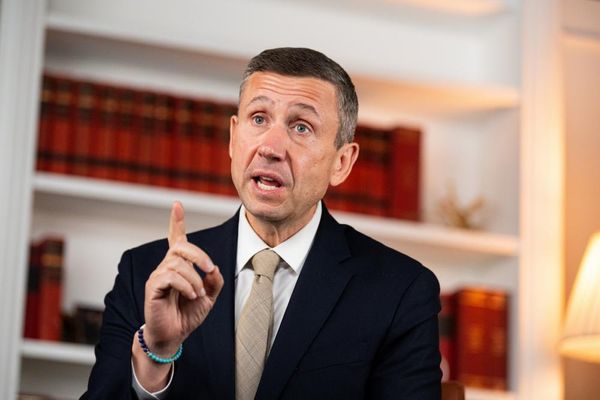
Much of the country, including the capital Khartoum, has been brought back under the control of the Sudanese Armed Forces (SAF). Sudanese author and analyst Omar Digna tells RFI that many people are cautiously backing the army as the war shifts focus from political grievances to survival.
“We had a lot of concern about their attitude and everything they did,” Digna says.
Speaking from Egypt, where he fled to with his family four months after the paramilitary Rapid Support Forces (RSF) took control of Khartoum, Digna said the questions that mattered in 2019 no longer feel central for many Sudanese.
Instead of asking whether the country will get elections or how a future government should be shaped, he says people's worries are now more basic.
“It’s about are we going to survive? Are we going to exist anymore? That’s the question.”
Sudan: rebels using sexual violence in Darfur as 'war weapon', says MSF
Shattered transition
Sudan reached a turning point in 2019, when a united protest movement helped force out longtime ruler Omar al-Bashir after more than 30 years in power.
Following decades of military rule, people pushed for civilian leadership, building on earlier brief democratic periods after independence from Britain and Egypt in 1956, the 1964 October Revolution that overthrew a military regime, and the short-lived elected government before Bashir took power.
A transitional government was formed in 2019 under prime minister Abdalla Hamdok, alongside army chief Abdel Fattah al-Burhan. Under African Union mediation efforts, Burhan was meant to hand power to a fully civilian-led leadership within two months.
“He didn’t want to give up the power after the transition period,” Digna explains. “It’s like an epidemic in Africa: the moment you reach power, almost no one wants to give it back.”
Instead, Burhan led a coup in 2021 that removed Hamdok and dissolved his cabinet.
He later signed an agreement to integrate RSF leader Muhammad Dagalo, known as Hemeti, into a shared power deal, but tensions between the two men continued to build until war broke out on 15 April 2023.

Spotlight on Africa: Reflections on the future of the African Union
War at an impasse
Since the war began, the rival sides have continued to pursue outright victory, says Jihad Mashamoun, an analyst on Sudanese politics and the Horn of Africa.
“Both sides still follow a zero-sum calculation of ending this conflict through defeating each other,” he tells RFI.
That zero-sum approach helps explain how the conflict escalated and why it continues to drag on. Burhan, Mashamoun says, is also relying on the SAF’s perceived legitimacy in the region and internationally to strengthen his position.
However, that external legitimacy has not erased criticism of the army’s role in the lead-up to the war, with its own decisions seen as having helped create the conditions for the conflict.
“The problem is we know that the SAF could have prevented this war and the RSF exploited the sloppiness of the SAF,” Digna says.
Holding on to power despite strong civilian opposition created an opening that the RSF was able to exploit, he adds. The paramilitary group went on to control Khartoum and large parts of the country for nearly two years before the army retook the capital in March 2025.
Burhan is now widely seen as Sudan’s de facto head of state since the 2021 coup, Mashamoun says – which also shapes how the army is viewed.
“Those supporting the SAF are supporting it because they see it as the only legitimate military institution of Sudan,” he adds.
Gold, power and influence – how the UAE is shaping Sudan’s war
'No third option'
The choices facing Sudanese people now are stark, with no clear alternative to continued fighting.
“Either keep fighting, or give up. They have not given us a third option,” Digna says.
Negotiating with the RSF is not seen as viable by those who fear it would allow the group to regroup and strike again.
“I’m totally against any negotiation with the RSF because I know they have the free will to give and take. If they end up controlling one square kilometre of Sudan, this means we have put a mole in our country that is going to reorganise itself and hit us again,” Digna warns.
The army must now prove it deserves the support it is receiving, even from those who once opposed it.
“I’m genuinely impressed by the performance of the SAF. I think of Burhan as an employee. He betrayed me at some point; now I want him to get the job done,” Digna says.
"I want him to fix his mistake. I know his mistake cost me a lot, but what options do I have?”

That shift in thinking is reflected more widely among Sudanese who once opposed the military.
Support has instead grown because many Sudanese see it as the best chance to “obliterate” the RSF, says Tagreed Abdin, a Sudanese architect and mother of three who fled Khartoum one month after the fighting began.
“The army is not beyond critique, but they are not genocidal,” she tells RFI.
On the ground, some areas under SAF control have returned to a degree of normal life.
“I think the Sudanese government has established control over most of the country and people have begun returning to their normal lives, whether in Khartoum or in other areas,” Amgad Fareid Eltayeb, a former adviser to Hamdok and current adviser to the chairman of Sudan’s Transitional Sovereignty Council, tells RFI.
But those gains have not brought the conflict any closer to a political resolution.
“Politically, we are not really near any end because the RSF remains entrenched in Darfur, parts of West Kordofan, and they've opened a new front from Ethiopia in Blue Nile state,” he says.