
At least seven protesters were killed and more than 180 wounded Sunday during mass demonstrations in Sudan, according to health ministry officials, as tens of thousands answered the opposition’s call for a “million-man march” to end military rule.
The victims included four protesters who were killed in Omdurman, Khartoum’s twin city that lies on the western bank of the River Nile across the Sudanese capital, said a doctors committee linked to the opposition Sudan Professionals Association (SPA).
The deaths came as tens of thousands of protesters answered the opposition’s call for a “million man march” on Sunday, which was seen as a test for protest organisers who have been hit by a June 3 raid on a Khartoum sit-in that killed more than 100 people, according to opposition leaders, amid reports of mass rapes by members of the Rapid Support Force (RSF), a Sudanese paramilitary unit.
Earlier Sunday, the RSF head -- who is also deputy leader of Sudan’s ruling Transitional Military Council (TMC) – said snipers shot at least five civilians and three RSF members on Sunday.
Mohamed Hamdan Dagalo – a former Janjaweed commander known by his nickname, Hemedti – said the snipers were “infiltrators, people who want to jeopardise progress”.
Dagalo was speaking at a rally outside Khartoum Sunday. His address was broadcast on state television.
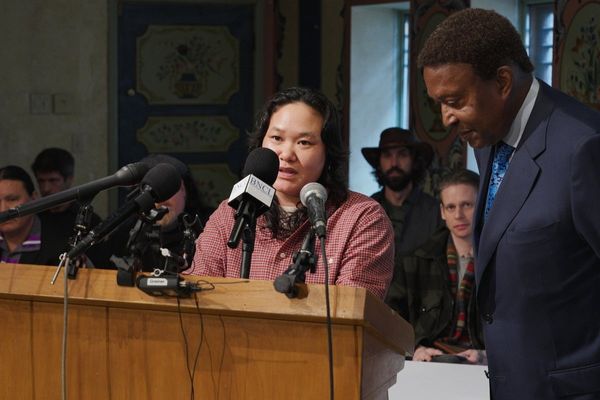
Sudanese human rights activist Azaz Elshami however denied any insinuation that the RSF troops were killed by protesters. “It’s not true unless there were friendly fires among themselves. The Sudanese protesters did not use force, they did not use guns and they will never do that. The whole idea of this movement is that it’s a nonviolent resistance and people are committed to being peaceful. They know very well that this is their weapon. The more they remain peaceful, the more they have a chance to win and that will not change,” said Elshami in an interview with FRANCE 24.
Since the June 3 crackdown – dubbed the “Ramadan massacre” after the Muslim holy month when it occurred – the opposition movement has been forced to cope with an Internet blackout that has curbed their ability to mobilise support.
Despite the Internet ban, Twitter on Sunday featured numerous video clips, which could not be verified, of demonstrators marching in cities and towns across the country. The mood appeared defiant with protesters waving flags and chanting, “Thawra! Thawra!” – Revolution! Revolution! – to drumbeats.
In the back streets of Omdurman, across the Nile from Khartoum, protestors marched through the maze of neighborhoods today: women, men and children, all demanding a civilian government pic.twitter.com/E5PrFdkuXQ
Geoffrey York (@geoffreyyork) June 30, 2019
‘World is watching’
Tensions were high in the lead-up to the million-man march, with the SPA announcing late Saturday that a planned press conference was cancelled due to a security raid on its offices.
Dagalo also issued a warning Saturday that no vandalism would be tolerated at the million-man march.
“There are vandals, there are people who have an agenda, a hidden agenda, we don't want problems," he said.
Sunday’s million-man march call came as Ethiopia and the African Union (AU) are jointly mediating between the protesters and generals to form a transitional council composed of civilian and military representatives.
On Friday, Amnesty International issued a statement demanding the TMC guarantee the safety of protesters on Sunday.
"The horrific unprovoked use of lethal and unnecessary force against peaceful protesters as witnessed on 3 June must not be repeated this Sunday, or ever again," Amnesty International's Secretary-General Kumi Naidoo said.
The European Union has also called on the generals to avoid any violence on Sunday.
Two months ago, the AU issued a June 30 deadline on Sudan’s TMC for a transition to a civilian-led joint council. The AU’s Peace and Security Council has since suspended Sudan until a civilian power transition is established.
June 30also marks the 30th anniversary of the Islamist-backed coup that brought Omar al-Bashir to power in 1989, toppling Sudan's last elected government. The military removed al-Bashir in April amid mass protests against his rule.
(FRANCE 24 with AFP, AP and Reuters)