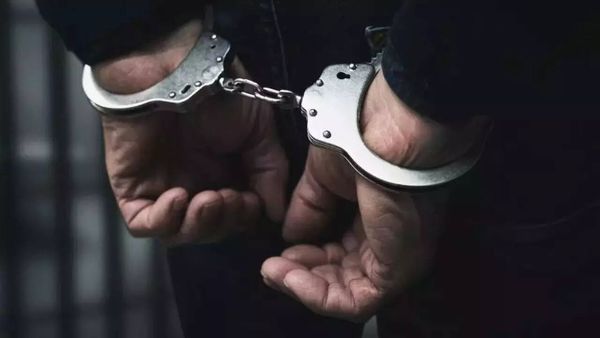
BEIRUT _ Sudan's military ousted and arrested President Omar al-Bashir on Thursday, delivering the deathblow to the authoritarian's nearly 30-year rule following months of intense protests.
Sudanese Defense Minister Awad Ibn Ouf went on state television to declare "the uprooting of this regime," saying the government, presidency and parliament were dissolved.
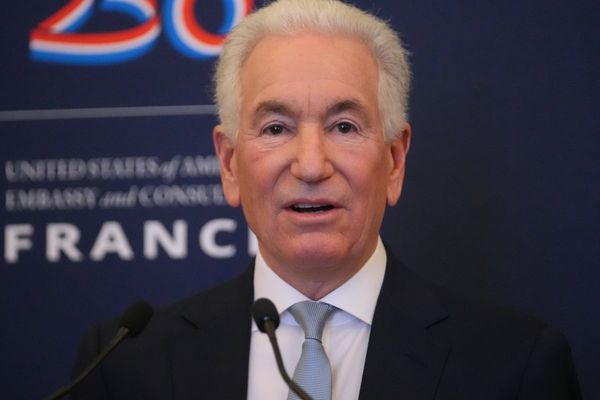
A military council will oversee a two-year transition period while suspending the constitution, he said. It will declare a three-month state of emergency and a one-month curfew of 10 p.m. to 4 a.m., he said. Sudan's airspace was to be closed for 24 hours and its land and sea borders shut "until further notice," Ibn Ouf added.
Ibn Ouf did not disclose al-Bashir's whereabouts or those of his allies, including officials and ministers who had been rounded up. The ousted president, he said, was being held "in a safe location."
Security services, he said, had long been keeping track of the "mismanagement, corruption and absence of justice" in state institutions, as well as "the poor economic conditions" and "lack of hope."
The government's "false promises" had forced the army's hand, he said.
Al-Bashir, 75, first came to power in a bloodless 1989 coup. He was viewed as a pariah to many other countries and long faced an arrest warrant from the International Criminal Court on charges of war crimes and crimes against humanity in Sudan's Darfur region. However, other nations refused to arrest him.
Over his political career, al-Bashir weathered several bouts of protests. Yet it was the economy that felled him. The secession of South Sudan in 2011 denied him the oil-rich regions that had been the financial bulwark of his government.
Astronomical prices for staples such as bread, queues for gas and a currency liquidity crisis pushed people to protest, despite al-Bashir's insistence that those demonstrating were paid agents of his enemies.
"There was even a time that people said the Sudanese won't go out or protest, but it happened, because the conditions were truly terrible," said Mada Fatih, a Geneva-based Sudanese diplomat, in a phone interview on Thursday.
Thursday morning at about 5, state TV's regular programming was interrupted by a banner asking people to wait for "an important statement from the Sudanese armed forces."
Seven hours of martial music videos later, Ibn Ouf appeared wearing fatigues to give his address as crowds massed before the military headquarters in the capital, Khartoum, to continue a days-long sit-in.
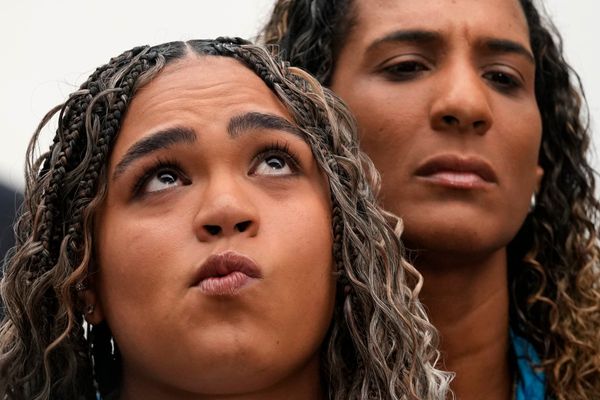
Protesters, expecting the good news of al-Bashir's ouster, cheered as demonstrators clambered up walls to rip down banners and posters bearing his image.
Yet moments later, a sense of victory against what many considered a reviled and incompetent regime turned to anger as it became clear the military was taking control.
The military also removed then-President Gaafar Nimeiri 34 years ago, nearly to the day.
"This is a dirty political game that is being played against the people. They removed Bashir, and one of his followers takes over?" said Ahmad Abbass, a 22-year-old protester in Khartoum contacted via social media.
The Sudanese Professional Association, which supported the protests since their beginnings in December, said the army's move was a coup aimed at "recycling the same faces and institutions against which our great people had revolted."
"We call upon our great people to continue their brave protest."
It also addressed the military, especially those who in recent days had protected demonstrators from attacks by branches of security services loyal to al-Bashir. (Nine people had been reportedly killed in Sudan since protests began.) The association asked soldiers to stand on the side of the people against the attempt to "steal the revolution."
Ibn Ouf said in his address that Sudan's judiciary, embassies, diplomatic missions and organizations would be unaffected by the change. The nation, he said, would continue to adhere to all treaties and charters.
In the meantime, all political prisoners, including those held by the country's National Intelligence and Security Service, would be released.
Fatih, the Sudanese diplomat, said that although protesters had expected more, he saw the army's move as a positive one.
"You can't do anything without the intervention of the army and its guarantee of security and peaceful transition," he said.
"At the end you're playing a dangerous game and you don't want things to lose control."