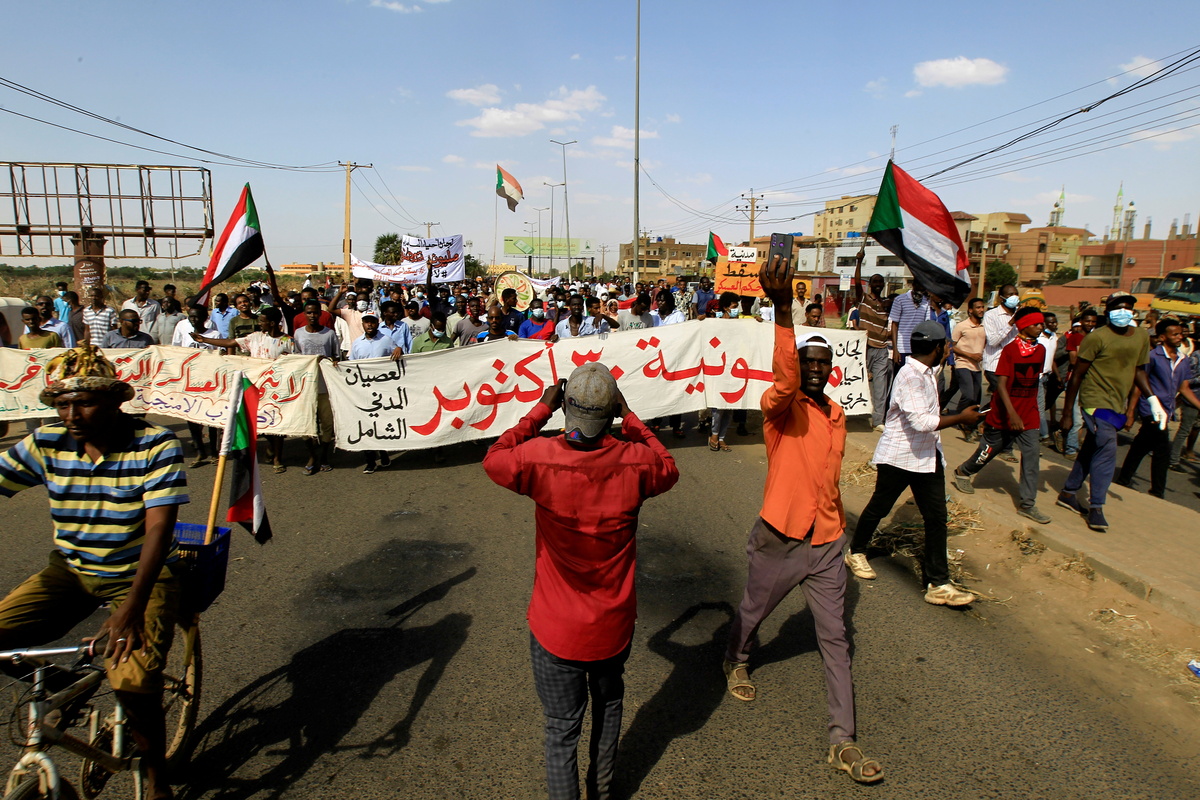
Sudanese pro-democracy groups launched two days of civil disobedience and strikes on Sunday in protest at last month's military coup, though participation appeared to be limited by continuing interruptions to internet and phone connections.
Local "resistance committees" and the Sudanese Professionals Association (SPA), which led demonstrations in the uprising that toppled then-president Omar al-Bashir in April 2019, are organising a campaign of protests to try to reverse the military takeover.
On Sunday morning people were out on the streets in the centre of the capital, Khartoum, though there was less traffic than usual, residents said. In Khartoum North, security forces patrolled major streets carrying sticks and tear gas grenades.
A teachers' union said security forces used tear gas at the education ministry building for Khartoum State to break up a sit-in staged to oppose any handover to military appointees. Five people were arrested, it said.
Some hospitals and medical staff were working normally while others were on strike.
"A number of people did not know about the call for civil disobedience because of the internet cut," said one resident in central Khartoum who asked not to be named.
Internet services have been badly disrupted since the Oct. 25 coup, and phone coverage remains patchy. Though daily life came to a near standstill, shops, roads, and some banks have since reopened.
The coup halted a power-sharing arrangement between the military and civilians that had been agreed after Bashir's overthrow and was meant to lead to democratic elections by late 2023.
Top civilians including several ministers were detained, and Prime Minister Abdalla Hamdok was placed under house arrest.
Since the coup, mediation efforts involving the United Nations have sought the release of detainees and a return to power sharing, but sources from the ousted government say those efforts have stalled.
Activists demanding that the military exit politics have announced a schedule of protests leading up to mass rallies on Nov. 13 under the slogan "No negotiation, no partnership, no compromise".
Hundreds of thousands took to the streets against military rule in two demonstrations before and after the Oct. 25 coup.
Western powers have paused economic assistance to Sudan and say that relief on tens of billions of dollars of foreign debt is at risk unless there is a return to democratic transition.
(Reporting by Khalid Abdelaziz, Nafisa Eltahir; Writing by Aidan Lewis; Editing by Gareth Jones)