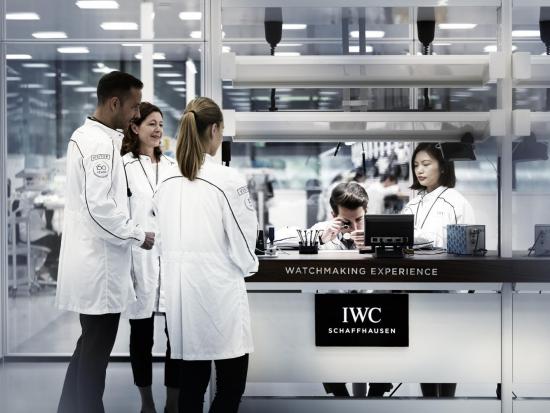
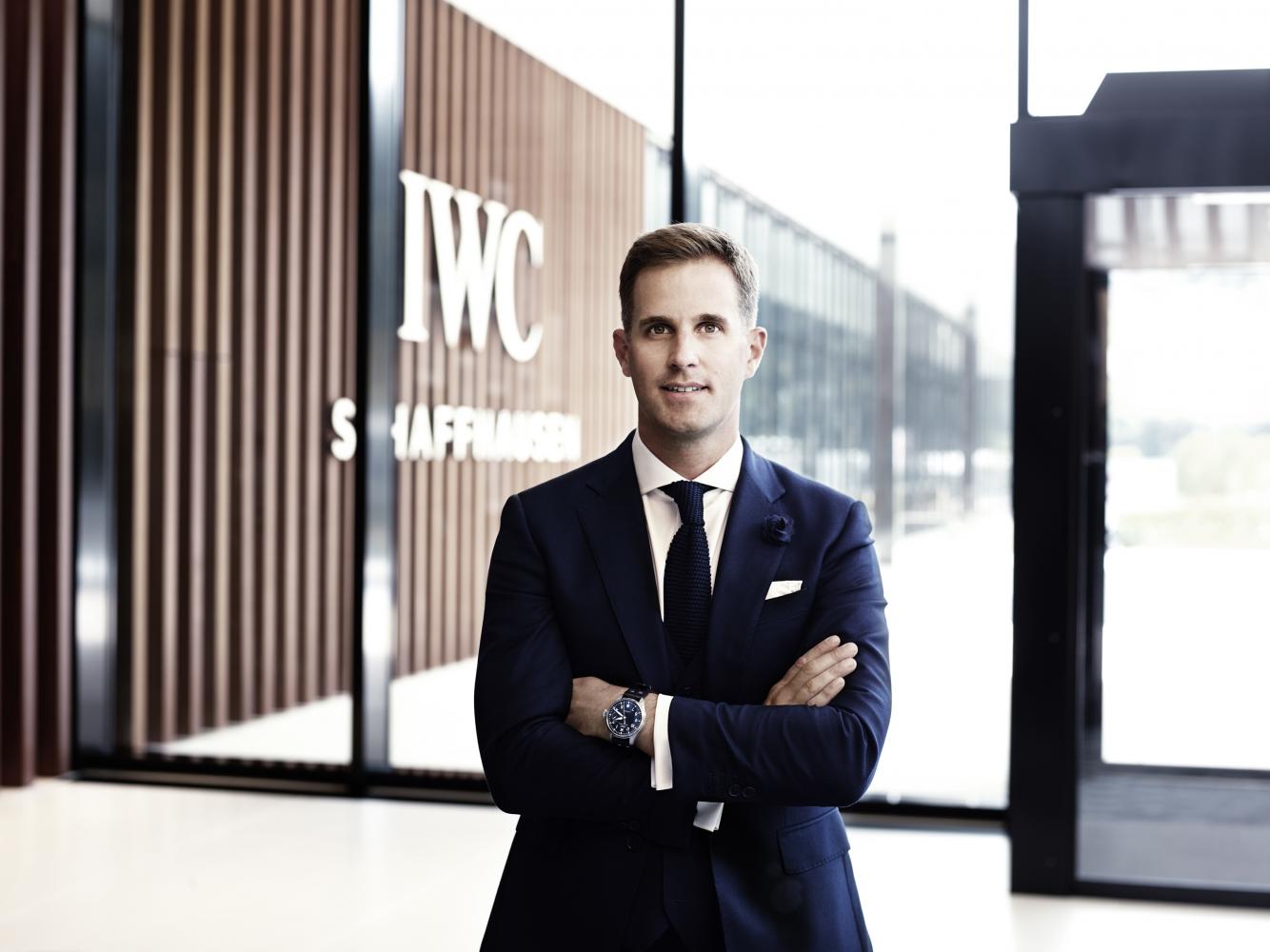
There is more to building a production plant than optimising processes and employees' working conditions. Christoph Grainger-Herr designed the Manufakturzentrum to make sure it would give a warm welcome to visitors into IWC Schaffhausen's watchmaking world.
"It was very important to us to provide visitors with a unique experience. We didn't just want to build a functional factory -- we wanted a building that was not only aesthetically pleasing, but also [one that] perfectly encapsulated the spirit of our brand," said the German, who has been the CEO since April 2017.
Grainger-Herr was an interior designer and architect before joining IWC's trade marketing department in 2006. He showed his architectural prowess in the design of the IWC museum located within the company's historic headquarters, sandwiched between the Rhine river and Schaffhausen Old Town in northern Switzerland.
Even after adding two annexes to the site, there still wasn't enough room to accommodate the production to meet demand for IWC mechanical timepieces. So they built a second home at a new location in Merishausen 8km north.
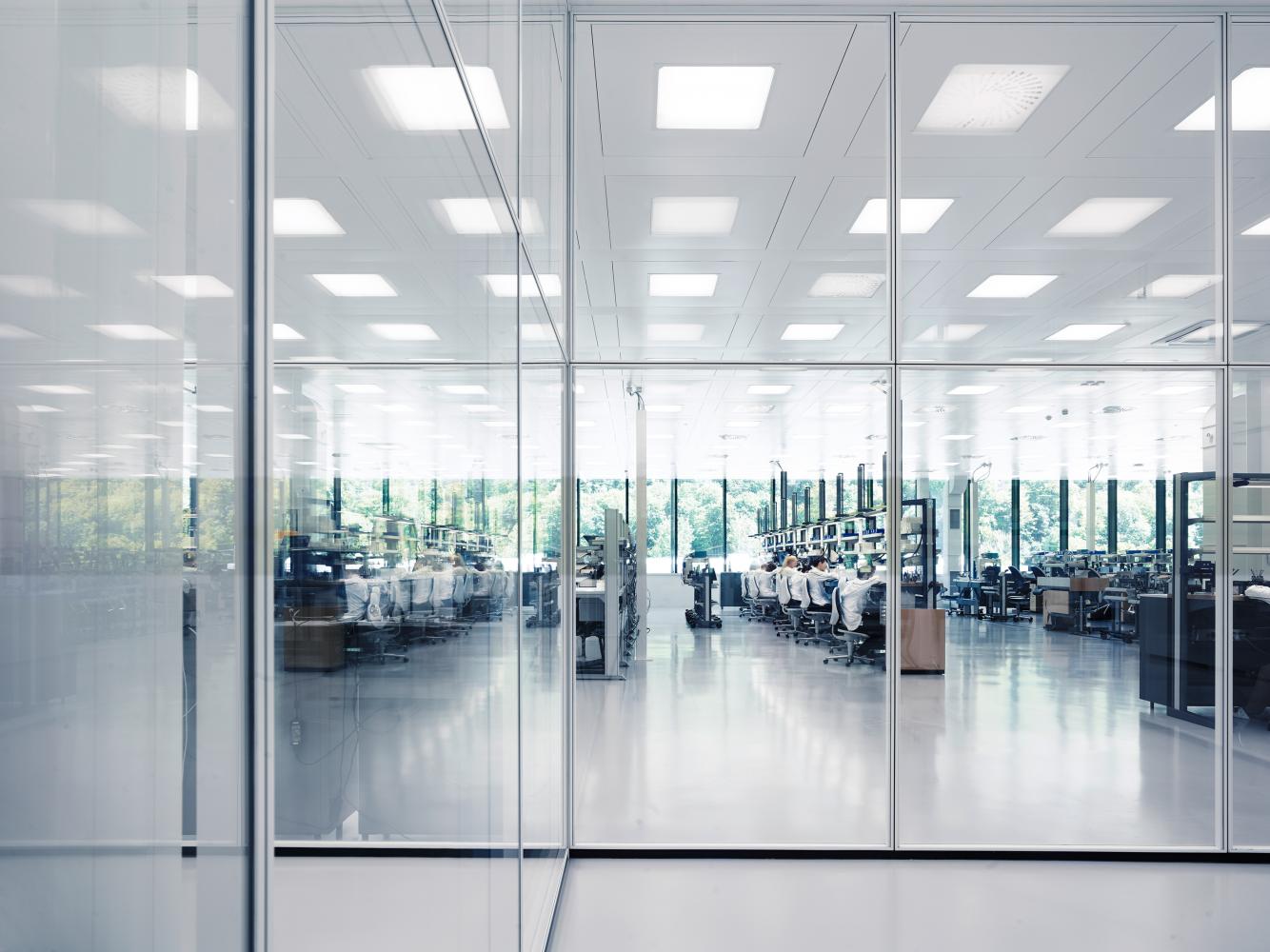
The state-of-the-art Manufakturzentrum officially opened its doors in August last year, fittingly, in time to mark IWC's 150th anniversary.
"In 1868, our founder Florentine Ariosto Jones was already pairing traditional watchmaking with advanced production methods. Ever since he established this approach to engineering, we have been systematically developing it; even today, we continue to combine skilled workmanship and sophisticated technology in our new Manufakturzentrum," said Grainger-Herr.
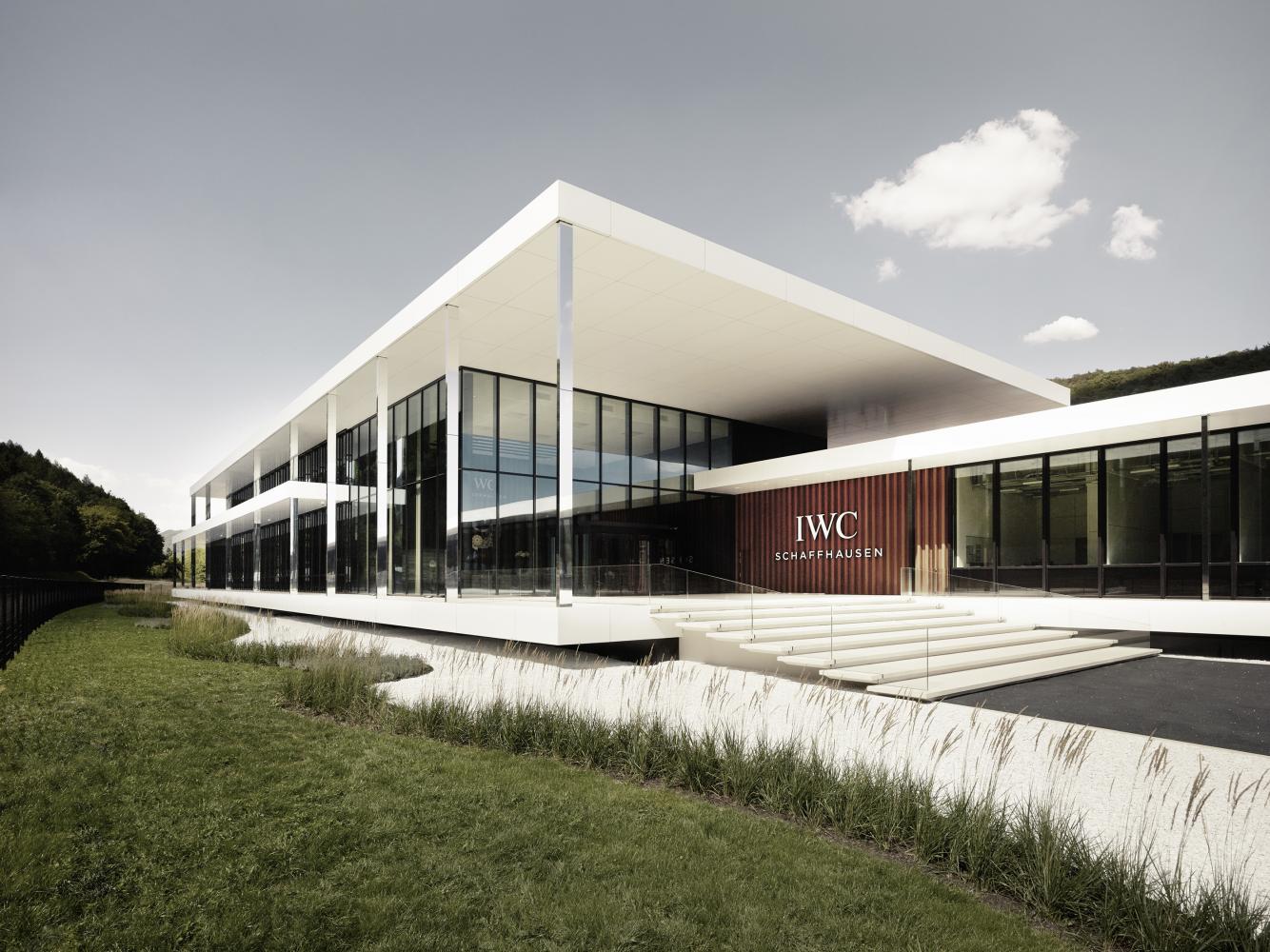
Perched in a rolling green field, the two-storey building stands out with its façade of glass panes and black frames contrasting with the extended white projecting flat roof that serves as an architectural sunshade. Inspired by modernist exhibition pavilions, the 13,500m² structure showcases IWC's skilled workmanship and sophisticated technology.
"When you first set foot in the Manufakturzentrum, you immediately get a sense of what IWC is all about, as well as a sense of the pride that our employees take in their work. If production is divided up over multiple storeys or buildings, you don't get that sense," said Grainger-Herr.
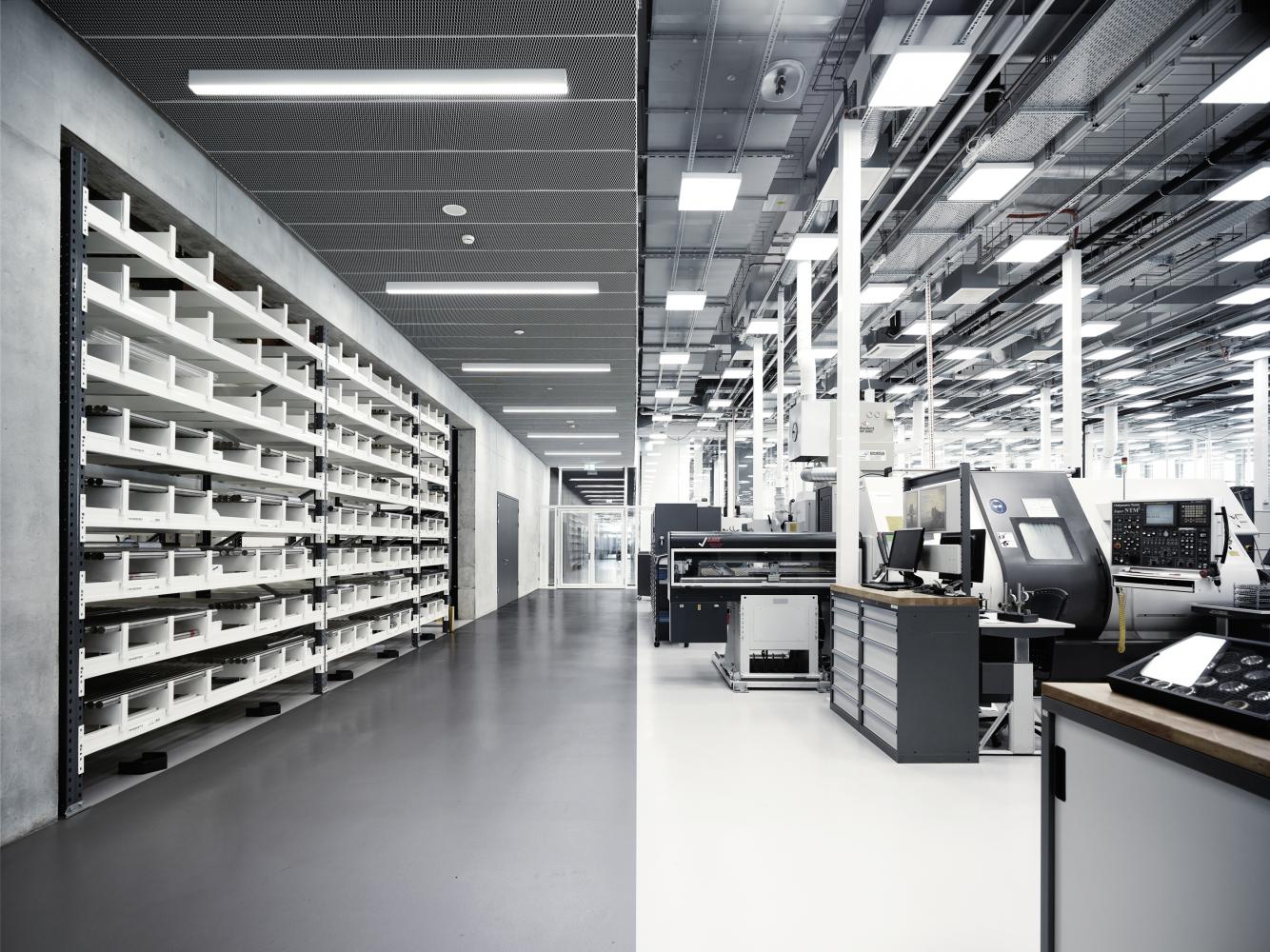
The architecture allows for more effective processes and faster communication flows while making the 230 employees feel at home.
"We also made use of various architectural tricks to create a rather special atmosphere -- for instance, the projecting flat roofs are covered with wooden planks. This makes the new building feel a little like a house with a generously proportioned veranda, and creates a cosy ambience," he explained.
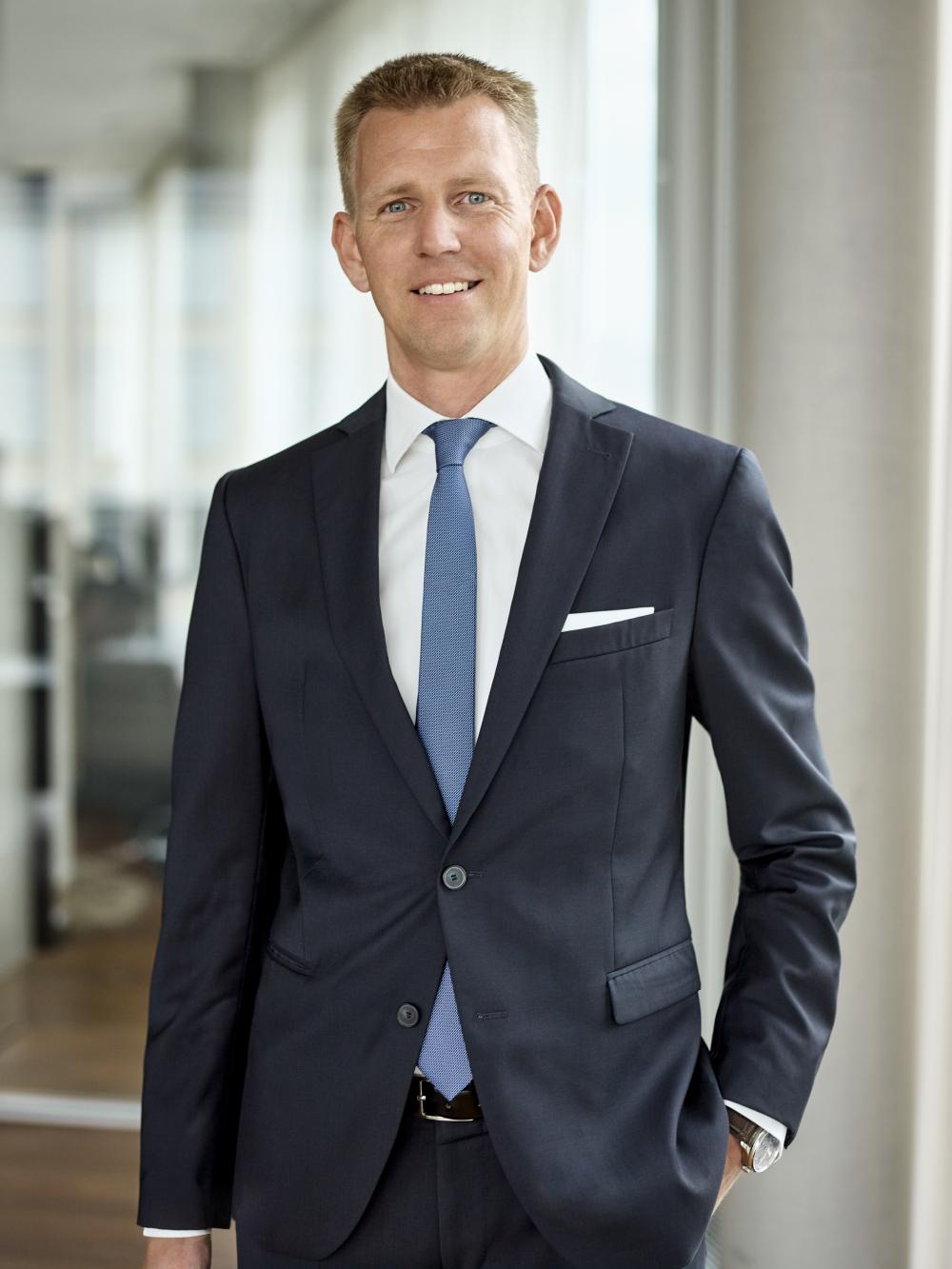
Chief operating officer (COO) Andreas Voll is in charge of all processes along the value chain at the Manufakturzentrum, where the production of movements and their components, as well as cases, takes place under one roof.
"This has enabled us, in particular, to configure our production processes precisely, as is best for ensuring that they run optimally and produce perfect quality," said Voll. "So, for example, the entire process of creating value, from the raw material to the individual movement component and on to the finished manufacture movement, progresses in a logical order on a single storey."
The basement is dedicated to case-making while the ground floor houses the movement-component production workshop, where most of the steps are automated, involving computer-controlled turning and milling machines and articulated robots. The watch parts are then given a protective coating and desired surface finish at the electroplating department.
Assembly of the tiny parts is meticulously carried out by hand since machines are incapable of this delicate operation. It is broken down into multiple sub-processes for specialists to perform each task in assembly lines.
"Our assembly processes for the different calibre families are organised into dedicated lines," explained Voll. "This way, not only are we systematically realising the business vision of our founder Florentine Ariosto Jones, whose thinking was way ahead of its time, but we are also maximising the quality standards we are able to attain in our assembly processes."
Jones was an American entrepreneur, who left Boston in the 1860s to establish a watchmaking business in Switzerland. He set up the International Watch Company in Schaffhausen, where he found ideal conditions, including hydropower driven by the Rhine in front of the factory, to run the machines.
At that time, the combination of the modern American system and Swiss craftsmanship differed significantly from the cottage industries in the watchmaking hub of French-speaking Switzerland.
"Today, just as we were already doing at our headquarters in Schaffhausen Old Town, we only use Swiss hydroelectric power that is generated with zero CO2 emissions," Voll noted.
Other sustainable elements include the roof's solar panels, drawing water for cooling and heating from two groundwater sources, reducing energy consumption through automatic lighting control coupled with LED lights, and reusing waste heat from equipment.
"In production areas that are bathed in natural light, guests can follow the production of our manufacture movements and cases step by step, and benefit from being able to witness these processes up close," said Voll.
"Watch enthusiasts can even try their hand at adding circular graining to movement components or setting stones. This gives them a good insight into how much concentration, patience and dexterity is required of our specialists in their day-to-day work."
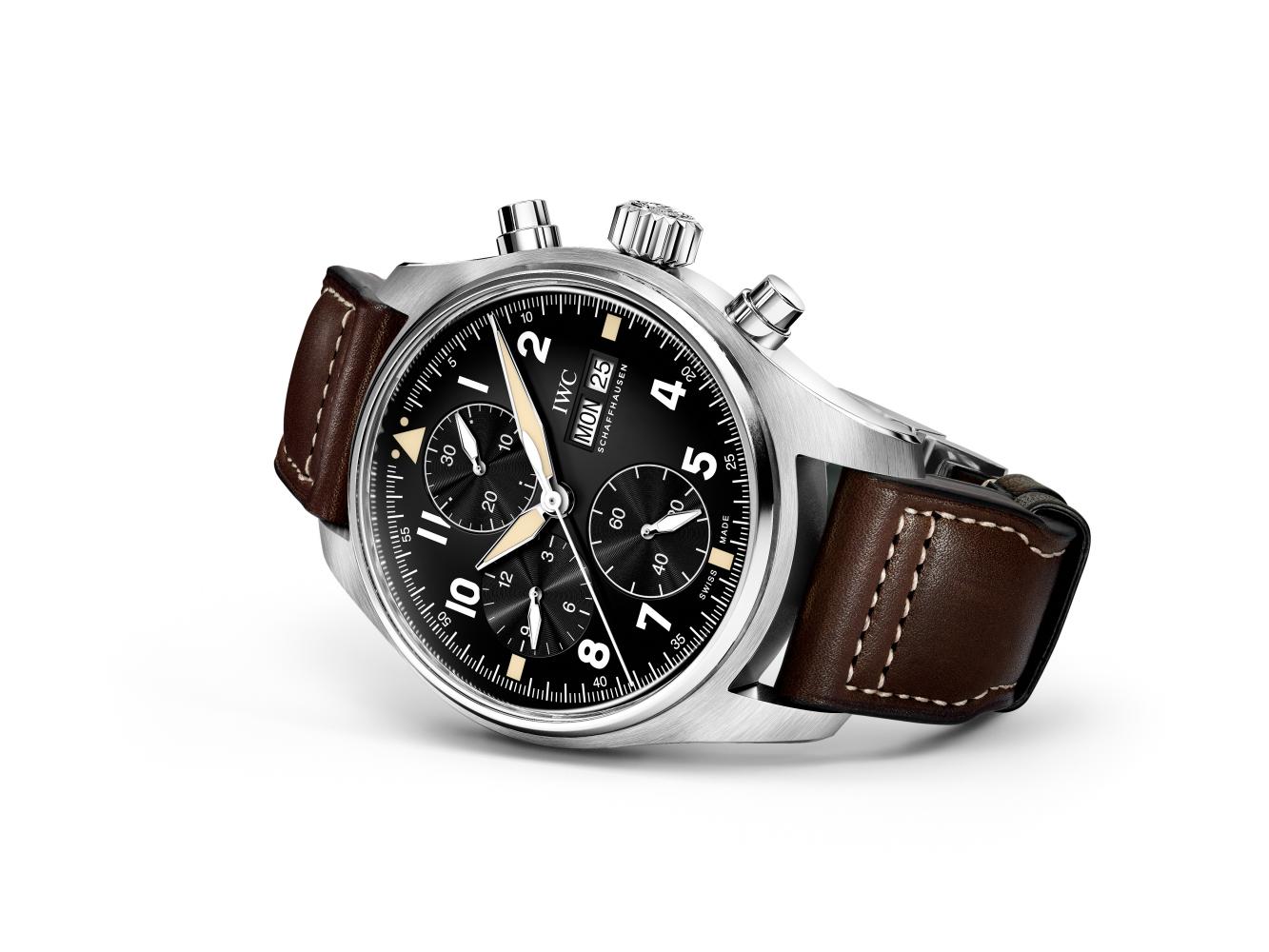
Guided tours in English and German take visitors around the historic headquarters, museum and the Manufakturzentrum. Besides learning about the rich history and observing the brand's technology, innovation and craftsmanship, visitors can familiarise themselves with IWC watches, such as the Pilot, Portugieser and Portofino, in the boardroom with a wonderful view of the Rhine.
For information, visit iwc.com.