Gen Z and millennial voters who back President Trump are emerging as an increasingly hard-line faction within his coalition, showing especially strong support for male leadership and religion in public life — and openness to political violence, a massive new survey finds.
Why it matters: The survey of 18,000 Americans finds that Trump supporters born after 1981 are less invested in consensus politics than previous generations, and look more favorably on cultural dominance and strongman leadership.
- The findings show how the economy, a backlash to progressive gains, and President Trump's tactics have shaped a significant share of voters who've come of age during his tenure.
- It's a shift that could reshape priorities and power in the GOP and beyond for years.
The big picture: Trump's base remains a coalition of competing worldviews, but generational change is tilting its energy toward cultural conflict rather than consensus on policies.
By the numbers: 26% of younger Trump voters say that "the man should lead, and the woman should follow," compared with 10% of older Trump voters, according to the findings from "Beyond MAGA: A Profile of the Trump Coalition," by More In Common.
- Meanwhile, 43% of younger Trump voters say religion is more "rebellious" than atheism, vs. 28% of older Trump voters who say that.
Zoom out: More In Common, which studies polarization and similarities across political groups, says the new report is the most comprehensive study of segments in Trump's coalition to date.
- The new survey draws on interviews conducted from April 2025 through early January, including 10,971 Trump 2024 voters and 7,400 non-Trump voters.
- The report identifies four distinct voter types across age groups who made up Trump's 2024 coalition: MAGA Hardliners (29%), Anti-Woke Conservatives (21%), Mainline Republicans (30%) and the Reluctant Right (20%).
What they're saying: "You come into your political formation in your early years, and that can often define your political identity for decades to follow," said Stephen Hawkins, global director of research for More in Common.
- "There's an antagonist, transgressive element and simply a reformist element trying to reconsider and reopen questions about values and gender," Hawkins said of the younger Trump voters surveyed.
- "Which direction gets more energy and which ends up being more permanent is a question that people who care about our cultural direction and our politics should be following closely."
Zoom in: The "emergent new traditionalism" found among Gen Z and Millennial Trump voters reflects "a countercultural social conservatism that is taking shape amid dissatisfaction with the economic and cultural status quo," the report found.
- These younger Trump voters' views differ not just from overall American attitudes but from older Trump voters' views.
Between the lines: Regardless of whether they support Trump, across ideological views, younger voters share an impatience with longstanding norms and skepticism about democratic governance.
- About one-third of younger Trump voters and younger non-Trump voters agree that "when one group gains in America, another group usually loses."
- In contrast, Gen X and older Trump and non-Trump voters "are more likely to say that it's 'possible for the whole country to grow and prosper together."
Among younger Trump voters, those who say men should generally lead women are still in the minority; most say men and women should be equal partners or that it depends on the couple. But younger Trump voters do want to see masculinity elevated from their perception of its current culture status.
The intrigue: "There's a deep over-concern about masculinity in the modern GOP, and younger Trump men are especially susceptible to reactionary messages about gender," Melissa Deckman, author of "The Politics of Gen Z: How the Youngest Voters Will Shape Our Democracy," tells Axios.
- Deckman said younger Trump voters' openness to strongman leadership — including ignoring constitutional limits — reflects broad generational mistrust in institutions and a belief that traditional systems have failed them.
- Sisto Abeyta, a Democratic political consultant based in New Mexico, tells Axios that he's especially seen this among Hispanic men. "They grow up during #MeToo and cancel culture while being left out economically."
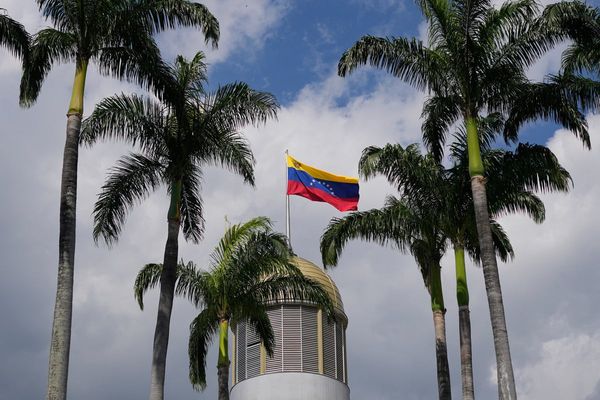
What we're watching: In the final survey wave, conducted Jan. 2-9, confidence in Trump differed significantly across his four voter segments, with healthcare and economic stress top concerns. But most Trump voters (71%) said the U.S. attack on Venezuela fits with how Trump said he would govern.
Methodology: This study by More in Common encompasses six survey waves from April 2025 through early January 2026, including 18,371 interviews (10,971 with Trump 2024 voters and 7,400 with non-Trump voters).
Story data comparing young Trump voters with other U.S. adults was drawn from the following waves:
- An April 16-22, 2025, survey of 2,478 Trump voters, with a margin of error of +/- 1.97 percentage points, including 511 young Trump voters (Gen Z + Millennials), with a margin of error of +/- 4.34 percentage points; and a nationally representative sample of 1,725 respondents, with a margin of error of +/-2.36 percentage points.
- A Nov. 6-17, 2025, survey with a nationally representative sample of 3,787 respondents and a margin of error of +/-1.59 percentage points. This includes an oversampling of 2,195 Trump voters with a margin of error of +/- 2.09 percentage points, and 533 young Trump voters with a margin of error of +/- 4.24 percentage points.
New data on Venezuela and other topics is drawn from a Jan. 2-9, 2026, survey with nationally representative sample of 3,038 respondents and a margin of error of +/-1.78 percentage points, which includes an oversampling of 1,572 Trump 2024 voters with a margin of error of +/-2.47 percentage points.