The Tale of the Princess Kaguya, the latest release from Japan’s best-loved animation studio, Studio Ghibli, has already won critical acclaim on the film festival circuit and was nominated for an Academy Award this year. It’s unlikely to excite kids, however, and I seriously doubt the matinee screenings will be populated by fidgety throngs of birthday-party groups. This is because Studio Ghibli is an odd quantity for much of its audience outside of Japan, where it has a niche but devoted following of mainly adult foreign-film enthusiasts. The film previewed this week at the only independent cinema in London’s West End, the Prince Charles, that caters primarily for obsessive film lovers. Quentin Tarantino loves the place, once saying: “The Prince Charles cinema is everything an independent movie theatre should be. For lovers of quality films, this is Mecca.”
Sure enough, Ghibli fans answered the call and descended in their hundreds. The five-hour Ghibli double bill was sold out a week before. The Tale of the Princess Kaguya was the first of the two Isao Takahata films being screened, the other being the Grave of the Fireflies (1988) – a politically scathing and harrowingly candid portrayal of the plight of war orphans during the second world war.
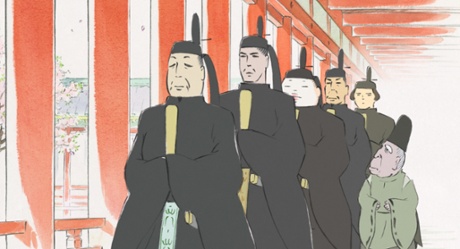
The Tale of the Princess Kaguya is a modest but opulent joy to behold. It does what Ghibli does best and creates an alluring world in which we can gladly envelope ourselves. It trots out some familiar themes: Kaguya – the heaven-sent “bamboo princess” – is sent through the usual fish-out-of-water motions, but the charm of Kaguya comes from her incredible temperament. Her ability to see the importance and the beauty in existence, in all its manifestations. Takahata shows us the shortcomings of societal expectations without being didactic.
Grave of the Fireflies, Takahata’s most famous work, is as affecting today as it was 27 years ago. It is certainly not a film aimed at younger children, yet it is firmly in the world of juvenile experience. It interrogates pain, grief, despair, destitution, nationalism, pride, shame; all through the prism of youth. As in The Tale of the Princess Kaguya, we are invited to reconnect with childhood fascination and experience a tumultuous emotional journey as if it were our own. This is the great achievement of these films – how immersive they are.
Studio Ghibli consistently manages to conjure an unpredictable and fitful joy through its love and observance of the beauty of life, nature and kinship, flitting between realism and fantasy but with the absence of prejudicial adult expectation. The Tale of the Princess Kaguya, armed with the soothing and undulating score by Joe Hisaishi, the classical composer who wrote every score for Hayao Miyazaki – Ghibli’s most famous director – is a complete treasure and has the power to enchant young and old for generations. That said, this wonderful film is unlikely to compete with the likes of Frozen or Big Hero 6, bravely plodding as it does at a fairly pedestrian pace. I wonder if children and young people have the attention span to appreciate such a film without a pacy soundtrack and roller-coaster plot. I sincerely hope I’m wrong, because The Tale of the Princess Kaguya is a treasure and an inspiration. It deserves a place in the hearts of children in the west as well as in Japan.