Amid the spread of the novel coronavirus, most of the events at the Tokyo Games will be held without spectators, but a school near the athletes village and local communities that are home to Olympic athletes are exploring ways to show their hospitality and support while limiting the risk of infection.
-- Warm welcome
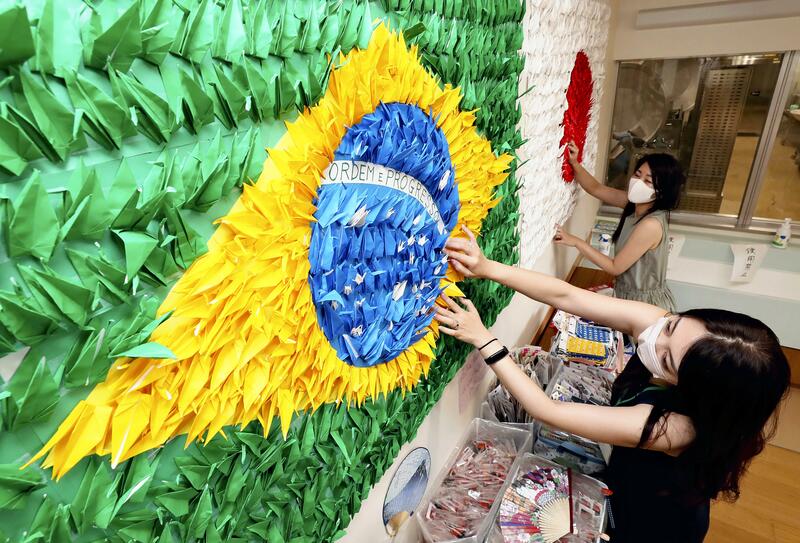
"It's too bad we can't directly interact with [Brazilian] athletes. But we hope they can feel the Japanese spirit of hospitality, even just a little," said principal of Toyomi Elementary School. Run by the Chuo Ward municipal government in Tokyo, the inside of the school is decorated with messages of support for the athletes.
The ward government signed a memorandum with the Brazilian Olympic Committee in 2017, agreeing to let Brazilian athletes use part of the school building, which is located in front of the athletes village, for training and other purposes.
The school had also planned to hold an exchange between its students and the athletes, but this has been canceled due to the pandemic. To convey their support, students and parents crafted a Brazilian national flag out of about 600 origami cranes, and made message cards.
They used them to decorate a large room on the fifth floor, where the athletes will take breaks.
A 42-year-old parent said, "We'll be happy if our children's feelings can reach the hearts of the athletes."
-- Virtual cheers
The Edogawa Ward government has canceled the public viewings it had planned during the Tokyo Games. As an alternative measure to support the athletes, about 180 households were chosen from applications by the public and linked to event venues via an online video conferencing system.
These households will watch on TV such events as swimming, in which Edogawa Ward native Rikako Ikee will be among the participants. Their cheers will be broadcast at the venues, and athletes will be able to see them waving their smartphones bearing words of support.
The Tokyo Organizing Committee of the Olympic and Paralympic Games has strived to help the athletes compete without feeling isolated. Electric bulletin boards at event venues will display video footage and messages of support posted from countries around the world via social media, such as Facebook and Twitter.
At some venues, the committee also plans to provide foreign athletes who have just finished competing with opportunities to talk face-to-face with relatives or friends who could not come to Japan.
Seiko Hashimoto, president of the organizing committee, said during a press conference on June 25, "Although we can't realize the dream of having the venues teeming with spectators, we want to enthusiastically welcome athletes from around the world at all the Olympic venues."
Read more from The Japan News at https://japannews.yomiuri.co.jp/